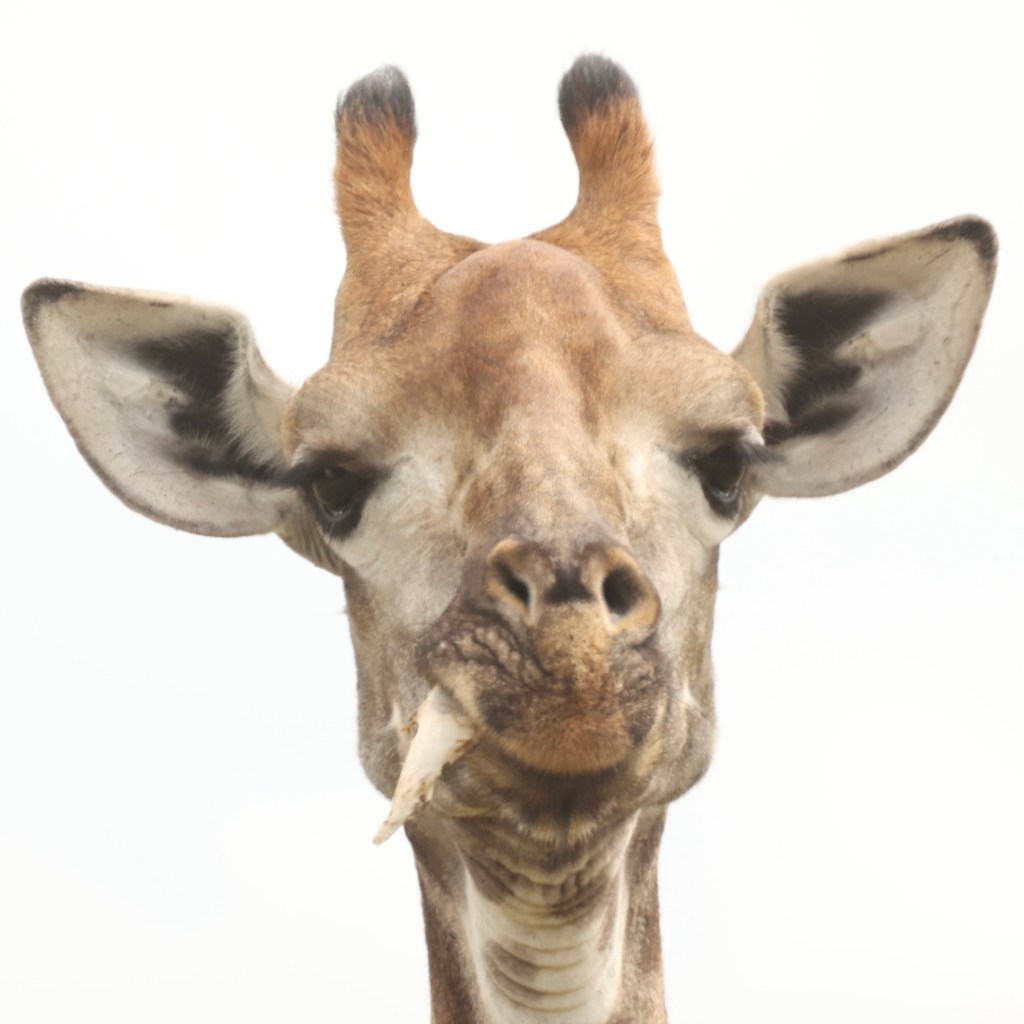
… is the term for a Giraffe behavior which seems rather odd.
Often, these largest land mammals are seen chewing bone material. The reason is to augment any calcium and/or phosphorus deficiency in their bodies. The material is manipulated in and out of the mouth using the tongue while being sucked and chewed.
I took this short video of a Thanda Safari Giraffe looking rather funny, which put me in a good mood for the weekend. I hope you enjoy yours!
Technical data: Canon R6 with RF lens f11/800mm | 4K Video | Hand-held
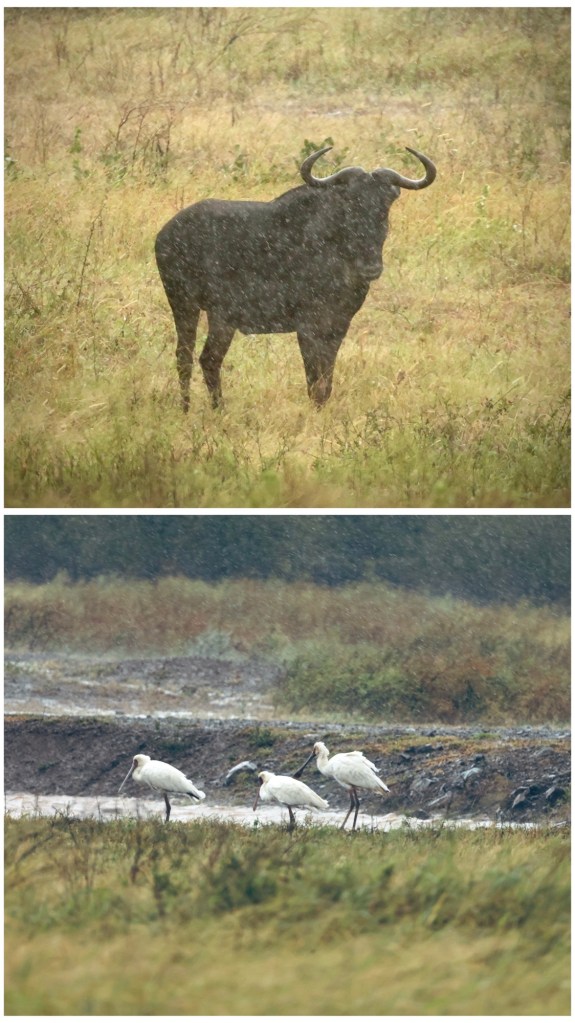
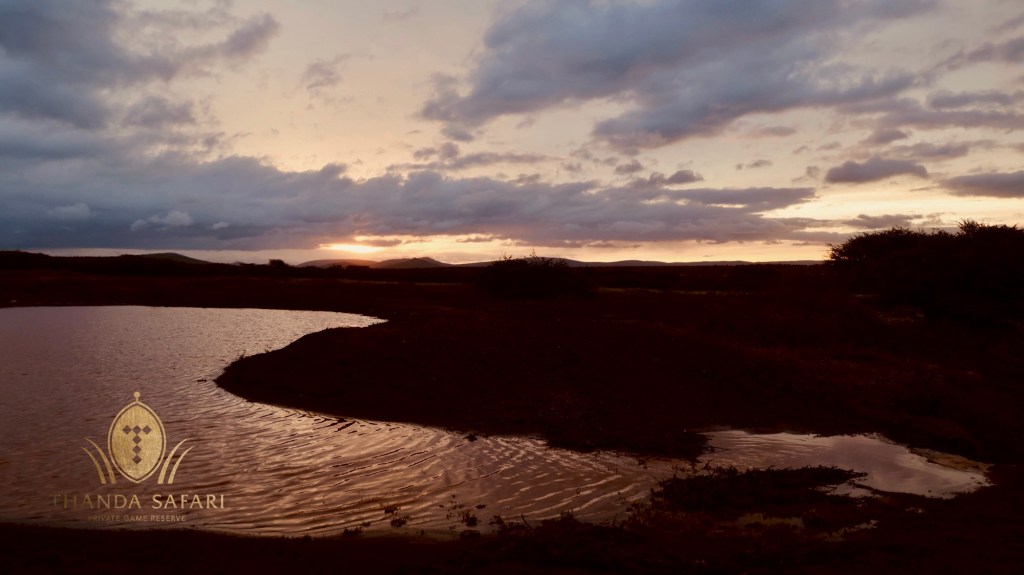
Starting last night, we experienced an incredible 146mm of rain pouring down on Thanda. Tropical Storm Filipo delivered the welcome precipitation, filling up many of our watering holes.
During the heavy rains, I took a short drive on our main roads (as all the others were impassable due to the soggy ground) but only encountered two animal species. A single Wildebeest bull was guarding his territory, and three African Spoonbills were standing completely drenched next to a waterhole. Most animals seek shelter in dense bushes during downpours.
I followed suit and returned to my home, enjoying this very rainy day!
Technical data for both images: Canon R6 with RF lens, f11/800mm | ISO 3200 | 1/500sec | ev+0 | WB 6500K | AV Mode
Many antelope species in various sizes can be found at my two favorite places in KwaZulu Natal, Thanda and Pakamisa. From the small and very cute Sunis (35cm – 15” shoulder height) to the large and impressive Kudus (155cm – 61” shoulder height).
For all the small antelopes, the males are called bucks and the females are called ewes, and for the large ones, they are called bulls and cows.
Today’s picture shows an Nyala male in high grass (_image taken yesterday at Pakamisa_). It is interesting to note that this is the only antelope species where the males are called bulls and the females are called ewes. This may be because sexual dimorphism (difference between male and female) is more distinct in Nyalas than in any other antelope species.
Here is the list of antelope species found on Thanda Safari and Pakamisa Private Game Reserve in order of their size:
THE SMALL ONES
*Bucks/Ewes*
⁃ Suni (35cm ~ 14”)
⁃ Natal Red Duicker (48cm ~ 19”)
⁃ Steenbok (50cm ~ 20”)
⁃ Klipspringer (60cm ~ 24”)
⁃ Grey Duicker (68cm ~ 27”)
THE LARGE ONES
*Bucks/Ewes*
⁃ Mountain Reedbuck (84cm ~ 33”)
⁃ Common Reedbuck (90cm ~ 35”)
⁃ Impala (90cm ~ 35”)
*Bull/Ewe*
⁃ Nyala (120cm ~ 47”)
*Bull/Cow*
⁃ Waterbuck (130cm ~ 51”)
⁃ Blue Wildebeest (150cm ~ 59”)
⁃ Kudu (155cm – 61”)
()= max shoulder heights (ref. Stuarts’ Field Guide to Southern Africa)
Technical data: Canon R6 with RF lens f11/800mm | ISO 25600 | 1/500sec | ev+0 | WB 6500K | AV Mode | Crop to 35% of original image
I had some good sightings over the last few days, but the clear number one was the one of almost fifty Elephants having fun in and around a waterhole.
We watched them for almost two hours until the sun had set and the last bulls had left the water.
It started with two herds rushing towards one of our largest dams at the same time. There was a bit of tension between the two groups which led to some stampeding. A few of them left for a little while, but then returned to the wet.
On this 35°C day (95°F) they obviously enjoyed drinking, swimming, spraying, mudding, diving, sparring, and even a bit of rough playing.
I hope you will enjoy this slide show with a few of my pictures.
Danaus is a genus of butterflies found worldwide. It contains 12 different species, with two of them found in Southern Africa (Danaus chrysippus and Danaus dorippus). I think this is a D. dorippus, but I am not sure as the two species look very similar.
Danaus butterflies are commonly known by many different names, including Tigers, Milkweed, Monarchs, Wanderers, and Queens.
They are among over 650 different species of butterflies found in South Africa.
An interesting fact to distinguish butterflies from moths is that when at rest, moths either fold their wings tentlike over the body, wrap them around the body, or hold them extended at their sides, whereas butterflies hold their wings vertically (as seen in this picture).
Technical data: Canon R6 with RF lens f11/800mm | ISO 6400 | 1/750sec | ev-0.5 | WB 6500K | AV Mode | Crop to 10% of original image
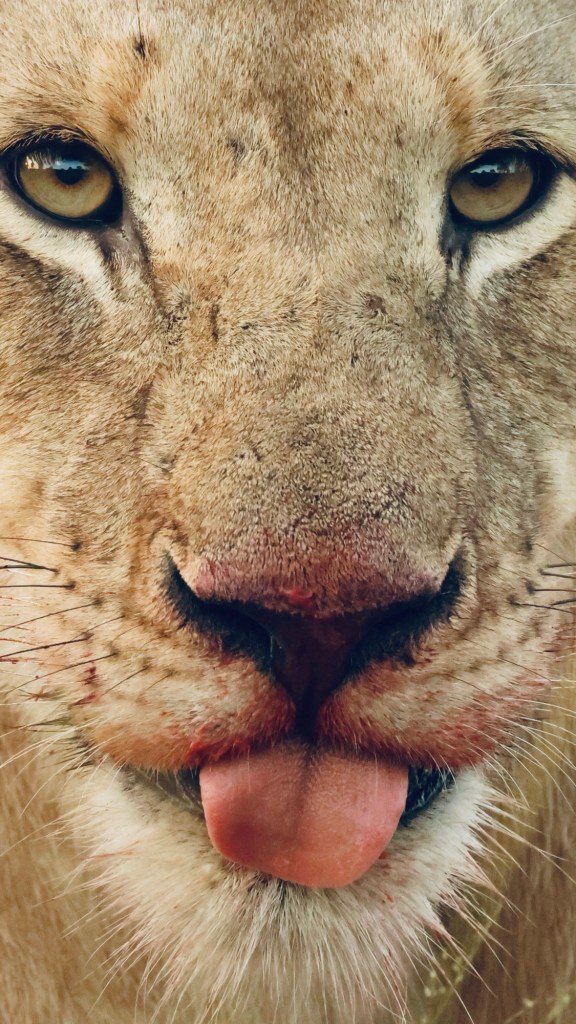
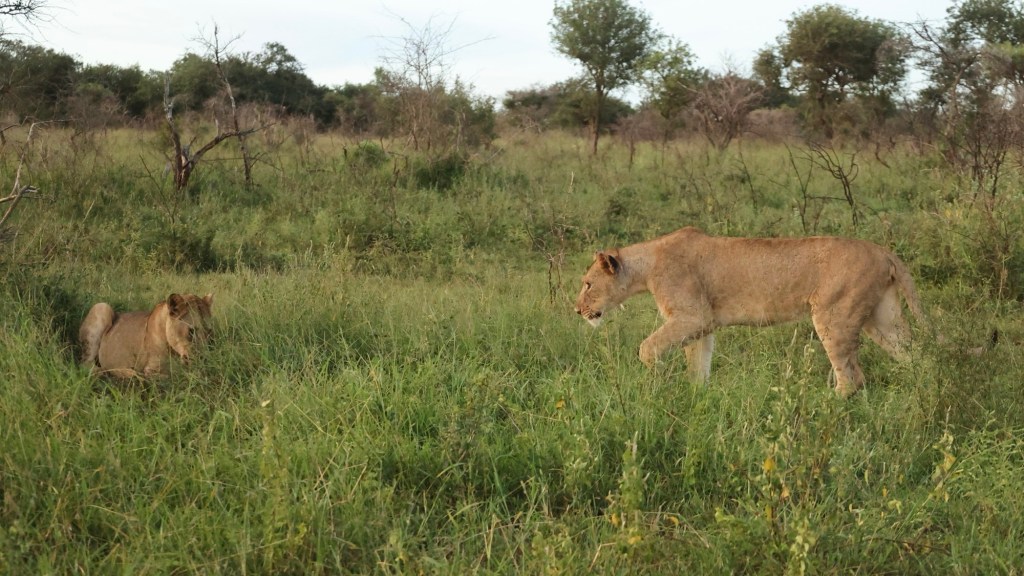
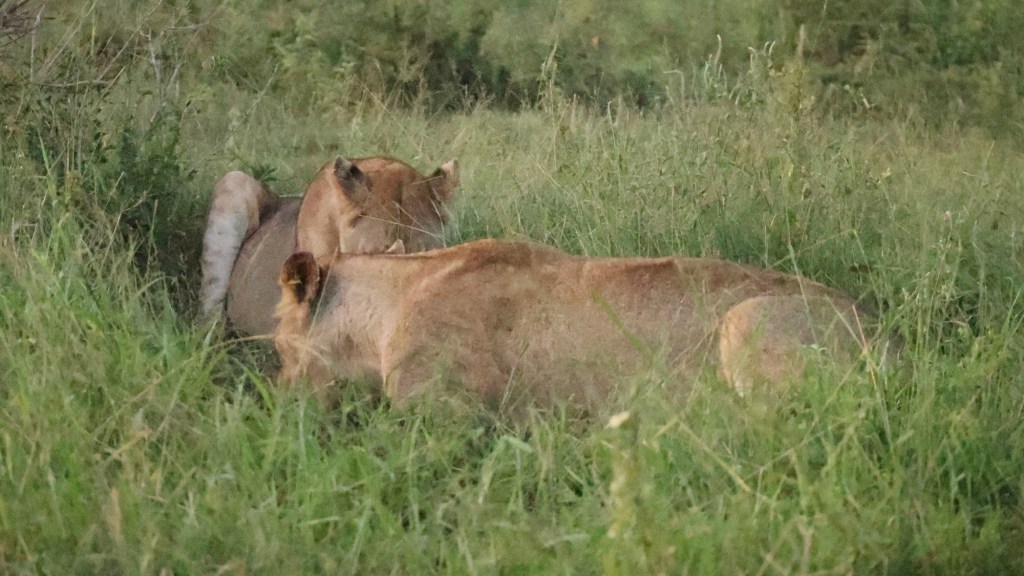
This young female lion caught a small warthog piglet for her dinner.
In a new experience for me, she was left alone by her pride of eight other lions to eat it by herself.
After a short chase, all of them except one gave up and did not follow her. The one that stayed waited respectfully until she was allowed to devour a few leftovers.
I am not sure, but I think this behavior was supported by the fact that all of them all had semi-full stomachs and that it is relatively easy for them to make a kill in the current conditions (long grass, abundant prey animals, and all of them participating in hunts).
In contrast, I have a video from a few years back where eight lions fought violently over one warthog. That is the what they usually do over smaller kills.
I never stop learning about animal behavior!
PS: The very bright red (oxygen-rich) blood on her face indicates that the kill happened ‘just now’.
Technical data: Canon R6 with RF lens f/11 800mm | ISO 20000 | 1/750 sec | EV +0 | WB 6500K | AV Mode | Crop to 25% of the original image
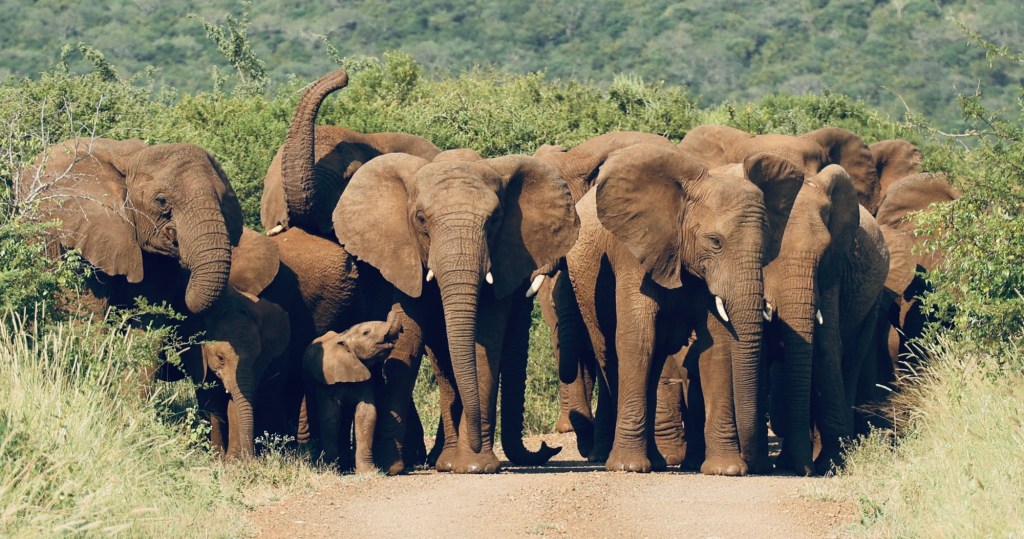
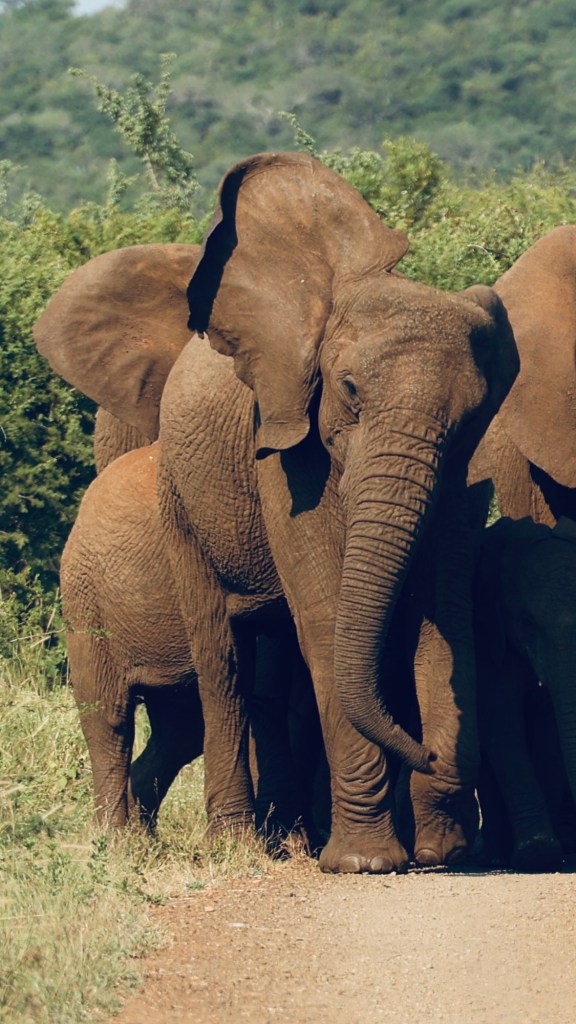
Elephants are amazing parents. In my experience, protecting their young is always their priority.
This picture shows one of the moments when this behavior became obvious. A Thanda Safari herd strolled down an open road at a very fast pace, spread out quite a bit. However, the moment they spotted my vehicle in the distance, they immediately bunched up and placed all their youngsters between them for protection.
Just after I took this picture, I moved out of the way. They then continued their tight formation walk until they disappeared into the surrounding trees.
Another fun fact: When Elephants stop to evaluate a situation they often shake their heads rather violently once they appear to have made up their mind what to do next. I have observed this behavior on many occasions.
Technical data (First): Canon R6 with RF lens f4-6.3/24-240mm | ISO 200 | 1/750sec | f6.3 | ev+0 | 190mm | WB 6500K | AV Mode | Crop to 20% of original image
Technical data (Second): Canon R6 with RF lens f4-6.3/24-240mm | ISO 160 | 1/500sec | f6.3 | ev-0.50 | 190mm | WB 6500K | AV Mode | Crop to 10% of original image
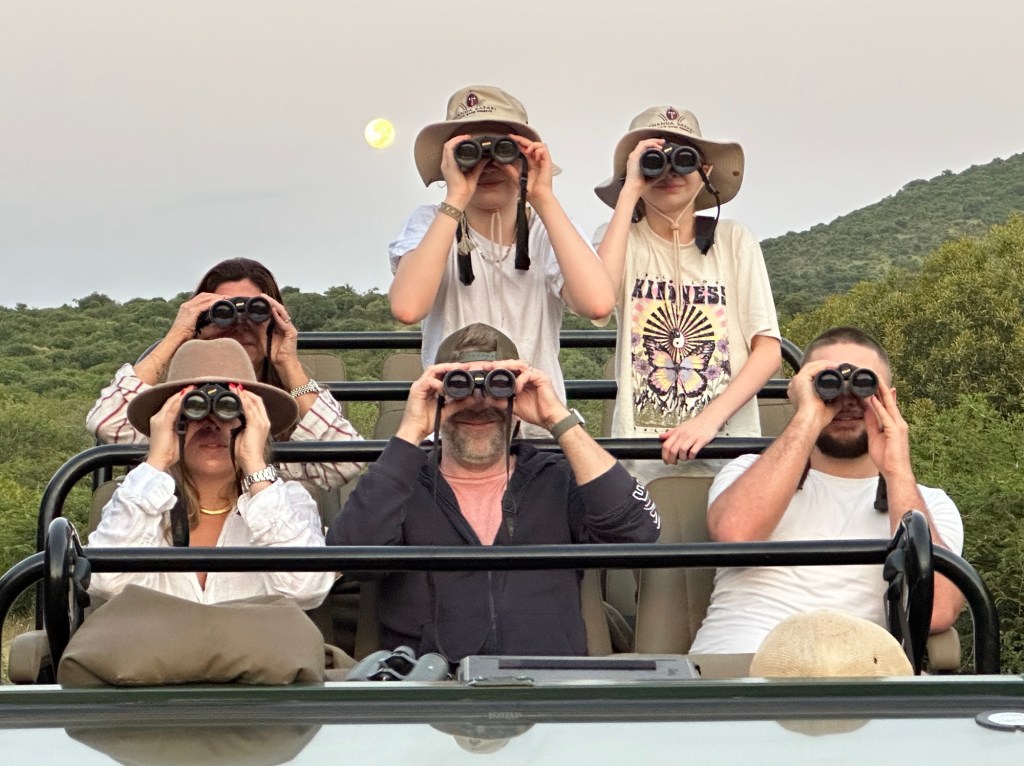
This slide show demonstrates why binoculars are so important on game drives. To enjoy the details shown of many of these subjects, one needs to ‘zoom in’.
In my opinion, binoculars are the most important item to take on safari. And it is key to set them up properly for each person (ocular adjustment).
I recommend not sharing binoculars, but getting a pair for each safari-goer. The reason for this is the same as the reason for not sharing prescription glasses between two people with different eyesight.
If you are interested, here are the instructions to set up your binoculars:
1. Close the right eye and adjust the focus on any object (remember this one) with the center-focus-adjustment-dial.
2. Now, do not touch the center-focus-adjustment-dial.
3. Close your left eye and adjust the focus on the ocular-adjustment-ring (usually located on the right ocular) to the same object as in step 1.
4. Open both eyes and only use the center-focus-adjustment-dial to focus on anything from now on. Both your eyes will show the image in perfect focus!
Ready for a ‘close-up’ safari?
PS: All pictures in this slide show were taken at Thanda Safari in the last seven days!
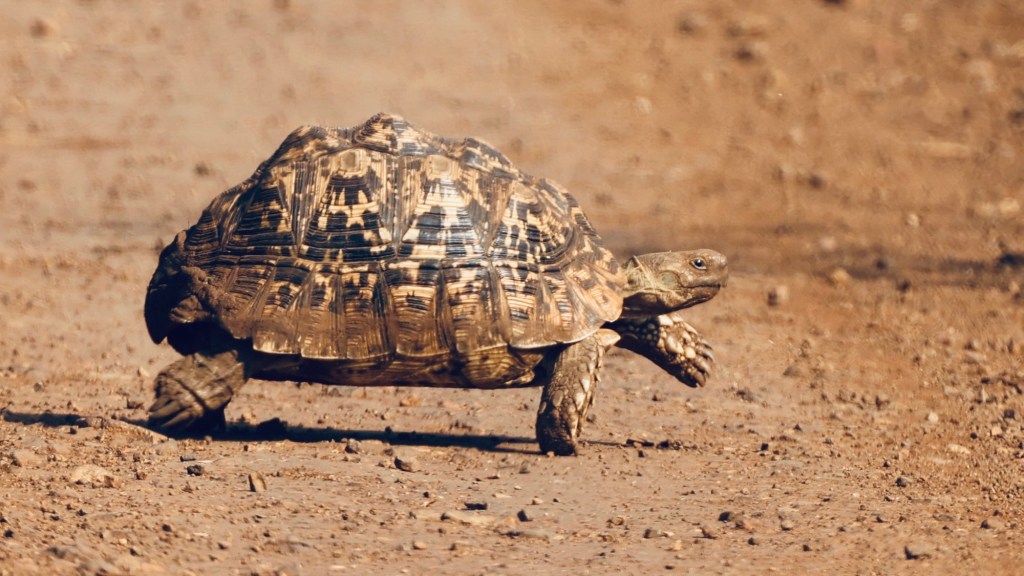
This Leopard Tortoise accelerated to a rather dramatic speed (for a tortoise) when we approached it with our vehicle on one of Thanda Safari’s main roads.
Instead of sitting down and withdrawing into its shell (the common response to approaching danger) this specimen decided to speed up to its maximum velocity.
It was an impressive site and an excellent trait to survive the modern world while crossing a road!
The average speed of a Leopard Tortoise is between 0.2 and 0.5 km/h (0.13 and 0.3 mph). Their maximum speed has been measured at a whopping 1km/h (0.62 mph).
Technical data: Canon R6 with RF lens f11/800mm | ISO 400 | 1/500sec | ev+0 | WB 6500K | AV Mode | Crop to 10% of original image
When I moved from posting wildlife images to posting reels, many of my followers asked me to bring back my picture posts. And I did. I must confess, I really enjoy posting my images accompanied by facts about the ‘models’.
Now, I have also received a few requests to continue posting videos/reels.
So, let’s do both!
Occasionally, I will post short videos/reels when I come across interesting situations to capture.
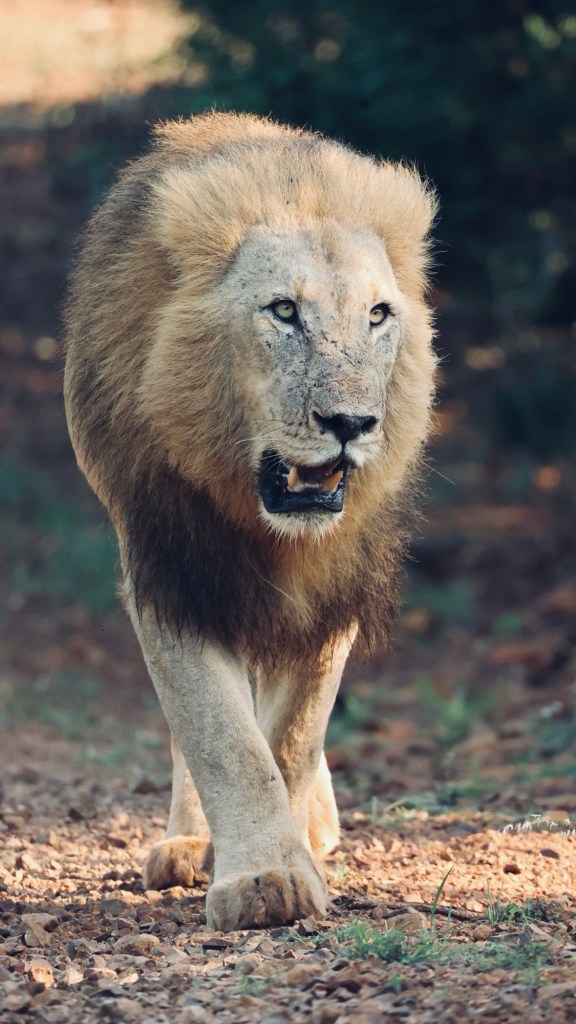
Let’s start today with this morning’s short clip of Thanda’s dominant male lion moving past my vehicle and admiring my camera hand! Switch on the sound!
Technical data video: Apple 14 Pro Max | Main Camera 24mm
Technical data picture: Canon R6 with RF lens f11/800mm | ISO 3200 | 1/500sec | ev+0 | WB 6500K | AV Mode | Crop to 45% of original image





 Christian Sperka Photography | Custom Luxury Tours