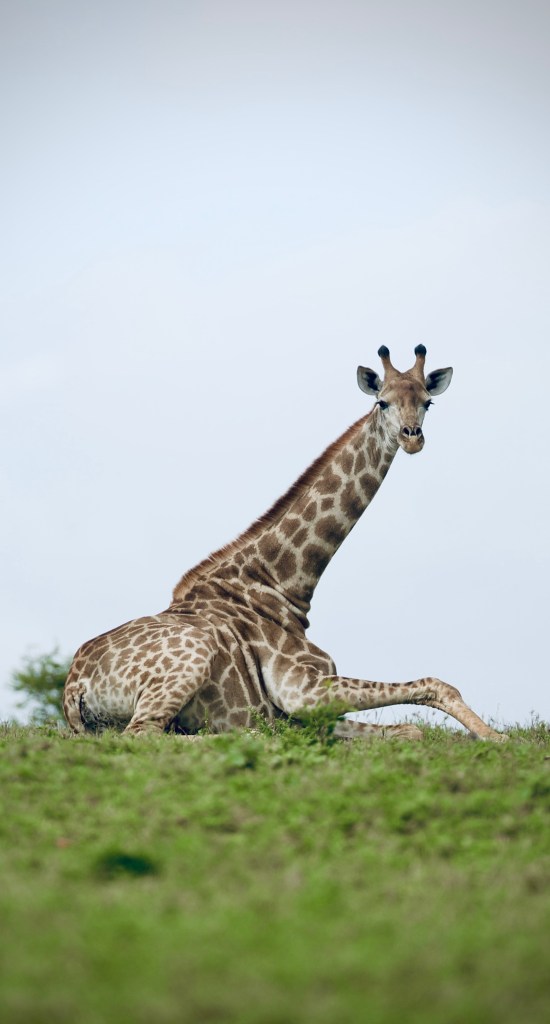
Beauty and the Beast!

This image, taken yesterday at Thanda Safari, depicts the difference between male and female Giraffes very well (apart from the obvious difference in genitals).

Males are considerably larger, are bold on told of their ossicones (often called horns), and have knobbly and rather ugly calluses on their forehead (from fighting with other males).

The females have a beautiful smooth face, long eyelashes, and a tuft of hair on top of their ossicones,

Their ‘courtship procedures’ are rather long-winded. Once the male has identified a female in estrus he will follow her patiently for days. Until the female deems the time right she will move away from him as soon as he tries to make advances. When she thinks she is ready, she will start circling him and rub her neck on his flanks until he is willing to mount her.

Technical data: Canon R6 with EF lens f4.0/500mm | ISO 100 | 1/1000sec | f4 | ev+/-0 | 500mm | WB 6500K | AV Mode | Crop to 70% of original image | bean bag shot

#amazingwildlife #africansafari #safarigetaway #christiansperkaphotography #thandasafari #big5 #gamereserve #wildlifephotography #learnphotography
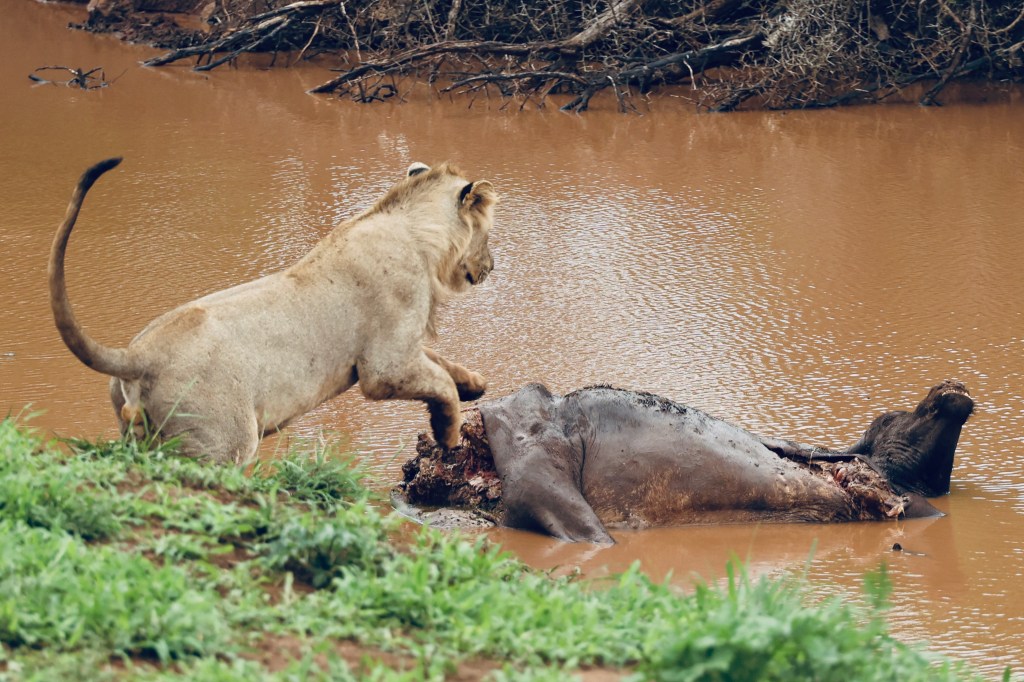
Sleeping Beauty!

Disney’s cartoon character slept 24 hours a days. Our Lions manage almost as much. If they have a full belly from a good meal they can easily sleep up to 20 hours per day.

Like most carnivores (meat eaters) they are able to ingest huge amounts of meat very quickly. A male Lion can eat around 40kg (~90lbs) of meat from one kill. With such a full stomach they rest and only get up to drink lots of water and urinate/dedicate as needed.

But one should not be fooled. Their sleep is not deep and if anything disturbs them they are up in seconds, ready to defend themselves, run away, or kill a prey animal if it ventures too close to them.

This picture shows a young Thanda Safari male Lion resting on a recently burned area with the new grass sprouting after the recent rains.

Technical data: Canon R6 with EF lens f2.8/70-200mm | ISO 800 | 1/500sec | f2.8 | ev+0 | 150mm | WB 6500K | AV Mode | Crop to 80% of original image | hand-held on eye level

#amazingwildlife #africansafari #safarigetaway #christiansperkaphotography #thandasafari #big5 #gamereserve #wildlifephotography #learnphotography

Common, but very beautiful!

Butterflies are some of the most difficult creatures to photograph from a game drive vehicle. Constantly on the move, they are very hard to capture with a camera.

I love this image of a Citrus Swallowtail (or Christmas Butterfly | Scientific name: _

Papilio demodocus_) which I was able to take a few days ago.

Three times per year they go through four development stages (metamorphosis) from egg, to larva (or caterpillar), to pupa (or chrysalis) before they turn into this very beautiful butterfly (adult form). The adult female lives normally just under seven days, the males just under four days.

Technical data: Canon R6 with EF lens f2.8/300mm | ISO 200 | 1/2000sec | f2.8 | ev-0.5 | 300mm | WB 6500K | AV Mode | Crop to 20% of original image

#amazingwildlife #africansafari #safarigetaway #christiansperkaphotography #thandasafari #big5 #gamereserve #wildlifephotography #learnphotography

Sisyphus!

Often, as I am watching a Dung Beetle trying to roll its ball up a steep bank, I am reminded of the story of Sisyphus, a character in Greek mythology whose eternal task it was to roll a large ball up a hill – almost to the top – from where it rolled down again and Sisyphus had to do his task all over again.

These incredibly strong beetles can roll many times their own body weight. When doing so they actually walk backwards. The ball is food store and breeding chamber at the same time. It gets buried in soft soil and the female beetle lays her egg in the ball. Once the off-spring hatches it feeds on the dung before emerging into the light as one of the next generation of Dung Beetles.

Technical data: Canon R6 with EF lens f2.8/70-200mm | ISO 1600 | 1/2000sec | f2.8 | ev+0.5 | 150mm | WB 6500K | AV Mode | Crop to 70% of original image | hand-held

#amazingwildlife #africansafari #safarigetaway #christiansperkaphotography #thandasafari #big5 #gamereserve #wildlifephotography #learnphotography

Just browsing!

Greater Kudu are the largest antelope on Thanda Safari. A average adult male weighs around 250kg (~550lbs). They are predominantly browsers, which means they eat mainly tree material.

Kudu are rather shy and tend to run away as soon as one stops the safari vehicle in their vicinity. That is why I like to observe them from a large distance, which means that I am remaining in their comfort zone, not disrupting their natural behavior.

Kudu are are a spiral horned antelope and have two closely related ‘cousins’ in our area. Nyala and Bushbuck are much smaller, but are often found in the same habitat as Kudu and they are also mainly browsers.

Technical data: Canon R6 with EF lens f4.0/500mm | ISO 400 | 1/500sec | f4 | ev+0.5 | 500mm | WB 6500K | AV Mode | Crop to 50% of original image

#amazingwildlife #africansafari #safarigetaway #christiansperkaphotography #thandasafari #big5 #gamereserve #wildlifephotography #learnphotography

Wanna play?

Baby Rhinos are very playful little creatures. It is a joy to watch them running up and down while their mums are steadily feeding on plant material (Grass for White Rhinos and tree material for Black Rhinos).

And if the mother is relaxed about game drive vehicles then her offspring has usually no problem being close to the car either. This little boy was a real poser in the low afternoon sun. This is my favorite picture taken during last night’s drive!

Technical data: Canon R6 with EF lens f2.8/70-200mm | ISO 200 | 1/500sec | f2.8 | ev+0 .5| 200mm | WB 6500K | AV Mode | Crop to 90% of original image

#amazingwildlife #africansafari #safarigetaway #christiansperkaphotography #thandasafari #big5 #gamereserve #wildlifephotography #learnphotography
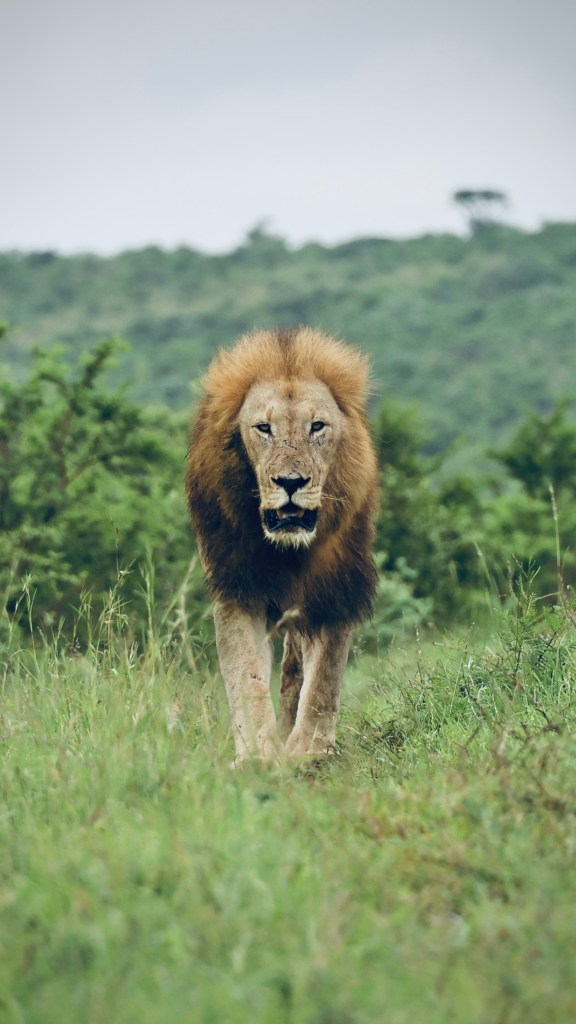
Let’s reproduce!

… is the motto for Termites when the conditions are right. Just after the first rains, when the humidity and temperature are just so, Termite colonies send out flying alates (or winged Termites) to reproduce and set up new colonies.

Termites live in cast societies where most of the members are non-reproductive (sex-less) workers or warriors. But from time to time the queen’s off-spring are born as large, winged males and females (future kings and queens). They swarm from their termite hill assisted by the workers and fly out to find a mate from another colony. When two such ‘termite lovers’ meet they loose their wings and become sexually active.

Then the females back body segment (termites have two segments) swells up into a large ‘egg-laying-machine’ and a new colony has its queen!

In this picture you can see three flying alates and hundreds of worker termites on a swarming day.

_ Technical data: Canon R6 with EF lens f2.8/300mm | ISO 100 | 1/750sec | f2.8 | ev-0.5 | 300mm | WB 6500K | AV Mode | Crop to 40% of original image_

#amazingwildlife #africansafari #safarigetaway #christiansperkaphotography #thandasafari #big5 #gamereserve #wildlifephotography #learnphotography

On the money!

Did you know that the Big Five feature on the recently re-designed South African Rand banknotes?

White Rhinos or Imikhombe (in isiZulu) decorate the green R10 bill, African Elephants or Izindlovu the brown R20 bill, African Lions or Amabhubesi the red R50 bill, Cape Buffalos or Izinyathi the blue R100 bill, and Leopards or Izingwe the orange R200 bill.

But if you are a ‘Big Five purist’ then the creators of the new money made a slight mistake. White Rhinos, strictly speaking, are not part of the Big Five. It is the Black Rhinos (as in my collage) that should be on the Ten Rand note.

The term Big Five is an old hunting term, which defined the five most dangerous creatures in the African wilderness (to hunt on foot). The Black Rhinos (=Hooked-lipped Rhinoceros) and not the White Rhinos (=Square-lipped Rhinoceros) are part of that exclusive club!

But nowadays the Big Five are very important for African tourism marketing and all Rhinos (white or black) are now included!

… and all of them live around my home at Thanda Safari.

#amazingwildlife #africansafari #safarigetaway #christiansperkaphotography #thandasafari #big5 #gamereserve #wildlifephotography #learnphotography
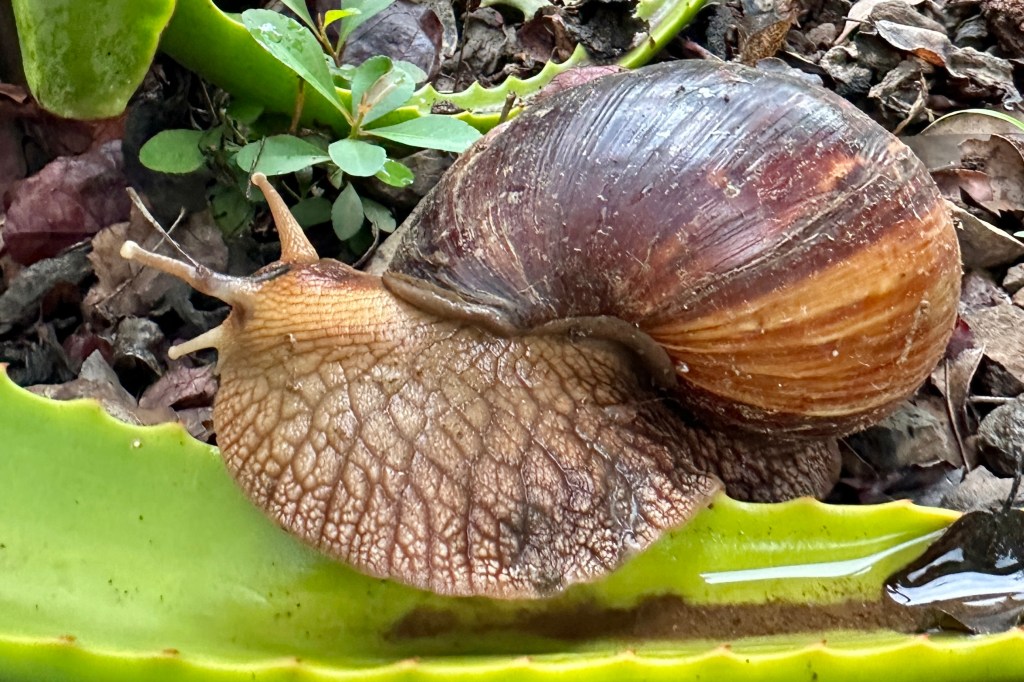
Dugga Boy…

… is the term for a Cape Buffalo bull who is no longer with its herd. Such bulls life either in small groups or alone.

The separation from their herd can have one of two reasons. They might be very old and no longer able to keep up with the herd and/or no longer willing to fight the younger bulls for position.

Or they might just be taking a time-out from rank fighting and looking after the ladies. In that case they will stay away for a while, improve their condition by feeding well and getting strong to return back to their herd in due course. This picture shows such a Dugga Boy!

Technical data: Canon R6 with RF lens f4-6.3/24-240mm

#amazingwildlife #africansafari #safarigetaway #christiansperkaphotography #thandasafari #big5 #gamereserve #wildlifephotography #learnphotography
Black backdrop!

Rock Monitors (or Rock Leguaan / Uxamu in isiZulu / Veldlikkewaan in Afrikaans) are very shy creatures who most of the time disappear into high grass or bushes as soon as one gets close enough to take a good pictures.

But the recent management fires helped with this ‘photo shoot’. The large lizard was walking along the road when I approached with my game viewer. It immediately tried to disappeared into the ‘grass’. As the area had been recently burned, there was no new grass yet.

The Rock Monitor stopped a few times on the black soil to glance back at me, providing me with the opportunity to get this picture.

Technical data: Canon R6 with EF lens f4.0/500mm | ISO 400 | 1/500sec | f4 | ev+/-0 | 500mm | WB 6500K | AV Mode | Crop to 25% of original image | hand-held

#amazingwildlife #africansafari #safarigetaway #christiansperkaphotography #thandasafari #big5 #gamereserve #wildlifephotography #learnphotography