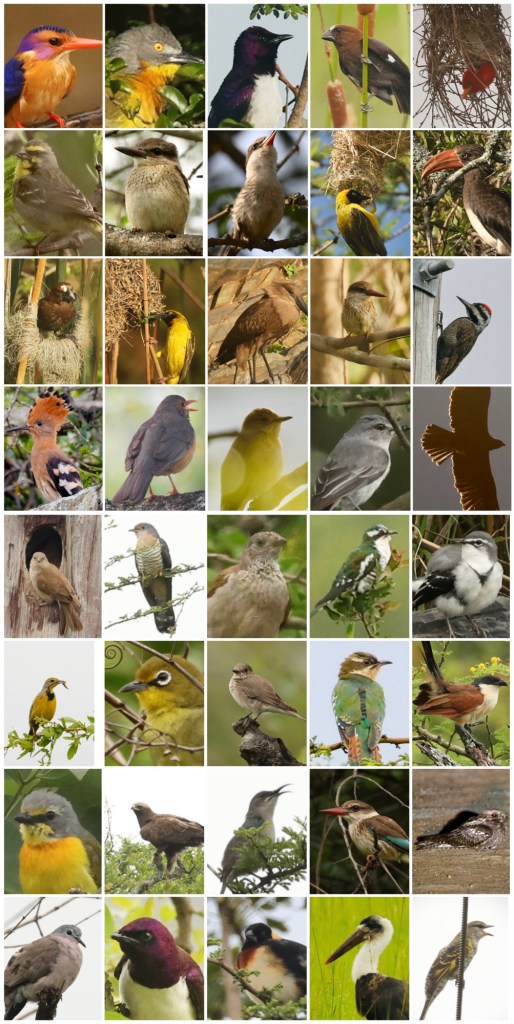
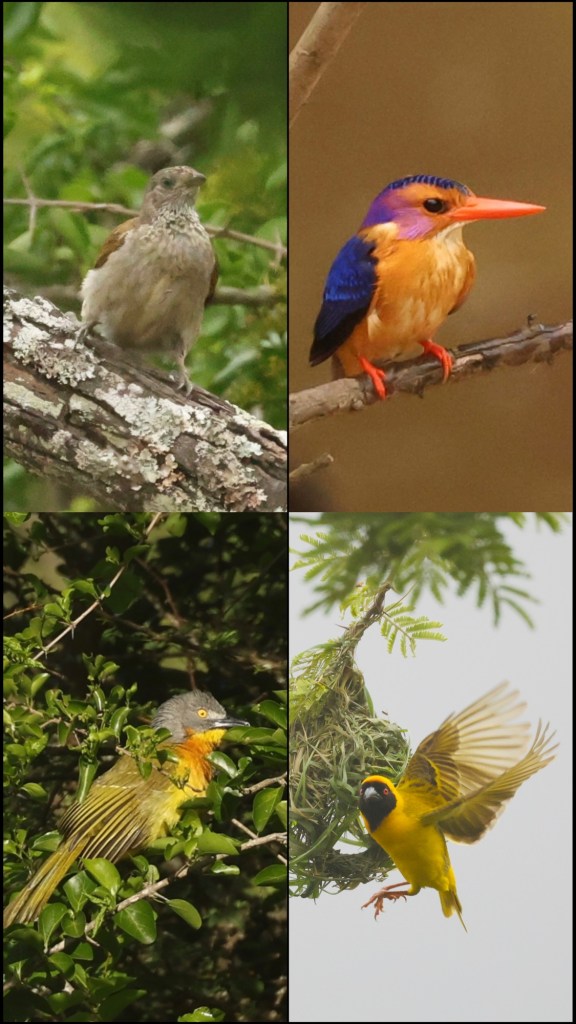
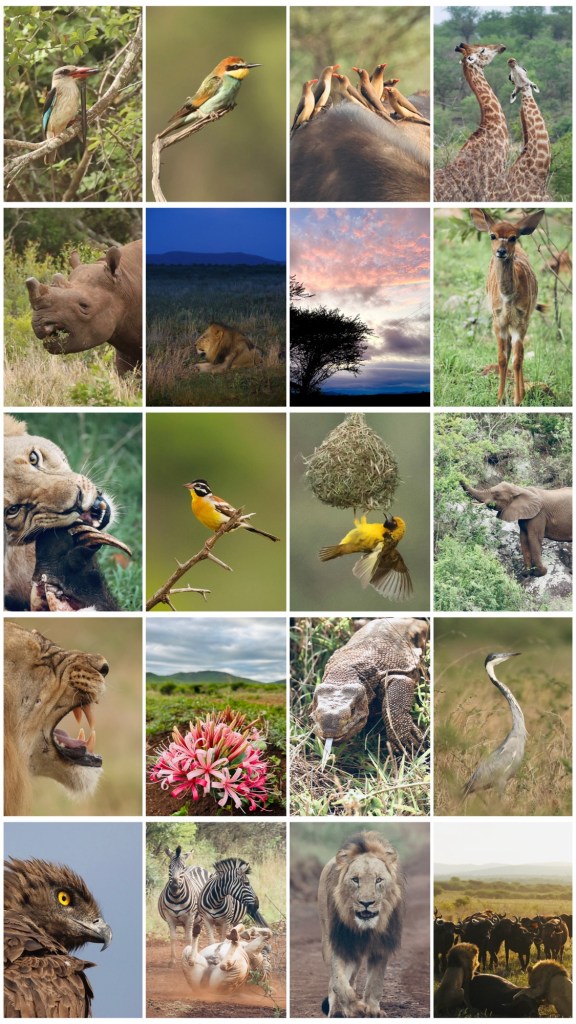
This is a slide show with a few of the pictures from our recent Birding Weekend at Pakamisa Private Game Reserve. We spotted more than 100 species of birds. Chamu, Pakamisa’s excellent birding guide, and myself enjoyed hosting the event.
Here are the dates for the next two three-nights-stay-birding-weekends at Pakamisa:
13 to 16 February 2026
27 to 30 November 2026
If you are interested you can contact Pakamisa directly at res@pakamisa.co.za / +27832291811.
Looking forward to seeing some of you at one of the next birding weekends 🐦
We had a great birding weekend at Pakamisa (www.pakamisa.com) with six birding game drives and two photography lessons. I enjoyed co-hosting this special event and am already looking forward to the next one!
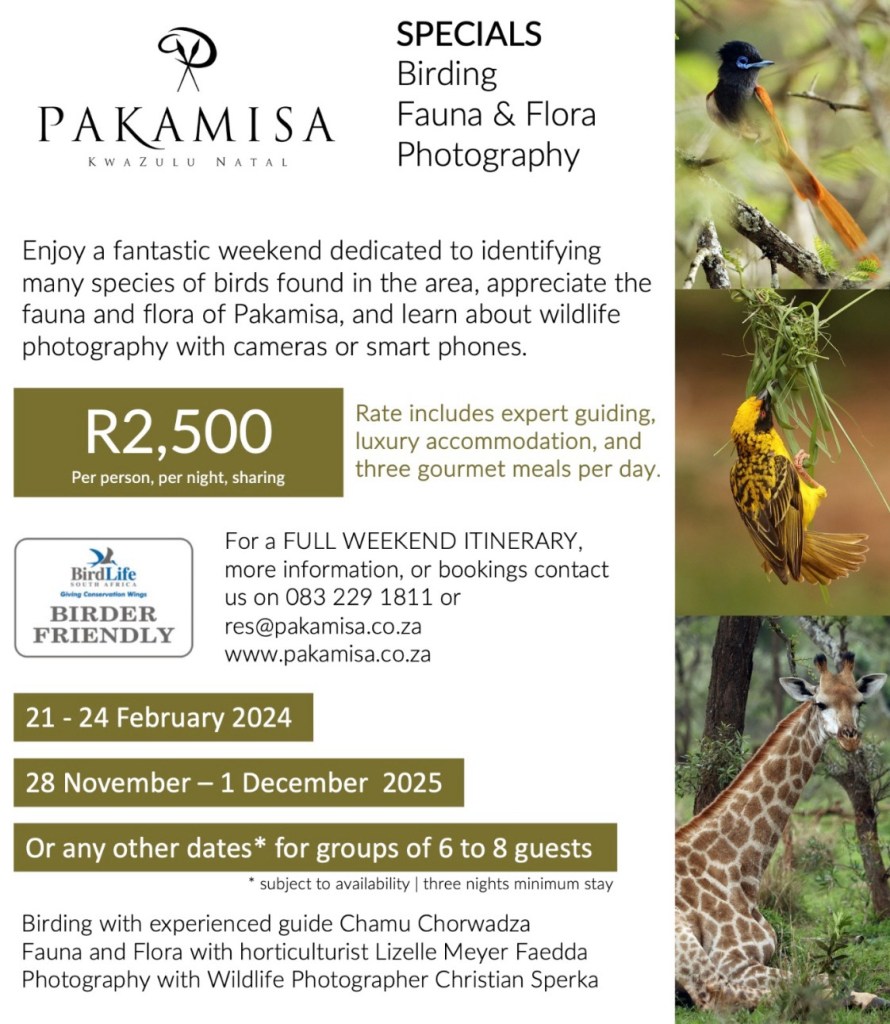
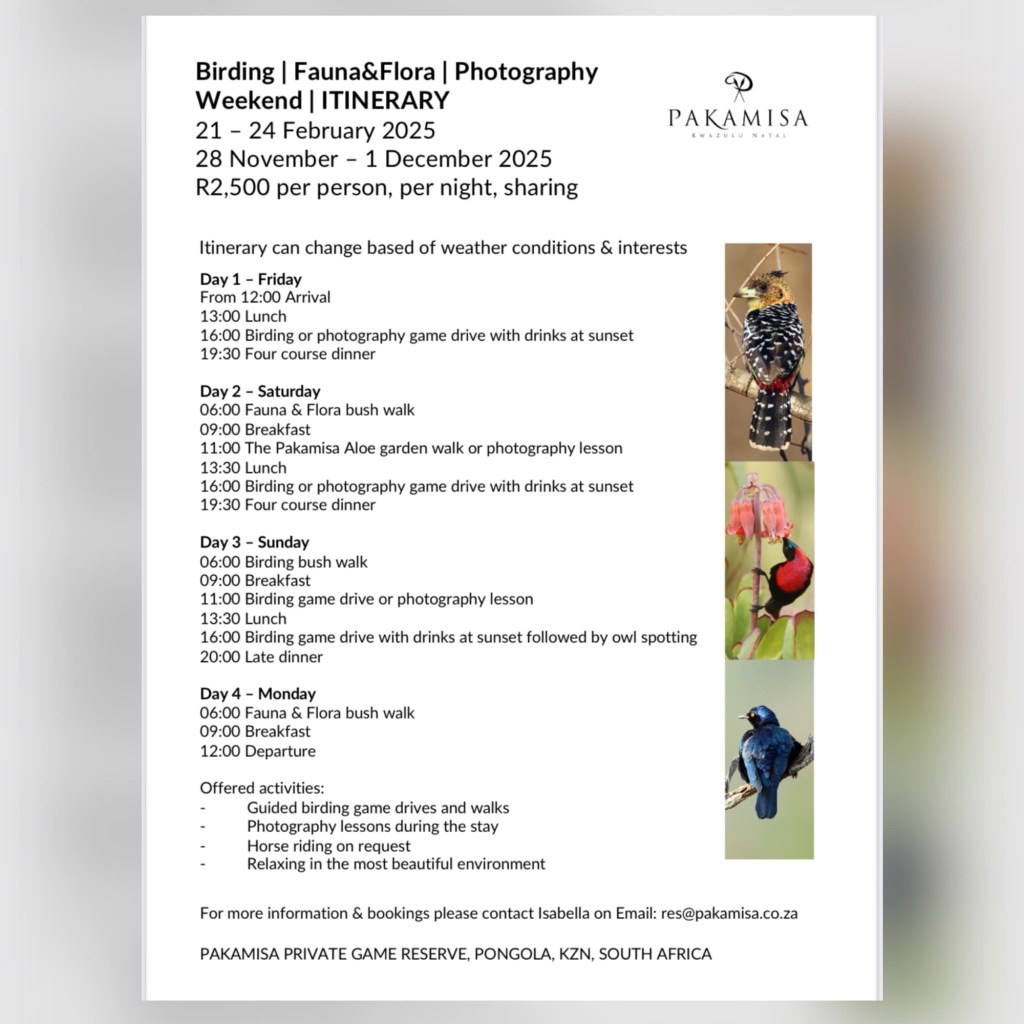
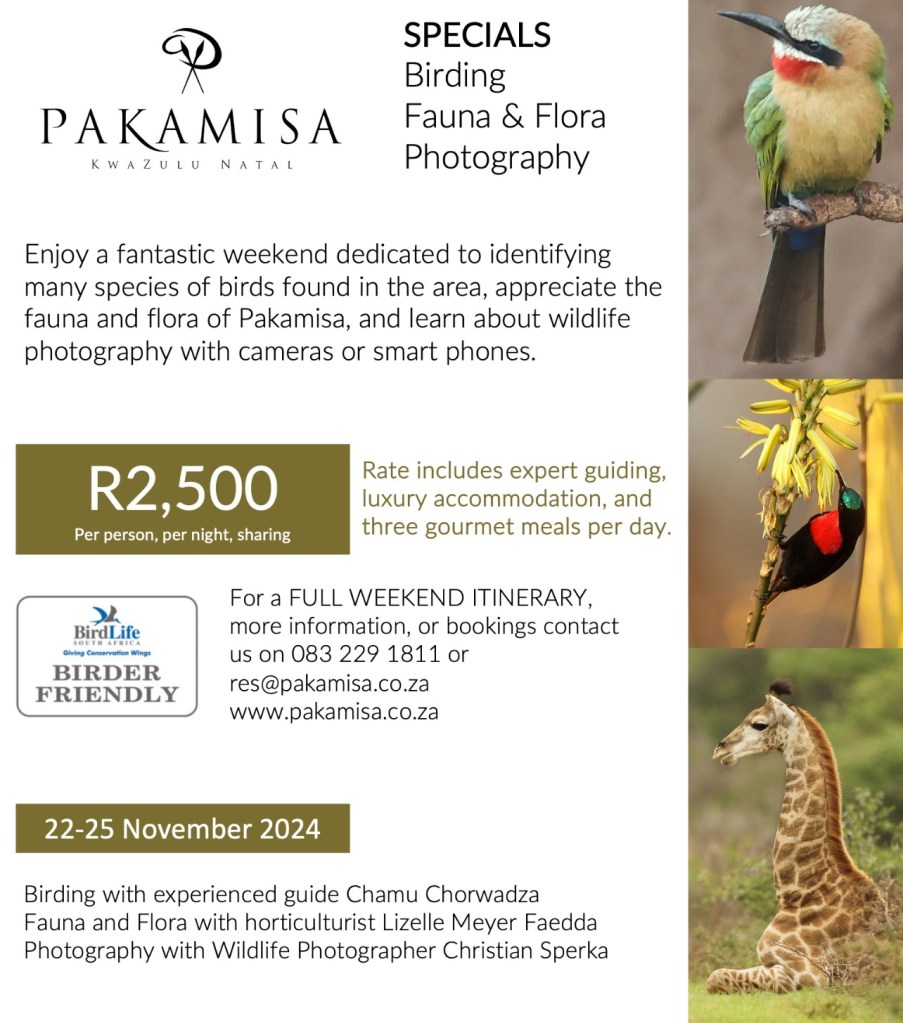
These are the dates for the two Pakamisa Birding Weekends in 2025. These weekends are great getaways for birders.
Feel free to contact me or Pakamisa reservations if you have any questions or if you would like to make a booking.
And in case you have a group of 6 to 8 birders we can arrange for a special weekend any time during the year (subject to availability and for a minimum stay of 3 nights).
Today, I am departing for a brief excursion into the Drakensberg Mountains. I plan to explore some new locations and attend two concerts featuring the renowned Drakensberg Boys Choir.
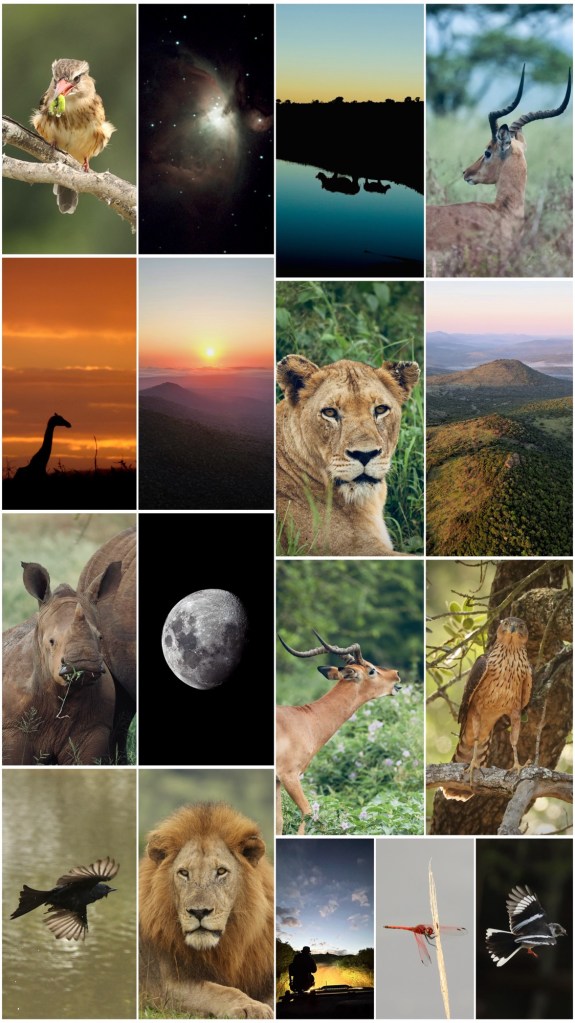
Before my departure, I thought I share a short slide show with some of my favorite photographs captured at Thanda and Pakamisa over the past three weeks.
I hope you will like the combination of wildlife, scenery, and night skies.
If you want to read more of my stories and see more of my pictures, you should visit my blog at https://sperka.info/blog/
I primarily use my longest lenses (500mm and 800mm) for bird photography. When mounted on my full-frame sensor cameras, these lenses provide the equivalent magnification of 10x and 16x binoculars.
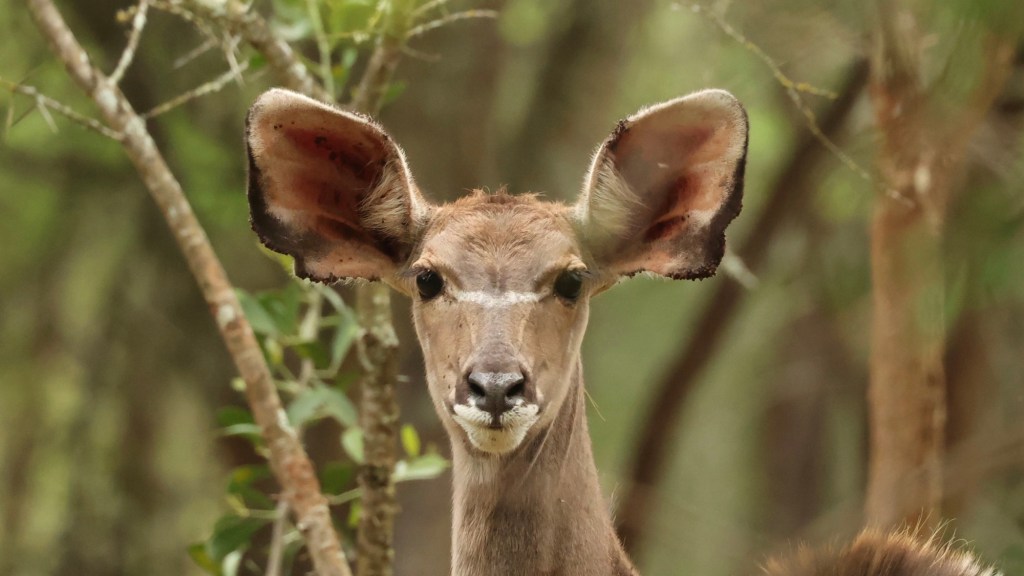
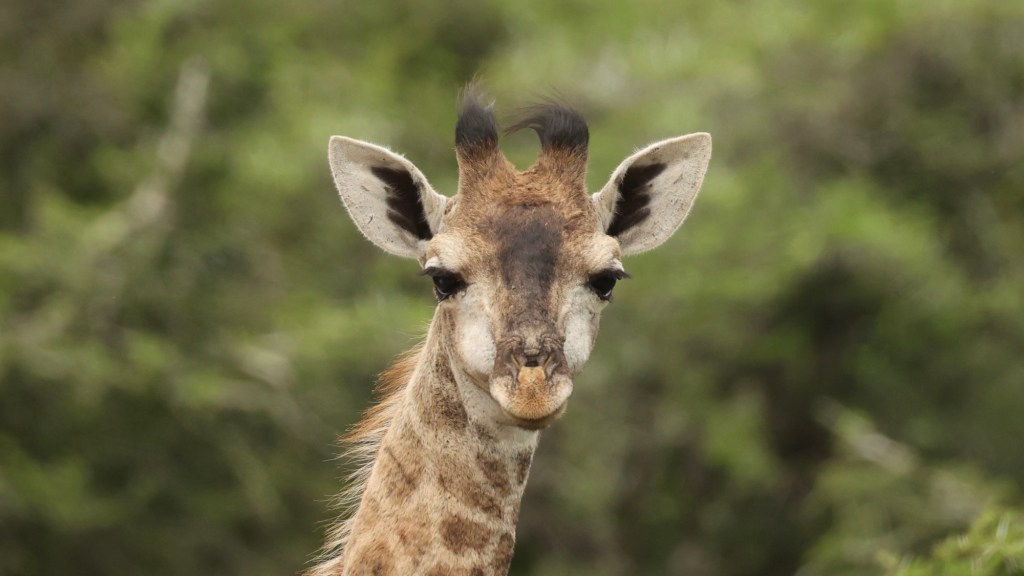
However, these lenses are also invaluable for capturing ‘long-distance portraits’ of mammals. Today’s picture collage showcases a few examples taken this past weekend at Pakamisa Private Game Reserve. The combination of a shallow depth of field and direct eye contact with the camera lens results in highly appealing portraits.
I also employ these long lenses when I wish to observe and photograph animals from their ‘comfort zone’. This approach ensures that my presence does not influence their behavior.
Consequently, a large number of my wildlife images are captured using these very long lenses.
If you want to read more of my stories and see more of my pictures, you should visit my blog at https://sperka.info/blog/
Many antelope species in various sizes can be found at my two favorite places in KwaZulu Natal, Thanda and Pakamisa. From the small and very cute Sunis (35cm – 15” shoulder height) to the large and impressive Kudus (155cm – 61” shoulder height).
For all the small antelopes, the males are called bucks and the females are called ewes, and for the large ones, they are called bulls and cows.
Today’s picture shows an Nyala male in high grass (_image taken yesterday at Pakamisa_). It is interesting to note that this is the only antelope species where the males are called bulls and the females are called ewes. This may be because sexual dimorphism (difference between male and female) is more distinct in Nyalas than in any other antelope species.
Here is the list of antelope species found on Thanda Safari and Pakamisa Private Game Reserve in order of their size:
THE SMALL ONES
*Bucks/Ewes*
⁃ Suni (35cm ~ 14”)
⁃ Natal Red Duicker (48cm ~ 19”)
⁃ Steenbok (50cm ~ 20”)
⁃ Klipspringer (60cm ~ 24”)
⁃ Grey Duicker (68cm ~ 27”)
THE LARGE ONES
*Bucks/Ewes*
⁃ Mountain Reedbuck (84cm ~ 33”)
⁃ Common Reedbuck (90cm ~ 35”)
⁃ Impala (90cm ~ 35”)
*Bull/Ewe*
⁃ Nyala (120cm ~ 47”)
*Bull/Cow*
⁃ Waterbuck (130cm ~ 51”)
⁃ Blue Wildebeest (150cm ~ 59”)
⁃ Kudu (155cm – 61”)
()= max shoulder heights (ref. Stuarts’ Field Guide to Southern Africa)
Technical data: Canon R6 with RF lens f11/800mm | ISO 25600 | 1/500sec | ev+0 | WB 6500K | AV Mode | Crop to 35% of original image







 Christian Sperka Photography | Custom Luxury Tours