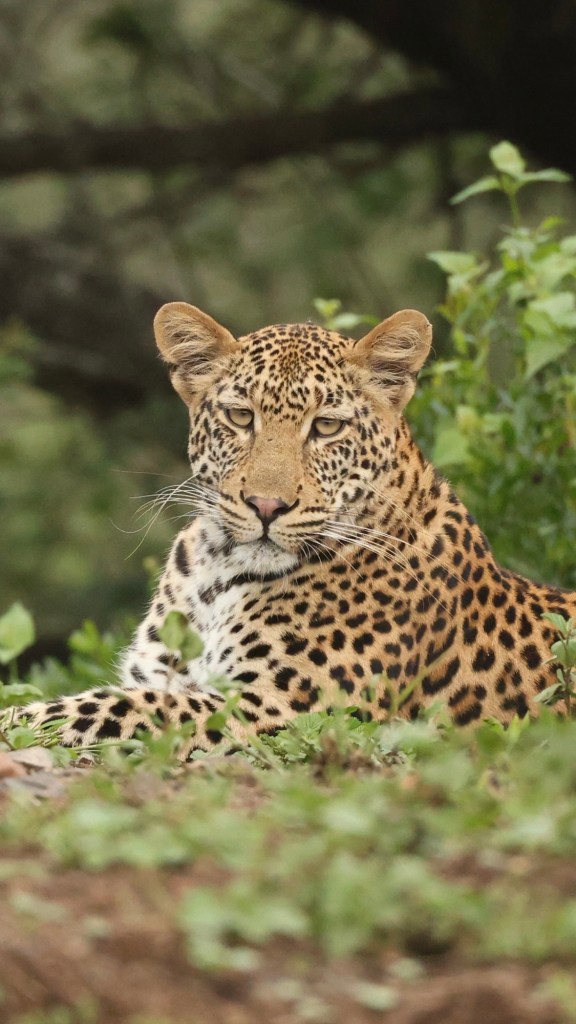
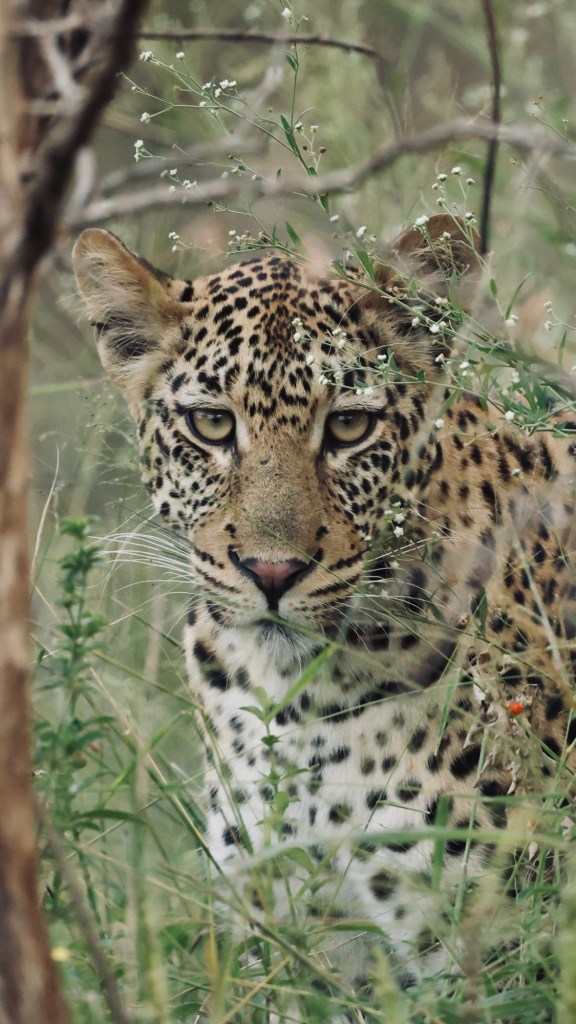
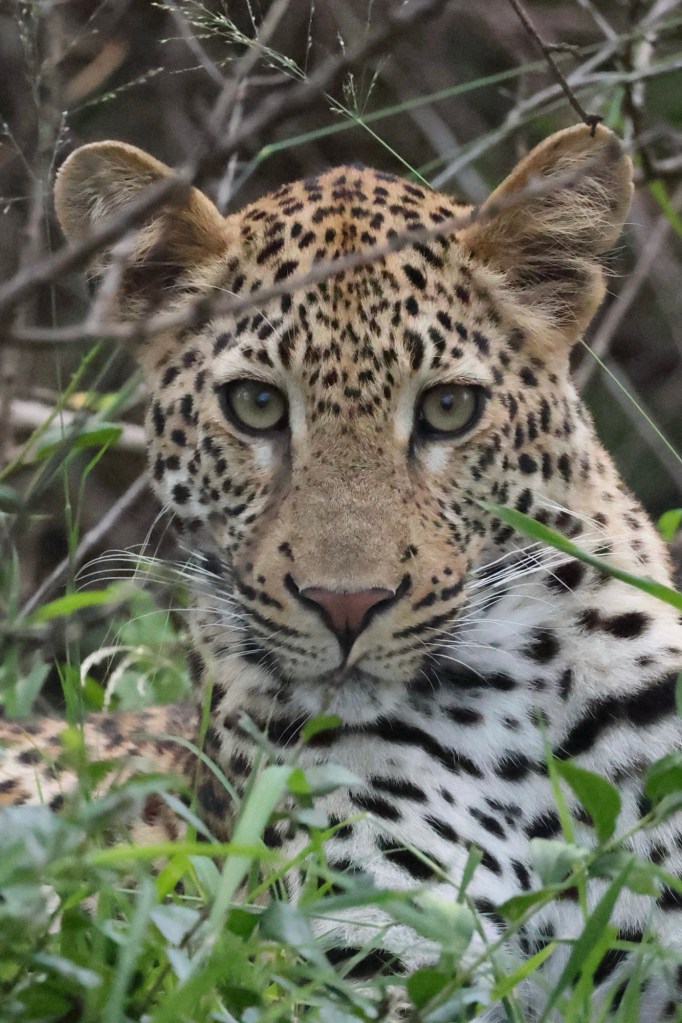
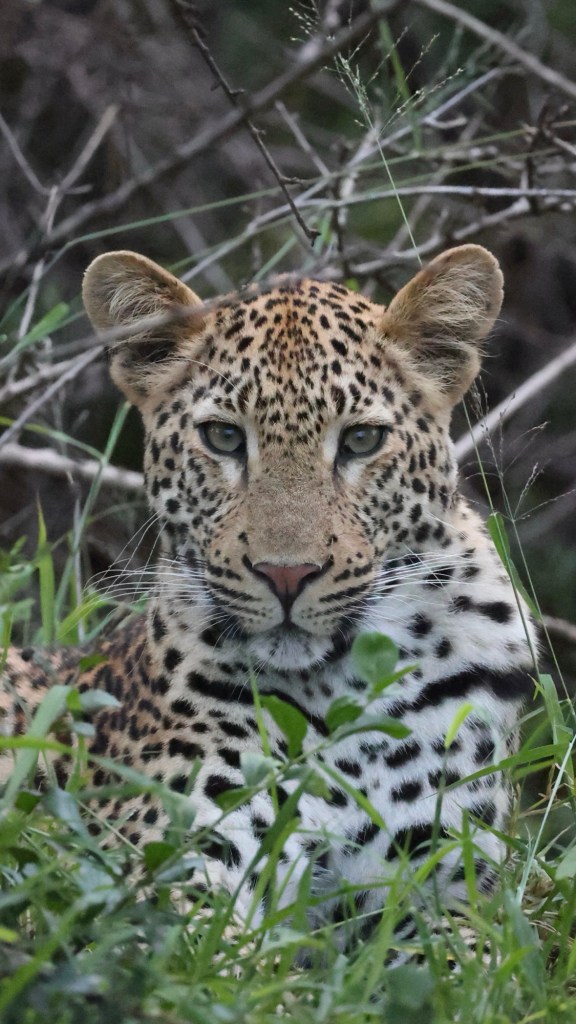
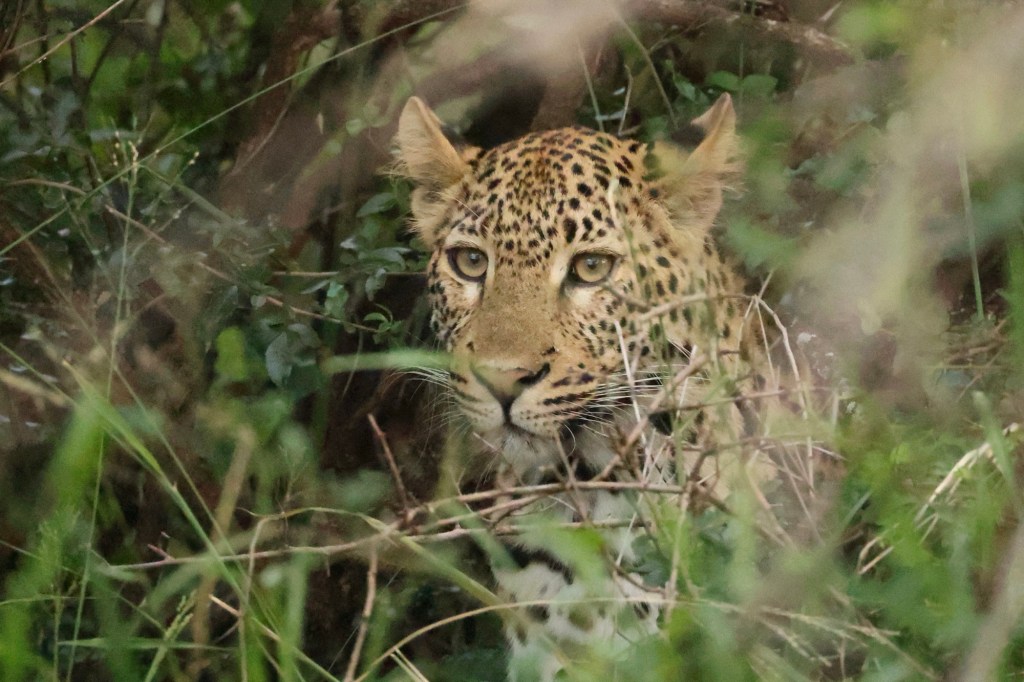
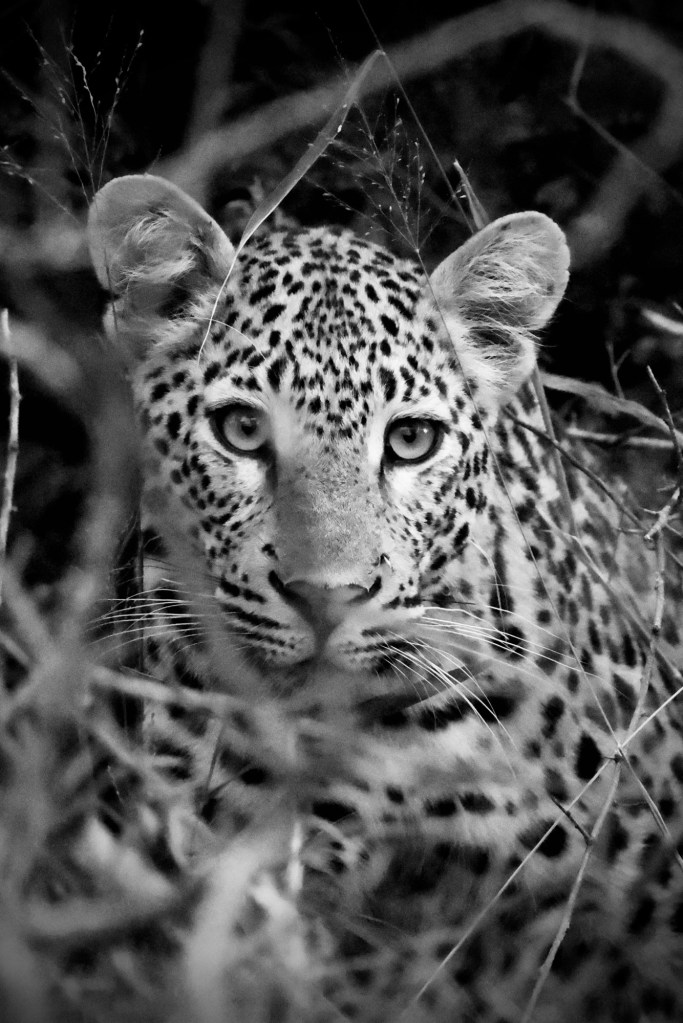
Topic: After over six month of ‘no decent Leopard pictures’, this evening I was able to get this beautiful shot of a young Thanda Safari Leopard. Oh happy day!
Technical data: Canon R6 MII with RF lens f11/800mm | ISO 51200 | 1/250sec | ev+0 | WB 6500K | AV Mode
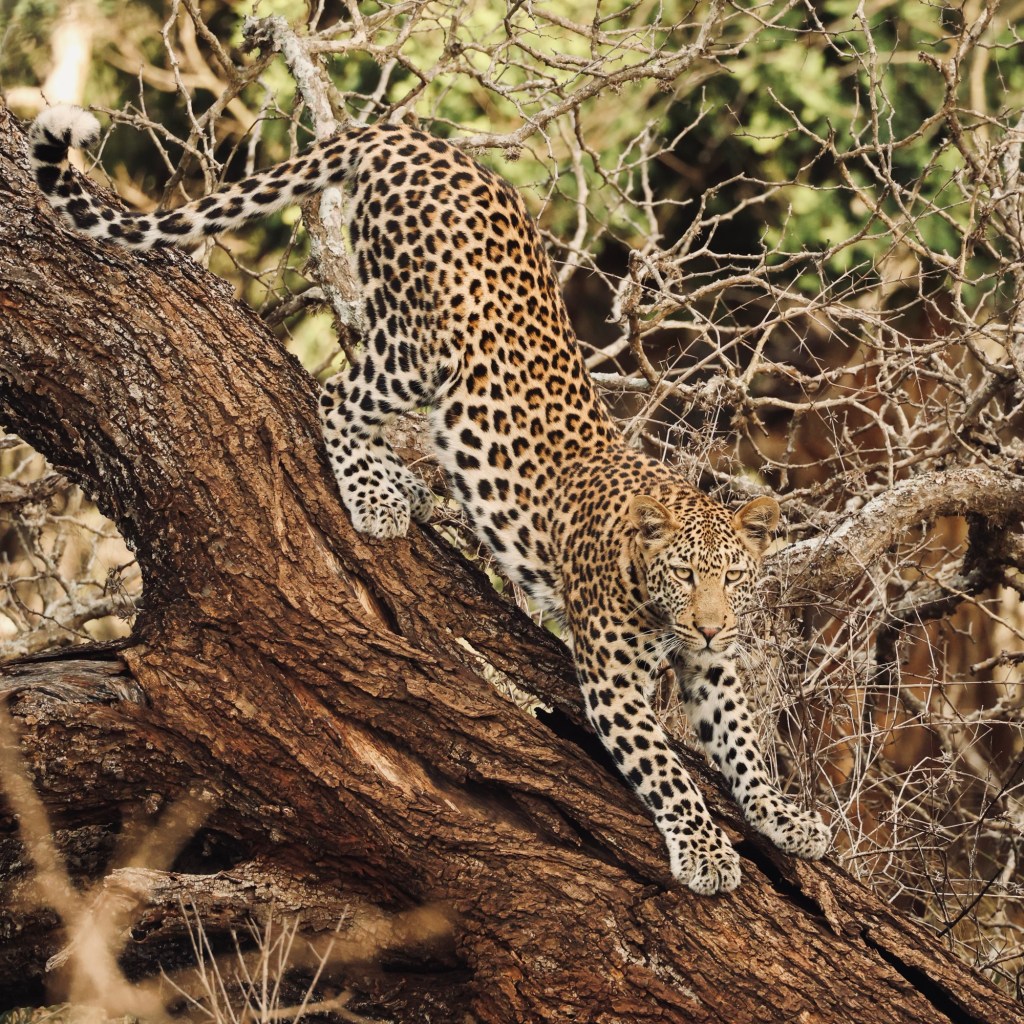
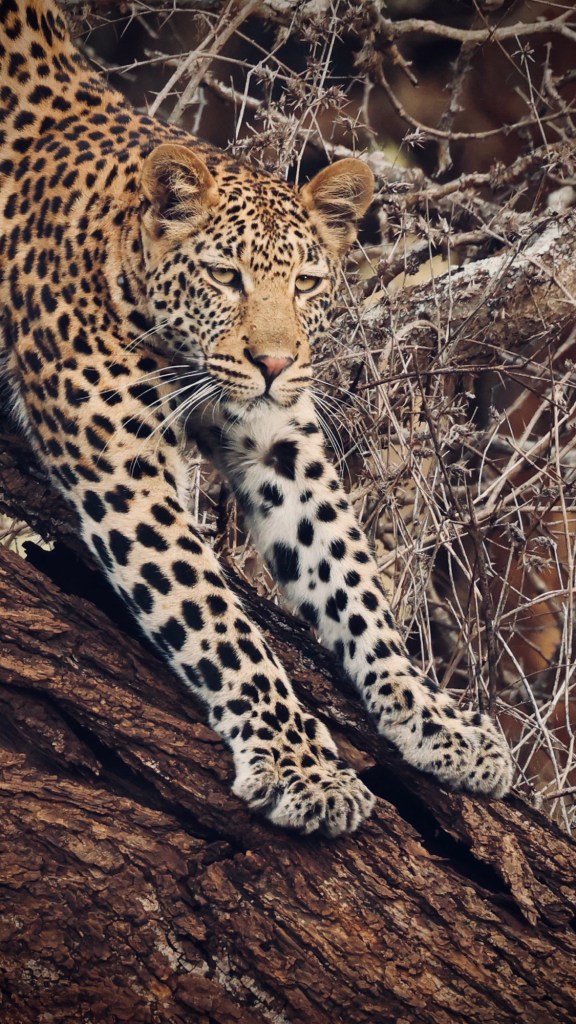
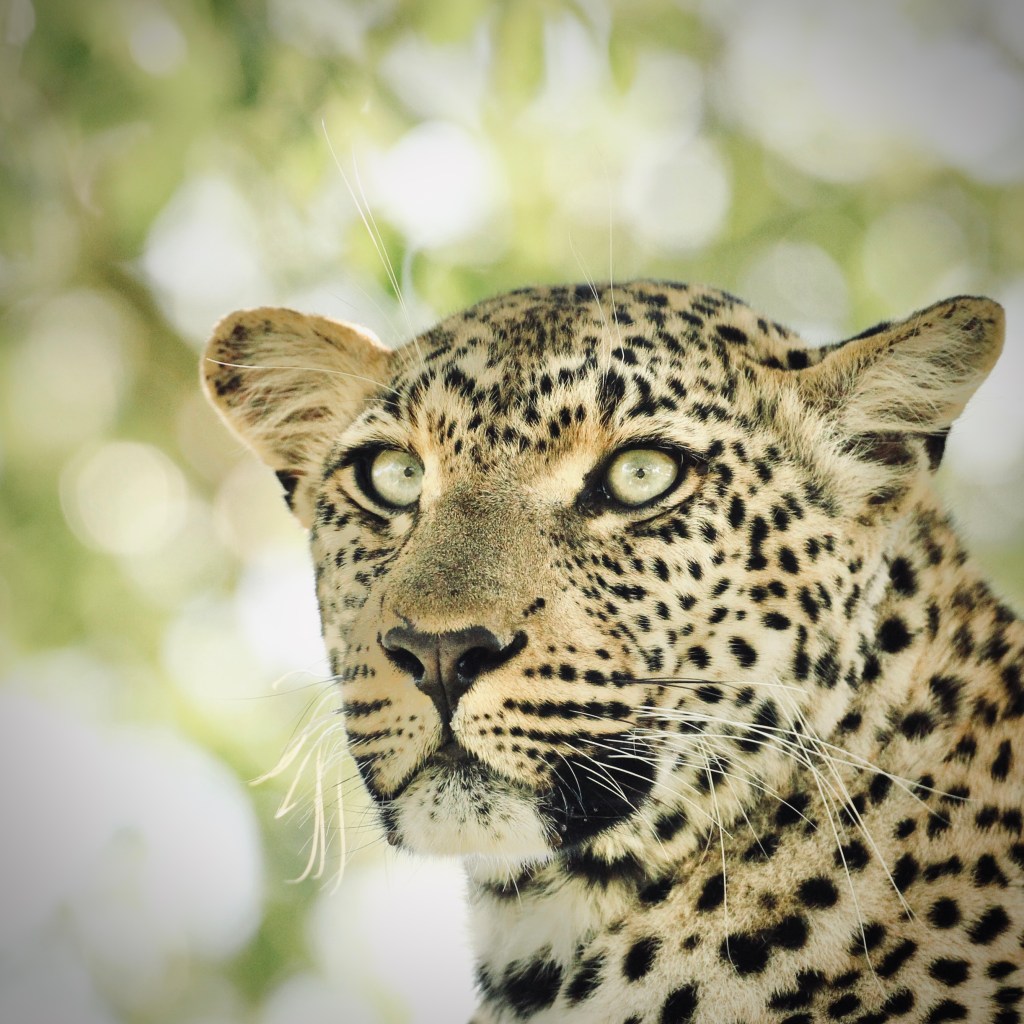
It does not happen often that we see a Leopard kill in a tree at Thanda Safari. So it was a very pleasant surprise to be able to get a glimpse (and a picture) of this beautiful cat feeding on an Impala carcass. A Hyena was on standby at the bottom of the tree for some drop-offs.
Using the light from the spotlights of my tracker Bheki I was able to capture this image in very low light. This was the only useable picture documenting the encounter.
Technical data: Canon R6 with RF lens f11/800mm | ISO 51200 | 1/60sec | ev+0 | WB AWB | AV Mode
Quite a few people asked me about the large stuffed Leopards which I have imported from China as deterrents against Monkeys.
It is amazing that these large toy cats (90cm and 133cm in length) scare Monkeys.
Placed as the centre piece on or just somewhere in a tree near a buffet table they keep the Monkey thief’s away from breakfasts, lunches, and dinners. I even used one for a picnic at Sodwana bay (famously invaded by monkeys) and not one of the small primates came anywhere near the food.
Feel free to contact me if you would like to purchase one of these large ‘toys’. I have still a few left and I will import more if the demand continues!
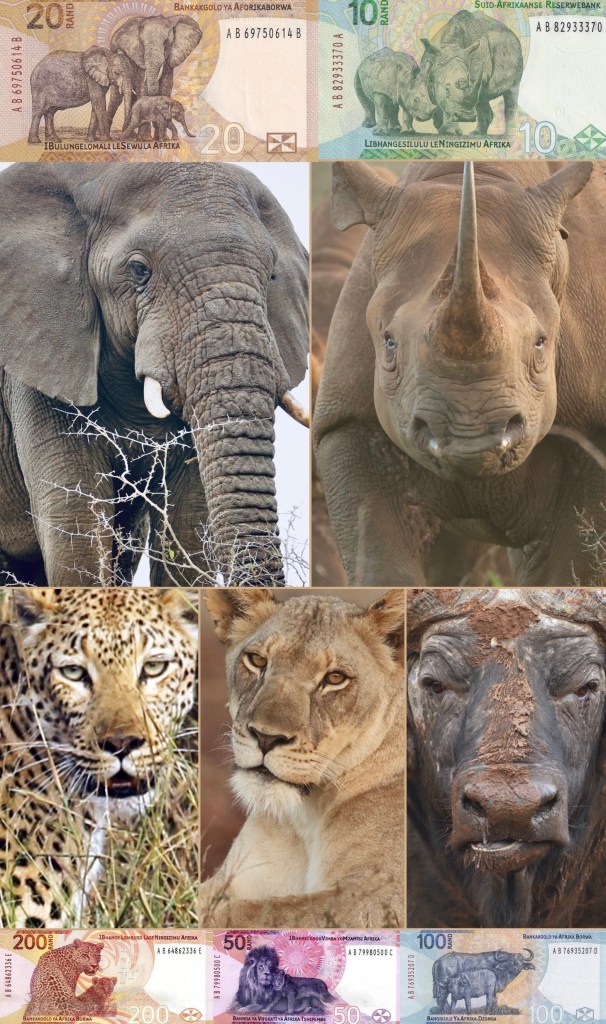
Did you know that the Big Five feature on the recently re-designed South African Rand banknotes?
White Rhinos or Imikhombe (in isiZulu) decorate the green R10 bill, African Elephants or Izindlovu the brown R20 bill, African Lions or Amabhubesi the red R50 bill, Cape Buffalos or Izinyathi the blue R100 bill, and Leopards or Izingwe the orange R200 bill.
But if you are a ‘Big Five purist’ then the creators of the new money made a slight mistake. White Rhinos, strictly speaking, are not part of the Big Five. It is the Black Rhinos (as in my collage) that should be on the Ten Rand note.
The term Big Five is an old hunting term, which defined the five most dangerous creatures in the African wilderness (to hunt on foot). The Black Rhinos (=Hooked-lipped Rhinoceros) and not the White Rhinos (=Square-lipped Rhinoceros) are part of that exclusive club!
But nowadays the Big Five are very important for African tourism marketing and all Rhinos (white or black) are now included!
… and all of them live around my home at Thanda Safari.
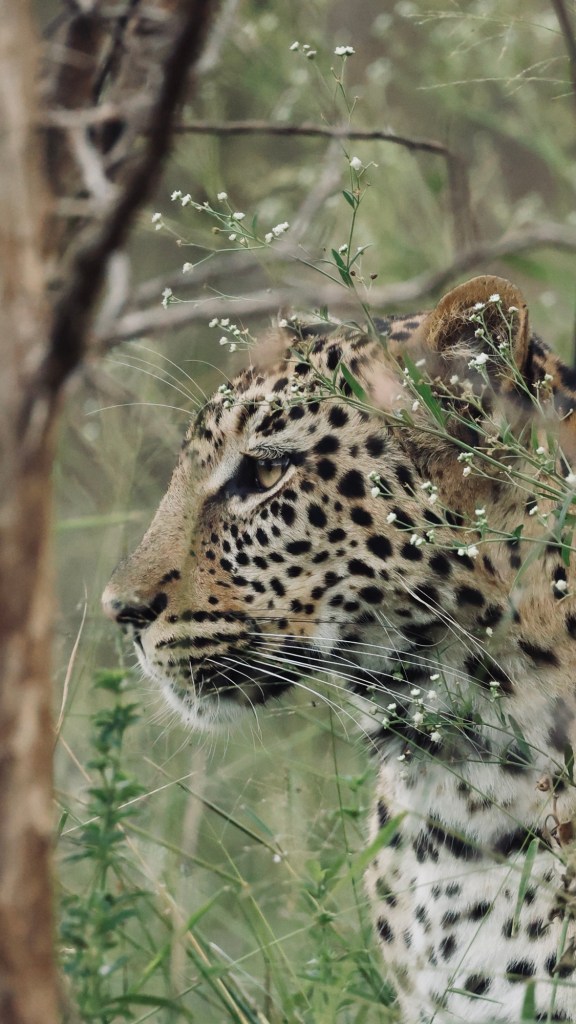
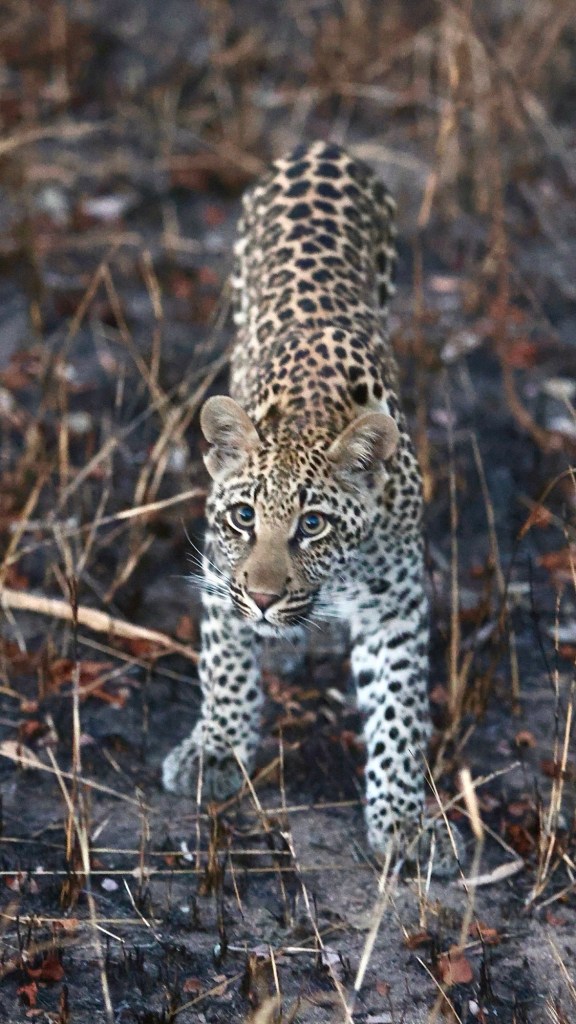
We went on game drive this afternoon to find Elephants, but we got much more. As we left the Thanda Safari Lodge we encountered two male Lions and when we stopped to watch a few Warthogs and Impalas we spotted a large male Leopard hunting. After this very special encounter we continued on our Elephant quest and almost immediately ran into a White Rhino. And towards the end of the drive we finally found the long-noses.
PS: Fantastic news from Germany 🇩🇪. As of today, fully vaccinated travelers from South Africa 🇿🇦 to Germany 🇩🇪 do no longer have to go into quarantine. This means that anyone from Germany coming on Safari 🦛🐆🐃🦒🐘🦏🦓 to our beautiful country 🇿🇦 can return home after their _trip of a lifetime_ without quarantine on arrival. I will be visiting my family in Germany 🇩🇪 in October for the first time in two years 😊






 Christian Sperka Photography | Custom Luxury Tours