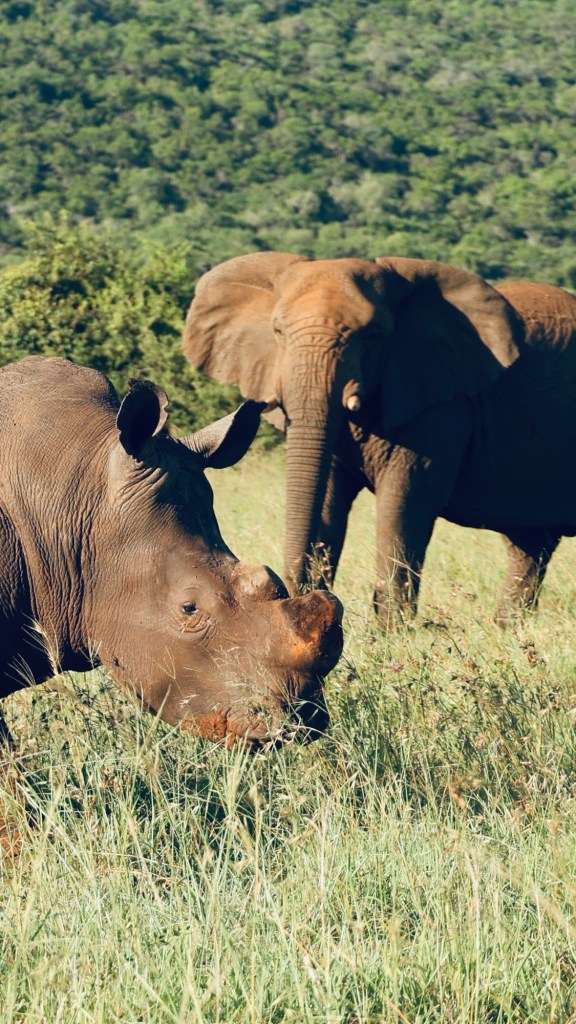
Topic: This is a short video I took this morning of an Elephant herd encountering a White Rhino bull. Both parties were quite nervous during the meeting!
Technical data: Apple 16 Pro Max | Main Camera 24 mm
Sometimes work related to wildlife conservation can get very exciting.
As part of the Black Rhino Range Expansion Project one of these incredible creatures was relocated from Thanda Safari to a new home to expand the range of the species.
When the Rhino was darted it fell asleep not next to the road, as we had hoped, but a bit down a hillside. So it was decided to clean a path, partially wake it up, and then ‘rhino walk’ it up to the waiting container truck.
This is a short video showing as all hands helped, so this large mammal could get to its new home. A job well done!
I have posted very little since early September, and some of you may have wondered what I have been up to.
I have just returned from a fantastic three week trip with two American guests who are also my friends from my time in the USA. We began our journey in the Drakensberg Mountains, visited the Battlefields, explored the iSimangaliso Wetlands, encountered the Big Five at Thanda, and concluded our travels in Durban at the fabulous Oyster Box Hotel to enjoy city life for a few days.
A few trip stats: 21 days, 7 overnight locations, 19 excursions and activities, and 11 game drives. I will soon be sharing a photo trip report about our adventures.
Upon my return, Thanda Safari and The Royal Thanda Club hosted the most extraordinary five-day event I have ever witnessed in the African bush. It was an extravaganza with over 120 guests from around the world staying in our six new Royal Thanda Club Villas, Villa iZulu, Thanda Safari Lodge, and Thanda Tented Camp. The experience was both exhilarating and exhausting!
This afternoon, for the first time in a while, I had the opportunity to venture out onto the reserve on my own. Just before sunset, I managed to capture this picture of a Black Rhino browsing in a recently burned area. The majestic creature appeared quite relaxed (for a Black Rhino!) and I was able to take a few shots from a distance. After wild cats, this is my favorite mammal species. What an evening!
Technical data: Canon R6 with RF lens f/11, 800mm | ISO 25600 | 1/500 sec | EV +0 | WB 6500K | AV Mode
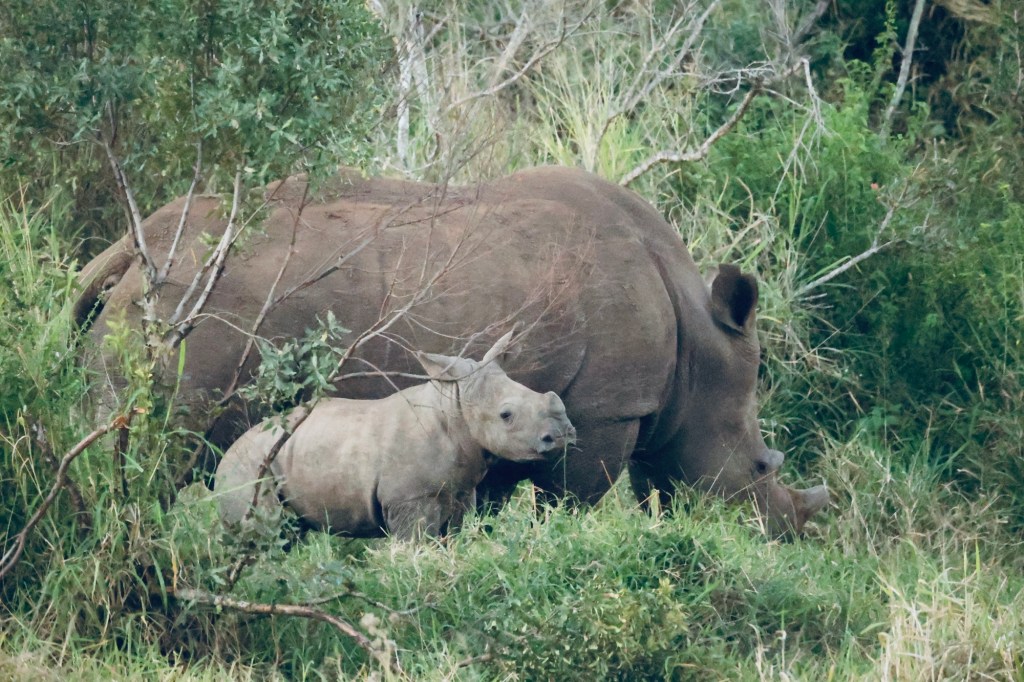
One of the most common questions that guides get asked is about the age of young animals. It is not always easy to give a correct answer without a point of reference.
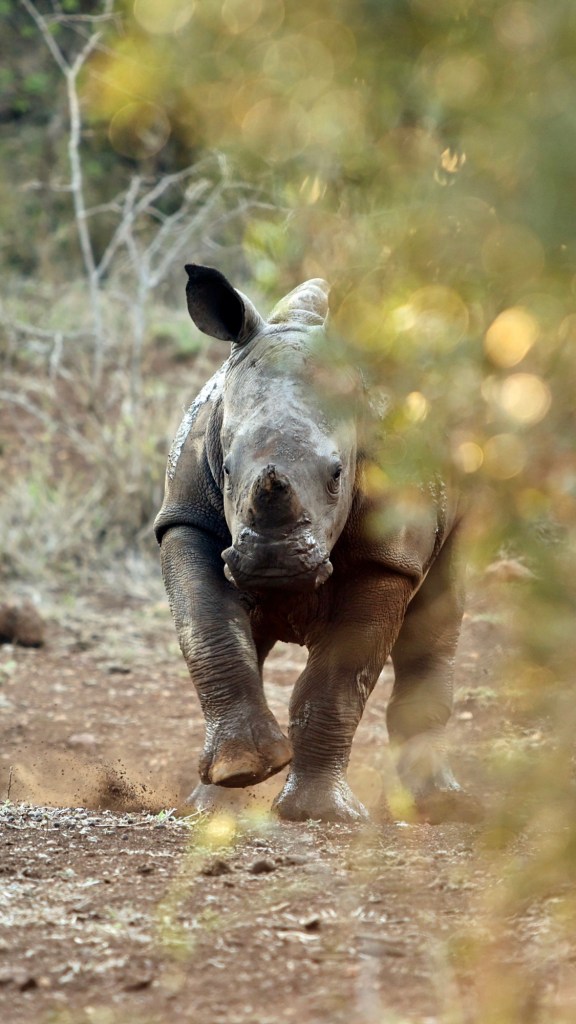
The White Rhino baby in this picture is a bit less than one year old (as it has lost its ’roundish’ baby head shape and as the second horn is not visible yet).
Below are a few indications that might help in determining the age of small Rhinos:
Age 0-3 months
– The shoulders are slightly higher than the mother’s underside of her belly
– No horn is visible and it has a ’roundish’ baby head shape, quite distinct from a typical Rhino head shape
Age 3-6 months
⁃ The front horn is now visible, but the back horn is not
Age 6 months – 1 year
– The shoulders are about 1/3 up the mum’s side
– The front horn is now visible and back horn is just coming through
Age 1-2 years
– The shoulders are about 1/2 up the mum’s side
– The front horn is quite distinct, while the back horn is now visible
Age 2-4 years
– The shoulders are about 2/3 up the mum’s side
– Both horns are growing
Age 4-7 years
– The shoulders will still be lower than those of the mother. It is very difficult to distinguish them from a fully grown adult when they are by themselves (7 years+).
Rhino females are usually sexually mature at 4-5 years of age, but they rarely have their first calf before the age of 7. Males need to wait until they are 10-12 years old before claiming their own territory and mating with the females in their area.
Rhinos typically live 40-50 years in the wild.
Technical data: Canon R6 with RF lens f4-6.3/24-240mm | ISO 20000 | 1/500sec | f6.7 | ev+0 | 150mm | WB 6500K | AV Mode | Crop to 50% of original image





 Christian Sperka Photography | Custom Luxury Tours