Organization!

20070725 - GK4I7892 - C

I am working on organizing all the Wildlife images, which I took between 2001 and 2010. This is a major undertaking which will take me many month.

But one of the rewards of this -sometime tedious – work is that I find some good images I have never published before. Here is one of them. Three Cheetah cubs watching their mum going off to hunt.

Precious 🙂

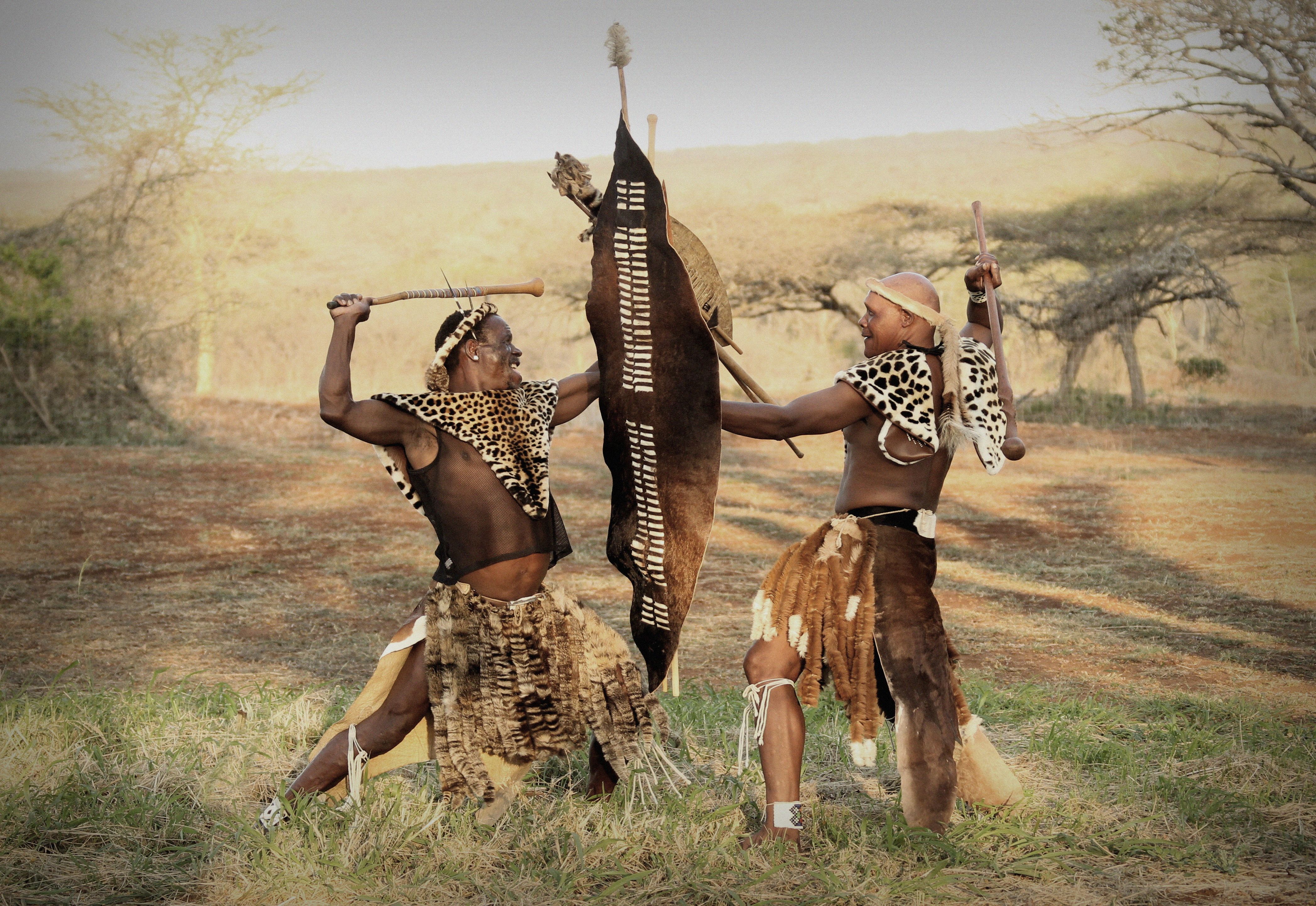
A brotherly fight!

20150924 - CS1_0430 - E 2

As many other peoples – who have existed for a long time – the Zulu people have a lot of customs and traditions.

I am now living for over three years in Zululand and I have tried to learn about the Zulus as much as possible. Even if I have not improved my Zulu language skills by much (isiZulu is quite difficult to learn and I am a bit on the lazy side when it comes to learning languages) I was able to observe quite a lot. Bheki Ngubane, my Zulu tracker and friend, has taught me much about his people and I was invited on some special days to the local communities.

This is a picture of Bheki (on the right) having a friendly ‘demonstration’ fight with his brother Mbongeni. When the Zulus have an occasion to celebrate – for example at a wedding – the men like to test their strength in such fights. A specially appointed Induna yenzinsizwa (fight leader) makes sure that these confrontations do not get out of hand. In this picture both brothers wear traditional men’s cloths, made from animal skins, mainly from cows and goats. And do not worry; the leopard skins around their necks are artificially made. Nowadays such traditional attire is mostly worn on special occasions and also when going to church services (similar to ‘Kilts in Scotland’ and ‘Lederhosen in Bavaria’).

Behki is a typical example of a Zulu man, living in a rural area. He wears modern cloth, works on Thanda as a tracker, drives a small car, uses cell phone technology to communicate with his family and friends – mostly by texting – and enjoys watching TV at his room at base camp.

But he is also the husband to two wives, has nine children and lives with his family on a large plot of land on Lake St.Lucia. At his home he has no access to electricity or to running water. His first wife and some her older children spend part of their days collecting water for a central point in the community and collecting firewood from the forest. Bheki comes from a very traditional background. His father had eight wives, 40 daughters and 25 sons. As a married man – with more than one wife – Bheki is a much respected man in his local community. It helps that the local Induna yesizwe (equivalent to a major) is his uncle and the Inkhosi (equivalent to a chief or governor) of his community is his nephew :-).

Quite a few of my blog followers have expressed interest in these subjects, so over the next couple month I will write a few more blogs about Zulu customs and traditions, and always with pictures 🙂

Please let me know if you have any questions or interest in specific topics and I will try to cover them. Siyabonga (Thank you in isiZulu).

A picture of two big guys :-)

IMG_5366 - E

Well, in this picture I am with Thulani, one of Thanda’s largest Elephant bulls. I came to watch him at the Thanda Safari Lodge, having a drink at the waterhole. He was in musth when this picture was taken. During musth he needs a lot of additional water as he looses a lot of liquids to get rid of his excess testosterone (up to sixty times higher than normal levels). Because he is an old and experienced bull he does not get very agitated during this period. As Elephant ladies like the older and the bigger guys he has nothing to worry about!.

In comparison to his weight of approximately six tons, I could be considered a light weight 🙂

Have a good week!

New Online Galleries & How to Buy a Print

Galleries 500_2

Recently, quite a few people have asked me how to see more of my images and how to buy some of them as prints on paper or canvas. (For their personal use at home – not for commercial use, retail or publication).

I have created new online galleries with many of my images for review and selection.(https://sperka.info/pictures)

It is not easy to ship anything from South Africa to anywhere else in the world. So, I have come up with a simpler way to do this. You can now buy a digital download of any of my images and have the print produced locally.

And here is how it works:
– Pick your image(s) and send the picture code(s) via email to info@sperka.com (just click on the image and the code will appear above or below the image)
– A download license for a single image (except Limited Series Images) cost 50 US Dollars. Please ask for the rebate structure in case you want to get more than one image. 
– I will send you an invoice, which you can pay with PayPal or you can transfer the money to one of my accounts (USA/Germany/Switzerland/South Africa).
– Once the payment is made I will send you a download link to a high-resolution file of the images, which you can then use to have it printed locally in any way you like, and you can also use it as wallpaper on your phone(s) or computer(s). Please do not use it commercially, publish it on social media or forward it to third parties.

Please note: This license does NOT allow re-selling, sharing with third parties or publishing [LIMITED SERIES IMAGES ARE NOT FOR SALE UNDER THIS LICENSE]

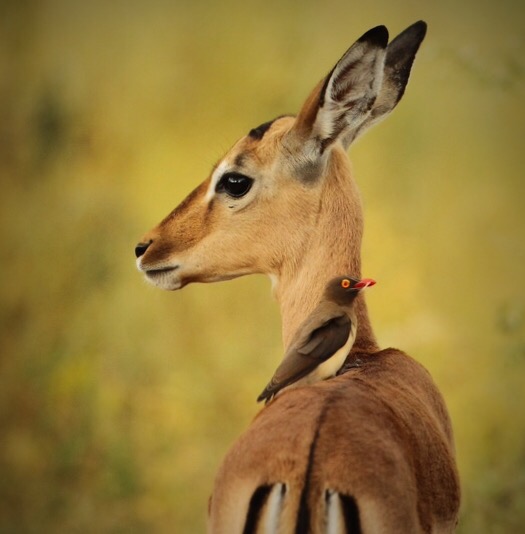
Symbiosis

  
An Impala and a Red-billed Oxpecker – An example for a mutualistic symbiosis, a relationship beneficial to two interacting species.

Two professions

Bheki and Christian

In August Bruno Fert, a well-known professional photographer from France, stayed at Thanda Private Game Reserve. Together with travel journalist Emmanuelle Eyles, he was working on material for stories about South Africa. Thanda was one of their subjects.

During his stay my tracker Bheki Ngubane and I were guiding them. Bruno was very kind and took some portraits of Bheki and of myself. I like them very much. They show me in both of my current professions, as field guide and as wildlife photographer. Thanks a lot Bruno!


Heads up – Just for fun!

20150929 - CS0_2130 - C

I usually do not manipulate my images except to ‘restore’ them to what I recall as the best representation of what I actually saw. This normally includes the adjustment of color, brightness, contrast, sharpness and some minor cloning and makeup work.

This picture is an exception. It is a merger of four images of a female Giraffe raising her head after she was finished drinking. An interesting study 🙂

Help!

WORLD RHINO DAY 2015

Support the fight for the survival of these magnificent creatures! ‪

In South Africa alone over 700 Rhinos were killed this year, that is almost three for every day …….

#worldrhinoday #savetherhino

Death of a Rhino CSP 4

A ‘cool’ snake!

20150905 - CS1_0893 - E

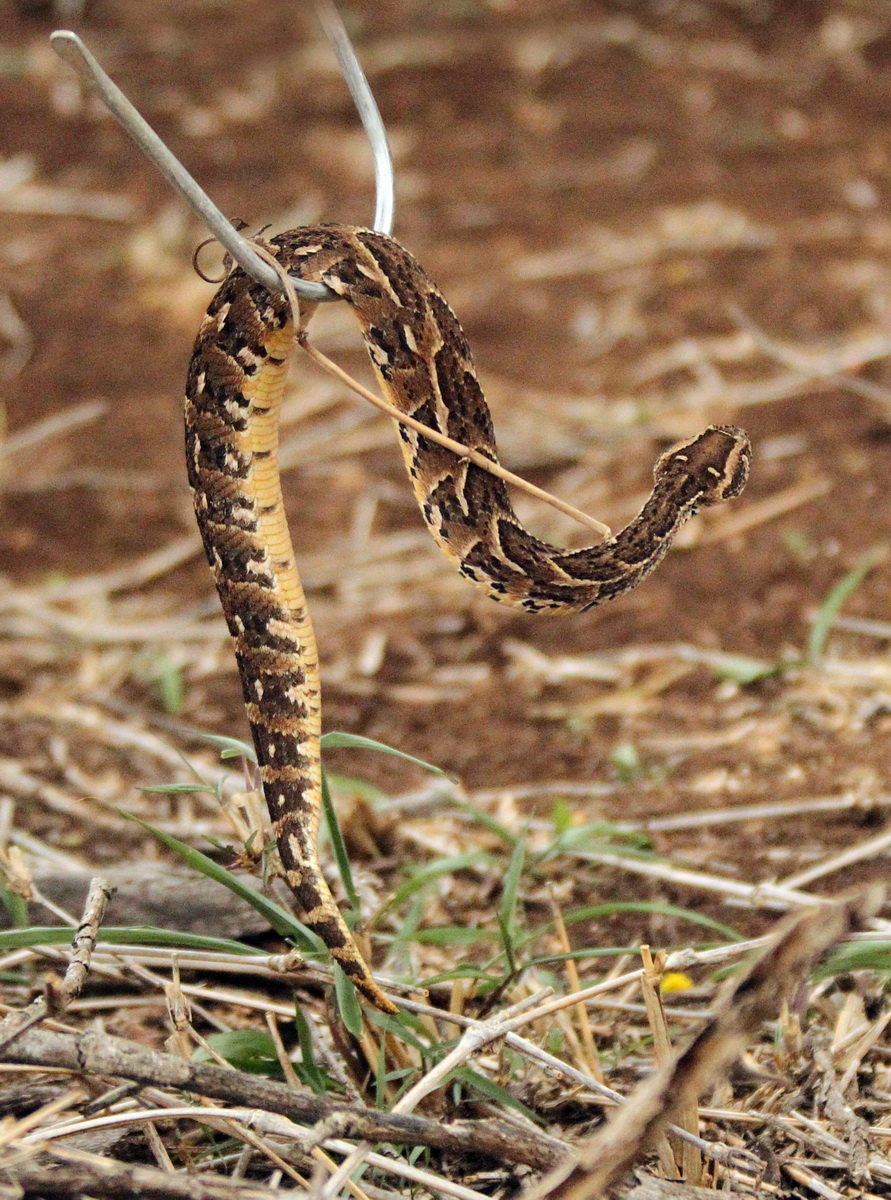
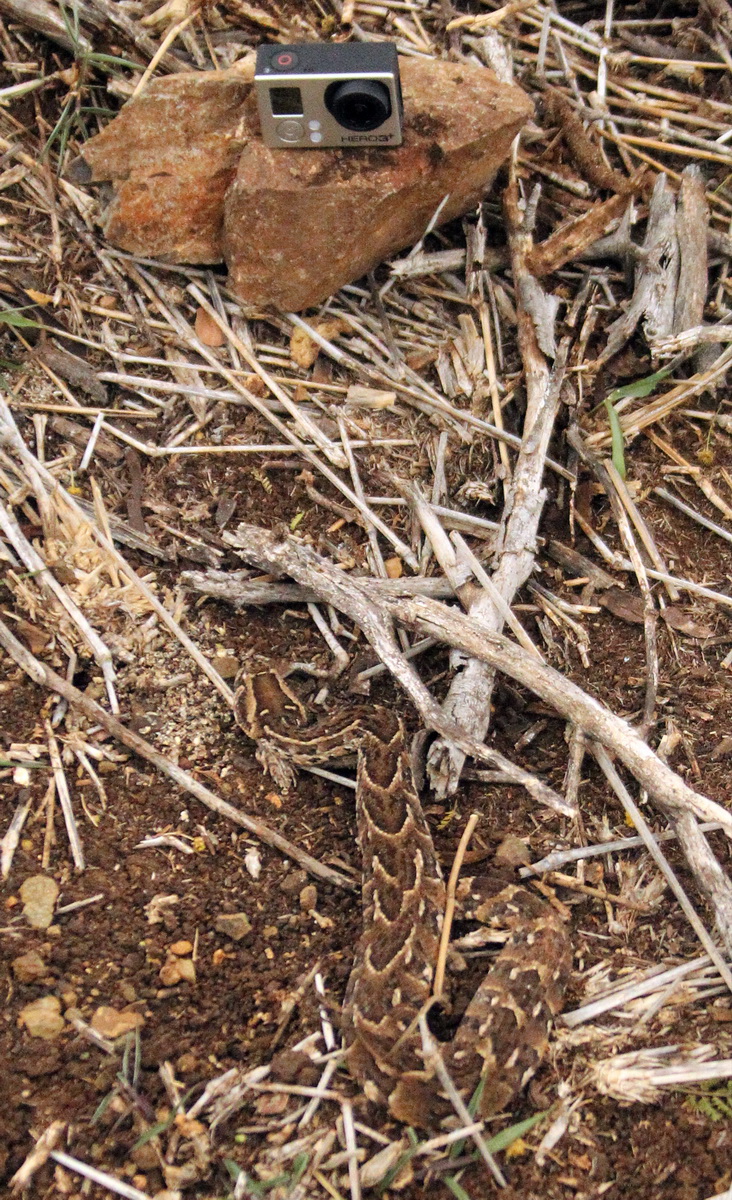
Sal (on Facebook) was the first to get the correct answer. We found this Puff Adder at Thanda House under a stack of fire wood. Due to the cold temperature it was very slow and did not react at all when Letishia took a piece of wood from the pile and discovered the snake.

I captured it and relocated it this morning away from Thanda House. After the release it took a few minutes before this incredibly camouflaged sake moved into the undergrowth.

Puff Adders are one of the most dangerous snakes in Africa. They have a very potent cytotoxic venom and are one of the fastest-striking snakes on earth. Due to the relatively low temperatures at this time of the year this specimen showed no aggression and could be handled quite easily.

This series of pictures were taken by Warren Beets (Thanda Reserve Manager) and myself during the release operation. Thanks Warren!

Well hidden! 20150905 - CS1_0886 - SPC

This picture shows me transferring the Puff Adder from the transport barrel to nice spot on the ground (near some undergrowth). 20150905 - CS1_0889 - E

Placing it on the ground 20150905 - CS1_0894 - E

Just in front of my GoPro camera 20150905 - CS1_0883 - E

This is the release from the GoPro angle 20150905 - CS8_1049 - E

And then the snake disappeared into the bush 20150905 - CS1_0897 - E