Topsy-Turvy!

My knowledge about the relationship between White Rhino and Cape Buffalo was severely challenged last night.

Usually when the two species meet the Buffalos will respectfully give space to the much larger and heavier Rhinos.

But at an encounter yesterday evening a Buffalo bull attacked a young Rhino bull, hit him twice with this boss and then chased him away.

What a show!

Technical data: Canon R6 with RF lens f4-6.3/24-240mm | ISO 20000 | 1/500sec | f5.6 | ev+0 | 90mm | WB 6500K | AV Mode | Crop to 10% of original image

#amazingwildlife #africansafari #safarigetaway #christiansperkaphotography #thandasafari #big5 #gamereserve #wildlifephotography #learnphotography

Tear Lines and Wide-Angle-View

Cheetahs’ eyes are designed to give them a wide-angle view of their surroundings. And their small, flat-faced heads allow their eyes to be positioned for maximum binocular vision.

These beautiful cats also have evolved to reduce the glare from the sun in their view. Black tear lines (or malar stripes) run from their eyes down the sides of their nose to the mouth, attracting the sun away from the eyes.

Yesterday I took this picture in shallow, soft evening light. Both the Cheetah’s eyes and the tear lines are beautifully displayed.

PS: All adult Cheetahs at Thanda Safari have radio collars, which allow our Wildlife team to monitor this endangered species on the reserve.

Technical data: Canon R6 with RF lens f11/800mm | ISO 400 | 1/500sec | ev+0 | WB 6500K | AV Mode | Crop to 25% of original image

#amazingwildlife #africansafari #safarigetaway #christiansperkaphotography #thandasafari #big5 #gamereserve #wildlifephotography #learnphotography
Two Europeans!

Yesterday evening I took these images of two of my favorit Europeans.

The first one is a European Bee-eater and the second one is a European Roller.

They are seasonal migrants which spend March to September in the Northern Hemisphere and for the rest of the year they return to the South to enjoy our summer.

About 12% of all bird species on Thanda Safari‘s bird list are summer migrants.

Both birds are great photographic targets as they often perch in the sun. They also often return repeatedly to the same branch after catching insects on a short flight. If one times it carefully, one can catch them with open wings during landing.

Technical data (Bee-eater): Canon R6 with RF lens f11/800mm | ISO 320 | 1/500sec | ev+0.5 | WB 6500K | AV Mode | Crop to 25% of original image

Technical data (Roller): Canon R6 with RF lens f11/800mm | ISO 320 | 1/500sec | ev-0.5 | WB 6500K | AV Mode | Crop to 10% of original image

#amazingwildlife #africansafari #safarigetaway #christiansperkaphotography #thandasafari #big5 #gamereserve #wildlifephotography #learnphotography

Flying Dung!

There is a curious traditional sport in South Africa. It is called Kudu dung-spitting (Bokdrol Spoeg in the Afrikaans language).

The winner is the contestant who is able to spit one of the small, hard Kudu dung pellets the furthest.

Unlike many similar sports, the distance is measured from the marker to the place the dung pellet comes to rest, rather than where it initially hit the ground.

The world record stands at 15.56m (51″), set in 2006 by Shaun van Rensburg from Addo.

I know this sounds like a joke fit for first of April. But it is quite true. I have tried it myself, but I got nowhere near the work record.

When you visit South Africa you may try it yourself. Good luck!

Technical data: Canon 1D Mark IV with EF lens f4/500mm | ISO 2000 | 1/2000sec | f4 | ev-1 | WB 6500K | AV Mode | Crop to 75% of original image

#amazingwildlife #africansafari #safarigetaway #christiansperkaphotography #thandasafari #big5 #gamereserve #wildlifephotography #learnphotography

Flehmen!

Flehmen is a behavior observed in many mammal species particularly ungulates and carnivores. It involves the curling of the upper lip and a raising of the head, to expose the vomeronasal organ (or Jacobson’s organ), located within the nasal cavity.

This behavior is exhibited (mostly by males) when animals encounter interesting scents, especially pheromones associated with potential reproductive activities.

The Cape Buffalo bull in this pictures was checking the air for signs of any of the females in his herd requiring his services.

In humans this organ exists but is ‘out of use’. And that is not a bad thing. Otherwise young men would constantly walk around with a raised head and curled upper lips. 😊

Technical data: Canon 1D Mark IV with EF lens f3.5-5.6/28-300mm | ISO 1600 | 1/1000sec | f5.6 | ev-.5 | 270mm | WB 6500K | AV Mode | Crop to 60% of original image

#amazingwildlife #africansafari #safarigetaway #christiansperkaphotography #thandasafari #big5 #gamereserve #wildlifephotography #learnphotography
Cool!

Many mammals, like this White Rhino bull, frequently wallow in mud and, on hot days, remain for a long time semi-submerged in their personal spa.

They do this for a multitude of reasons.

First – The drying mud withdraws heat from the body and cools them down.

Second – A layer of mud protects the skin against the direct sun, a bit like sun-screen for humans.

Third – The mud cover helps keeping parasites away from the skin.

Fourth – When rubbing on trees the mud can help to cleanse the outer layers of the skin, especially if it is wrinkled.

If you ever feel very hot and you pass an inviting looking mud-hole on a hot day then you could try this yourself. Just watch out for other mud hole visitors! ☺️

Technical data: Canon R6 with RF lens f4-6.3/24-240mm | ISO 3200 | 1/500sec | f6.7 | ev+0 | 240mm | WB 6500K | AV Mode | Crop to 50% of original image

#amazingwildlife #africansafari #safarigetaway #christiansperkaphotography #thandasafari #big5 #gamereserve #wildlifephotography #learnphotography
Kindergarten!

At this time of the year a lot of baby mammals can be seen on game drives.

And, as the Blue Wildebeest calf’s in this picture, they often huddle together in small ‘Kindergarten’ groups.

Quite a few mammal species have a breeding season and therefore the females almost all drop at the same time. At the end of the year Kudus, Impalas, Warthogs, and Blue Wildebeests all give birth to their next generation. So January/February is a great time to look out for Kindergartens!

Elephants, Black and White Rhinos, Cape Buffalos, Giraffes, Nyalas, Zebras, primates, and all the predators do not have a clearly defined breeding season and youngsters can be born at any time of the year.

Technical data: Apple iPhone 14 Pro Max | Telephoto Camera | 77mm | Auto Setting

#amazingwildlife #africansafari #safarigetaway #christiansperkaphotography #big5 #gamereserve #wildlifephotography #learnphotography

Technical data: Canon R6 with RF lens f4-6.3/24-240mm | ISO 1600 | 1/500sec | f6.7 | ev+0 | 240mm | WB 6500K | AV Mode | Crop to 20% of original image

Details!

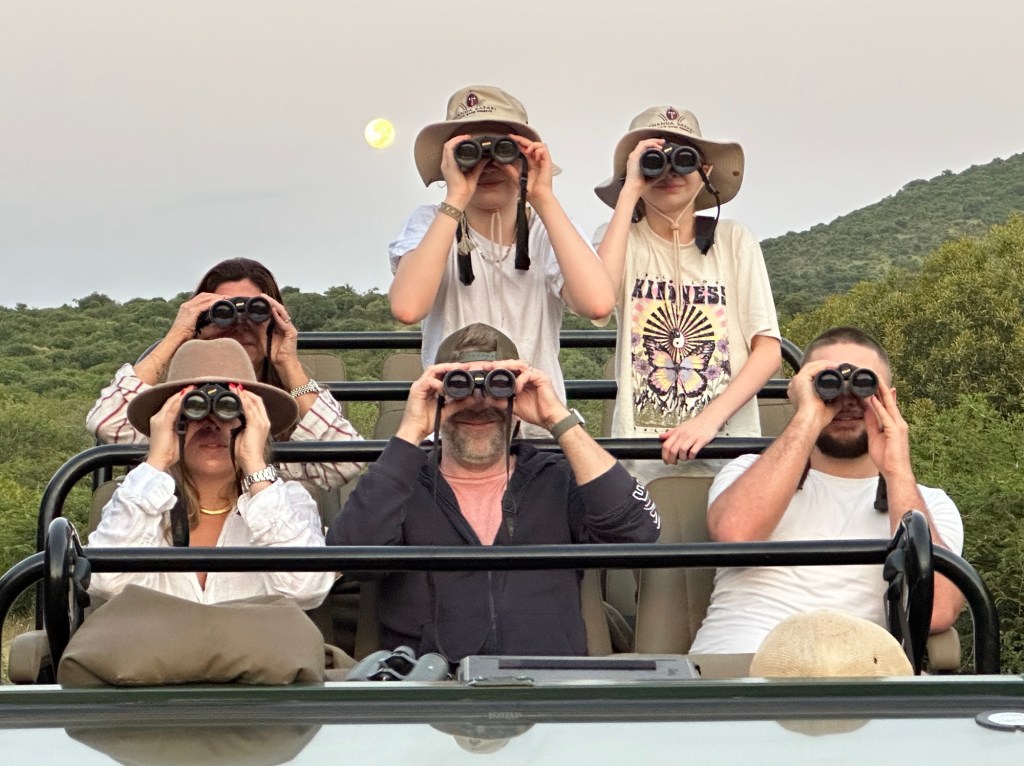
I think that binoculars are the most important item to take on a game drive. People often tell

me that they do not need any as they are not interested in birds. I think they are wrong.

I still take a pair for each for my guests on game drive as they are a great way to enjoy end explore details even of large mammals.

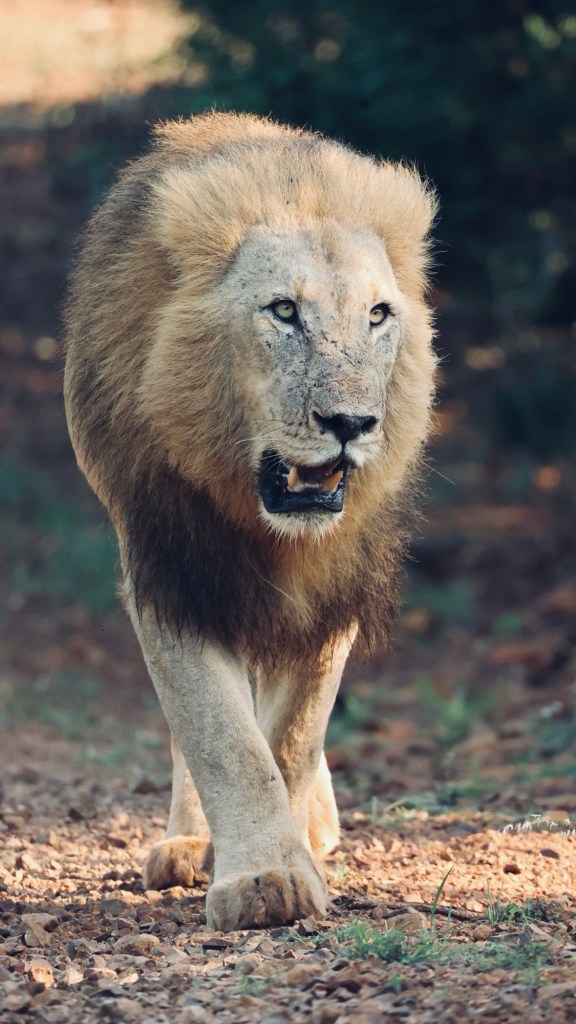
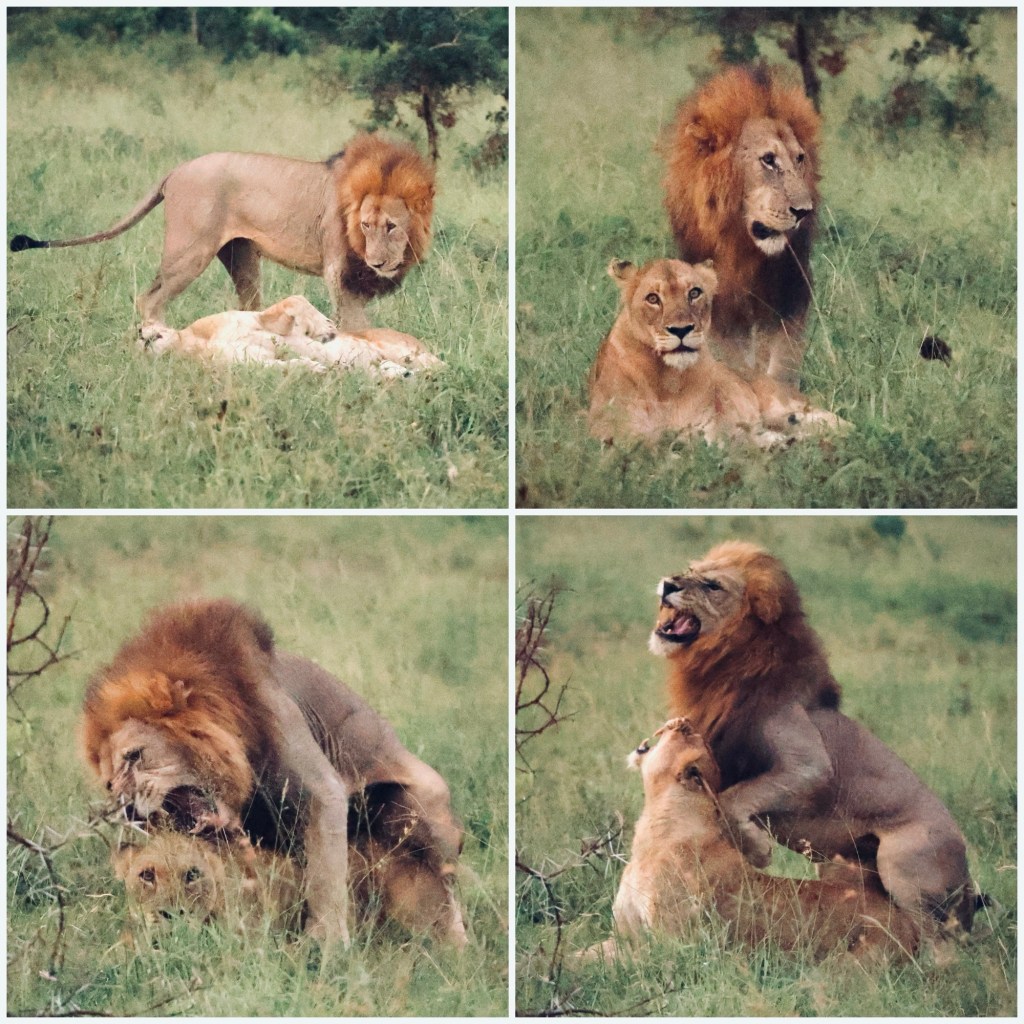
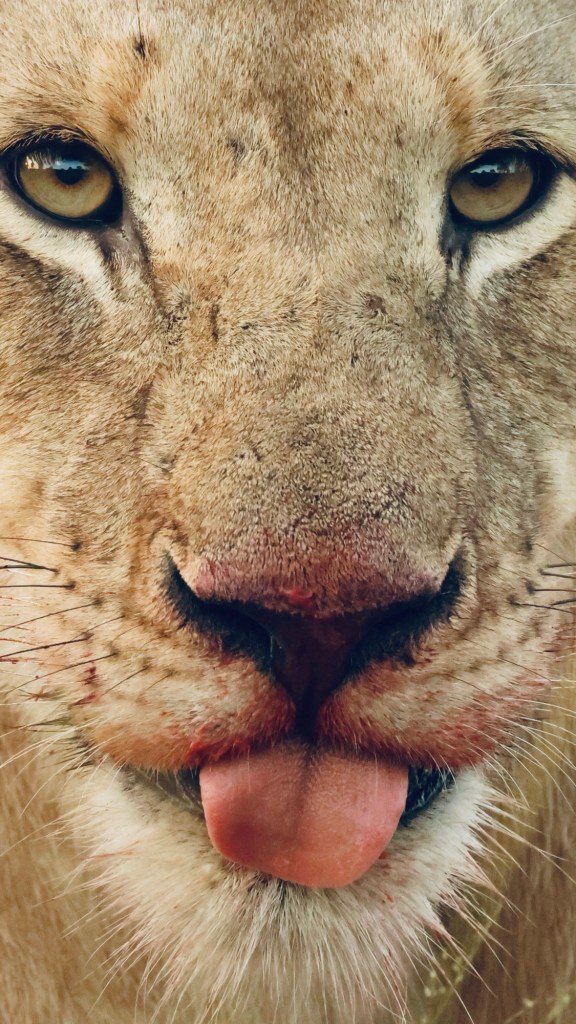
The sharp eyes of a Lion, the claw holes in a Lion’s pelt inflicted in a fight, the Lion’s ears with a small tick, the Lion’s back legs with the youngster’s pattern, the underside of a Lion’s paw, or the pinkish nose of a young Lioness; all of these are clearly visible with the help of binos.

Should you ever see any of these that close without optical help then you are far too close and it is probably the last thing you would see :-).

So my advice: Take a set of binos for each person (properly adjusted to the user’s eyes) on your safari and enjoy all the details!

#amazingwildlife #africansafari #safarigetaway #christiansperkaphotography #thandasafari #big5 #gamereserve #wildlifephotography #learnphotography
Twilight

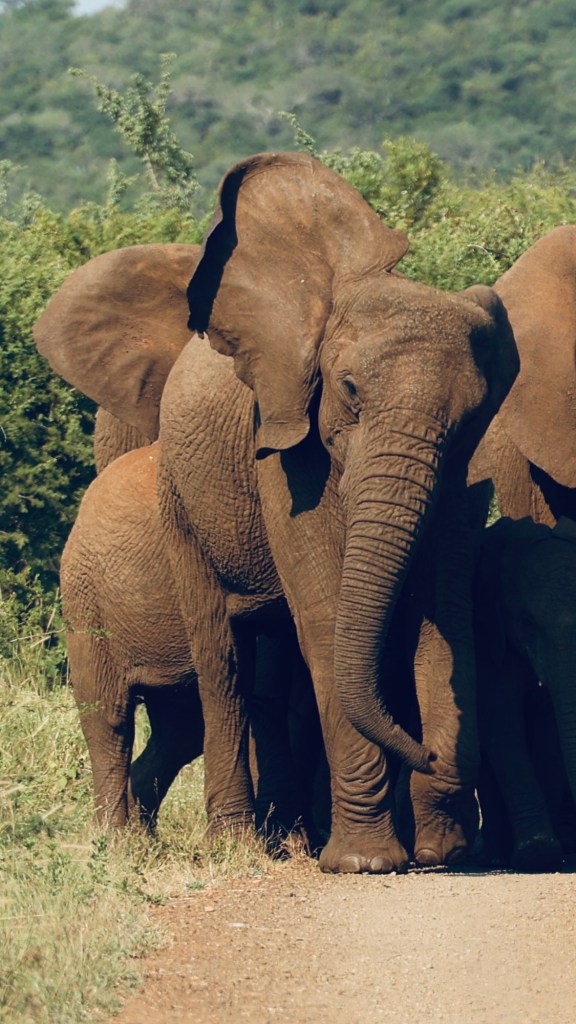
Sometimes the camera can see more than the human eye. I this case I got this image of an Elephant cow eating grass in the twilight, after the sun had set. With my eyes I only saw the outline of the huge form above the grass.

Elephant have to eat most of the day and night, as they have to ingest up to 300kg (660lbs) per day to sustain their huge bulk.The foods they consume (Grass- and tree-materials) are ‘low-energy-containing’, so a lot is needed.

A Lion in contrast eats very ‘high-energy-containing’ foods (Meat, intestines, and bones) and can therefore rest most of the day.

Result: Lions sleep up to 18 hours a day. Elephants eat up to 18 hours a day! To a gourmet glutton, who likes his sleep, both sounds appealing 😊

Technical data: Canon R6 with EF lens f4.0/500mm | ISO 12800 | 1/180sec | f4 | ev-0.5 | 500mm | WB 6500K | AV Mode | Crop to 50% of original image | beanbag support

#amazingwildlife #africansafari #safarigetaway #christiansperkaphotography #thandasafari #big5 #gamereserve #wildlifephotography #learnphotography
A Tower …

… of fifteen Giraffe. Last night I was at the right time at the right place to take this picture of a few of the world‘s tallest land mammals in front of a waterhole, on a savanna, and with the rolling hills of Zululand in the background.

A group of Giraffe can be called a ‘Tower of Giraffe’ when they mingle in an area or a ‘Journey of Giraffe’ when they are on the move.

Unlike most other large mammals Giraffes have no strong social ties. Individuals can join or leave a group as they like. But except for old bulls they usually prefer to congregate with others.

When on game drive, one often spots a Giraffe and one thinks it is a lonely animal. But it is actually part of a group spaced out over a large area, keeping visual contact with others from its great heights.

A female Giraffe can reach over 4 meters (13”) in heights, a male of 5 meters (16”).

Technical data: Canon R6 with RF lens f4-6.3/24-240mm | ISO 125 | 1/500sec | f6.3 | ev+2 | 100mm | WB 6500K | AV Mode | Crop to 50% of original image

#amazingwildlife #africansafari #safarigetaway #christiansperkaphotography #thandasafari #big5 #gamereserve #wildlifephotography #learnphotography
Additional images: