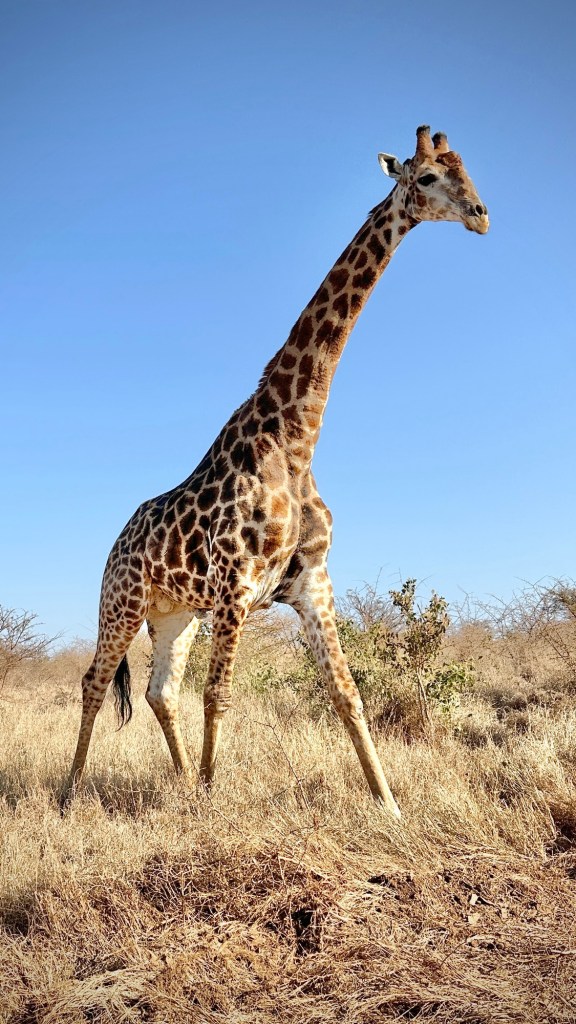
This afternoon, I returned to Thanda House driving along the reserve fence. This large Giraffe bull did not want to step out of my way as he was ‘air-sparring’ with another bull on the neighboring game reserve. Normally, bulls stand next to one another as they spar or fight by hitting one another, swinging their massive heads.
As these two could not get together, they were swinging at the air! (short video below) I took this eye-level shot as I passed him while he stepped back towards the fence.
[Taken from my Suzuki Jimny with an Apple iPhone 14 Pro Max using the 24mm main camera at Thanda Safari]
This was the moment when these South African Giraffes realized that they were going the wrong way.
As these three tall mammals appeared around the corner, one of Thanda Safari’s Lionesses (part of a large pride), who was snoozing in the sun, started chasing the Giraffes.
Even though she was not a real threat to the three large ruminants, their instinct made them turn and run immediately as this encounter was too close for comfort.
Unless one of Giraffes trips and falls during the chase, a small group of Lions will rarely attempt an adult Giraffe kill. A kick from one of their strong legs can break a Lion’s jaw and condemn it to death.
At Thanda, Lions on occasion target Giraffes calves. Such kills provide a lot of meat to the predators.
Technical data: Canon R6 with RF lens f4-6.3/24-240mm | ISO 200 | 1/500sec | f6.7 | ev+0 | 130mm | WB 6500K | AV Mode | Crop to 30% of original image
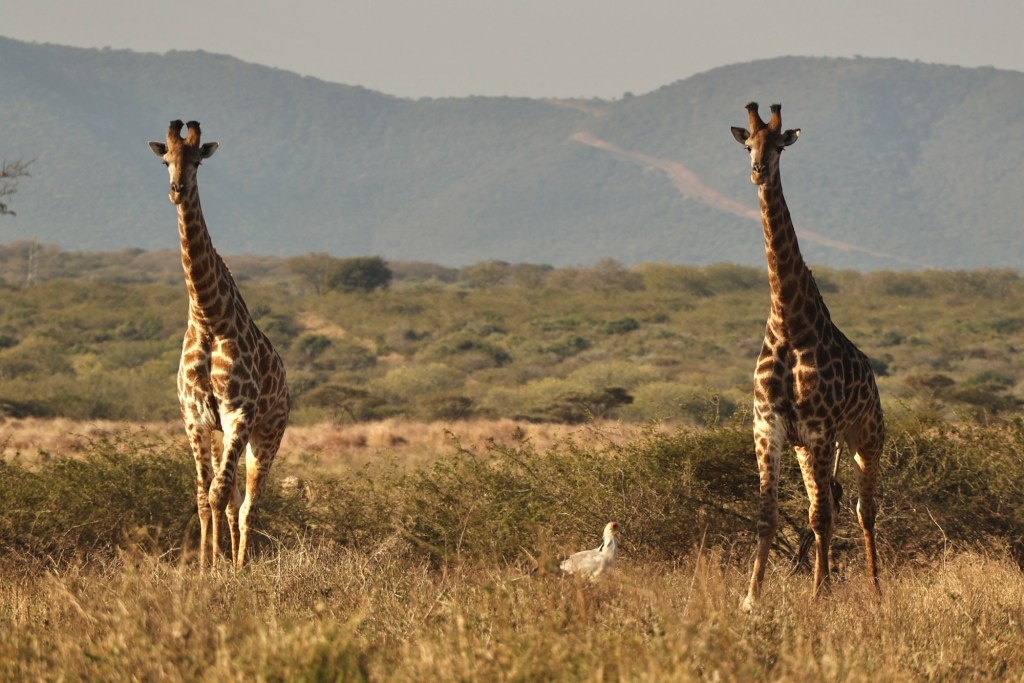
There are far more ectotherms (cold-blooded animals) than endotherms (warm-blooded animals) on Earth.
With the exception of mammals and birds, most life forms rely on their surroundings and behavior to regulate their internal temperature, a process known as thermoregulation.
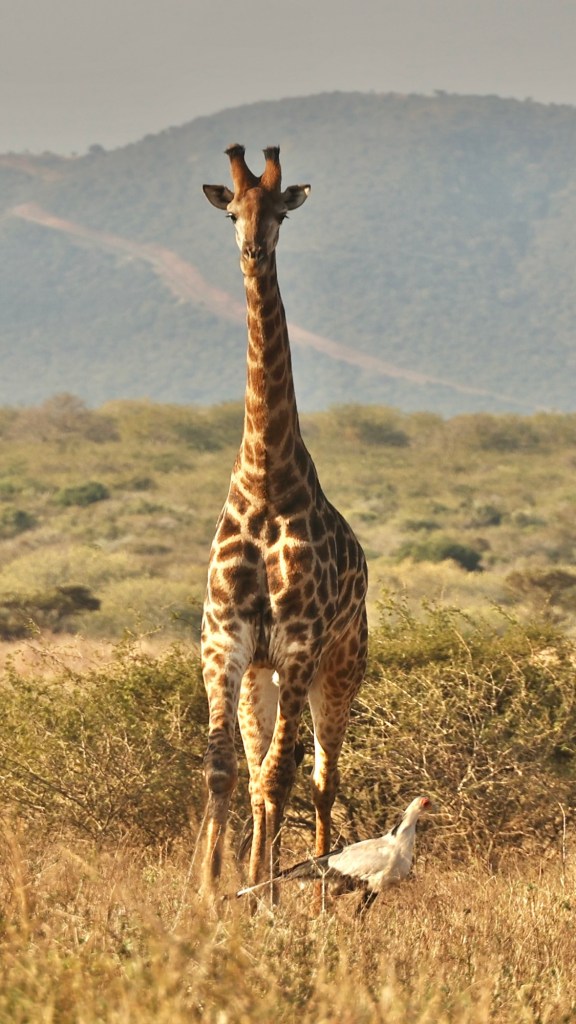
Fish, reptiles, and amphibians, with very few exceptions, are considered ectotherms. In this picture, you can see two of my favorite endotherms: a South African Giraffe and a Secretary Bird.
Have a great week!
Technical data: Canon R6 with RF lens f4-6.3/24-240mm | ISO 100 | 1/500 sec | f6.3 | EV +0 | 240mm | WB 6500K | AV Mode | Image cropped to 15% of the original size.
Technical data: Canon R6 with RF lens f11/800mm | ISO 2500 | 1/2000sec | ev+0 | WB 6500K | AV Mode | Crop to 25% of original image Technical data: Canon R6 with RF lens f4-6.3/24-240mm | ISO 125 | 1/500sec | f6.3 | ev-1 | 240mm | WB 6500K | AV Mode | Crop to 30% of original image
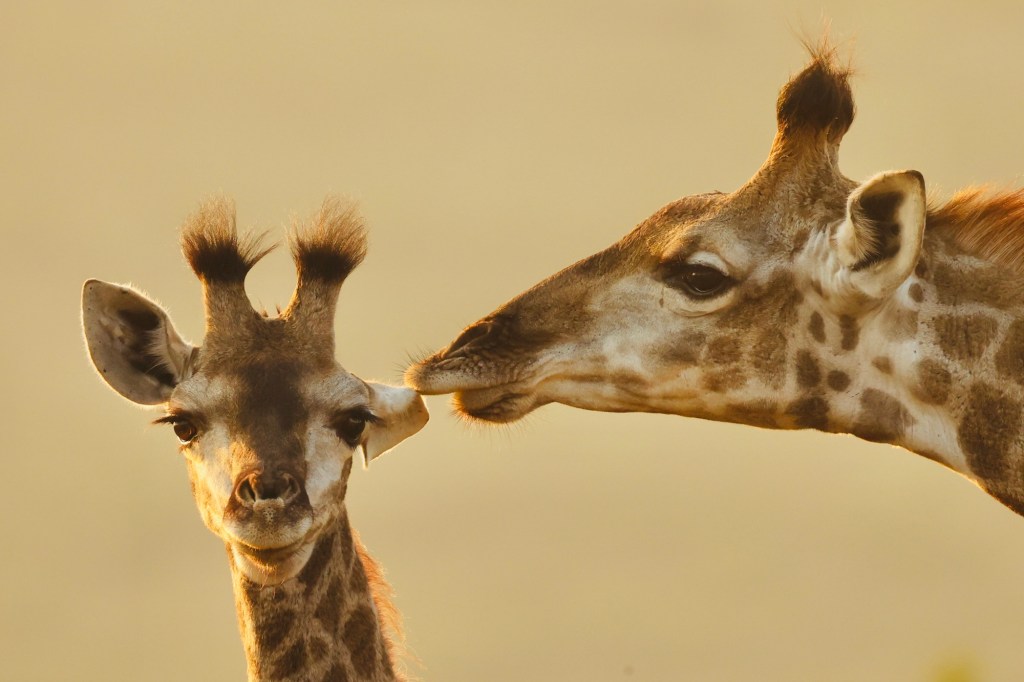
… are skin-covered bone structures on the heads of Giraffes and male Okapi. They are distinguished from the similar structures of horns and antlers by a permanent covering of skin and fur.
Similar to animals with horns or antlers, male giraffes use their ossicones as weapons during combat, using their heads as clubs.
In early development, they are not bony and are not fused to skull. Ossicones usually fuse to the skull at sexual maturity.
Females and young Giraffes (male and female) have hair on top of their ossicones while adult males are bald.
Technical Data: Canon R6 with RF lens f/11, 800mm | ISO 1600 | 1/500 sec | EV +/-0 | WB 6500K | AV Mode | Crop to 45% of original image
Two days ago, I spent the late afternoon at one of my favorite Thanda Safari water holes.
And just as the sun started to set, four giraffes arrived to have an evening drink.
When most mammals want to have a drink, they simply lower their heads to the water. Their necks are long enough and their legs are short enough to make this a very simple process.
Not so for adult giraffes. They either have to spread their front legs extra wide or do a funny half-kneel to reach the water to drink.
So the giraffes either have legs that are too long or necks that are too short!
Technical data: Canon R6 with RF lens f4-6.3/24-240mm | ISO 2000 | 1/2000sec | f6.3 | ev+0 | 220mm | WB 6500K | AV Mode | Crop to 60% of the original image.
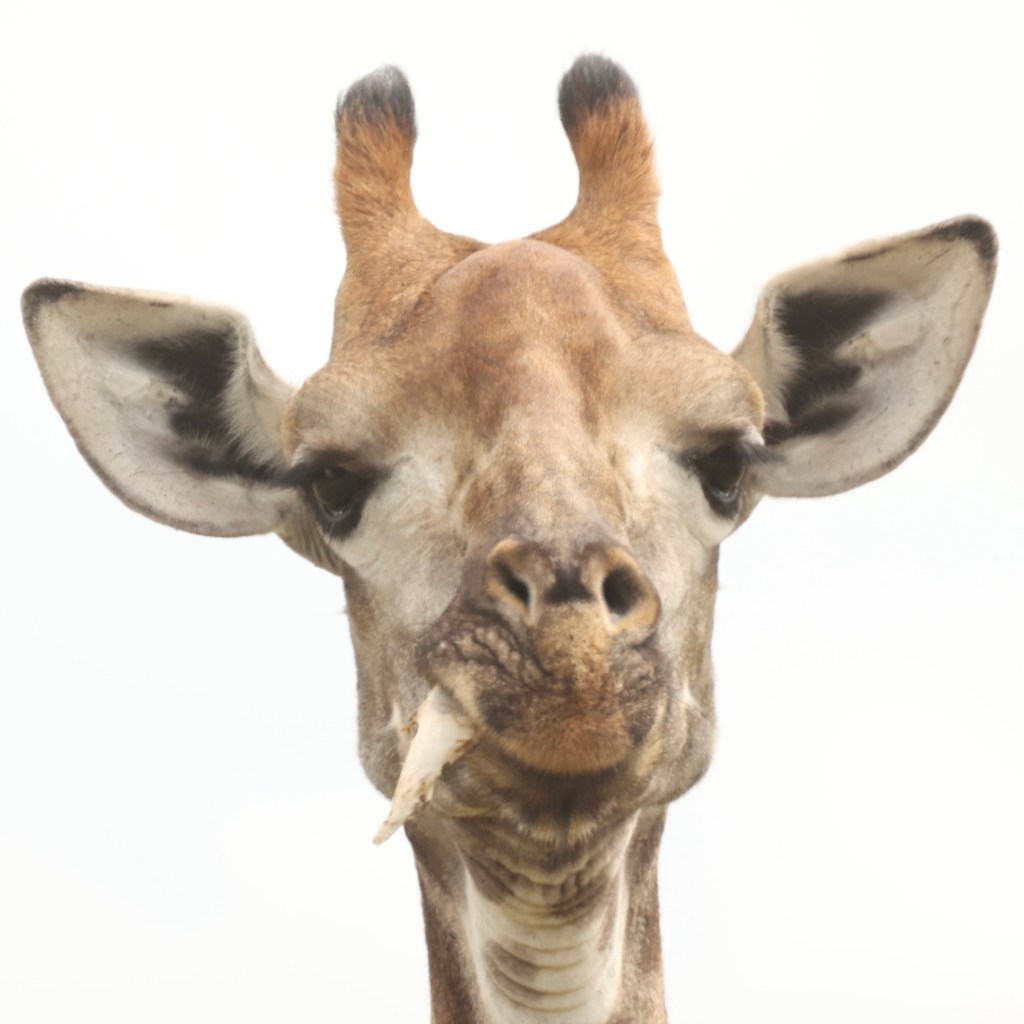
… is the term for a Giraffe behavior which seems rather odd.
Often, these largest land mammals are seen chewing bone material. The reason is to augment any calcium and/or phosphorus deficiency in their bodies. The material is manipulated in and out of the mouth using the tongue while being sucked and chewed.
I took this short video of a Thanda Safari Giraffe looking rather funny, which put me in a good mood for the weekend. I hope you enjoy yours!
Technical data: Canon R6 with RF lens f11/800mm | 4K Video | Hand-held
Just after the sun had set we encountered a group of Red-billed Oxpeckers which were all over this South African Giraffe, feeding on the many ticks in its skin.
The large mammal was ruminating (re-chewing food from a previous feeding session) and therefore standing very still in the road for a long time. Animals seldom move unless they have a reason to do so. And as the food to chew came straight from one of its own stomach chambers, there was no need to expend energie by moving around.
As we watched the small birds through our binoculars expertly picking up the parasites, they decided to take a dust bath right in the road.
As many other birds they keep their feathers pliable, weather-proof, and ready for flight with an oil secreted from a gland on their body. But this oil can build up, resulting in greasy and matted feathers. During a dust bath dirt particles bind to the excess oil.
After flapping around for a while the Oxpeckers fluffed out their feathers and shook off the excess dust before they returned to their long-necked host with freshly maintained feathers.
Technical data (top): Canon R6 with RF lens f4-6.3/24-240mm | ISO 5000 | 1/750sec | f6.7 | ev+1.5 | 150mm | WB 6500K | AV Mode | Crop to 60% of original image
Technical data (bottom): Canon R6 with RF lens f11/800mm | ISO 20000 | 1/500sec | ev+0 | WB 6500K | AV Mode | Crop to 5% of original image










 Christian Sperka Photography | Custom Luxury Tours