Special Presentation – Week 1 – King Vulture

While reviewing my picture library I came across this beautiful portrait of a King Vulture. I thought many of you might like it.

[Do not forget to vote for the picture of the year 2011 :-) ]

[and I hope you will be able to come this Saturday to the Gallery Crawl in Nashville]

More about King Vultures:

The King Vulture (Sarcoramphus papa) lives predominantly in tropical lowland forests stretching from southern Mexico to northern Argentina. Large and predominantly white, the King Vulture has gray to black ruff, flight, and tail feathers. The head and neck are bald, with the skin color varying, including yellow, orange, blue, purple, and red.

The King Vulture has a very noticeable yellow fleshy caruncle on its beak. This vulture is a scavenger and it often makes the initial cut into a fresh carcass. It also displaces smaller New World vulture species from a carcass. King Vultures have been known to live for up to 30 years in captivity.
Picture of the Week 1 – Sly!

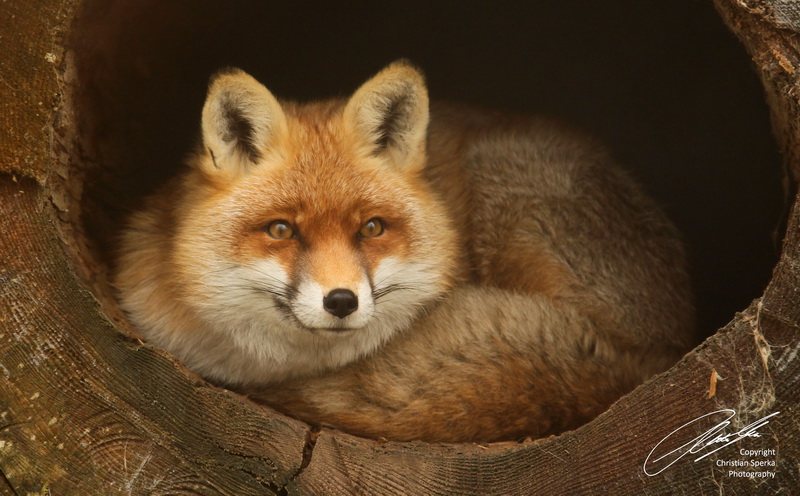
The first picture of the week for 2012 is of a Red Fox at the Natur- und Tierpark Goldau (a beautiful zoo in Switzerland displaying  many indigenous species – http://www.tierpark.ch/english/index.htm)

[and do not forget to vote for the picture of the year 2011 🙂 ]

20111227 - CS2_6612 - E - C

About Red Fox:

The Red Fox (Vulpes vulpes) is the largest of the true foxes, as well as being the most geographically spread member of the Carnivora. It is distributed across the entire northern hemisphere from the Arctic Circle to North Africa, Central America and the steppes of Asia.

Despite its name, the species often produces individuals with abnormal colourings, including albinos and melanists.

The species has a long history of association with humans, having been extensively hunted as a pest and furbearer for centuries, as well as being prominently represented in human folklore and mythology. Because of its widespread distribution and large population, the Red Fox is one of the most important furbearing animals harvested for the fur trade.

Vote for your Picture of the Year 2011 and win an Art Print

PLEASE VOTE FOR THE PICTURE OF THE YEAR 2011 by sending an email to INFO@SPERKA.COM. Thanks you.

Select from  http://www.sperka.biz/potw2011.

Same procedure as last year 🙂 Please select your Picture of the Year 2011 from all my Pictures of the Week in 2011. You can review the pictures at http://www.sperka.biz/potw2011. Then either send me an email, a blog message or a facebook message with your choice of image.  The voting process is open until the end 20th of January 2012.

On January 21 I will draw two winners from the group of people who voted for the winner image (with the most votes). I will also draw one winner from all people who voted regardless for which image. All three winners will get one Christian Sperka Art Print (11″x14″) with an image of their choice for free.

So, PLEASE VOTE FOR THE PICTURE OF THE YEAR 2011 by sending an email to INFO@SPERKA.COM. Thanks you.

Picture of the Week 52 – Walking the tight-rope!

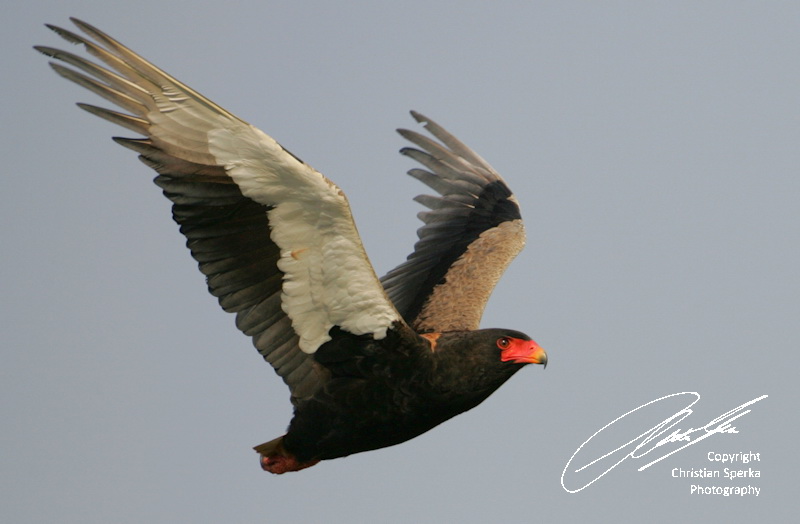
This week’s picture of a male Bateleur was taken at Phinda Private Game Reserve, Kwazulu Natal South Africa.

To review all 2011 pictures of the week go to www.sperka.biz/potw2011/slideshow

About Bateleur …

The Bateleur (Terathopius ecaudatus) is a medium-sized eagle. It is a common resident species of the open savanna country in Sub-Saharan Africa. Bateleurs pair for life, and will use the same nest for a number of years. Unpaired birds, presumably from a previous clutch, will sometimes help at the nest. The Bateleur is a colourful species with a very short tail which makes it unmistakable in flight. Immature birds are brown with white dappling. The prey of this raptor is mostly birds and also small mammals; it also takes carrion. “Bateleur” is French for “tight-rope walker”. This name describes the bird’s characteristic habit of tipping the ends of its wings when flying, as if catching its balance.

For more Bateleur pictures go to www.sperka.biz/bateleur

Pictures of the Week 51 – I love bamboo :-)

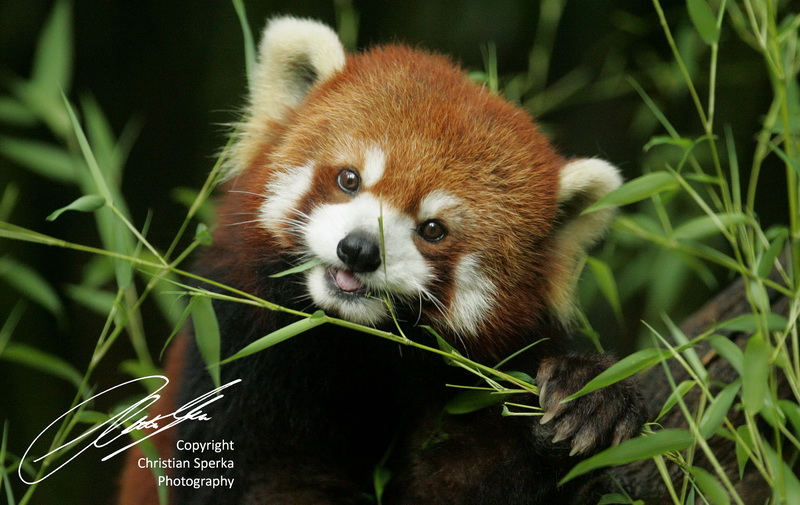
This weeks’ picture is of a female Red Panda at Nashville Zoo at Grassmere, Nashville, Tennessee, USA

To review all 2011 pictures of the week go to http://www.sperka.biz/potw2011/slideshow

More Red Panda pictures at www.sperka.biz/redpanda

About Red Panda

The Red Panda (Ailurus fulgens) is a small arboreal mammal native to the eastern Himalayas and southwestern China. It is the only species of the genus Ailurus. Slightly larger than a domestic cat, it has reddish-brown fur, a long, shaggy tail, and a waddling gait due to its shorter front legs. It feeds mainly on bamboo, but is omnivorous and may also eat eggs, birds, insects, and small mammals. It is a solitary animal, mainly active from dusk to dawn.

The taxonomic classification of the red panda has been controversial since it was discovered. French zoologist Frédéric Cuvier initially described the Red Panda in 1825, and classified it as a close relative of the Raccoon (Procyonidae). At various times it has been placed in Procyonidae, Ursidae (Bears), with Ailuropoda (Giant Panda) and in its own family, Ailuridae.

Recent molecular-systematic DNA research also places the red panda into its own family Ailuridae, which is in turn part of the broad superfamily Musteloidea that also includes skunk, raccoon, and weasel families.

Red Pandas are not related to Giant Pandas, as the name would suggest, but they both love bamboo. The Red Panda picture was taken at Nashville Zoo and the Giant Panda at Zoo Atlanta, Georgia, USA.

This weeks selection for the “Picture of the Week” was made by a 7th grade World Geography class at Sunset Middle School in Williamson County, TN. Thanks for your interest in wildlife photography and conservation.

Picture of the Week 50 – Bloodshot!

This weeks picture if of a Cape Buffalo Bull.  The picture was taken at Phinda Private Game Reserve, Kwazulu Natal, South Africa.

To review all 2011 pictures of the week go to http://www.sperka.biz/potw2011/slideshow

And this is my EYES series version of the image in black&white:

For more Cape Buffalo pictures go to http://www.sperka.biz/buffalo

About Cape Buffalo:

The Cape Buffalo, Affalo, Nyati, Mbogo or African Buffalo (Syncerus caffer) is a large African bovine. It is not closely related to the slightly larger wild Asian water buffalo. Owing to its unpredictable nature which makes it highly dangerous to humans, it has not been domesticated, unlike its Asian counterpart, the domestic Asian water buffalo.

The Buffalo is a very robust species. Its shoulder height can range from 1 to 1.7 m (3.3 to 5.6 ft) and its head-and-body length can range from 1.7 to 3.4 m (5.6 to 11 ft). Buffalo weigh up to 910 kg (2,000 lb), with males, normally larger than females.

Buffalo have few predators and are capable of defending themselves against (and killing) lions. Lions do kill and eat buffalo regularly, but it typically takes multiple lions to bring down a single adult buffalo.

Picture of Week 49 – Hold on!

This picture of a three month old male Orangutan baby was taken at the Krefeld Zoo in Germany.

More about Orangutans:

Orangutans are the only exclusively Asian genus of great ape. They are the largest living arboreal animals. Their hair is typically reddish-brown, instead of the brown or black hair typical of other great apes. Orangutans are found only in rainforests on the islands of Borneo and Sumatra. There are only two surviving species, both of which are endangered: the Bornean Orangutan (Pongo pygmaeus) and the critically endangered Sumatran Orangutan (Pongo abelii). The word “orangutan” comes from the Malay words “orang” (man) and “(h)utan” (forest); hence, “man of the forest”.

Gestation lasts for nine months with females giving birth to their first offspring between 14 and 15 years old. Female orangutans have the longest interbirth intervals of the great apes, having eight years between births. Male orangutans play almost no role in raising the young. Females are the primary caregivers for the young and are also instruments of socialization for them. A female often has more than one offspring with her, usually an adolescent and an infant, and the older of them can also help in socializing their younger sibling. Infant orangutans are completely dependent on their mothers for the first two years of their lives. The mother will carry the infant during traveling, as well as feed it and sleep with it in the same night nest. Orangutans are juveniles from about two to five years of age and start to exploratory trips from their mothers. Juveniles are usually weaned at about four years of age.

Picture of the Week 48 – Tallest

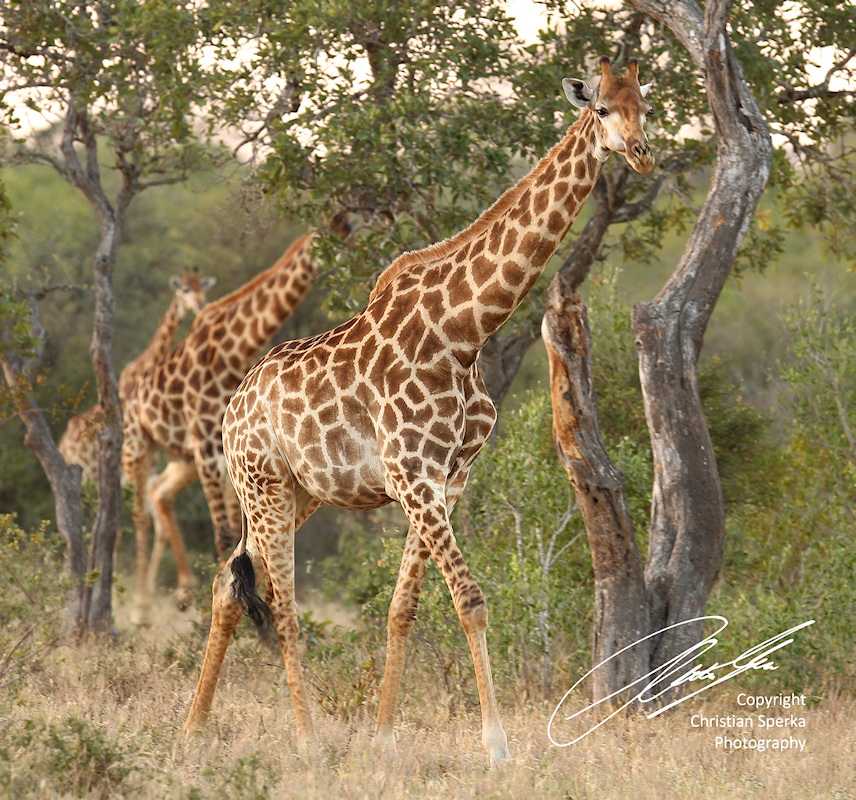
This week’s picture of a South African Giraffes was taken at Kings Camp, Timbavati Game Reserve, South Africa.

Enjoy the picture!

For more Giraffe pictures go to www.sperka.biz/giraffe (Wild South African Giraffes) or www.sperka.biz/giraffes (Masai Giraffes at the Nashville Zoo)

About Giraffes:
The Giraffe (Giraffa camelopardalis) is the tallest of all land-living animal species, and the largest ruminant. Its scientific name refers to its irregular patches of color on a light background, which bear a vague resemblance to a Leopard’s spots, and its face, which is similar to that of a camel. In addition to these features, the Giraffe is noted for its extremely long neck and legs and prominent horns. It stands 5–6 m (16–20 ft) tall and has an average weight of 1,200 kg (2,600 lb) for males and 830 kilograms (1,800 lb) for females.

It is classified under the family Giraffidae, along with its closest relative, the Okapi. Different authorities have recognized different numbers of subspecies, differentiated by size, coloration, coat pattern and range. Up to nine subspecies are recognized:
G. c. angolensis (Smoky or Angolan)
G. c. antiquorum (Kordofan)
G. c. camelopardalis (Nubian)
G. c. giraffa (South African)
G. c. peralta (West African)
G. c. reticulata (Reticulated or Somali)
G. c. rothschildi (Rothchild)
G. c. thornicrofti (Thornicroft or Rhodesian)
G. c. tippelskirchi (Massai)

My pictures are mainly of South African Giraffes (www.sperka.biz/giraffe) and of Masai Giraffes(www.sperka.biz/giraffes).

Picture of the Week 47 – We are playing – don’t interrupt!

These two Cape Hunting Dog puppies were playing when they were rudly interrupted by the photographer 🙂

The picture was taken at Thanda Private Game Reserve, Kwazulu Natal, South Africa.

Enjoy the picture!

For more Cape Hunting Dog (or African Wild Dog) pictures go to www.sperka.biz/chd

About Cape Hunting Dogs / African Wild Dog:

The Cape Hunting Dog (Lycaon pictus) is a large canid found only in Africa, especially in savannas and lightly wooded areas. It is variously called the African wild dog, African hunting dog, Cape hunting dog, painted dog, painted wolf, painted hunting dog, spotted dog, or ornate wolf. This dog is the only canine without dewclaws which are the claws that are on the inside of the front feet.

The Cape Hunting Dog has a the highest biting force of any extant mammal of the order Carnivora, although exceeded by the Tasmanian devil a marsupial carnivore.

Litters can contain up to 19 pups, though ~10 is the most common. The typical gestation period is 70 days. Females will disperse from their birth pack at 14–30 months of age and join other packs that lack sexually mature females. Males typically do not leave the pack in which they were born.  In a typical pack, males outnumber females by a factor of two to one, and only the dominant female is usually able to rear pups. The species is also unusual in that some members of the pack, including males, may be left to guard the pups whilst the others, including the mothers, join the hunting group.

Picture of the Week 46 – Brothers

This week’s picture is of three Hyacinth Macaw brothers at Nashville Zoo at Grassmere, Nashville, Tennessee, USA.

About Hyacinth Macaws:
The Hyacinth Macaw (Anodorhynchus hyacinthinus) is a parrot native to central and eastern South America. With a length of about 100 cm (3.3 ft) it is the largest macaw and the largest flying parrot species. Habitat loss and trapping wild birds for the pet trade has taken a heavy toll on their population in the wild, and as a result the species is classified as endangered. In the 1980s, it is estimated that at least 10,000 birds were
taken from the wild. The Nashville Zoo is involved in Hyacinth Macaw conservation. (Species Survial Plan SSP).

For more Hyacinth pictures go to  www.sperka.biz/macaw