Two Europeans!

Yesterday evening I took these images of two of my favorit Europeans.

The first one is a European Bee-eater and the second one is a European Roller.

They are seasonal migrants which spend March to September in the Northern Hemisphere and for the rest of the year they return to the South to enjoy our summer.

About 12% of all bird species on Thanda Safari‘s bird list are summer migrants.

Both birds are great photographic targets as they often perch in the sun. They also often return repeatedly to the same branch after catching insects on a short flight. If one times it carefully, one can catch them with open wings during landing.

Technical data (Bee-eater): Canon R6 with RF lens f11/800mm | ISO 320 | 1/500sec | ev+0.5 | WB 6500K | AV Mode | Crop to 25% of original image

Technical data (Roller): Canon R6 with RF lens f11/800mm | ISO 320 | 1/500sec | ev-0.5 | WB 6500K | AV Mode | Crop to 10% of original image

#amazingwildlife #africansafari #safarigetaway #christiansperkaphotography #thandasafari #big5 #gamereserve #wildlifephotography #learnphotography

THE MORNING POST – COLORS

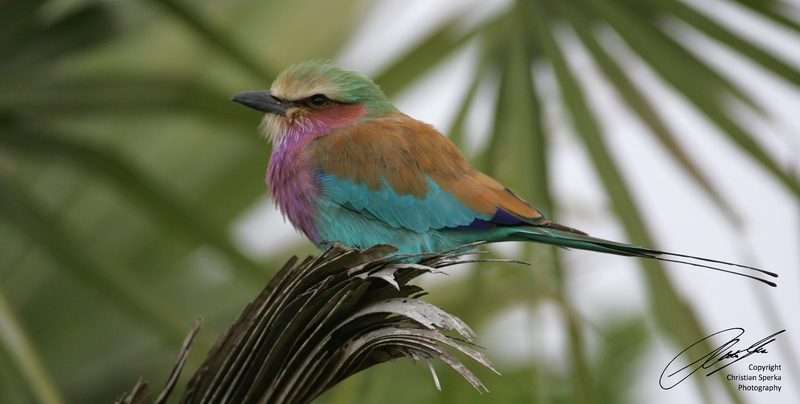
There are many colorful creatures on Earth but when it comes to subtle variations and delicate nuisances Lilac-breasted Rollers are one of the winners. Two days ago this beautiful bird remained still for long enough for me to take this portrait.

Enjoy the colors!

#Thandasafari @thandasafari

#Christiansperkaphotography @christiansperkaphotography

Bird of the Day – Lilac-breasted Roller

One of the most striking color combinations in the bush: Lilac-breasted Roller. This picture was taken at Kings Camp, Timbavati Game Reserve, South Africa.

To view more of my Lilac-breasted Roller images go to http://www.sperka.biz/sgb5

20110703 - CS2_7037 - E - 04

The Lilac-breasted Roller (Coracias caudatus) is widely distributed in sub-Saharan Africa, preferring open woodland and savanna. Usually found alone or in pairs, it perches conspicuously at the tops of trees, poles or other high vantage points from where it can spot insects, lizards, scorpions, snails, small birds and rodents moving about at ground level. Nesting takes place in a natural hole in a tree where a clutch of 2–4 eggs is laid, and incubated by both parents, who are extremely aggressive in defence of their nest, taking on raptors and other birds. During the breeding season the male will rise to great heights, descending in swoops and dives, while uttering harsh, discordant cries.

From Europe to Africa

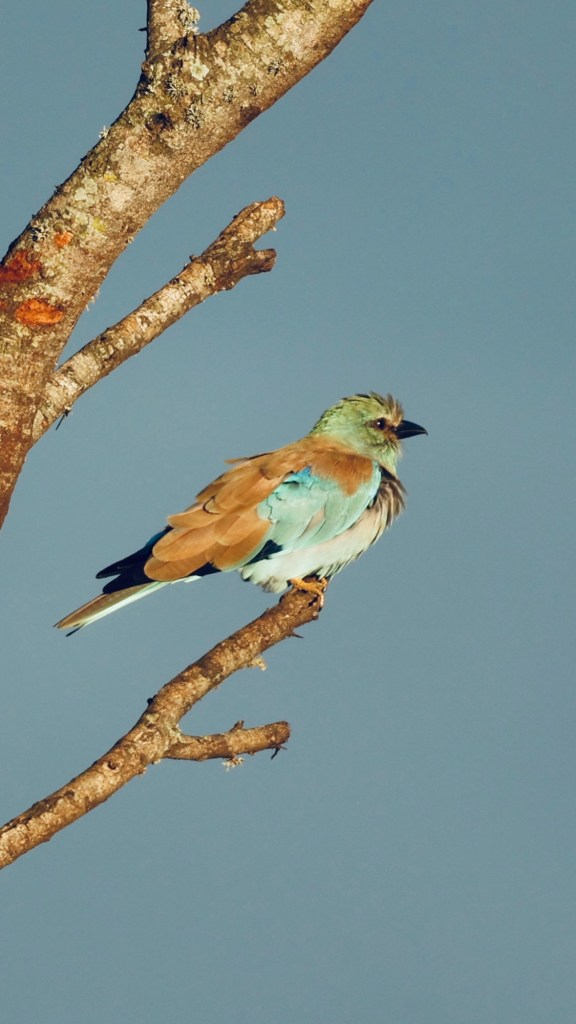
Today’s picture is an image of a European Roller, one of my favorite “Summer-Birds” in South Africa.

20130115 - CS2_7453 - E - SIG

About European Rollers:

The European Roller (Coracias garrulus) is the only member of the roller family of birds to breed in Europe. It is a long-distance migrant, wintering in southern Africa.

Rollers perch prominently on trees, posts or overhead wires, like giant shrikes, whilst watching for the large insects, small reptiles, rodents and frogs that they eat.

This species is striking in its strong direct flight, with the brilliant blue contrasting with black flight feathers. Sexes are similar, but the juvenile is a drabber version of the adult.

Feathery Spectrum!

I have not posted a bird picture for quite a while. So here are a few images of one of my favorite birds in South Africa.

Lilac-breaster Rollers have many colors of the spectrum in their plumage.

These pictures were taken in Phinda Private Game Reserve, the Timbavati Private Game Reserve and in Kruger National Park.

More about Lilac-breasted Rollers:
The Lilac-breasted Roller (Coracias caudatus) is widely distributed in sub-Saharan Africa. Usually found alone or in pairs, it perches conspicuously at the tops of trees, poles or other high vantage points from where it can spot insects, lizards, scorpions, snails, small birds and rodents moving about at ground level. It is the national bird of Botswana.