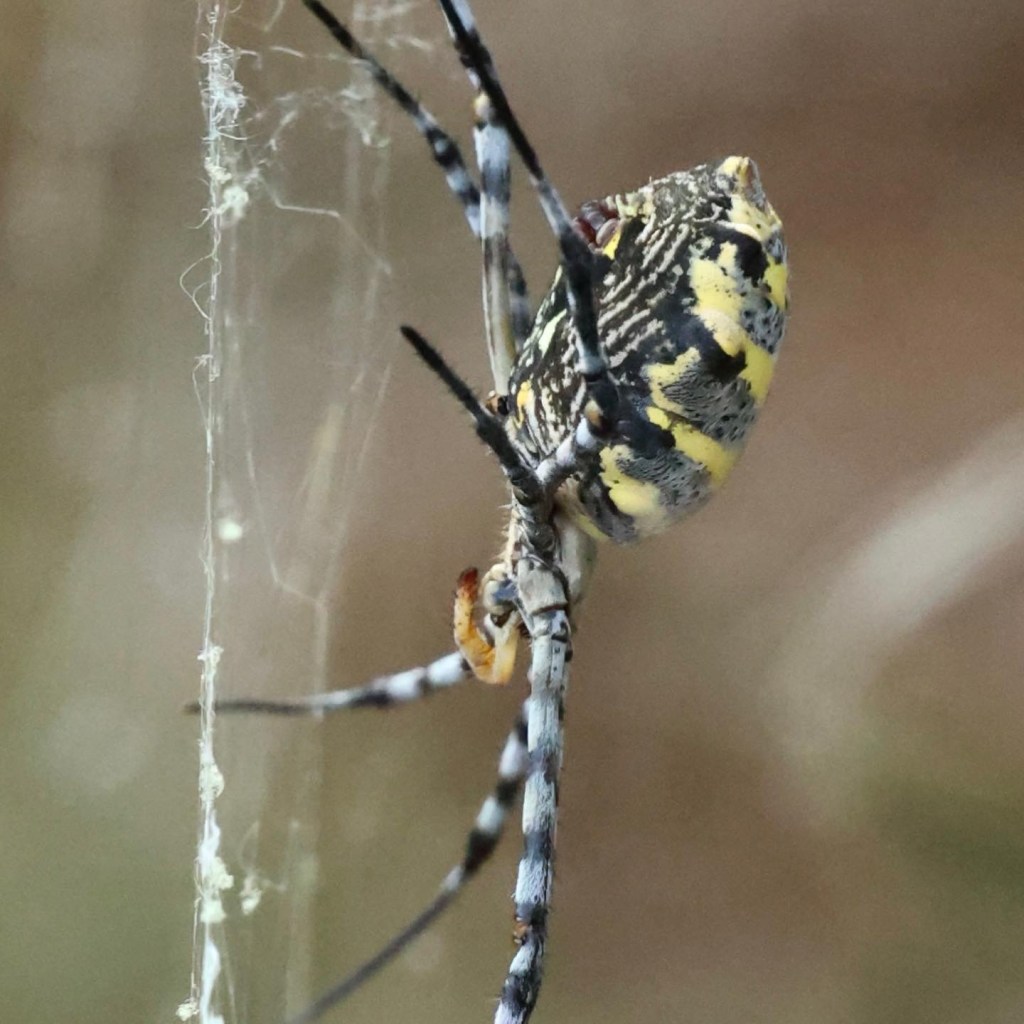
Golden Orb Spiders

For the last couple of years, we have only spotted very few spiders. But this season, we have had a spider explosion!

I even renamed one of the major roads in Thanda to ‘Spider Alley’.

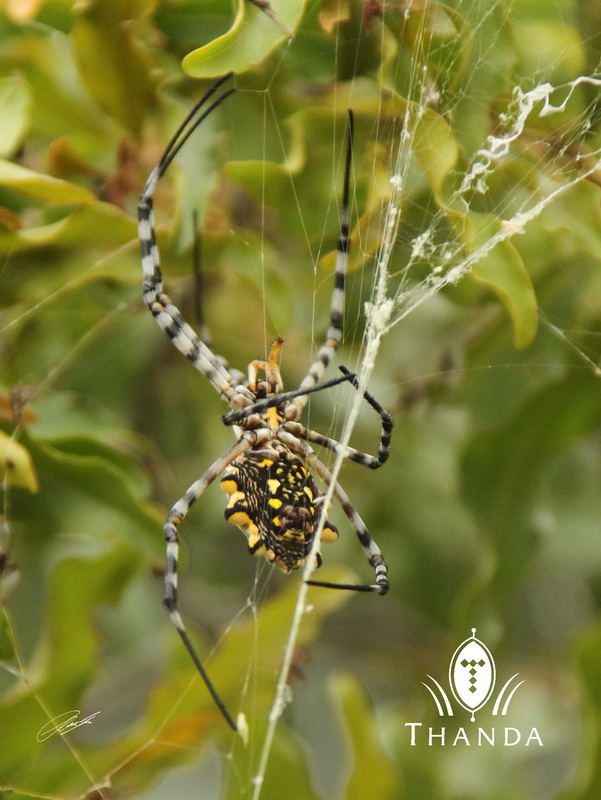
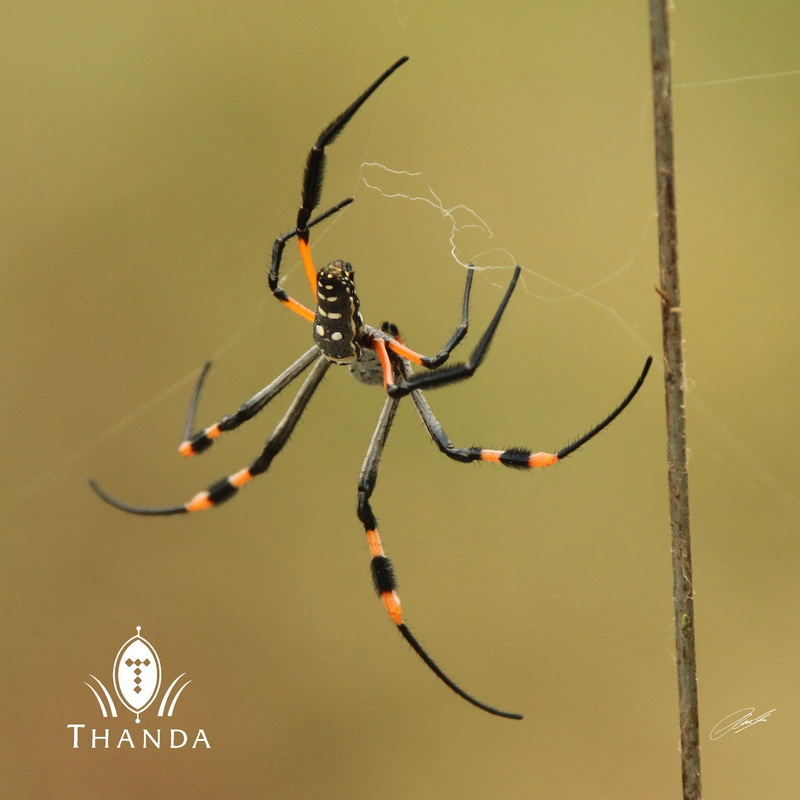
My favorites are the Golden Orb Spiders with their beautiful colors, long legs, and golden silk webs.

Interesting fact: The female Golden Orb spiders are up to 10 times larger than the males, as the males have only one function in life!

_Photography Info: These pictures were taken with a Canon EOS R6 Mark II and two different lenses, a 800mm RF lens and a 24-240mm RF lens._

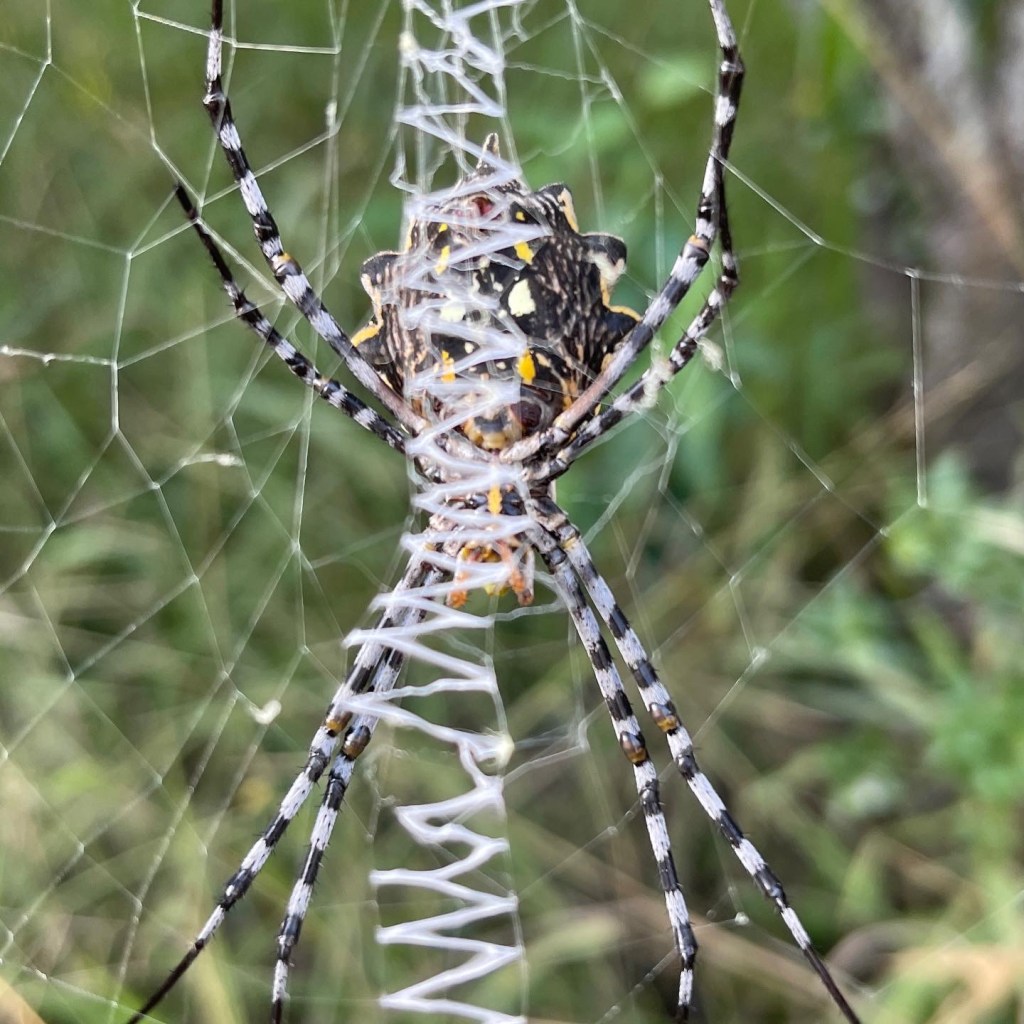
On the golden orb (its web)
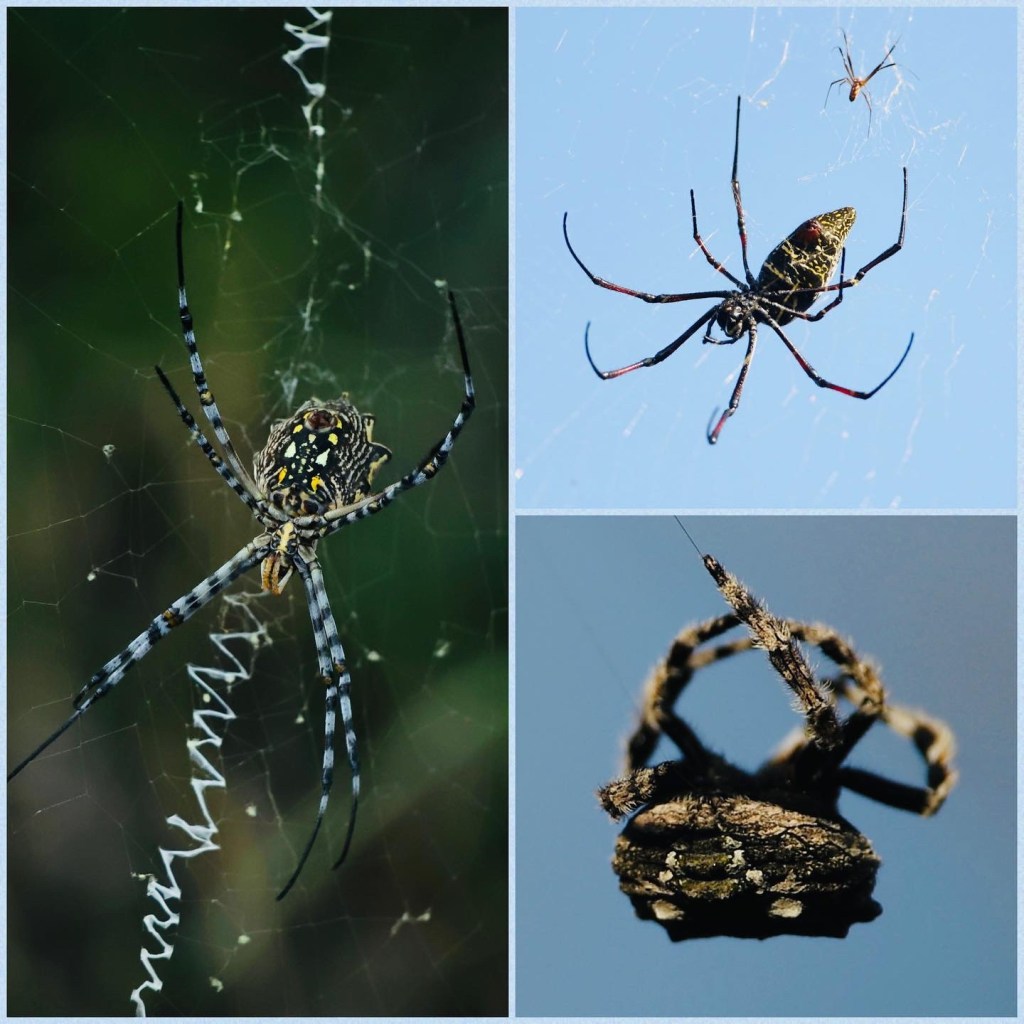
Two golden orbs!
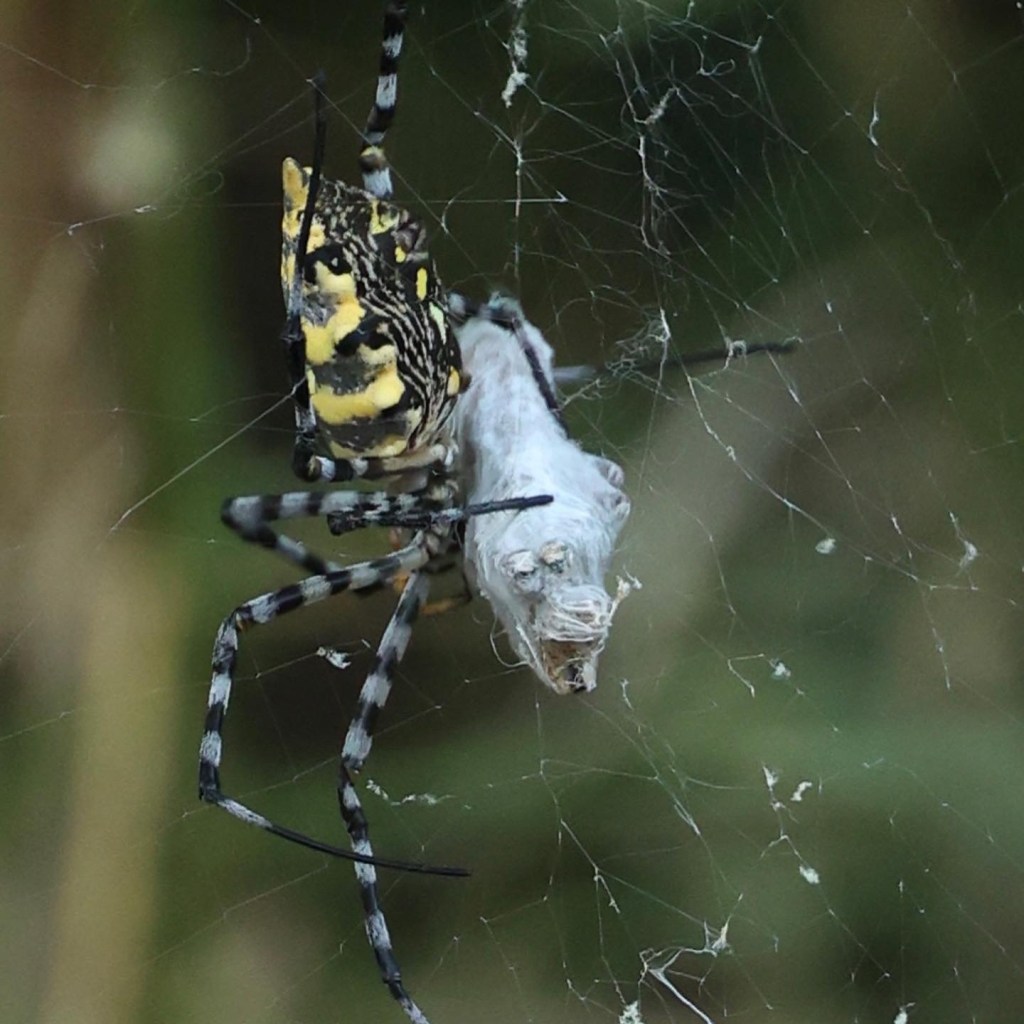
Having a meal
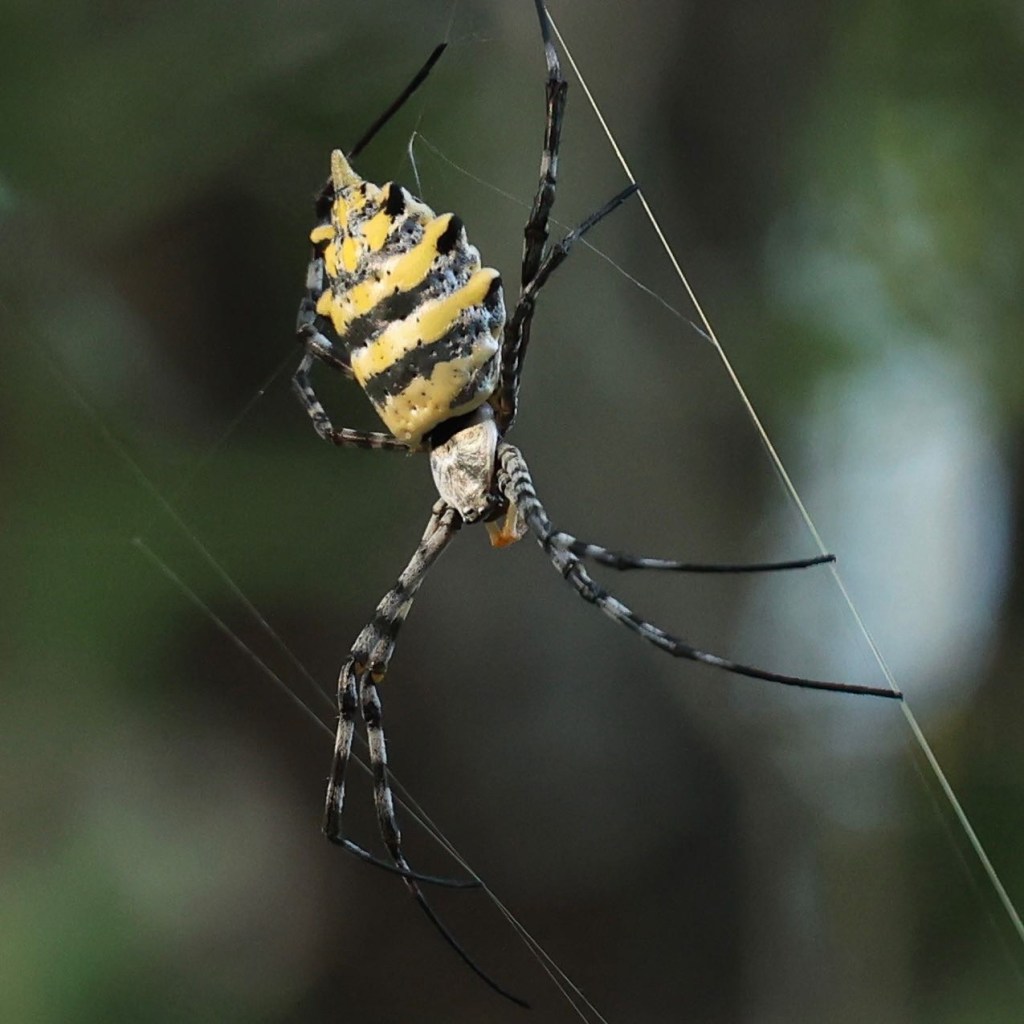
male vs female

Golden Orb Weavers …

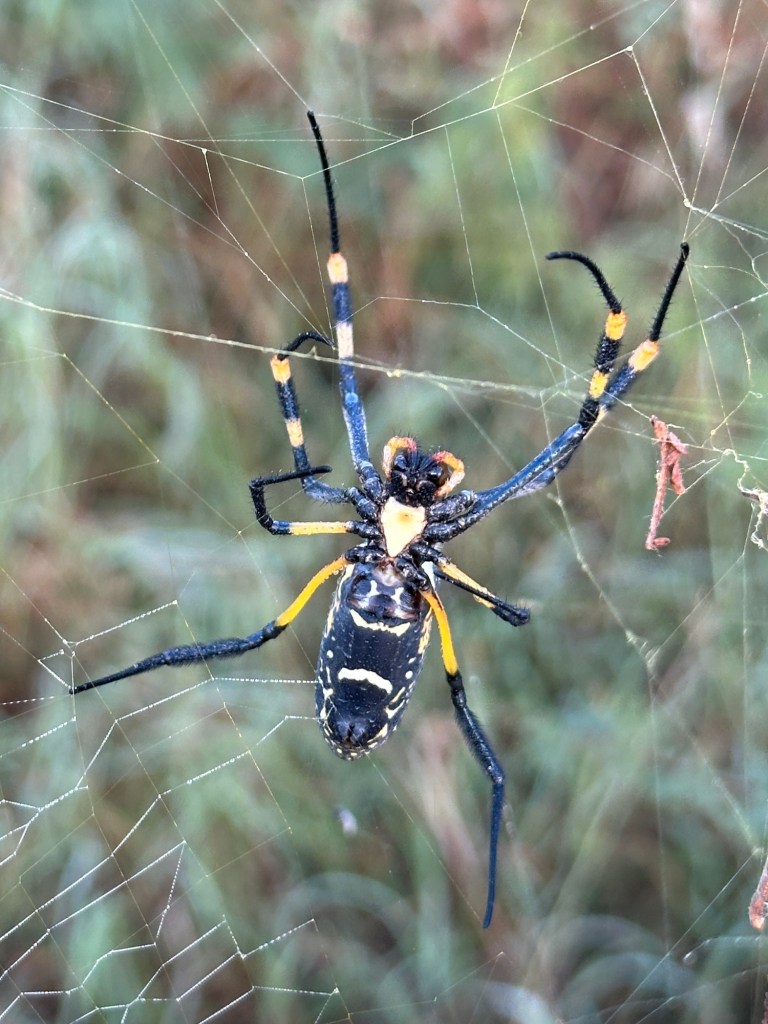
… are noted for the impressive webs they weave. There are quite a few different species in the genus _Trichonephila_. The females can reach sizes of over 5cm (2″). The males are usually 2/3 smaller.

This picture shows what one can close-up work one can do with a good smart phone.

Technical data: Apple 14 Pro Max | Main Camera 48mm | ISO 80 | 1/85sec | f1.8 | ev+0 | 240mm

#amazingwildlife #africansafari #safarigetaway #christiansperkaphotography #thandasafari #big5 #gamereserve #wildlifephotography #learnphotography

Small Kill!

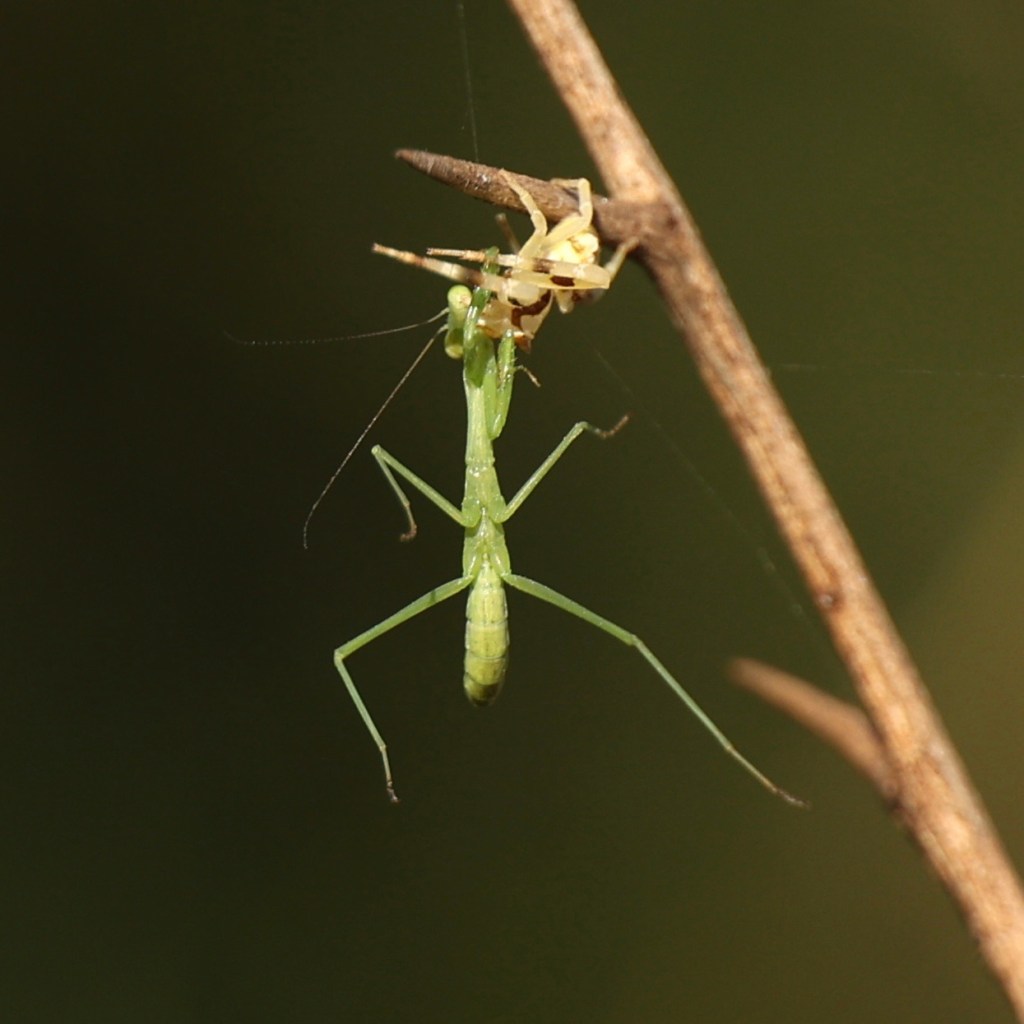
As we drove through some high grass during yesterday evening’s game drive my tracker Bheki collected this fighting pair from our vehicle’s front fender. The small spider and the small Praying Mantis were in a fight for their lives.

When we encountered the two contestants the spider was missing two front legs but he had one of the Praying Mantis’ legs firmly locked in his pincers. We were not sure if the spider lost his legs in this fight or if he entered the contest thus handicapped.

After a few minutes struggle the spider had won and the Praying Mantis had died. It was astonishing how quickly the strong green color faded from the dead creature.

We carefully transferred the winner with his price into a nearby acacia and continued on our drive.

Technical data: Canon R6 with RF lens f4-6.3/24-240mm | ISO 320 | 1/500sec | f6.7 | ev+0.5 | 240mm | WB 6500K | AV Mode | Crop to 5% of original image

#amazingwildlife #africansafari #safarigetaway #christiansperkaphotography #thandasafari #big5 #gamereserve #wildlifephotography #learnphotography

Sometimes …

… on a very hot day mammals are just not available for sightings on game drives. They hide in the shade of thick bush and are not visible at all.

At such times smaller creatures like spiders can provide beautiful material for wildlife photography.

On Sunday afternoon I took some guests on a drive down ‘spider alley’ and we observed these fascinating creatures waiting patiently for prey or devouring it.

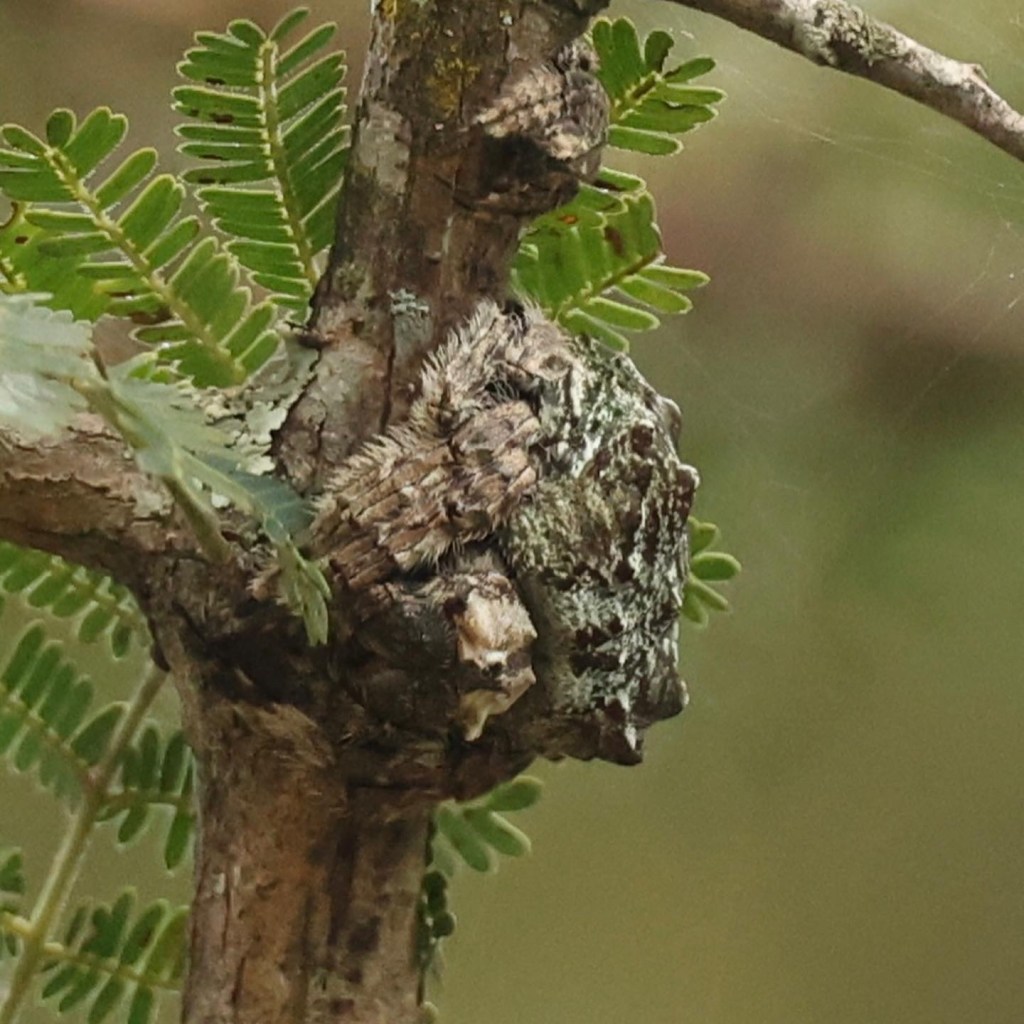
Here are some of the pictures taken of Golden Orb Spiders, Garden Orb Spiders and Bark Spiders.

My guests enjoyed this special arachnid drive very much!

#Christiansperkaphotography @christiansperkaphotography #pakamisagamereserve @pakamisagamereserve

Strong silk!

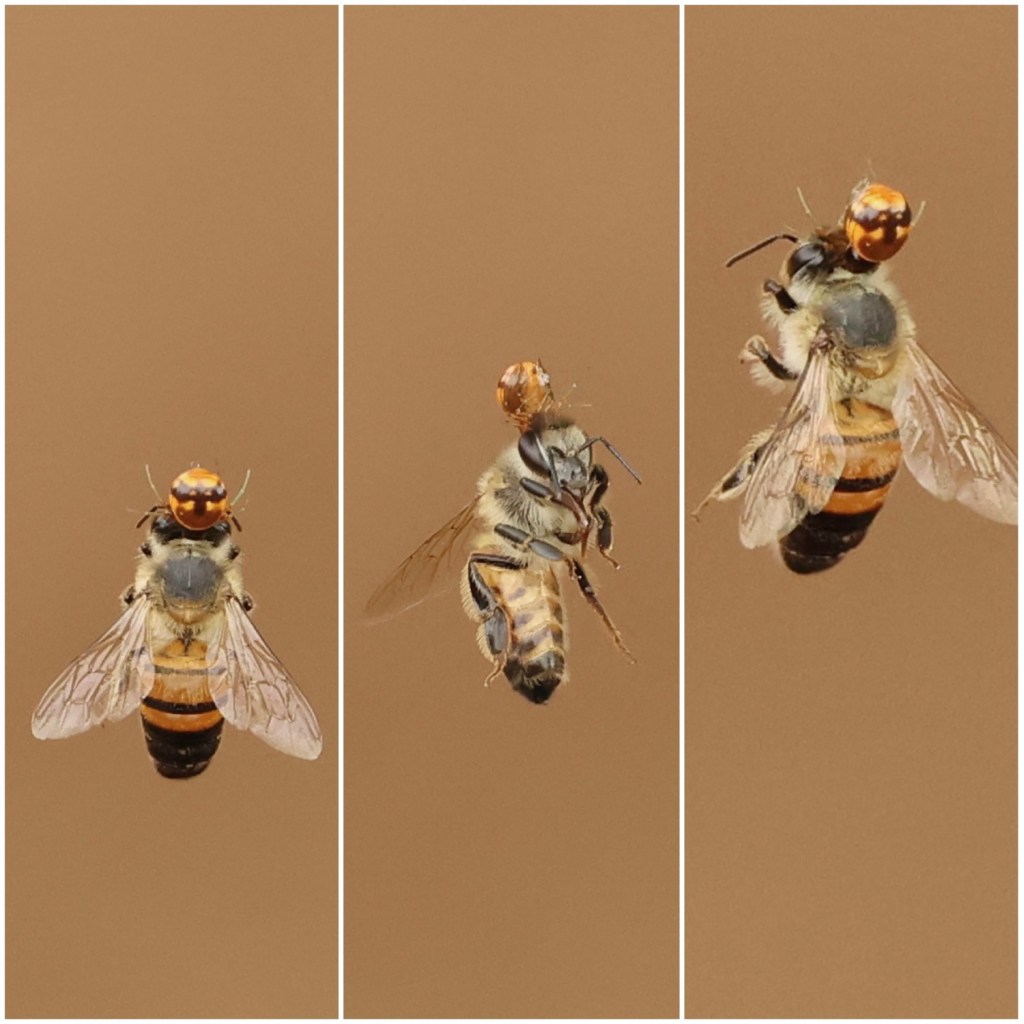
I do not know the name of this small (yellow/orange) spider, but it certainly must have potent venom and very strong silk.

As we arrived back at the Thanda Safari Lodge after a very productive morning game drive one of our guests pointed at a small spider and a honey bee seemingly floating in the air. When we looked closer it became clear that the spider was holding the dead bee firmly with its pedipalps while slowly pulling itself and its prey up to a branch by a silk strand.

Sometimes the ‘small sightings’ are even more fascinating than the big ones!

#Christiansperkaphotography @christiansperkaphotography #thandasafari @thandasafari

The Green Mamba and the Spider

Occasionally a Bark Spider decides to span its web across a road. If I see it in time (before driving through it) I always stop and show this fascinating creature and its ‘hunting tool’ to my guests. Once we had a good look I ‘cut’ the anchor line and the base line of the web.

The spider, now hanging with his web material from one tree only, eats up the remaining silk to preserve the protein for its next night’s web-building.

Nature is amazing!

#Christiansperkaphotography @christiansperkaphotography #thandasafari @thandasafari

ECTOTHERM MONDAY – GOLDEN ORB SPIDERS

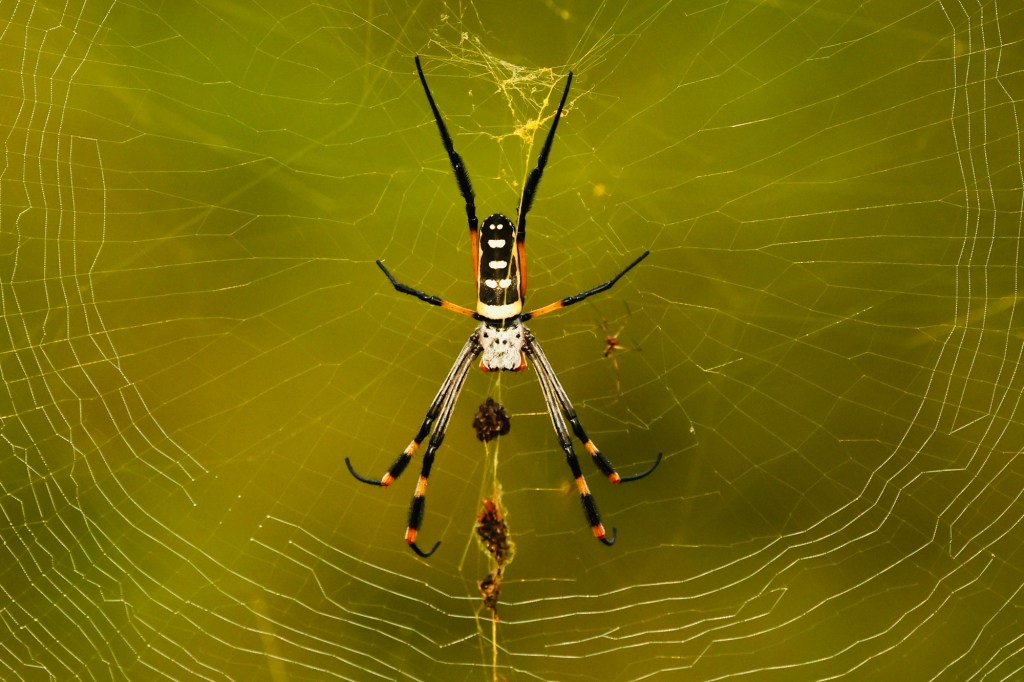
Golden Orb Spiders sometimes create caches of food for storage to be consumed later. I took this picture of a female spider cocooning a Blister Beetle.

She worked on this storage project while she had two other smaller ‘kills’ in her web, waiting to be eaten.

#Christiansperkaphotography @christiansperkaphotography #pakamisagamereserve @pakamisagamereserve

Two orbs and an eye!

Today’s images are a bit more “artsy” than my usual wildlife images.

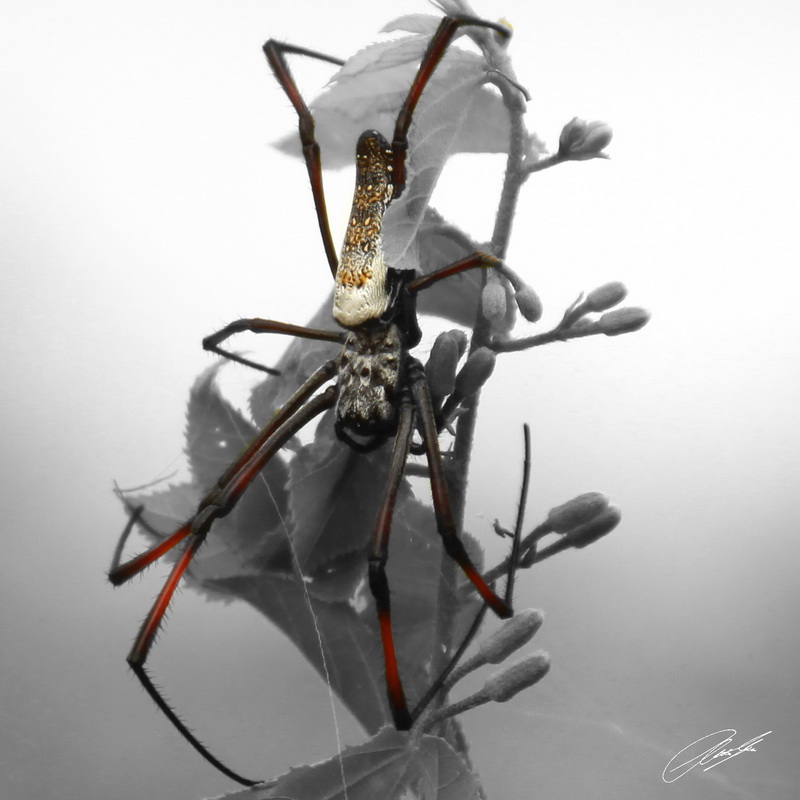
The first is of an Golden Orb Spider on a branch.

20130129 - CS2_0113 - E - SIG

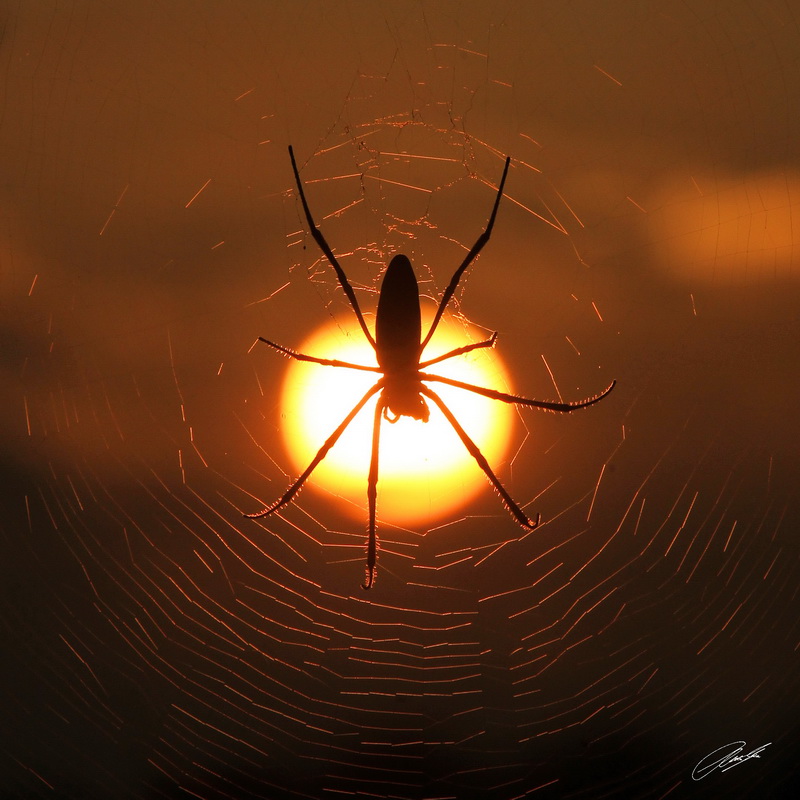
The second is of an Golden Orb Spider at sunrise.

20130131 - CS1_9277 - E - SIG

The third is of an Zebra’s eye just before sunset. (This image is part of my EYES series)

20130131 - CS3_8349 - E - SIG

Enjoy the images!

All three images are part of my “Without the Five” series (images 12-14).

Summer Time – Spider Time

20121220 - CS2_4178 - E - SIG

When the weather gets hot and humid many different species of Golden Orb Spiders build their webs along and across the roads on Thanda. Part of Bheki’s job at this time of the year is to take down the webs across the roads before they reach our guests.

It is good to know that spiders do not like large warm-blooded mammals and therefore avoid any contact with humans. Even in the rare case that one touches Bheki’s fingers it immediately descends and gets away from him. That also means that one can walk or drive safely beneath their webs – they do not drop on people 🙂

These beautiful creature occur in many color variations.
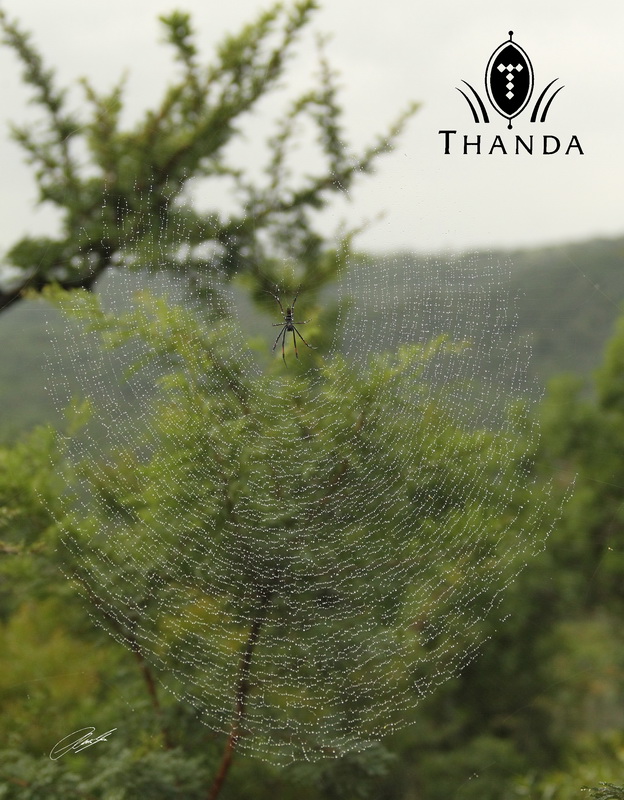
20121223 - CS2_4640 - E - SIG

20121226 - CS2_5154 - E - SIG

More about Golden Orb Spiders:

The Golden Orb Spiders (genus Nephila) are a genus of spiders noted for the impressive webs they weave. Nephila consists of numerous individual species found around the world. They are also commonly called Golden Silk Orb-weavers, Giant Wood Spiders, or Banana Spiders.

Golden Orb Spiders usually reach sizes up to 5.1 cm (2 in) in females, not including leg span, with males being usually 2/3 smaller (less than 2.5 cm, 1 in).

They are the oldest surviving genus of spiders, with a fossilized specimen known from 165 million years ago.

These spiders do not seem to form either beneficial or harmful relationships with humans. An (unlikely) bite causes local pain, redness, and blisters that normally disappear within 24-hours.

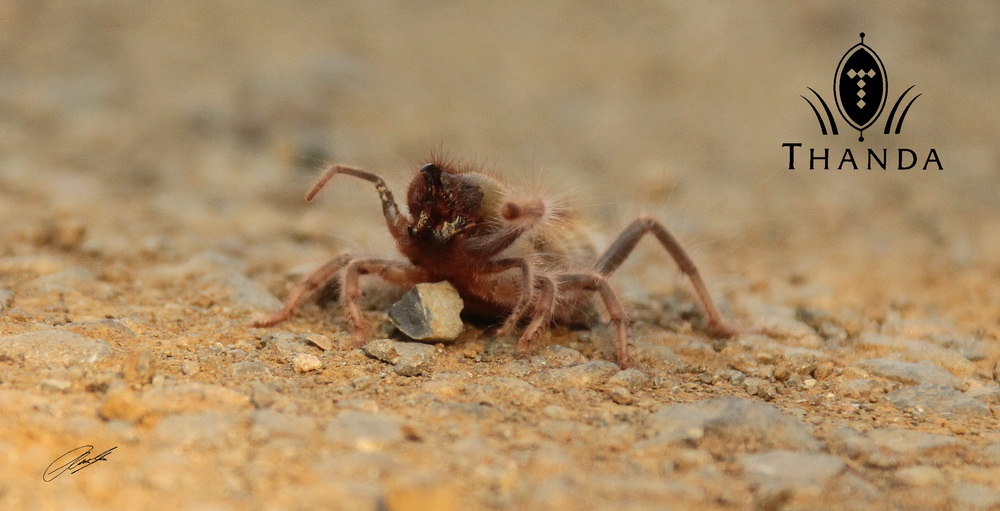
Without the Five (4) – Sun Spider

20130103 - CS2_6428 - E - SIG

This sun spider sat in the middle of the road when I left the lodge. I took an eye level shot of this small predator – lying on my belly as usual 🙂

About Sun Spiders:

Solifugae are known variously as Camel Spiders, Wind Scorpions or Sun Spiders. The order includes more than 1,000 described species. Sun Spiders are a different order from the true Spiders and the Scorpions. Much like a spider, the body of a Sun Spider has two tagmata (body segments).

Unlike Scorpions, Sun Spiders do not have a third body segment that forms a “tail”. Most species of Solifugae live in deserts and feed opportunistically on small ground-dwelling animals. A number of urban legends exaggerate the size and speed of Sun Spiders, and their potential danger to humans, which is practically nil.

This image is part of my “Without the Five” series:

Each image features a species, which is usually not in the safari limelight. So they will be no images of Lions, Leopard, Elephants, Rhinos, Buffalo, Cheetahs …

Enjoy the “without the Five” series