I would rate this image of Thanda’s youngest Elephant with “Cuteness Factor 100”.
To the delight of all Thanda guests he and his family came for a drink stop at the small pond in front of the Thanda Safari Lodge.
What a morning!
Philip G. – a Dutch boy living with his family in Poland – one of our recent guests at Thanda – took my photography lesson during his stay at the Lodge.
He, his two brothers and his parents enjoyed the stay very much and Philip sent me two of his pictures. I am very proud to feature in one of them (even if it is with a bit of a funny face looking at a scorpion – but do not worry this one is quite harmless :-)).
Philip especially liked the macro image of the little caterpillar. The collage also shows Philip with his camera – busy shooting in the bush!
Well done and thanks for letting me publish two of your works!
Christian Sperka – Specialist Photography Guide and Resident Wildlife Photographer – Thanda Private Game Reserve
More about Christian’s photography lessons at Thanda:
Any guest at Thanda Private Game Reserve may request a complementary 90 minute photography session (based on availability/between game drives). In these sessions Christian will teach how to set up your camera for wildlife photography, what do adjust during shooting on game drive (motto:keep it simple) and he will show you what makes a good wildlife image. It does not matter if you stay at the Safari Lodge, the Tented Camp or the Villa iZulu. When you are booking your stay at Thanda you can also request Christian as your field guide (based on availability) during your stay to spend additional photography time with him and his tracker Bheki in the bush.
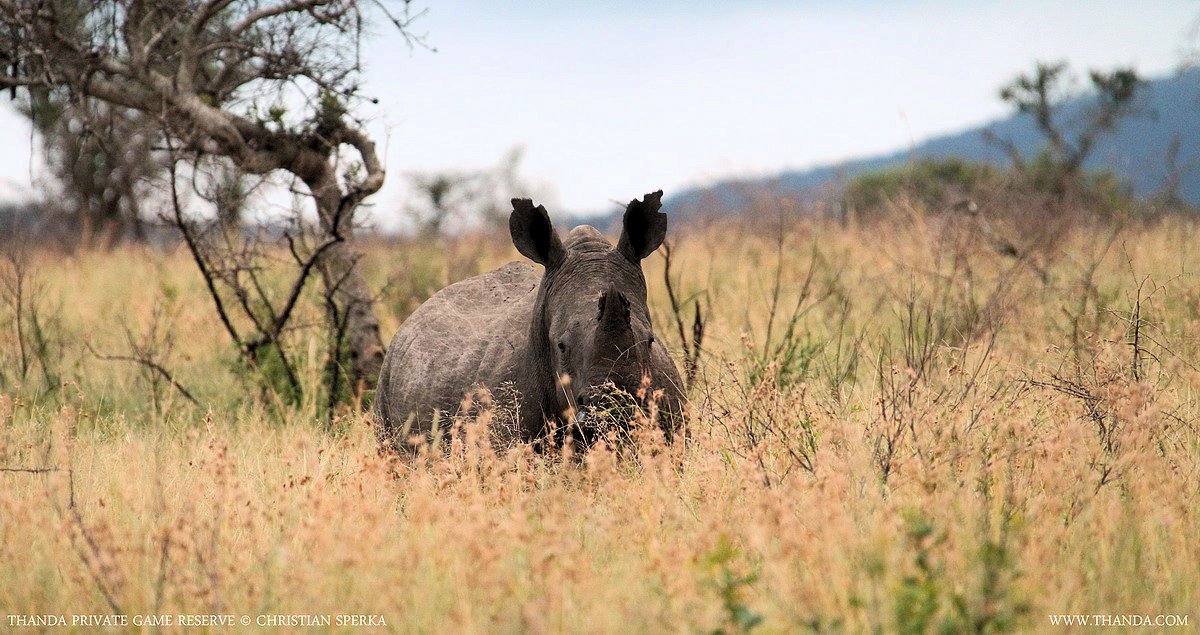
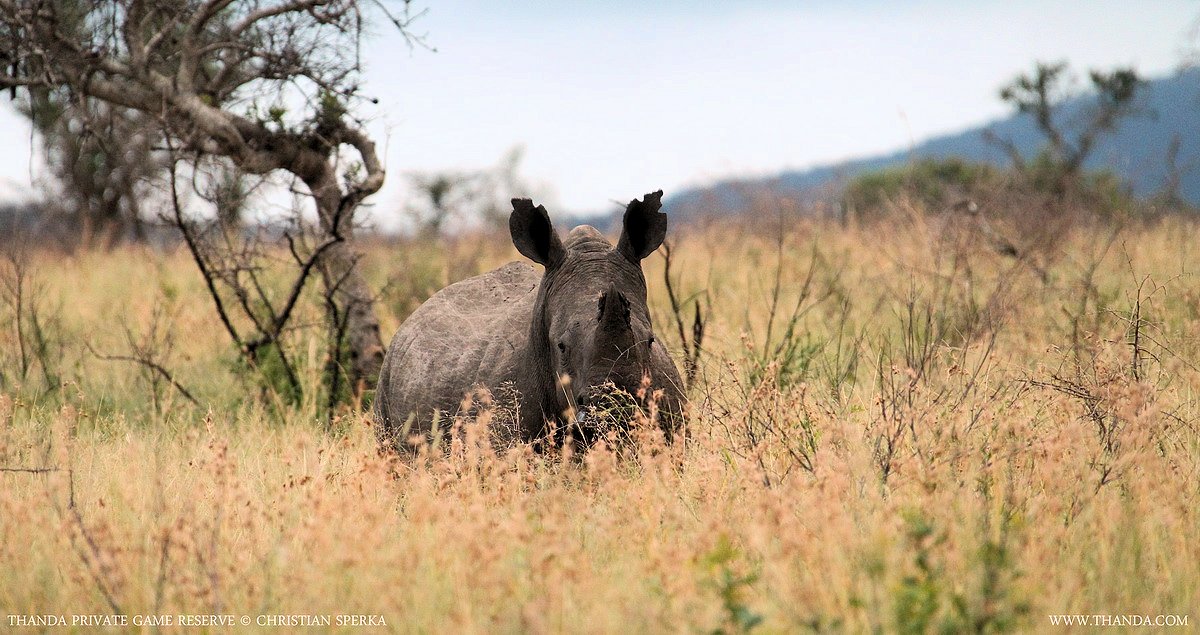
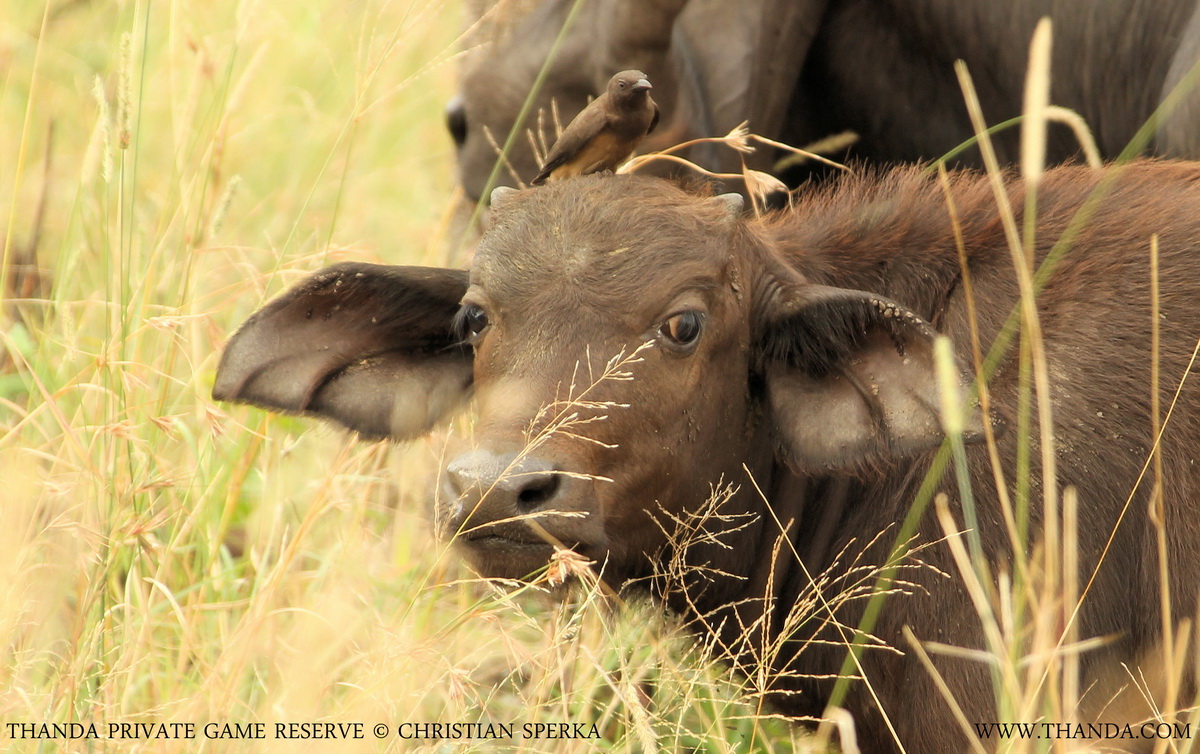
The picture shows a juvenile Red-billed Oxpecker looking for ticks inside of a White Rhino’s nose. The Oxpecker’s bill is black because he is not an adult yet.
Lisa W. (commented on my blog) got closest to the correct answer – Well done!
More about …
Oxpeckers are endemic to the savanna of Sub-Saharan Africa. Their name arises from their habit of perching on large mammals, eating ticks and other parasites. Oxpeckers feed exclusively on the backs of large mammals. The smallest regularly used species is the Impala. Some potential Oxpecker hosts are intolerant of their presence. Elephants and Waterbuck will actively dislodge the Oxpeckers when they land.
This blog message contains the answer to https://sperka.info/2014/01/16/what-is-that/
My brother Stefan visited me in November last year at Thanda. And he has taken quite a few shots of me during his stay. This is a collage with some his images – featuring me at work. Thanks Stefan!
Click on the image to enlarge.
From top left to bottom right – me …
…in my car in front of the Oysterbox hotel
…sitting in the Thanda Safari Lodge lounge
…with Dulcie at the Thanda Safari Lodge
…standing behind the outside dining table at Thanda’s Villa iZulu
…with Rachel and Jabulani at the Elephant interaction
…with Stefan, Bheki and my Land Rover
…talking to a family during a local community visit
…visiting a zulu homestead
…driving my “Landi”
…setting up the bar on my landrover for an evening drink stop
…in my office
…in front of my room
…with a White Rhino on game drive
I have created a new collage of some of my favorite wildlife images I took at Thanda Private Game Reserve. All images were taken during my 390 game drives in 2013.
I hope you enjoy the Thanda Wildlife Collage 2013.
In case you would like to order a print (various sizes) or a high-res digital download of this collage online go to http://www.sperka.biz/tc/h263b7061#h263b7061.
Pictures by Christian Sperka – Specialist Photography Guide and Resident Wildlife Photographer – Thanda Private Game Reserve.
PS: The Thanda Wildlife Collage 2012 is also still available for purchase at http://www.sperka.biz/tc/h55933700#h55933700
Watch the video at http://www.youtube.com/watch?v=9yqY1be88CQ
This morning I had to “rescue” a Mozambique Spitting Cobra. This snake had lost her way into one of Thanda store rooms. Someone spotted it disappearing behind a cabinet in the room.
Lodge management called me to capture the snake and to remove it to a new home. First I had to empty out the cabinet (hundreds of cans and bottles :-)) to be able to move it and to get to the snake hidden behind.
Once the cabinet was out of the way the Cobra did, what Cobras do. It opened it’s hood and made hizzing sounds to scare me away. I used a “snake grabbing stick” to capture it (20 cm behind the head) and carried it out of the room holding it also by its tail.
Once safely lodged in a special snake barrel I drove the snake to one of Thanda’s waterholes. Thanks to Jarred Glasson, Thanda’s Head Guide, I have some images of me releasing the snake at its new home!
More about Mozambique Spitting Cobra (Naja mossambica)…
It is native to Africa. The average length of adults is between 90cm – 105cm (3-3½ feet). This species prefers localities near water, to which it will readily take when disturbed. It is considered one of the most dangerous snakes in Africa. It can spit its venom. Its bite causes severe local tissue destruction. Venom to the eyes can also cause impaired vision or blindness. This cobra’s diet mainly consists of amphibians, other snakes, birds, eggs, small mammals, and even insects occasionally. This snake is nervous and highly strung. When confronted at close quarters it can rear up to as much as two-thirds of its length, spread its long narrow hood and will readily “spit” in defense, usually from a reared-up position. By doing this the venom can be ejected at a distance of 2-3 metres (6½-10 feet), with remarkable accuracy. The spitting cobra does bite depending on its environment and the situation it is in, and also feigns death to avoid further molestation.
My guests enjoyed this very special sighting of a small insect. Skillfully light by Bheki’s spotlight I took this shot of a Katydid. To get a shot on eye level I had to stretch out on the ground. This picture is a prime example why “wildlife-eye-level-photography” is so important.
Picture by Christian Sperka – Specialist Photography Guide and Resident Wildlife Photographer – Thanda Private Game Reserve.
More about …
Insects in the family Tettigoniidae are commonly called katydids or bush-crickets. There are more than 6,400 species. They are also known as long-horned grasshoppers, although they are more closely related to crickets than to any type of grasshopper. Many tettigoniids exhibit mimicry and camouflage, commonly with shapes and colors similar to leaves.