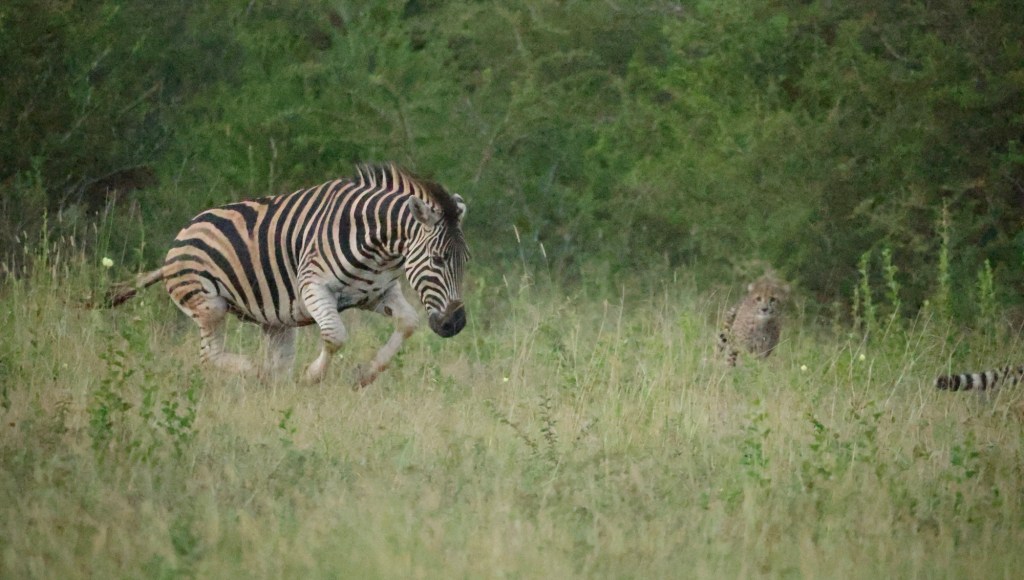
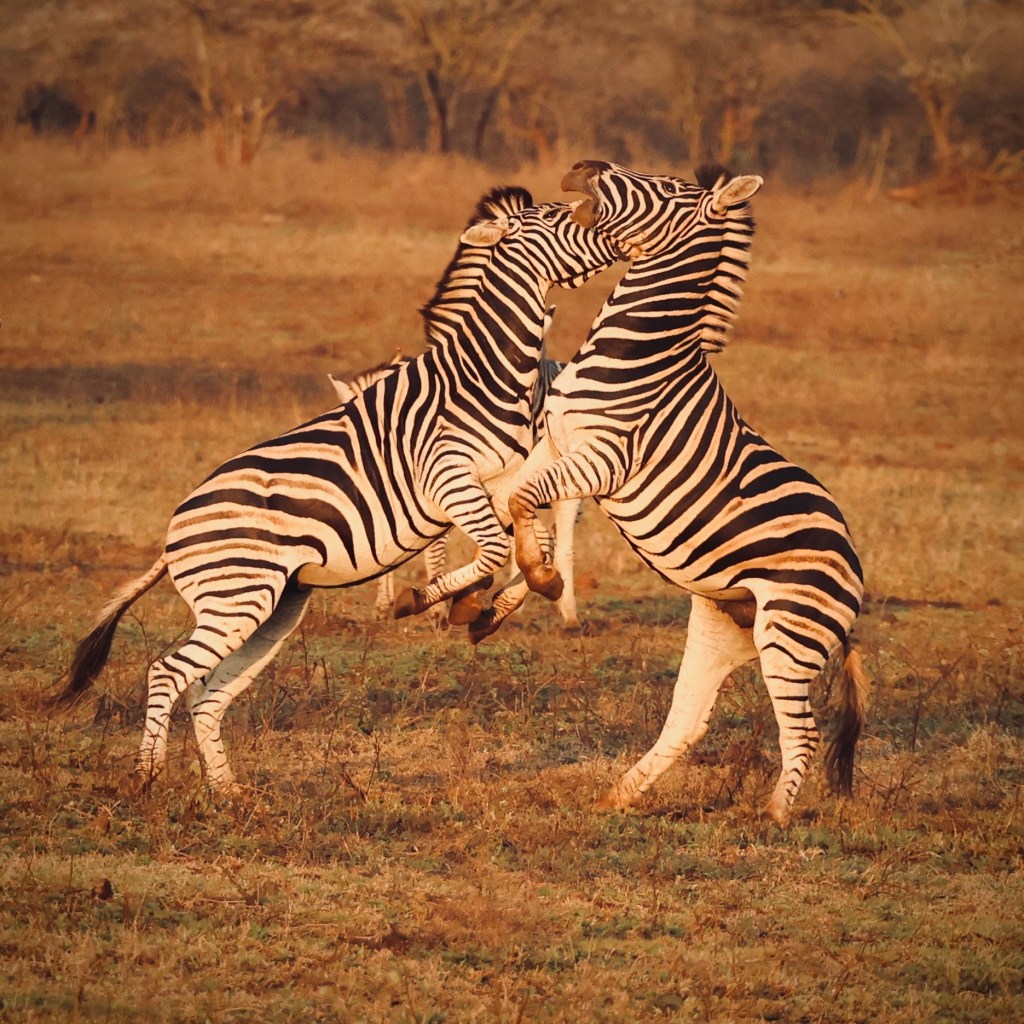
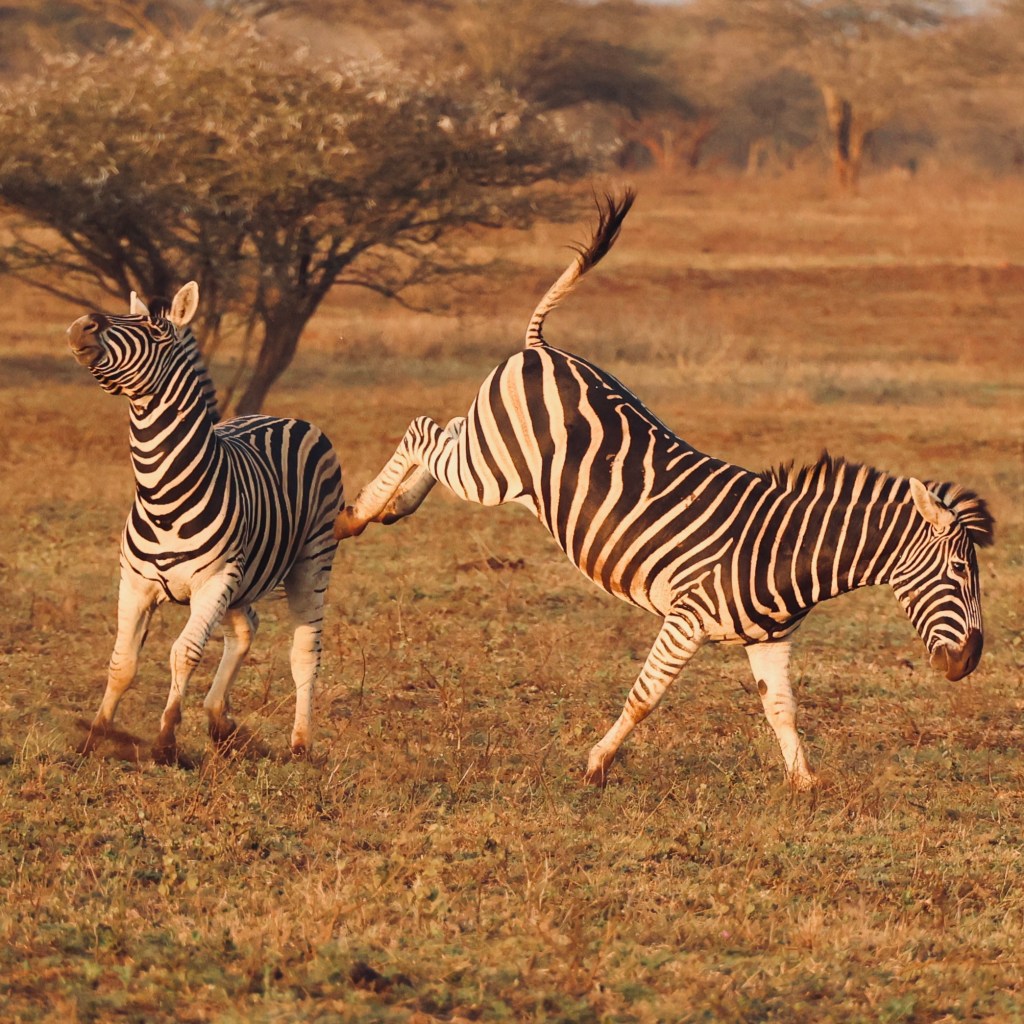
Topic: After sunset this Zebra stallion turned the table on two Cheetah cubs who where stalking him. Once they got close he started chasing them. Lesson learned and no harm done.
Technical data: Canon R6 MII with RF lens f11/800mm | ISO 102400 | 1/2000sec | ev+0 | WB 6500K | AV Mode
Did you know that Zebras can crossbreed with other equine species? When Zebras hybridize, the resulting offspring are called Zebroids. The most common hybrid is the Zorse, a cross between a Zebra and a Horse.
Zebroids often exhibit a combination of traits, such as striped legs and a Horse-like body shape. However, Zebra crossbreeds rarely occur in the wild.
Like mules and hinnies they are generally unable to breed, due to an odd number of chromosomes disrupting meiosis (cell division of germ cells).
Looking at ‘googled’ pictures of Zebroids I am reminded of an extinct relative of modern Zebras, called a Quagga (which still lends its name to the scientific term for today’s Plains Zebra = Equus.quagga).
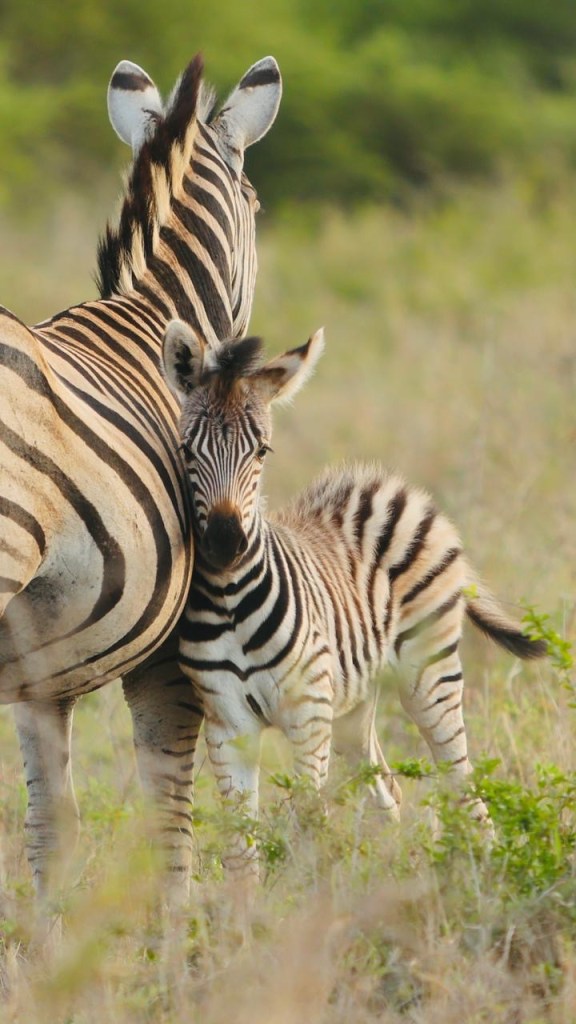
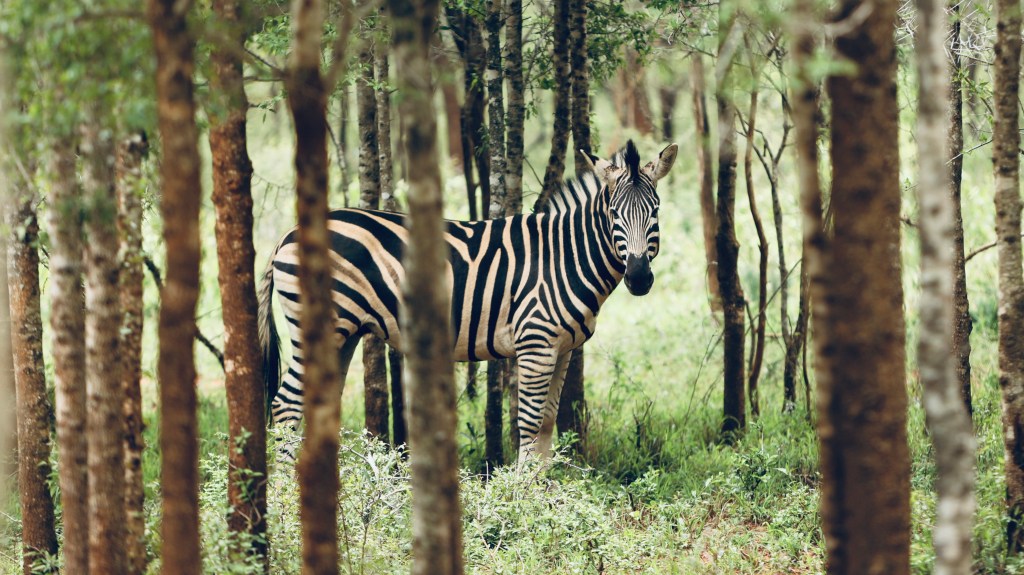
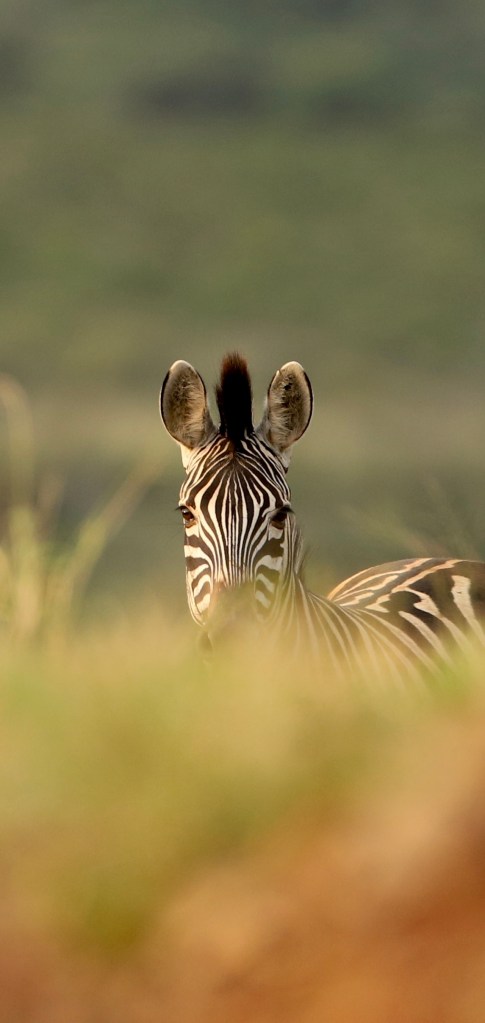
I took this morning light portrait of this Burchell’s Zebra (Equus quagga burchellii – Southern subspecies of the Plains Zebra) last week on Thanda.
Technical data: Canon R6 with RF lens f4-6.3/24-240m | ISO 2000 | 1/750sec | f6.7 | ev+1 | 160mm | WB 6500K | AV Mode | Crop to 25% of original image
Zebras are predominantly feeding on grass, but occasionally browse on trees. Herbivores (animals, which only consume plants material) are either grazers (mostly eating grass), browsers (mostly eating tree material), and mixed feeders (eating both).
It is interesting to observe the order in which grazers feed in area. Cape Buffalo (considered bulk feeders) will move into an area with tall, fibrous grass. Once they have shortened it, Zebras will move in and cut the grass further. At the end Wildebeest will eat the very short left-overs (fresh shoots).
The Zebra in this image moved through a tree line, Knob-thorn feeding on the grass in between the trees.
Technical data: Canon R6 with EF lens f2.8/70-200mm | ISO 160 | 1/500sec | f2.8 | ev+0 | 200mm | WB 6500K | AV Mode | Crop to 40% of original image
Three different species of Zebra exist today. The Plains Zebra (Equus quagga) is the most common one and occurs all over sub-Saharan Africa (with six recognized subspecies).
The two other species are the Mountain Zebra (Equus zebra) only found in Southern Africa (mainly in Namibia and the Western parts of South Africa), and Grevy’s Zebra (Equus grevyi) only occurring in East Africa. The latter two species are threatened by extinction.
This picture is of a Burchell’s Zebra (Zebra quagga burchelli or Damaraland Zebra or Zululand Zebra), a Southern subspecies of the Plains Zebra, which can be found on Thanda Safari. In difference to all other Zebras they have a few grey shadow stripes between their white and black stripes.
Technical data: Canon R6 with EF lens f2.8/70-200mm | ISO 100 | 1/2000sec | f2.8 | ev+0 | 140mm | WB 6500K | AV Mode | Crop to 80% of original image
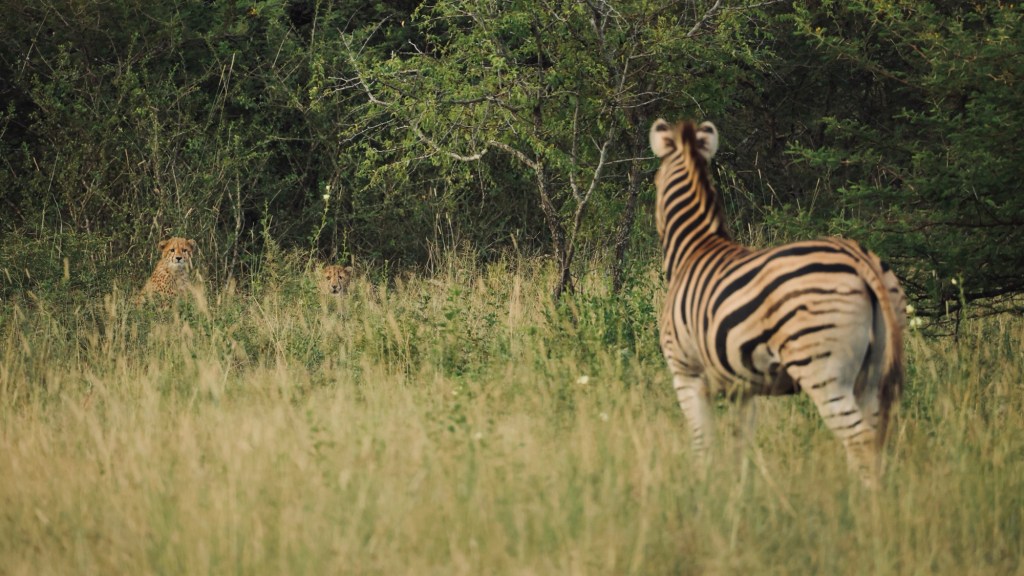
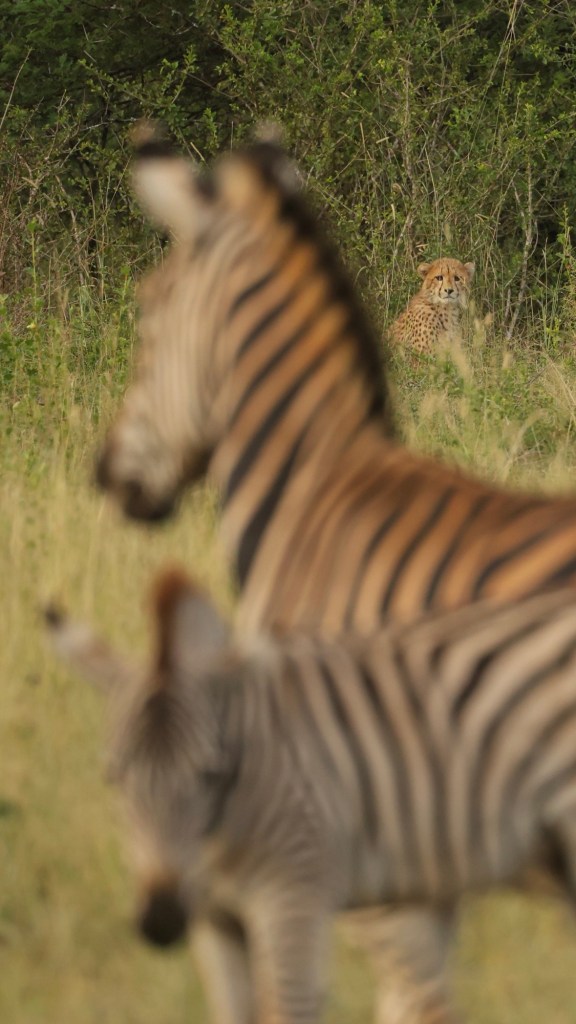
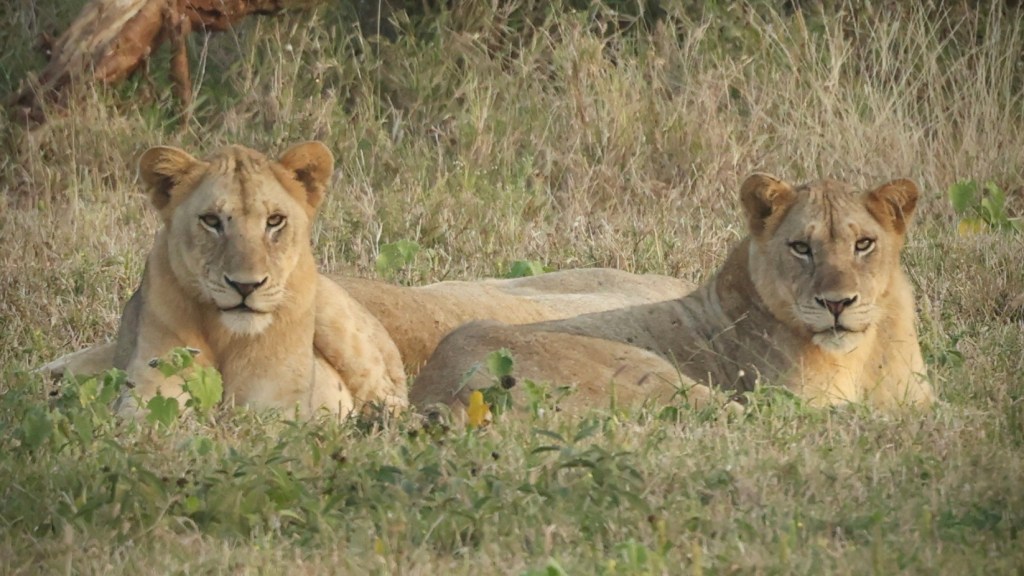
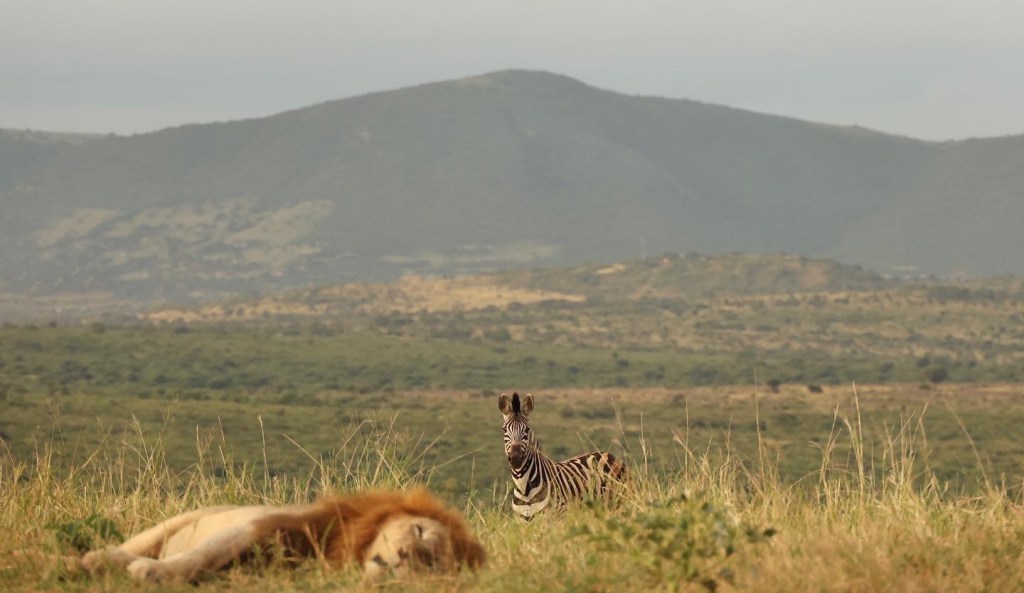
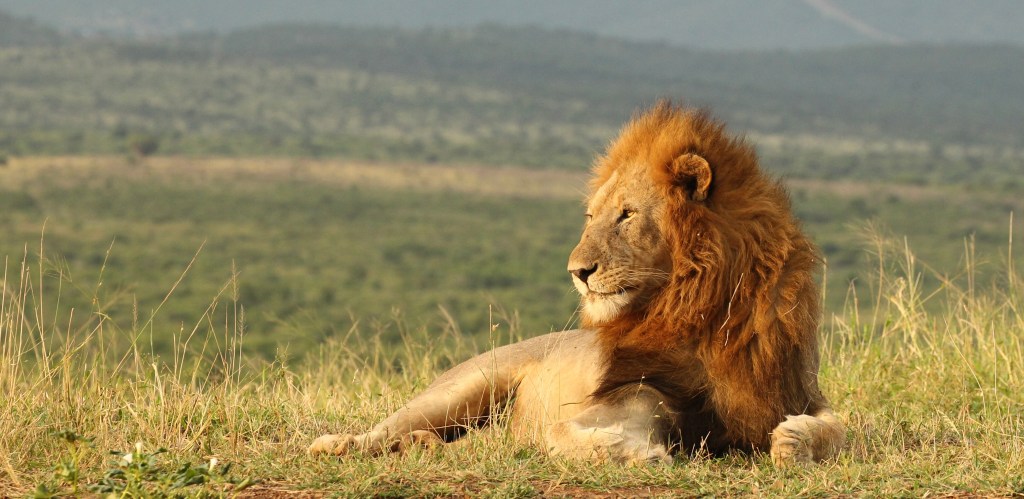
This Zebra spotted two of our male Lions just in time before it was getting to close to these formidable carnivores.
The cats were not in hunting mode – as they still had a fairly full stomach from their last meal – but their killing instinct would have taken over if the Zebra would have gotten to close.









 Christian Sperka Photography | Custom Luxury Tours