at the edge of an open savanna area just after the sun had set.
While we took pictures of the beautiful orange backlight clouds my tracker Bheki shouted at us to get into the vehicle.
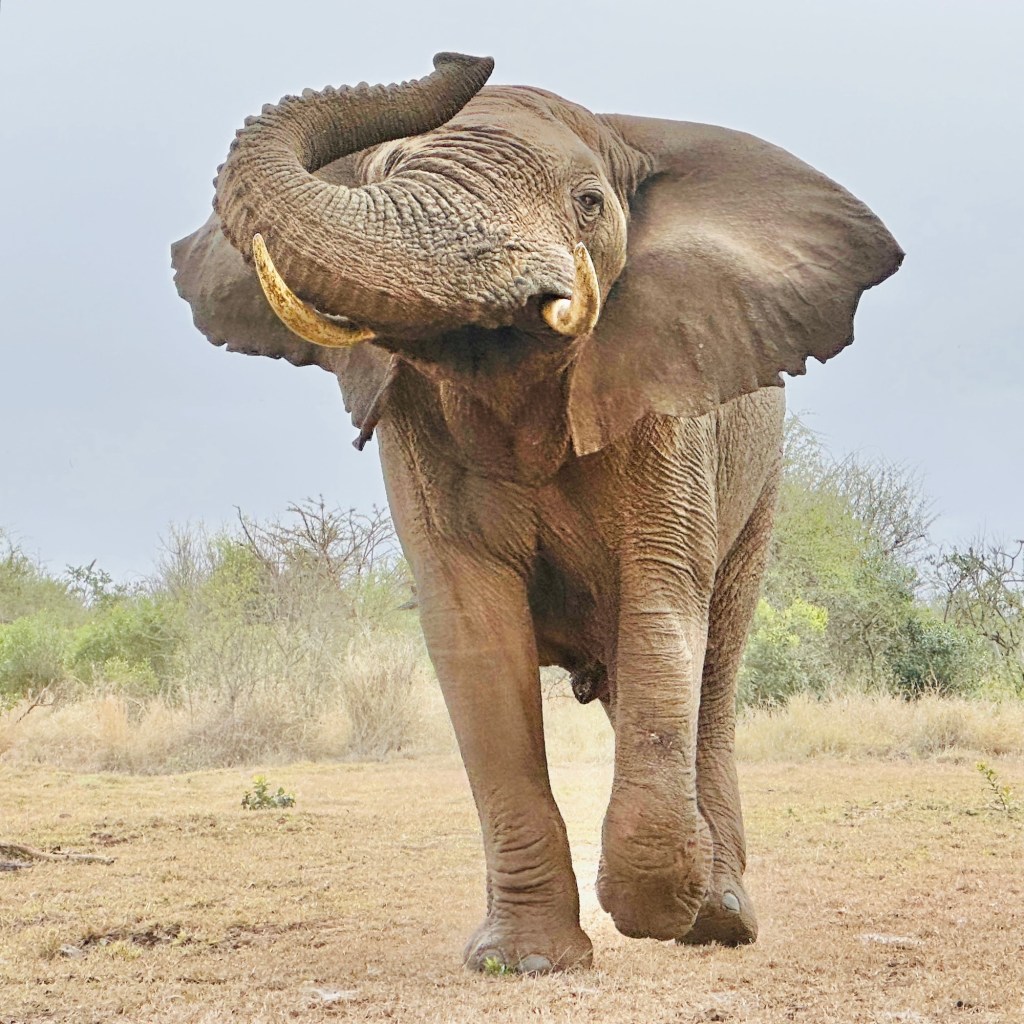
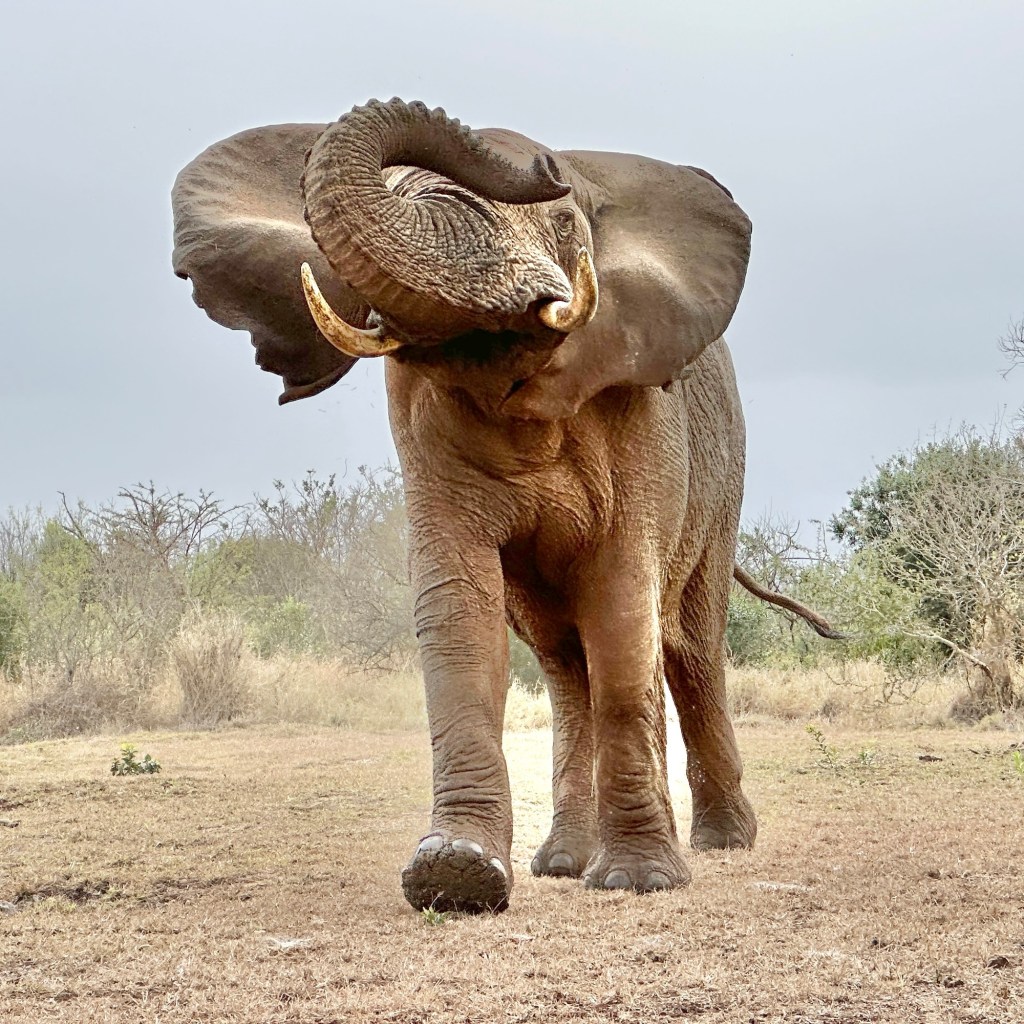
As I turned around a large grey ghost (also called Elephant) was standing about 20 meters away from us. He had appeared Houdini-fashion out of the nearly tree-line without making any sounds.
My guest, who had enjoyed an Amarula on ice just before the unplanned arrival, adhered to my instructions to move slowly but steadily to the vehicle and climbed on.
Bheki had only time to get onto his tracker seat when the large bull arrived at the back of the vehicle, where my coolerbox and hotbox sat in the open back gate.
Our drink stop snacks, cans, glasses, and the Amarula bottle were still on the foldable table on the front of the vehicle.
Bheki grabbed the bottle and I started driving forwards very carefully away from our visitor, without spilling anything from the table.
The Elephant did not follow but chose to continue his walk up the road towards a nearby water hole.
We packed up all our equipment and agreed that we just had a very special adventure!
It was amazing to see how the Elephant’s behavior changed once we were no longer on foot but back on the vehicle. It was another clear demonstration for the difference between the instinctual hostile attitude of Elephants to humans on foot and the learned acceptance of humans as part of a safari vehicle (or any other human-made structure).
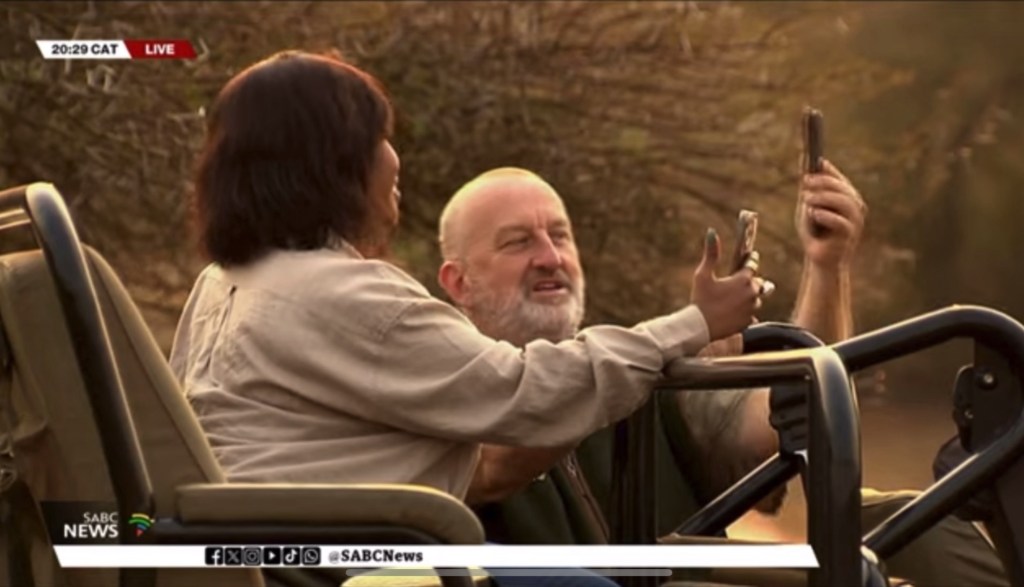
The collage shows a picture taken by my guest of the Elli behind us and my picture of Bheki holding the Amarula bottle while we were driving away!
As many of you know I support the Star For Life ( https://starforlife.org ) charity whenever I can.
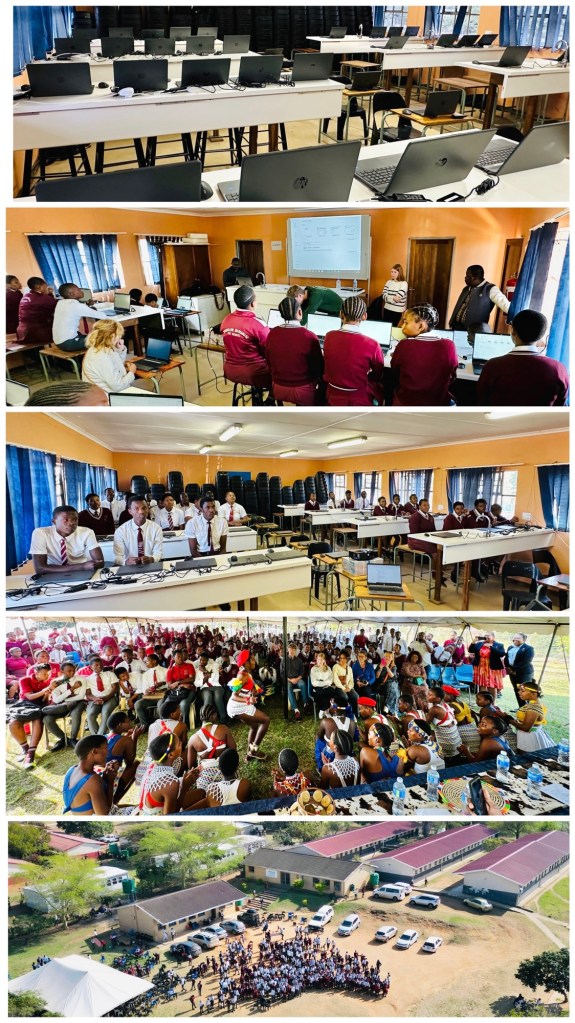
For this project Star For Life Germany ( https://starforlife.org/de ) has donated 45! brand-new Laptops for a Secondary School in one of the poorest areas of South Africa.
Over the last few weeks I have spent quite a bit of time setting the laptops up with MS-Office, Google Chrome, etc at my home at Thanda House.
And this week I supported the donors’ representatives from Germany, the local SFL team, and a student-teacher-team from Sweden delivering them to the school and giving the first lessons to learners and teachers.
I enjoyed helping in this very worth-while project.
Today we had a great hand-over celebration with local officials, all the learners and teachers, and a lot of song and dance!
With this new ‘computer lab’ the students of all the grades from 8 to 12 can now learn some of the most important skills for the modern world. Up til today only very few of them had ever had access to a PC.
If you want to know more about Star For Life and/or how you can help then just refer to their website(s) or contact me directly.
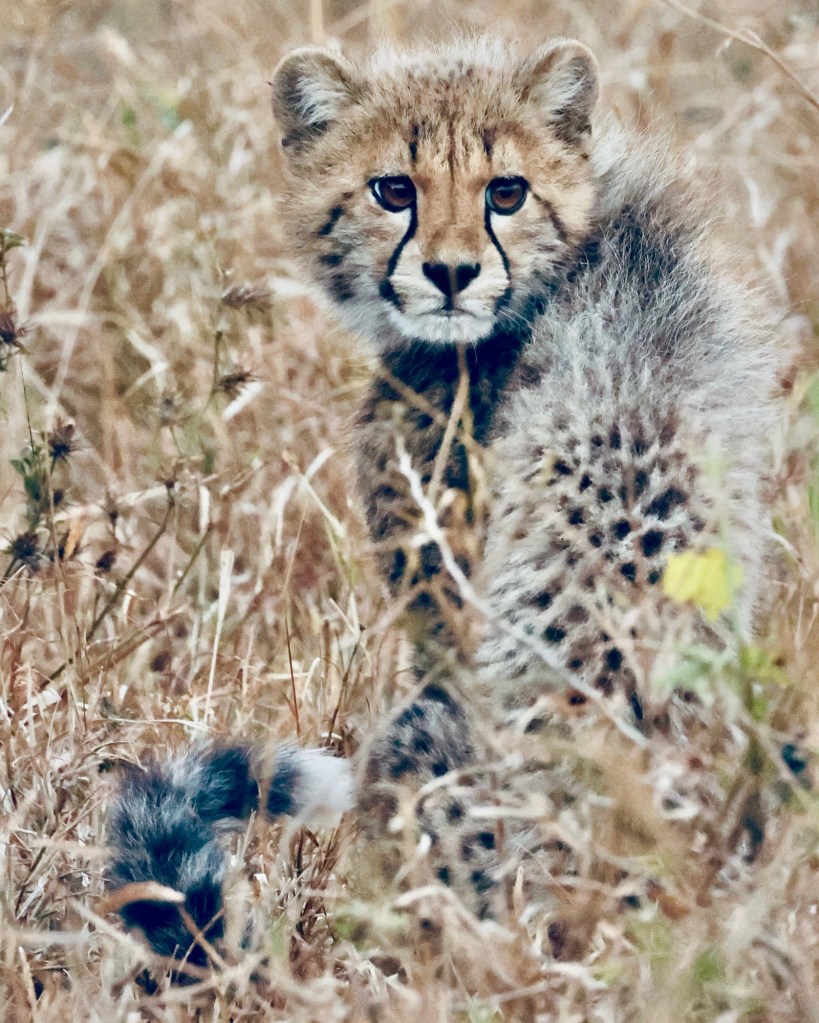
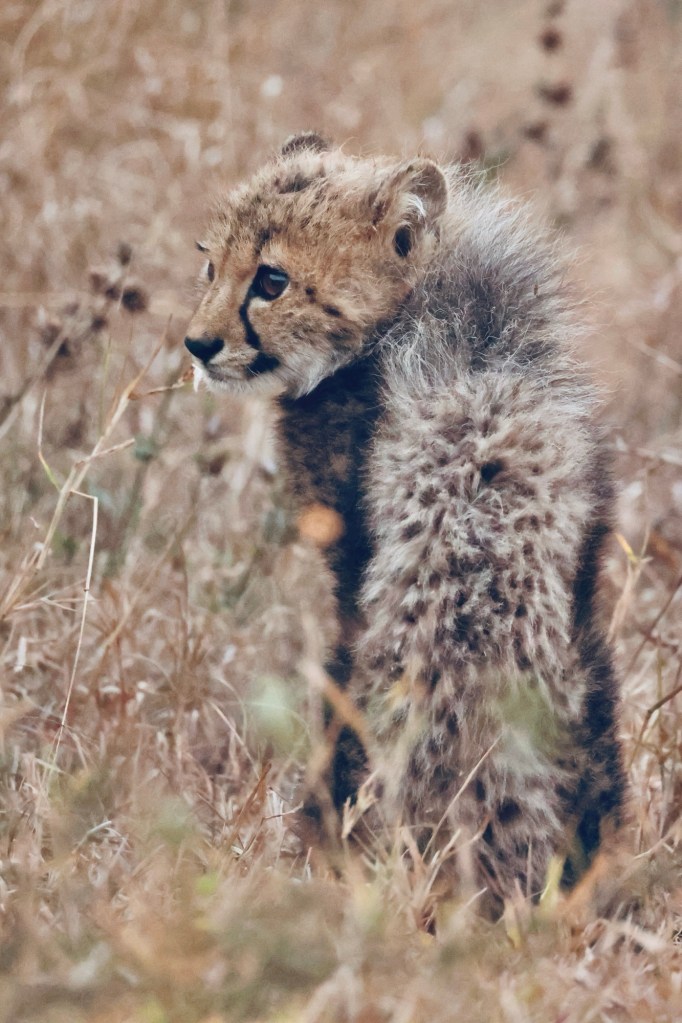
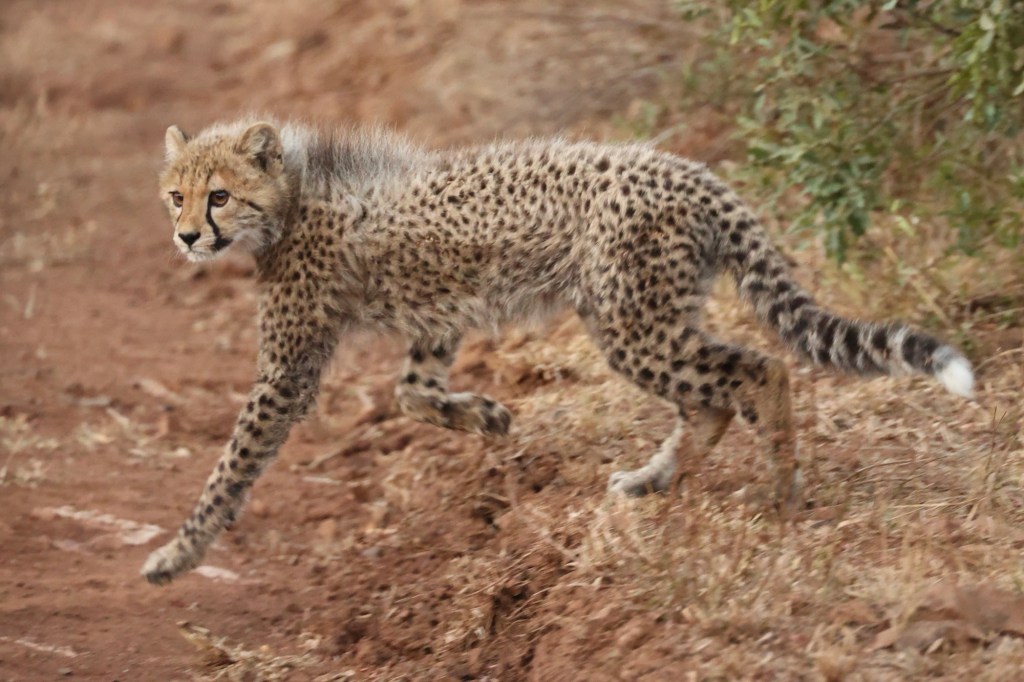
Two days ago, just after sunset, I sat for a while with two little Cheetah cubs as they were waiting for their mum to come back from a hunt.
These small cats instinctively knew not to follow their mother based on her body language but to stay behind and wait for her return.
Camouflaged in bush colors, they blended into their surroundings perfectly, and I had to concentrate not to lose sight of them.
Some people argue that their grey/white/black back fur coloration is a special sort of defense. When viewed from the top, they look very similar to a Honey Badger, one of the most ferocious creatures on earth. A large raptor, like a Martial Eagle, would love a Cheetah cub as prey but would think twice before attacking a Honey Badger. Evolution at work or just a coincidence, who knows!
I left the two little creatures just as their mum returned, and when I started to lose sight of them in the dark.
Have a good Sunday and a great week!
Technical data: Canon R6 with RF lens f11/800mm | ISO 25600 | 1/250sec | ev+0 | WB 6500K | AV Mode | Cropped to 50% of the original image
If you want to read more of my stories and see more of my pictures, you should visit my blog at https://sperka.info/blog/
Technical data: Canon R6 with RF lens f11/800mm | ISO 25600 | 1/90sec | ev+0 | WB 6500K | AV Mode | Crop to 50% of original image Technical data: Canon R6 with RF lens f11/800mm | ISO 25600 | 1/125sec | ev+0 | WB 6500K | AV Mode | Crop to 10% of original image Technical data: Canon R6 with RF lens f11/800mm | ISO 8000 | 1/500sec | ev+0 | WB 6500K | AV Mode | Crop to 10% of original image Technical data: Canon R6 with RF lens f4-6.3/24-240mm | ISO 12800 | 1/250sec | f6.3 | ev+0 | 220mm | WB 6500K | AV Mode | Crop to 50% of original image
Nowadays, most scientists acknowledge forty species of wild cats.
Five of these are considered large cats (members of the genus _Panthera_): Lion, Tiger, Jaguar, Leopard, and Snow Leopard.
The two species of Clouded Leopards (found in South-east Asia) are often considered the bridge between large and small cats. However, most of the time, they are acknowledged as large cats.
All other 33 species of wild cats are considered small cats (sub-family _Felinae_). This includes Cheetahs (Genus _Acinonyx_) and Cougars (Genus _Puma_).
Looking just at body size and weight, these two species could certainly be considered large cats, but scientifically they are not.
But one thing is for sure. The only cats built for speed rather than power are Cheetahs.
With their special body design (slim body, long legs, rudder-like tail, and semi-retracted ‘spike-like’ claws) they are the fastest land mammals on earth.
I enjoy the frequent sightings of these day-active cats on Thanda Safari. I took this picture of one of our females a week ago. I love the orange eyes!
Technical data: Canon R6 with EF lens f4.0/500mm | ISO 400 | 1/500sec | f4 | ev+0.5 | 500mm | WB 6500K | AV Mode | Crop to 10% of the original image











 Christian Sperka Photography | Custom Luxury Tours