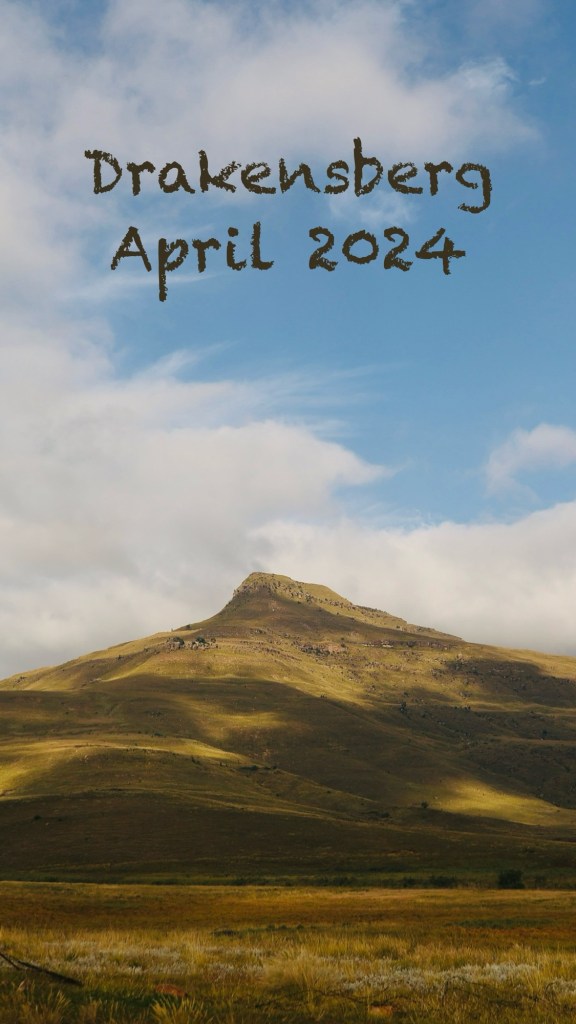
I am currently exploring the Drakensberg Mountains area. Today, I walked from the Giants Castle Resort to some caves with prehistoric San rock paintings. I enjoyed the one-hour hike to get there, even if some of the track was a bit challenging.
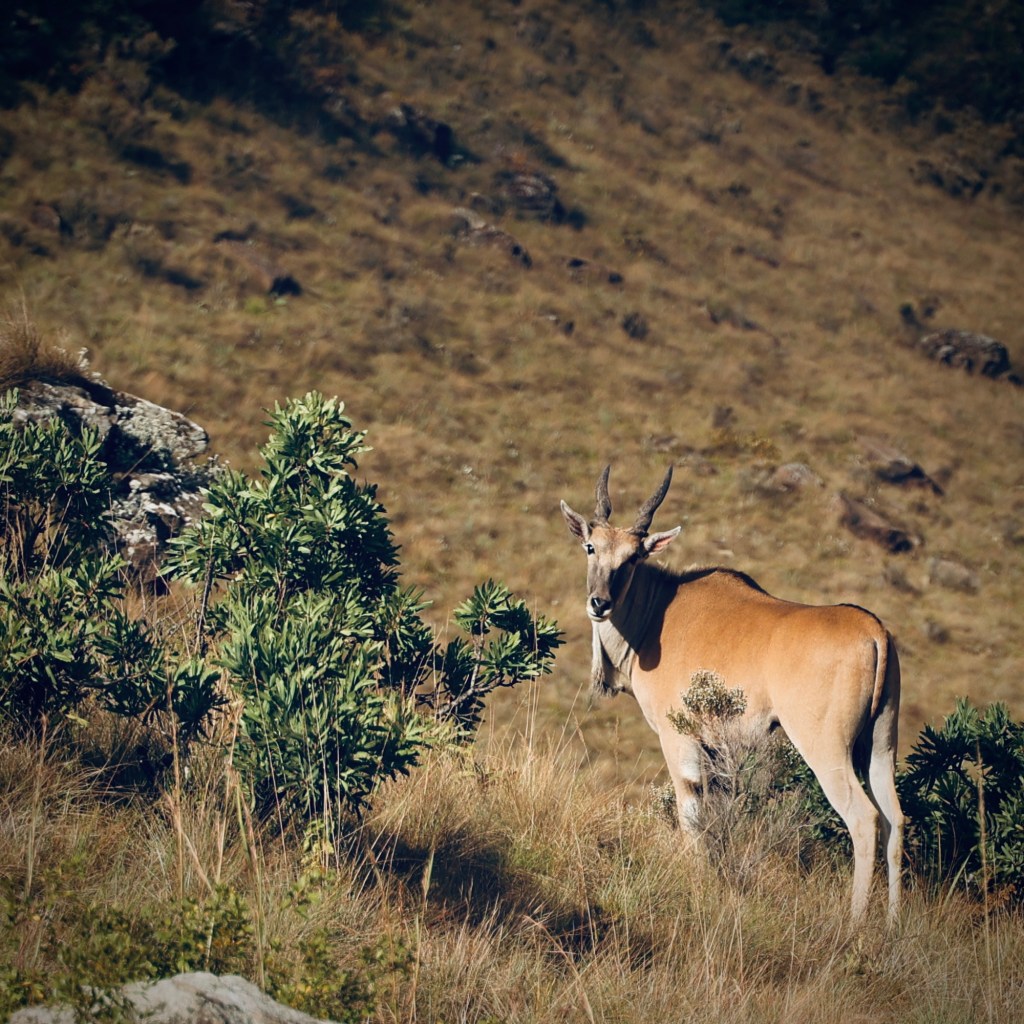
On the way, I took a few pictures of some Common Elands. This largest living antelope species in Southern Africa likes higher altitudes.
Adult females (as in this picture) usually weigh around 400kg (~990lbs), whereas males can get up to 900kg (~1980lbs).
I saw four cows today, but only this one stood still long enough for me to get a good picture.
Technical data: Canon R6 with RF lens f4-6.3/24-240mm | ISO 100 | 1/750 sec | f6.3 | EV -0.5 | 240mm | WB 6500K | AV Mode | Crop to 25% of the original image
I rescued this Eastern Tiger Snake from a bathtub and released it back into the wild in our garden.
This specimen was in the process of shedding its skin (ecdysis). This process allows the snake to grow and remove any parasites which may have attached themselves to the skin.
Eastern Tiger Snakes are only mildly venomous and are no danger to Humans.
Before letting it go I placed it in a Coral tree and used it as a photo model. These are some of the images from the photo shoot.
If you want to read more of my stories and see more of my pictures, you should visit my blog at https://sperka.info/blog/
Today, I am departing for a brief excursion into the Drakensberg Mountains. I plan to explore some new locations and attend two concerts featuring the renowned Drakensberg Boys Choir.
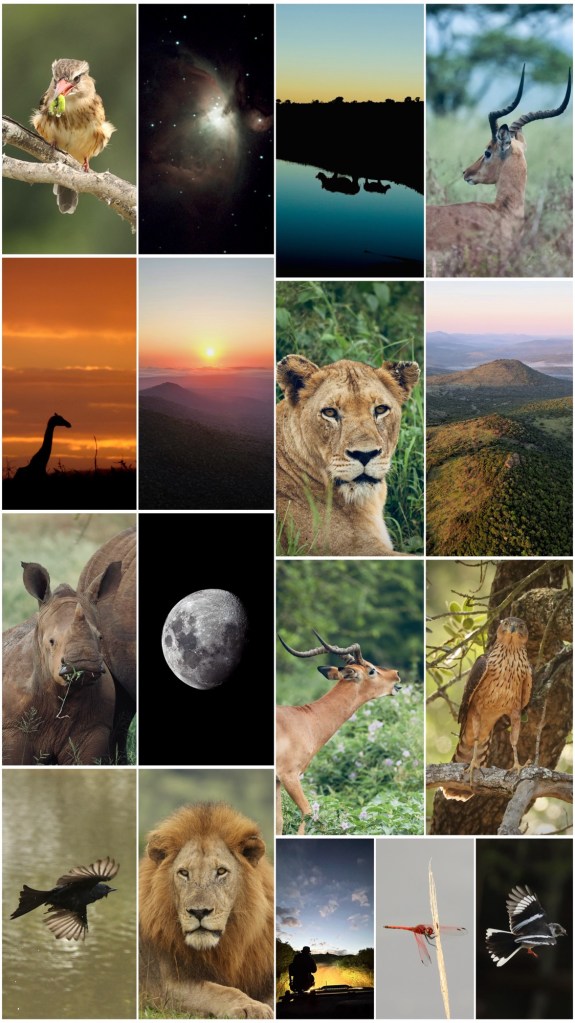
Before my departure, I thought I share a short slide show with some of my favorite photographs captured at Thanda and Pakamisa over the past three weeks.
I hope you will like the combination of wildlife, scenery, and night skies.
If you want to read more of my stories and see more of my pictures, you should visit my blog at https://sperka.info/blog/
Thanda Safari recently purchased a Seestar S50, an intelligent astronomical telescope. I like working with it, as requires very little setup and lets me display/save the magnified stellar objects’ images on my iPad.
Besides looking at nebulas and other deep space objects it works very well for moon observation and sun observation (using a special filter).
This evening I took this moon picture from the Thanda House garden.
I also enjoy night sky photography. This – rather blue – milky way picture I took this morning at 5:30 before sunrise, during the nautical twilight, and just before the start of the ‘blue hour’. In this lucky shot I captured a shooting star.
Crisp winter nights are ideal for star gazing and photography. I am looking forward to some more night sessions in the upcoming winter months.
Technical data: Canon R6 with EF lens L 17-40mm | ISO 6400 | 8sec | f4 | ev+0 | 19mm | Manual focus | WB Auto | M Mode | Crop to 40% of original image
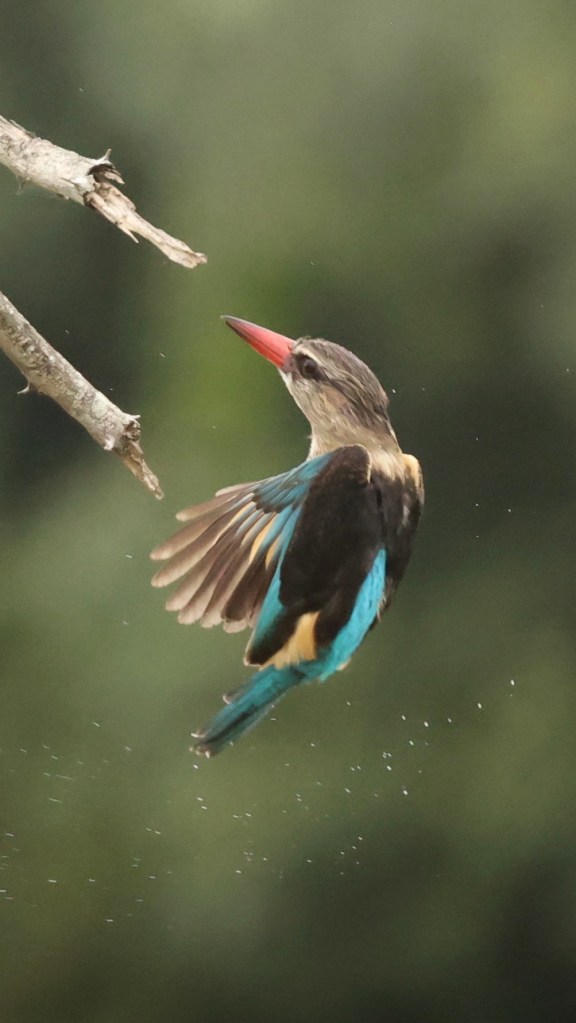
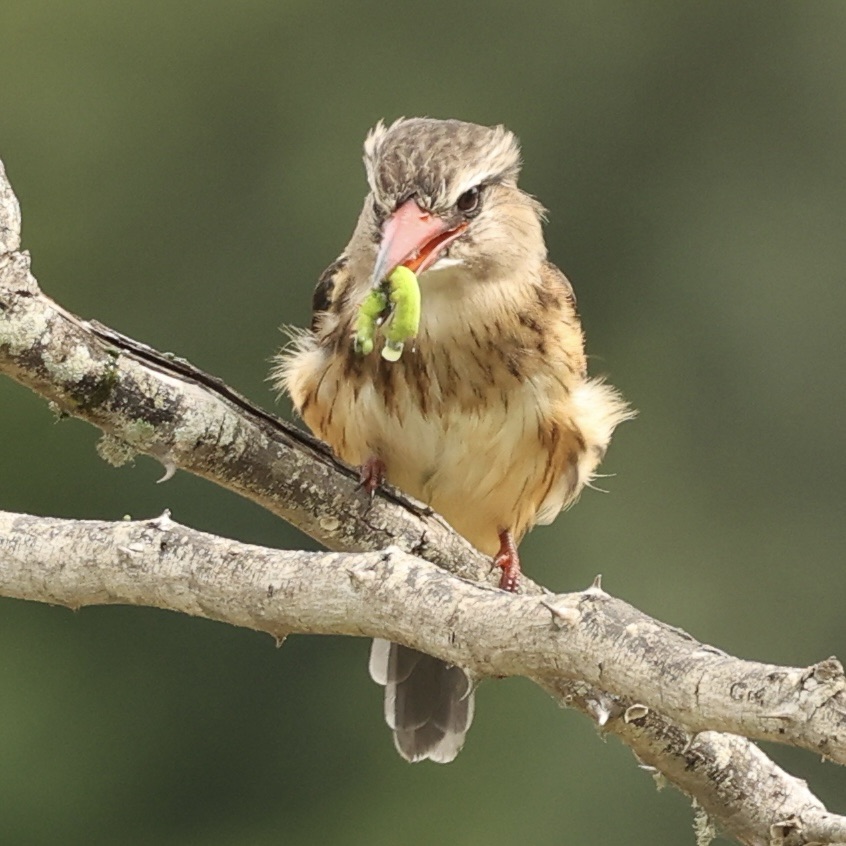
Photographing birds in flight is quite challenging, but Kingfishers and Bee-eaters make it somewhat easier due to their hunting and bathing behaviors.
Both Kingfishers (with 10 different species in Southern Africa) and Bee-eaters (also with 10 different species) enjoy perching on trees to hunt or bathe. Additionally, they frequently return to the same branch after flying off to catch an insect or dip into the water.
Here is a brief guide on capturing in-flight birds before landing:
1. Place the camera on a beanbag or a tripod.
2. Set your shutter speed to 1/2000 second or faster.
3. Switch the camera to manual focus and ensure you do not touch the focus ring.
4. Set the camera to ‘continuous shooting mode’ with the highest frame rate available.
5. Frame and focus on the perched bird, leaving enough room for aerial landing images.
6. Wait for the bird to depart for its hunt or bath without looking through the viewfinder but watch the bird instead.
7. Begin shooting as the bird returns towards the perch, continuing until it is stationary again. Be sure to press the shutter button gently to avoid moving the camera from its target area.
8. Review your images (I typically shooting 20-40 frames for one landing) and select the best ones.
This process requires patience. For the Brown-hooded Kingfisher landing in the picture, I captured seven approaches with a total of 197 images taken, resulting in a satisfying outcome (and as you can see from the droplets in the air he returned from a bath).
Technical data: Canon R6 with RF lens f11/800mm | ISO 10000 | 1/3000sec | ev+0 | WB 6500K | AV Mode | Cropped to 10% of the original image.
Technical data: Canon R6 with RF lens f11/800mm | ISO 1600 | 1/500sec | ev+0 | WB 6500K | AV Mode | Crop to 10% of original image Technical data: Canon R6 with RF lens f11/800mm | ISO 1000 | 1/500sec | ev-0.5 | WB 6500K | AV Mode | Crop to 10% of original image
I primarily use my longest lenses (500mm and 800mm) for bird photography. When mounted on my full-frame sensor cameras, these lenses provide the equivalent magnification of 10x and 16x binoculars.
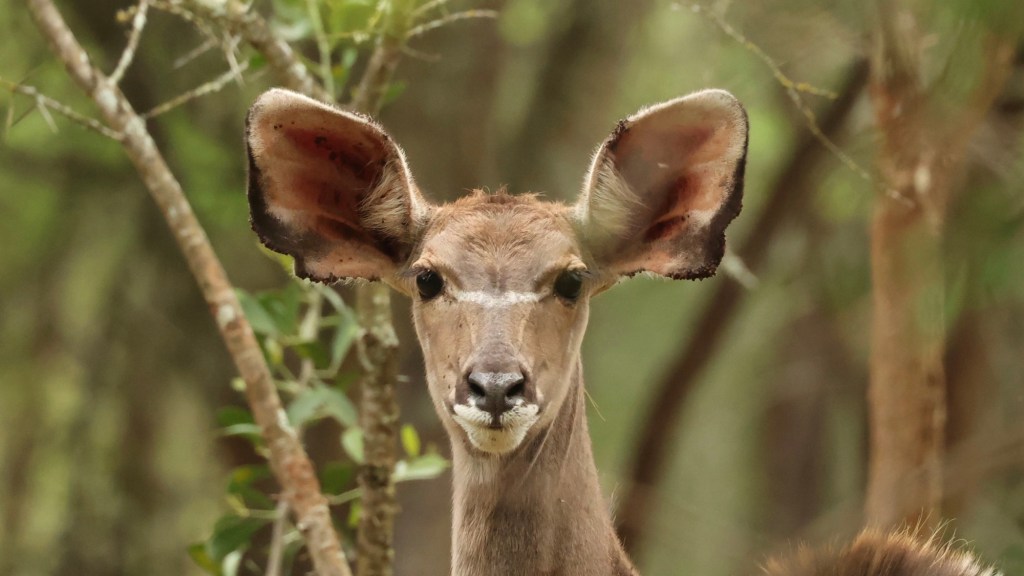
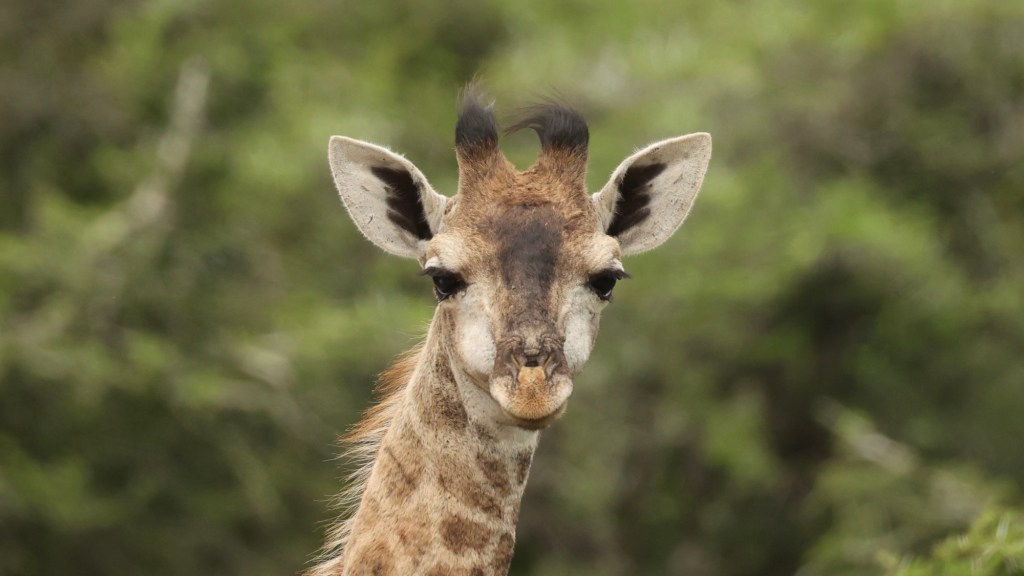
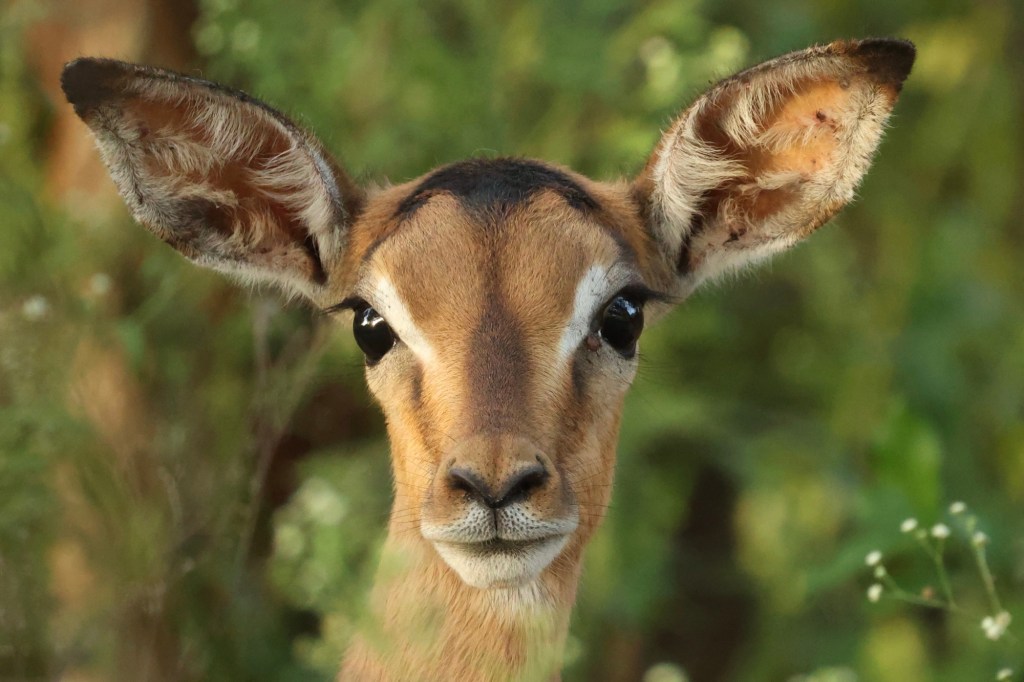
However, these lenses are also invaluable for capturing ‘long-distance portraits’ of mammals. Today’s picture collage showcases a few examples taken this past weekend at Pakamisa Private Game Reserve. The combination of a shallow depth of field and direct eye contact with the camera lens results in highly appealing portraits.
I also employ these long lenses when I wish to observe and photograph animals from their ‘comfort zone’. This approach ensures that my presence does not influence their behavior.
Consequently, a large number of my wildlife images are captured using these very long lenses.
If you want to read more of my stories and see more of my pictures, you should visit my blog at https://sperka.info/blog/
Two weeks ago, I wrote about our largest pride of Lions (called Zanele’s Pride). I described the energy with which the seven youngsters of the group trained for their adult life hunting skills.
When I met the group again a few days ago, they lounged comfortably at Thanda House dam near my home.
As I approached the waterhole, all nine Lions raised their heads, and I was able to get a frontal portrait shot of each of them.
It is astonishing that all of the young ones now look very much like adult Lions. Here is a bit of a quiz question:
Can you identify Zanele (15 years old) in this collage?
I give you a little hint: Look at the noses!
[The answer will be in my next post.]
If you would like to like to read more of my stories and see more of my pictures, you should visit my blog at https://sperka.info/blog/
Lions on the dam near Thanda HouseThanda House Dam
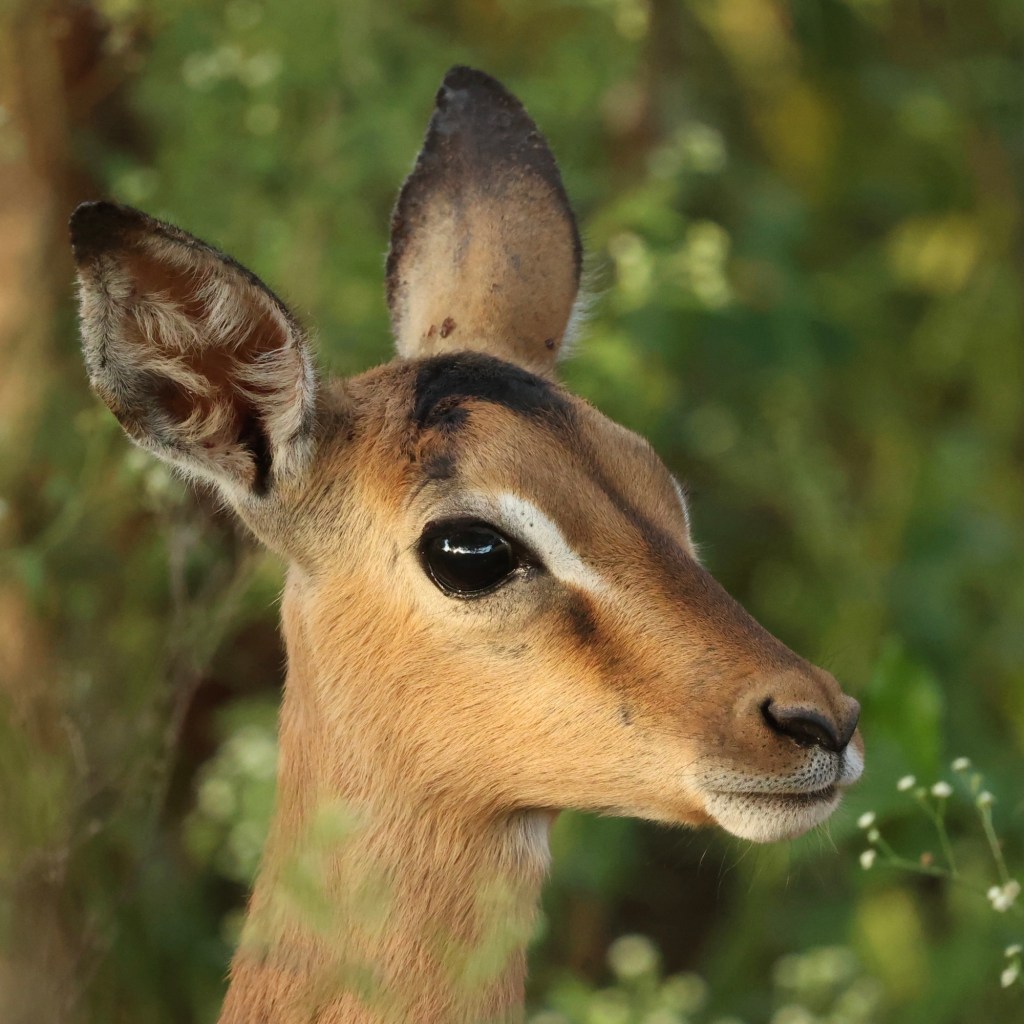
Impalas are the most prevalent type of antelope found in sub-Saharan Africa (and on Thanda Safari). They have remained pretty much the same for over five million years, a real success in terms of evolution.
The tiny Suni antelope is the closest relative to Impala. Black-faced Impalas in Namibia and Angola are seen as a distinct subspecies.
Their ability to adapt their eating habits is a key factor in their evolutionary success. They feed on grasses during the rainy season and switch to eating tree-material as the dry season progresses, ensuring a steady food supply that allows female impalas to give birth to a new lamb each year.
Impalas are a vital food source for large predators – including some Eagles – and have high mortality rates, particularly during the birthing season. Their sharp eyesight and alert behavior help them detect predators like Leopards and Cheetahs, prompting the herd to make warning sounds.
The best time to see the very cute Impala fawns is in December and January, when all the females give birth almost at the same time.
Technical data: Canon R6 with RF lens f11/800mm | ISO 12800 | 1/500sec | ev+0 | WB 6500K | AV Mode | Crop to 40% of original image
If you might want to like to read more of my stories and see more of my pictures, you should visit my blog at https://sperka.info/blog/
At times, Obusayo, our dominant male Lion, ventures all the way to the western part of the reserve. This scenic area of Thanda Safari is very hilly and has only a few roads with thick vegetation. Water is much scarcer in the west, resulting in fewer prey animals. This is why our lion prides establish their territories in the more game-rich central and eastern areas.
Obusayo, like most dominant males, is not a permanent member of a pride but ‘the owner’ of a large territory that encompasses multiple prides. When he hears a lion roaring on a neighboring reserve, he sometimes feels the urge to explore even the remote corners of Thanda, but he always returns after these inspections to the core of his territory.
Male Lions dedicate a significant portion of their time to securing their territory.
PS: Obusayo means ‘The one in charge’ in isiZulu, a fitting name for a dominant male.
If you might want to like to read more of my stories and see more of my pictures, you should visit my blog at https://sperka.info/blog/












 Christian Sperka Photography | Custom Luxury Tours