Flehmen!

Flehmen is a behavior observed in many mammal species particularly ungulates and carnivores. It involves the curling of the upper lip and a raising of the head, to expose the vomeronasal organ (or Jacobson’s organ), located within the nasal cavity.

This behavior is exhibited (mostly by males) when animals encounter interesting scents, especially pheromones associated with potential reproductive activities.

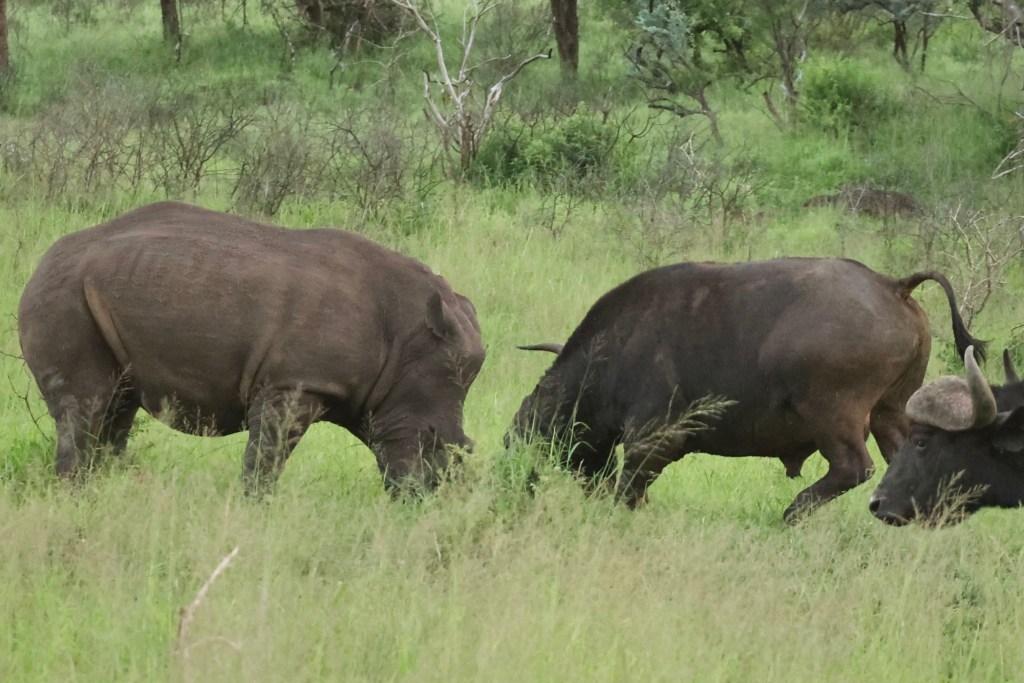
The Cape Buffalo bull in this pictures was checking the air for signs of any of the females in his herd requiring his services.

In humans this organ exists but is ‘out of use’. And that is not a bad thing. Otherwise young men would constantly walk around with a raised head and curled upper lips. 😊

Technical data: Canon 1D Mark IV with EF lens f3.5-5.6/28-300mm | ISO 1600 | 1/1000sec | f5.6 | ev-.5 | 270mm | WB 6500K | AV Mode | Crop to 60% of original image

#amazingwildlife #africansafari #safarigetaway #christiansperkaphotography #thandasafari #big5 #gamereserve #wildlifephotography #learnphotography

Cool!

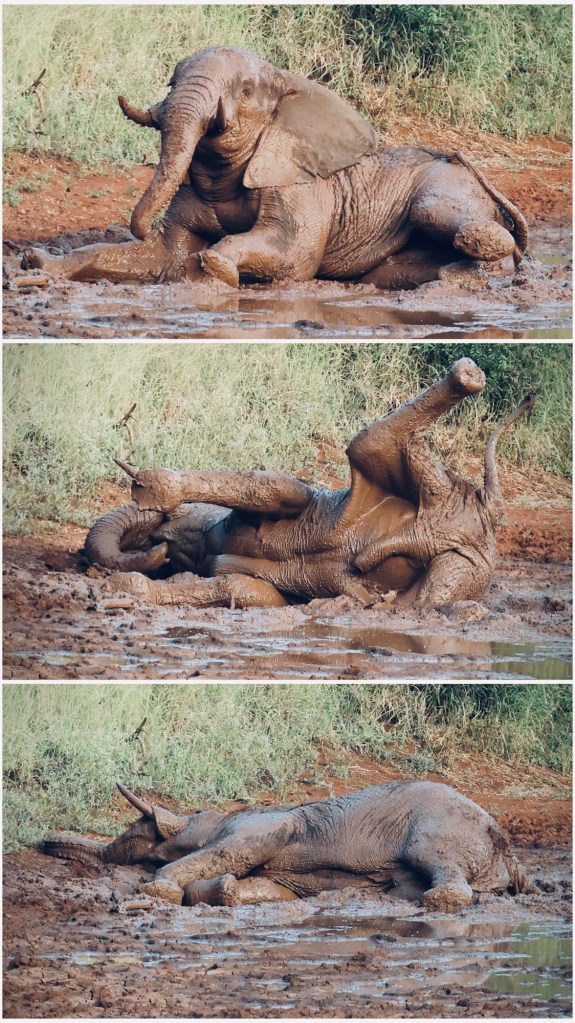
Many mammals, like this White Rhino bull, frequently wallow in mud and, on hot days, remain for a long time semi-submerged in their personal spa.

They do this for a multitude of reasons.

First – The drying mud withdraws heat from the body and cools them down.

Second – A layer of mud protects the skin against the direct sun, a bit like sun-screen for humans.

Third – The mud cover helps keeping parasites away from the skin.

Fourth – When rubbing on trees the mud can help to cleanse the outer layers of the skin, especially if it is wrinkled.

If you ever feel very hot and you pass an inviting looking mud-hole on a hot day then you could try this yourself. Just watch out for other mud hole visitors! ☺️

Technical data: Canon R6 with RF lens f4-6.3/24-240mm | ISO 3200 | 1/500sec | f6.7 | ev+0 | 240mm | WB 6500K | AV Mode | Crop to 50% of original image

#amazingwildlife #africansafari #safarigetaway #christiansperkaphotography #thandasafari #big5 #gamereserve #wildlifephotography #learnphotography
Kindergarten!

At this time of the year a lot of baby mammals can be seen on game drives.

And, as the Blue Wildebeest calf’s in this picture, they often huddle together in small ‘Kindergarten’ groups.

Quite a few mammal species have a breeding season and therefore the females almost all drop at the same time. At the end of the year Kudus, Impalas, Warthogs, and Blue Wildebeests all give birth to their next generation. So January/February is a great time to look out for Kindergartens!

Elephants, Black and White Rhinos, Cape Buffalos, Giraffes, Nyalas, Zebras, primates, and all the predators do not have a clearly defined breeding season and youngsters can be born at any time of the year.

Technical data: Apple iPhone 14 Pro Max | Telephoto Camera | 77mm | Auto Setting

#amazingwildlife #africansafari #safarigetaway #christiansperkaphotography #big5 #gamereserve #wildlifephotography #learnphotography

Technical data: Canon R6 with RF lens f4-6.3/24-240mm | ISO 1600 | 1/500sec | f6.7 | ev+0 | 240mm | WB 6500K | AV Mode | Crop to 20% of original image

Details!

I think that binoculars are the most important item to take on a game drive. People often tell

me that they do not need any as they are not interested in birds. I think they are wrong.

I still take a pair for each for my guests on game drive as they are a great way to enjoy end explore details even of large mammals.

The sharp eyes of a Lion, the claw holes in a Lion’s pelt inflicted in a fight, the Lion’s ears with a small tick, the Lion’s back legs with the youngster’s pattern, the underside of a Lion’s paw, or the pinkish nose of a young Lioness; all of these are clearly visible with the help of binos.

Should you ever see any of these that close without optical help then you are far too close and it is probably the last thing you would see :-).

So my advice: Take a set of binos for each person (properly adjusted to the user’s eyes) on your safari and enjoy all the details!

#amazingwildlife #africansafari #safarigetaway #christiansperkaphotography #thandasafari #big5 #gamereserve #wildlifephotography #learnphotography

Twilight

Sometimes the camera can see more than the human eye. I this case I got this image of an Elephant cow eating grass in the twilight, after the sun had set. With my eyes I only saw the outline of the huge form above the grass.

Elephant have to eat most of the day and night, as they have to ingest up to 300kg (660lbs) per day to sustain their huge bulk.The foods they consume (Grass- and tree-materials) are ‘low-energy-containing’, so a lot is needed.

A Lion in contrast eats very ‘high-energy-containing’ foods (Meat, intestines, and bones) and can therefore rest most of the day.

Result: Lions sleep up to 18 hours a day. Elephants eat up to 18 hours a day! To a gourmet glutton, who likes his sleep, both sounds appealing 😊

Technical data: Canon R6 with EF lens f4.0/500mm | ISO 12800 | 1/180sec | f4 | ev-0.5 | 500mm | WB 6500K | AV Mode | Crop to 50% of original image | beanbag support

#amazingwildlife #africansafari #safarigetaway #christiansperkaphotography #thandasafari #big5 #gamereserve #wildlifephotography #learnphotography
A Tower …

… of fifteen Giraffe. Last night I was at the right time at the right place to take this picture of a few of the world‘s tallest land mammals in front of a waterhole, on a savanna, and with the rolling hills of Zululand in the background.

A group of Giraffe can be called a ‘Tower of Giraffe’ when they mingle in an area or a ‘Journey of Giraffe’ when they are on the move.

Unlike most other large mammals Giraffes have no strong social ties. Individuals can join or leave a group as they like. But except for old bulls they usually prefer to congregate with others.

When on game drive, one often spots a Giraffe and one thinks it is a lonely animal. But it is actually part of a group spaced out over a large area, keeping visual contact with others from its great heights.

A female Giraffe can reach over 4 meters (13”) in heights, a male of 5 meters (16”).

Technical data: Canon R6 with RF lens f4-6.3/24-240mm | ISO 125 | 1/500sec | f6.3 | ev+2 | 100mm | WB 6500K | AV Mode | Crop to 50% of original image

#amazingwildlife #africansafari #safarigetaway #christiansperkaphotography #thandasafari #big5 #gamereserve #wildlifephotography #learnphotography

Additional images:

Speed

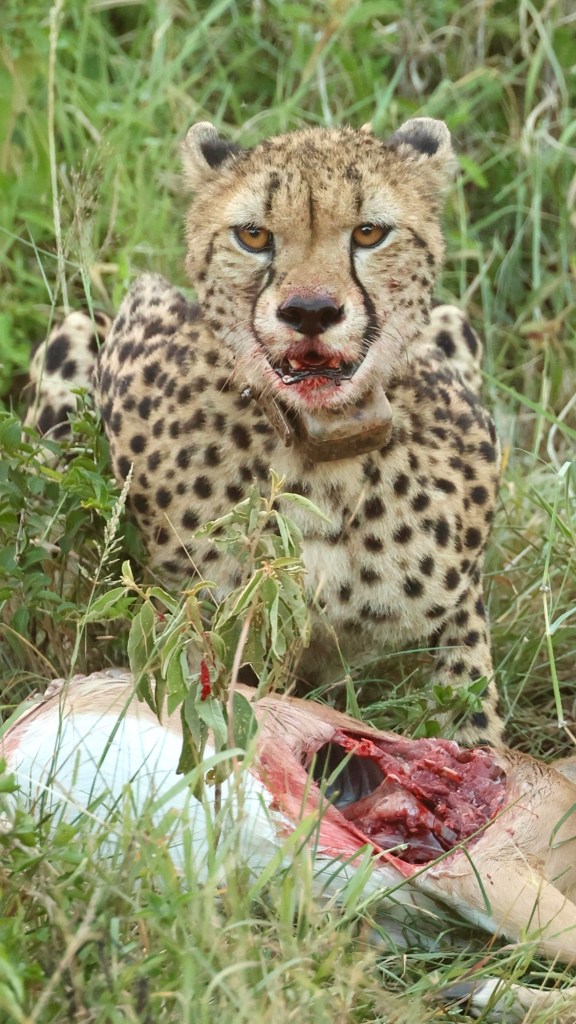
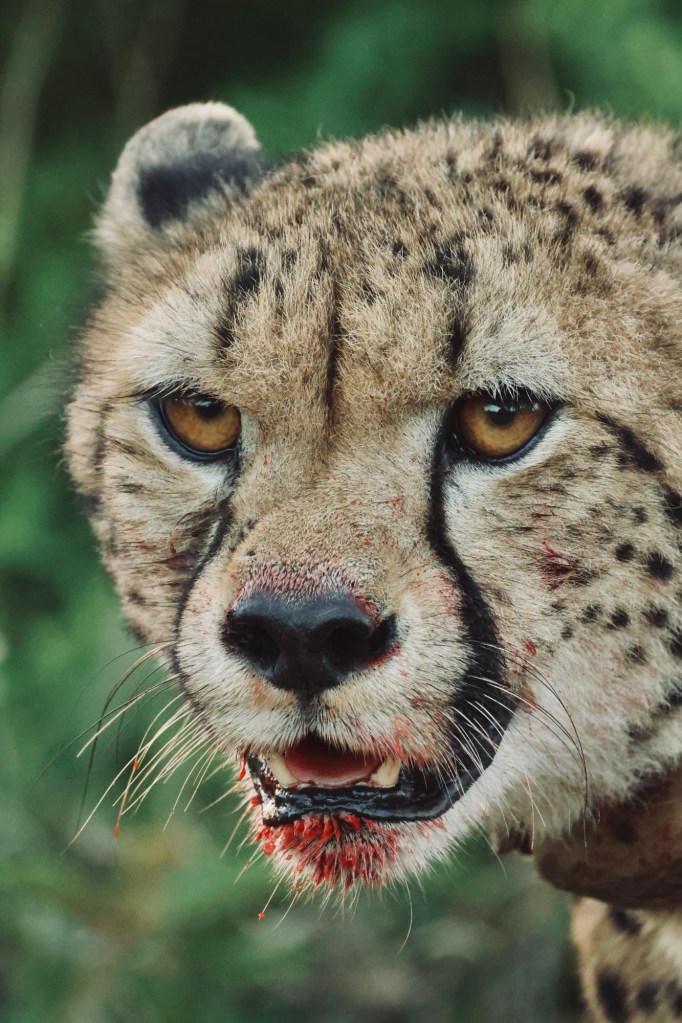
Cheetahs (Acinonyx jubatus) are very special. Not just because they are beautiful and very fast, but because they are the only cat species built for speed.

In taxonomy (the branch of science concerned with the classification of organisms) they are the only living member of the genus Acinonyx, which sets them apart from the other 40 cat species on earth. With their long legs, semi-retracted claws, excellent vision, and a specially designed steering tail they are designed for short speed runs to kill their prey.

This picture is of one of Thanda Safari’s Cheetah youngsters. I took this portrait a week ago. The black lines running down from the eyes to the mouth on both sides of the nose are the best way of identifying a cat portrait as that of a Cheetah. No other cats shows these tear-lines.

Technical data: Canon R6 with RF lens f11/800mm | ISO 2500 | 1/750sec | ev+0 | WB 6500K | AV Mode | Crop to 20% of original image

#amazingwildlife #africansafari #safarigetaway #christiansperkaphotography #thandasafari #big5 #gamereserve #wildlifephotography #learnphotography
Faint

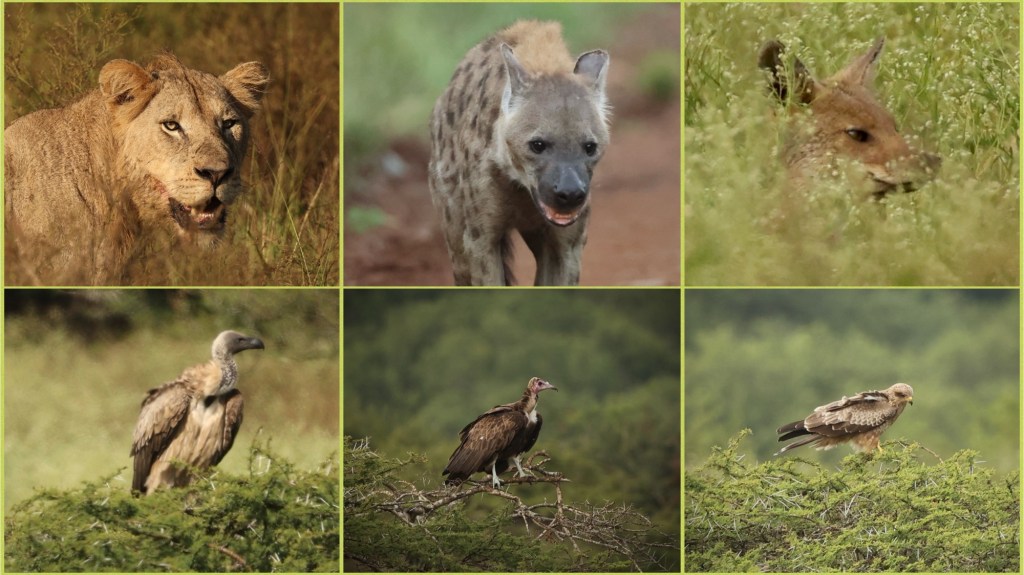
This collage illustrates why animal tracking is such a very specialised skill. The bottom pictures of this collage shows a Lion track on the side of the road (Toes on the right, foot pad on the left).

Unless one has experience and the aptitude for reading tracks one would never interpret this faint print on the ground as that of a Lion. I am not very good at this, but my tracker Bheki Ngubane can spot these tracks from a moving vehicle!

The picture on top shows the corresponding underside of the back foot of a Lioness. The track shown in the bottom picture was created by her walking just before she lay down to rest.

Technical data: Canon R6 with RF lens f11/800mm | ISO 6400 | 1/60sec | ev+0 | WB 6500K | AV Mode | Crop to 50% of original image

#amazingwildlife #africansafari #safarigetaway #christiansperkaphotography #thandasafari #big5 #gamereserve #wildlifephotography #learnphotography
Thulani…

… means ‘the quiet one’ in isiZulu. This is a very apt name for one of our oldest and largest Elephant bulls.

If you look carefully at this pictures you can see him dribbling urine from his penial shief (between his back legs). This means that he is in musth (heightened sexual activity period) and dribbles liquid all day.

But unlike most younger bulls this over six ton old gentleman remain quite gentle. When I encountered him last night at dusk he moved quietly swaggering past my vehicles while stopping from time to time to nibble on some trees and grasses.

PS: He is partially wet in this picture as he had just mudded himself at a small waterhole.

Technical data: Canon R6 with RF lens f4-6.3/24-240mm | ISO 3200 | 1/750sec | f6.3 | ev+0 | 100mm | WB 6500K | AV Mode | Crop to 10% of original image

#amazingwildlife #africansafari #safarigetaway #christiansperkaphotography #thandasafari #big5 #gamereserve #wildlifephotography #learnphotography

Adaptable

One of the main traits of a Hyena is its incredible adaptability. Hyenas are highly versatile creatures and have evolved to thrive in various habitats, including grasslands, savannas, mountains, and even deserts.

Their ability to adapt to different environments enables them to find food sources and survive in a wide range of conditions.

We had a great early morning encounter of a clan of 8 Spotted Hyenas finishing off a carcass in the vicinity of a herd of grazing Cape Buffalo.

Technical data: Canon R6 with RF lens f4-6.3/24-240mm | ISO 1600 | 1/750sec | f6.7 | ev+0 | 200mm | WB 6500K | AV Mode | Crop to 25% of original image

#amazingwildlife #africansafari #safarigetaway #christiansperkaphotography #thandasafari #big5 #gamereserve #wildlifephotography #learnphotography