
 This was the view a few minutes ago when stepped in front of my room at Thanda House – winter is coming and so are the beautiful sunrises and sunsets – Have a good day!
HAPPY MOTHER’S DAY
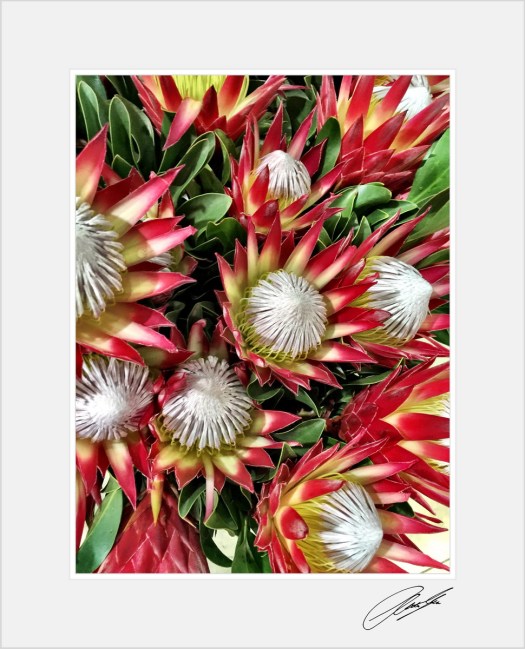
With this electronic bouquet of Proteas I wish my mum (in Germany) and all the mums around the world – in the eighty countries, where this special day is celebrated today – a VERY HAPPY MOTHER’S DAY.
ALLES GUTE ZUM MUTTERTAG !
50mm
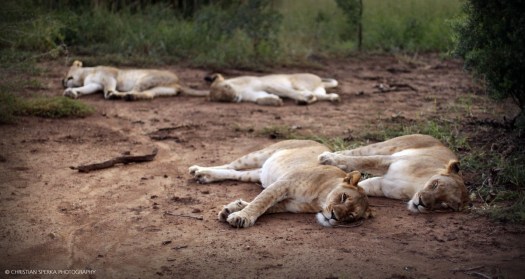
It has been years since I have used a ‘short fixed focus length lens’. Last week, when cleaning my equipment, I picked up my Canon EF f1.4/50mm lens and decided to put in my camera case to give it a try at low light.
And two days ago such a scenario presented itself.
After the sun had set I took this image of our north pride Lions sleeping off a good meal. With very shallow depth of field it creates a special artsy atmosphere. I like it and I think I will use this ‘short beauty’ more often.
A little kiss :-)


The traditional pose …

… and another one …
A Little Detour
Today a little detour was required on my way home from the Thanda Safari Lodge. The two Cheetah brothers were resting in the shade under a tree in the middle of the road, so I had to get a bit of the street as they would not move for my car 🙂

The Two Boys!
Backlight

Lions at one of Thanda’s waterholes – I was able to play with the light from another game viewing vehicle (thanks to my fellow guide) – despite the fact that I did not have the right lens for the job I like the atmosphere of the scene!
Nashville Memories
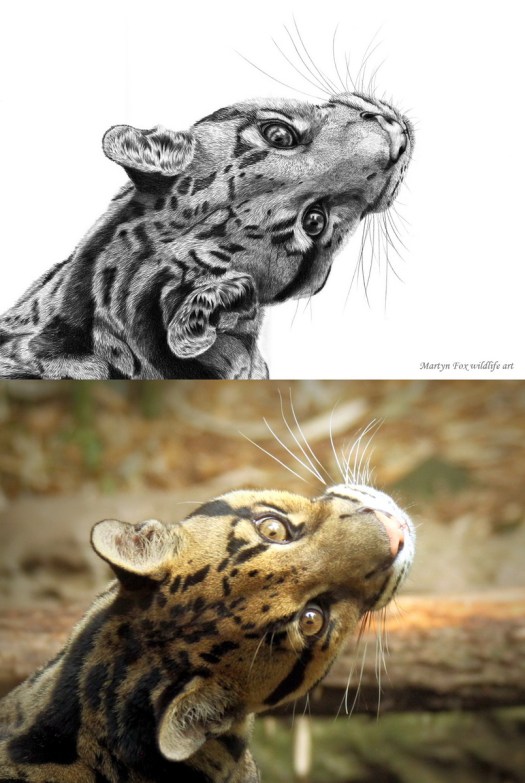
An artist named Martyn Norris has recently asked for permission to use one of my Clouded Leopard images as a basis for one of his drawings. I really like the result – thanks Martyn!
And looking at this image took me back to when I was working as photographer and photography teacher at Nashville Zoo at Grassmere. I really enjoyed my time in Nashville and I miss my friends in the Music City USA. I hope to visit again, soon.
If you are travelling to Nashville make sure you visit this excellent zoo – http://www.nashvillezoo.org …
… and also have a look at Martyn’s other work (if your are on Facebook 🙂 – http://www.facebook.com/martynfoxart.
The South African Kingfishers
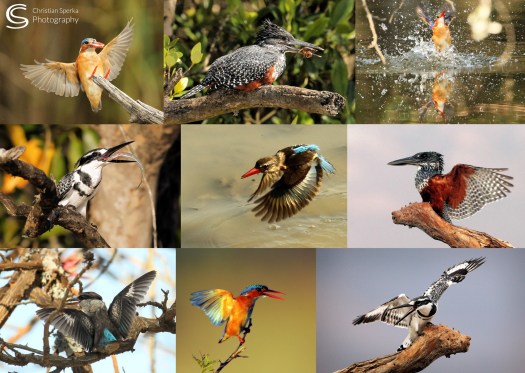
After yesterday’s post about a Malachite Kingfisher on Thanda a few people have asked me about the various South African Kingfishers. So, here is a short post about them:
There are ten Kingfisher species in South Africa. Five are aquatic species and five are considered woodland Kingfishers. Up til now I took pictures of eight of these ten species. I am still missing the Half-collared Kingfisher and the Grey-headed Kingfisher.
Four of them (Woodland Kingfisher, Striped Kingfisher, Brown-hooded Kingfisher and African Pygmy Kingfisher) are regularly seen on Thanda Safari Private Game Reserve and I had one – rare – sighting of a Malachite Kingfisher. Giant Kingfishers, Mangrove Kingfishers and Pied Kingfishers are aquatic species and are therefore not resident on Thanda.
Enjoy the pictures!

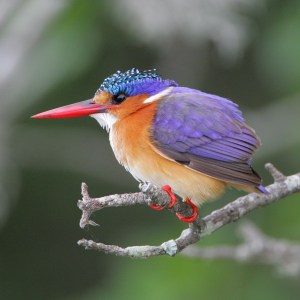
Malachite Kingfisher (C) Christian Sperka Photography

Giant Kingfisher (C) Christian Sperka Photography

Mangrove Kingfisher (C) Christian Sperka Photography

Pied Kingfisher (C) Christian Sperka Photography

Brown-hooded Kingfisher (C) Christian Sperka Photography

African Pygmy Kingfisher (C) Christian Sperka Photography

Striped Kingfisher (C) Christian Sperka Photography

Woodland Kingfisher (C) Christian Sperka Photography
Not supposed to be there! – Bird of the Day – Malachite Kingfisher
It is always very exciting to see a bird in an area where it usually does not occur. Malachite Kingfishers are one of the aquatic Kingfisher species. They live on Rivers or other large bodies of water. Finding one on Thanda Safari – Private Game Reserve was a very special treat for our bird-loving guests. Bheki (my Zulu tracker) spotted it at the waterhole near my home.
These are not my best Malachite Kingfisher images, but they are very special to me!
To view more of my Malachite Kingfisher images go to http://www.sperka.biz/sgb10
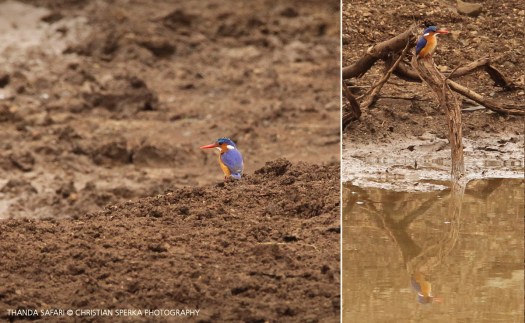
The Malachite Kingfisher (Corythornis cristatus) is an aquatic, small Kingfisher which is widely distributed in Africa south of the Sahara. It is only 13 cm (5.1 in) in length. This species is common to reeds and aquatic vegetation near slow-moving water or ponds. The flight of the Malachite Kingfisher is rapid, with the short, rounded wings whirring until they appear a mere blur. It usually flies low over water. The call of this kingfisher is then a short shrill seek. The breeding song is a chuckling li-cha-cha-chui-chui.
The African Bush Portraits (1)
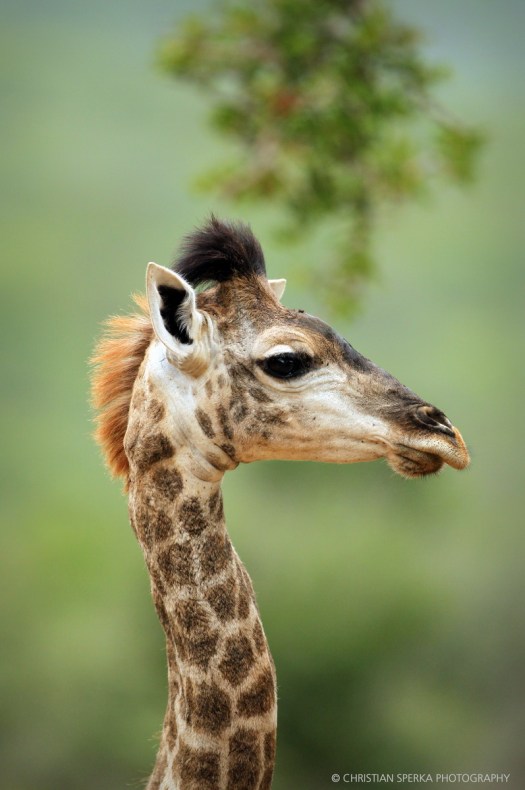
An African Bush Portrait – Baby Giraffe
 Christian Sperka Photography | Custom Luxury Tours