The Nashville Zoo Elephants Videos – 2 – Care, Sounds and Details

This second video in the  Nashville Zoo Elephants video series includes many pictures and video clips about Elephant care, a few interesting sounds and fascinating pictures of some details of Elephants (as the one of the molar above) .

There are three videos in this series:
– Video 1 – Introduction
– Video 2 – Care, Sounds and Details
– Video 3 – Tasks, Talks and Beauty

Enjoy the video!

The Nashville Zoo Elephants Videos – 1 – Introduction


In the last few weeks I have spent a lot of the time with the Nashville Zoo Elephants and their keepers.

This first of three videos about these amazing creatures is an introduction to the Nashville Zoo Elephants and the Elephant facilities at the zoo.

There are three videos in this series:
– Video 1 – Introduction
– Video 2 – Care, Sounds and Details
– Video 3 – Tasks, Talks and Beauty

Enjoy the video!

Picture of the Week 10 – Blitz

[View all Pictures of the Week 2012]

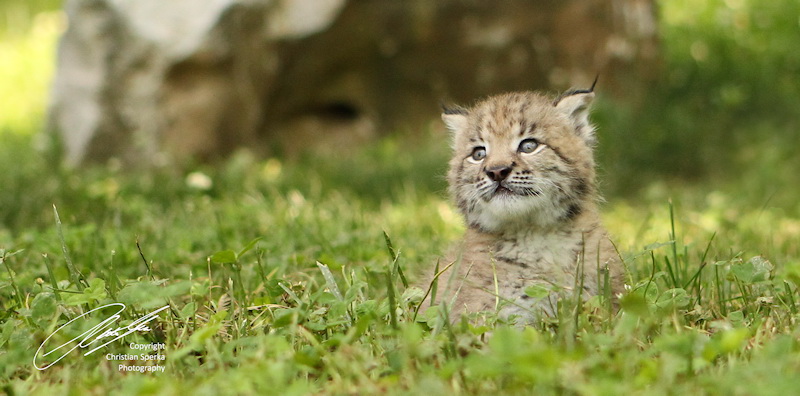
Taking pictures of little cubs is always fun. A lot of my cub photo session I spend laying flat on the ground trying to get them on eye-level. This small Eurasian Lynx picture was taken at Nashville Zoo at Grassmere. Blitz (that is his name) was born on the May weekend of the 2010 big floods in Nashville. He is now one of the stars in the educational shows at the zoo.

More about Lynx:

The Eurasian Lynx (Lynx lynx) is a medium-sized cat native to European and Siberian forests, South Asia and East Asia. While its conservation status has been classified as “Least Concern”, populations of Eurasian lynx have been reduced or extirpated from western Europe, where it is now being reintroduced.

The Eurasian lynx is the largest lynx species, ranging in length from 80 to 130 cm (31 to 51 in) and standing about 70 cm (28 in) at the shoulder. It possesses a short “bobbed” tail with an all-black tip, black tufts of hair on its ears, and a long grey-and-white ruff

There are three more species in the genus Lynx:
– Canadian Lynx (Lynx canadensis)
– Iberian Lynx (Lynx pardinus) – critically endangered
– Bobcat (Lynx rufus)

Picture Data: Camera: Canon 1D Mark IV / Lens: Canon L IS 2.8 70-200mm at 70mm / Mode: AV / Shutter Speed: 1/3200s / Aperture: f/2.8 / ISO: 1600 / Exposure Correction +0.33eV / Metering: Central weighted / White balance: K6500 / Center point focus only / Time: noon / cropped to approx 40% / Freehand

For more Lynx pictures go to www.sperka.biz/lynx

Invitation to the March Gallery Crawl / Picture of the Week 9 – Bubble Bath!

[View all Pictures of the Week 2012]

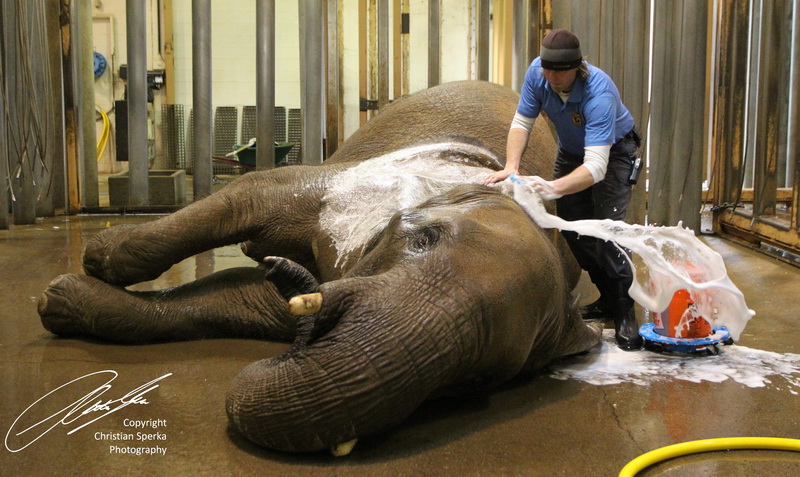
It is not really a bubble bath but Hadari, one the Nashville Zoo’s African Elephants, is getting a “shampoo rub down”  as part of her daily routine.

Invitation to the March Gallery Crawl

When: Saturday, March 3, 2012 from 6p.m. to 9p.m.
Where: Christian Sperka Photography / Animal Art Photography Gallery at the Arcade [Downtown Nashville in the block between Church and Union Streets and 4th and 5th Avenues]

Special Event
INTELLIGENT GIANTS – The Nashville Zoo Elephants

In cooperation with the Nashville Zoo I will be presenting many interesting  images and video clips of the Nashville Zoo Elephants.

I will show a lot of backstage images give some insights into Elephant care at Nashville Zoo at Grassmere.

There will be three presentations by Connie Philipp, Director of Animal Collections (at 6:30pm / 7:30pm and 8:30pm) on the subject.

I am looking forward to seeing you on Saturday 🙂

Picture of the Week 6 – Stare!

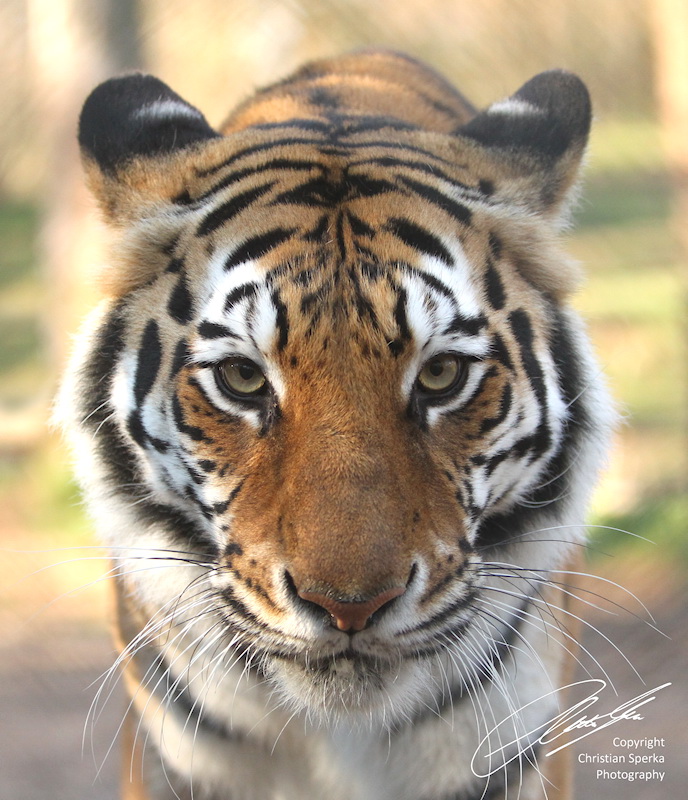
Female Bengal Tiger (Panthera tigris tigris) Deutsch:Koenigstiger

[View all Pictures of the Week 2012]
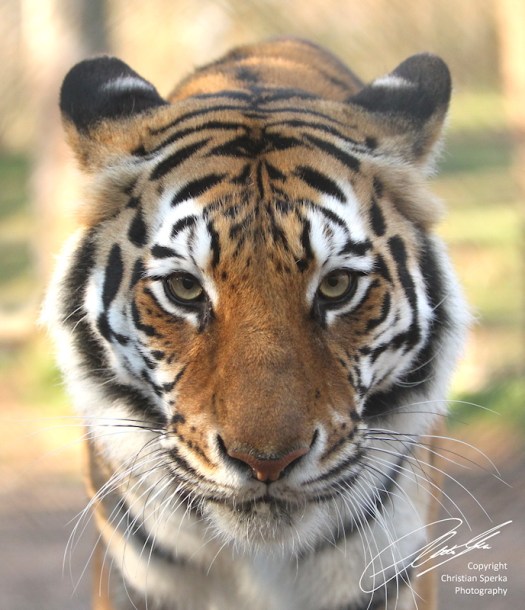
A direct stare of a fully grown tiger from a few feet away is making you feel a bit squeezy in the the stomach, even if you know that you are safe behind the fence.

I took this picture last week at Nashville Zoo at Grassmere as part of a series of “eye level” Bengal Tiger pictures.

Here are the technical details (for the photographers among you :-): The shot was taken through chain-linked fence with the lens a few inches from the fence. The chain link openings were only 2/3 of the lens diameter. The animal was moving at the time towards the camera (lens 70mm – aperture f/2.8 – shutter speed 1/1500sec – ISO 1600 – aperture control mode – continous focus mode – central focus point only – exposure compensation +/-0 – crop approx.50%).

If you would like to purchase a print of this image go to http://www.sperka.biz/p50955839/h7b49fb1#h7b49fb1

Eyes Series Version:
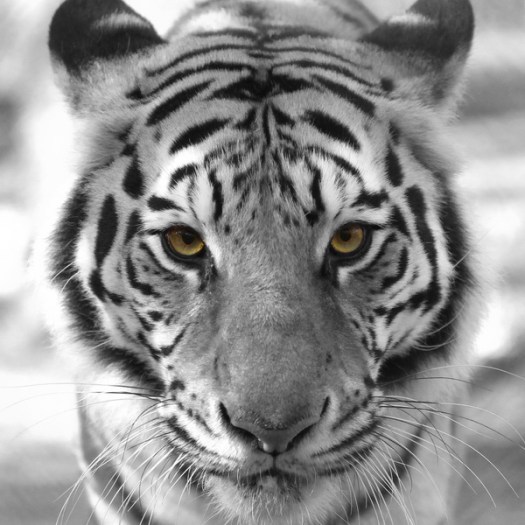
For more Tiger pictures:

Bengal Tiger (Nashville Zoo) – www.sperka.biz/nztiger
Bengal Tiger – www.sperka.biz/bengaltiger
Malayan Tiger – www.sperka.biz/malayantiger
Amur Tiger – www.sperka.biz/amurtiger

If you would like know more about the conservation efforts for Tigers go to Panthera’s Tiger projects webpage: http://www.panthera.org/species/tiger

About Tigers:

The Tiger (Panthera tigris) is the largest cat species, reaching a total body length of up to 3.3 metres (11 ft) and weighing up to 306 kg (670 lb). Their most recognizable feature is a pattern of dark vertical stripes on reddish-orange fur with lighter underparts. Tigers once ranged widely across Asia, from Turkey in the west to the eastern coast of Russia. Over the past 100 years, they have lost 93% of their historic range, and have been extirpated from southwest and central Asia, from the islands of Java and Bali, and from large areas of Southeast and Eastern Asia. Today, they range from the Siberian taiga to open grasslands and tropical mangrove swamps.

The remaining six Tiger subspecies (Bengal Tiger, Indochinese Tiger, Malayan Tiger, Sumatran Tiger, Amur or Siberian Tiger, South China Tiger) have been classified as endangered by IUCN. The global population in the wild is estimated to number between 3,000 to 4,000 individuals, with most remaining populations occurring in small pockets that are isolated from each other. Major reasons for population decline include habitat destruction, habitat fragmentation and poaching.

Picture of the Week 5 – Scare and Intimidate

Eurasian Eagle Owl (Bubo bubo)Deutsch: Uhu

[View all Pictures of the Week 2012]

One of my favorite birds at Nashville Zoo is this Eurasian Eagle Owl.

His name is Archimedes. He is one of the education animals at the zoo and he appears regularly on stage as part of the education animal shows and in the zoo’s outreach programs.

In this picture Archimedes showed his full beauty in a defensive posture as he sighted a young Lynx cub near by.

For more owl images go to http://www.sperka.biz/eeowl.

About Eurasian Eagle Owls

The Eurasian Eagle Owl (Bubo bubo) is a very large and powerful bird. It is often referred to as the world’s largest owl, although Blakiston’s Fish Owl is slightly heavier on average and the Great Grey Owl is slightly longer on average.

The Eagle Owl has a wingspan of 138–200 cm (55–79 in) and measures 58–75 cm (23–30 in) in heights. Females weigh 1.75-4.5 kg (3.9-10 lbs) and males weigh 1.5-3.2 kg (3.3-7 lbs). In comparison, the Great Horned Owl, roughly the Eagle Owl’s ecological equivalent in North America, weighs around 1.4 kg (3.1 lbs). The great size, ear tufts and orange eyes make this a distinctive species.

Eagle Owls are distributed sparsely through a wide range of habitats. They have been found in habitats as diverse as Northern coniferous forests to the edge of vast deserts. Rocky areas seem to be favored, with cliffs and mountains abutting woodland usually containing the largest numbers of these owls.

A Day in the Life of a Zookeeper – Invitation to the February Gallery Crawl

Many people think that the life of a zookeeper is pure bliss and that they are hugging animals all day.  Not quite 🙂

In this special event, during the Nashville First Saturday Gallery Crawl, Christian will show images documenting “A Day in the Life of a Zookeeper” to give some insights into animal care at Nashville Zoo at Grassmere.

In special presentations Connie Philipp – Director of Animal Collections at Nashville Zoo – will talk about the keepers and their work. Some of the Zookeepers featured in the pictures will be present at the event to answer your questions and talk about their days! (The presentations will be at 6:15pm, 7:00pm and 7:45pm at the Christian Sperka Photography Gallery). There will also be some special guests from Nashville Zoo – with feathers, fur and scales!

Invitation to the February Gallery Crawl

When: Saturday, February 4, 2012 from 6p.m. to 9p.m.
Where: Christian Sperka Photography / Animal Art Photography Gallery at the Arcade [Downtown Nashville in the block between Church and Union Streets and 4th and 5th Avenues]

Error
This video doesn’t exist

And the winners are …

Emily Helms, Keith Pruitt and Steve Brenner. Congratulations!

All winners will receive a 11″x14″ animal art print of their choice.

Not Camera Shy! – Picture of the Year 2011

184 people have voted and the clear winner (with 24 votes) is the picture of the week 23 (A Clouded Leopard cub at Nashville Zoo at Grassmere trying to touch a camera during a news media introduction – Title: Not Camera Shy!).

On second place is the picture of the week 49 (A Orangutan baby holding on to its mum – Title: Hold On! / 11 votes)

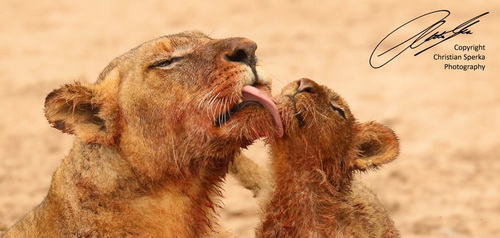
On third place is the picture of the week 35 (A Lioness cleaning her cub after a big giraffe meal – Title: Wash! / 10 votes)

Thanks to everyone who voted and helped selecting the picture of the year 2011.

The picture of the year image is available as a print (4″x6″ or 8″x10″) in the Nashville Zoo gift shop or online at www.sperka.biz/poty2011.

If you would like to review all pictures of the week 2011 got www.sperka.biz/potw2011.

For the pictures of the week 2012 go to www.sperka.biz/potw2012.