A Rare and Wild Guest at Nashville Zoo at Grassmere

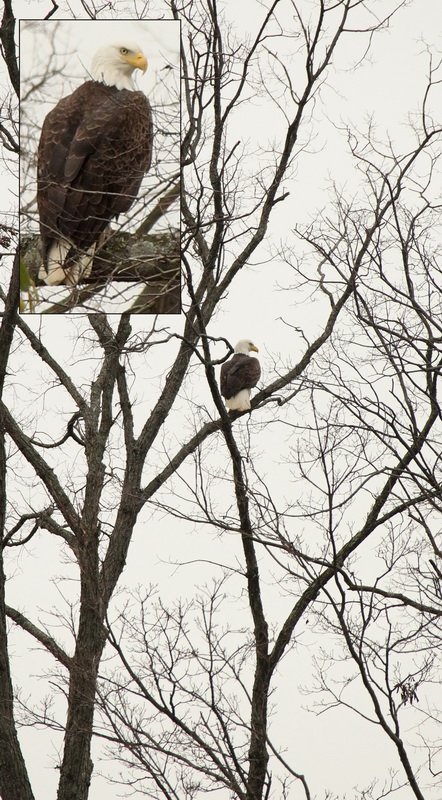
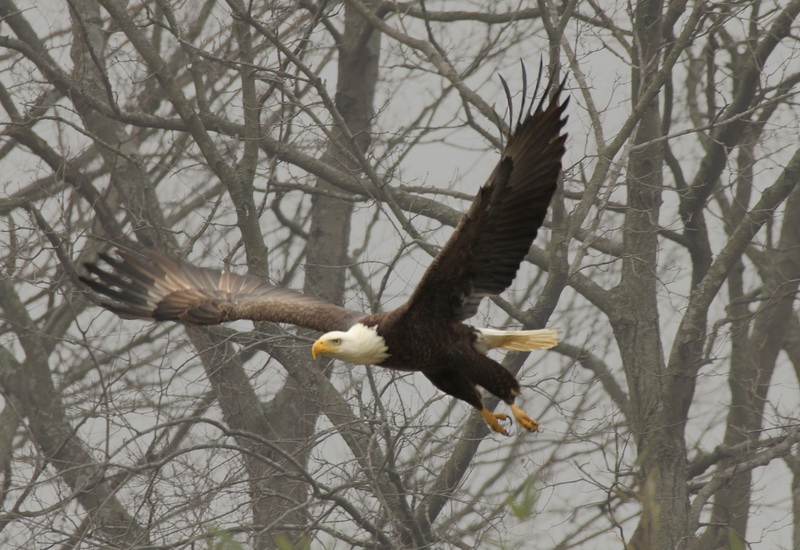
I took these pictures yesterday around 11:45 a.m. at the Nashville Zoo, Tennessee, USA.

This Bold Eagle stayed for a short time near the Giraffe exhibit and then flew on in a westerly direction.

This was the first official sighting of a Bald Eagle at Nashville Zoo at Grassmere.

A beautiful and rare sighting in the midst of a city on a gloomy day.

If you wish to order a print of this image go to www.sperka.biz/baldeagle

Have a good weekend!


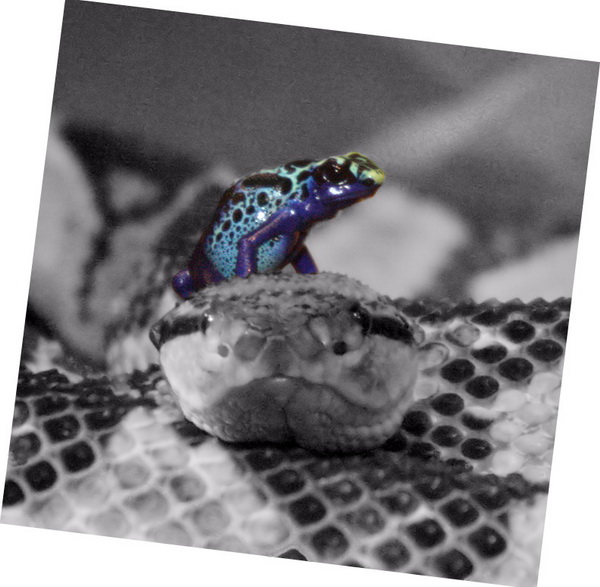
A Brave Frog

This small Dyeing Poison Arrow Frog ventured on to the head of the most venomous snake at Nashville Zoo at Grassmere. The Bushmaster (a venomous pit viper) was not disturbed by the extra weight on his head and the little one escaped unharmed 🙂 .

This picture was taken in the Unseen New World at Nashville Zoo at Grassmere , Tennessee, USA.

A Brave Frog – by Christian Sperka

Merry Christmas and a Happy New Year 2012

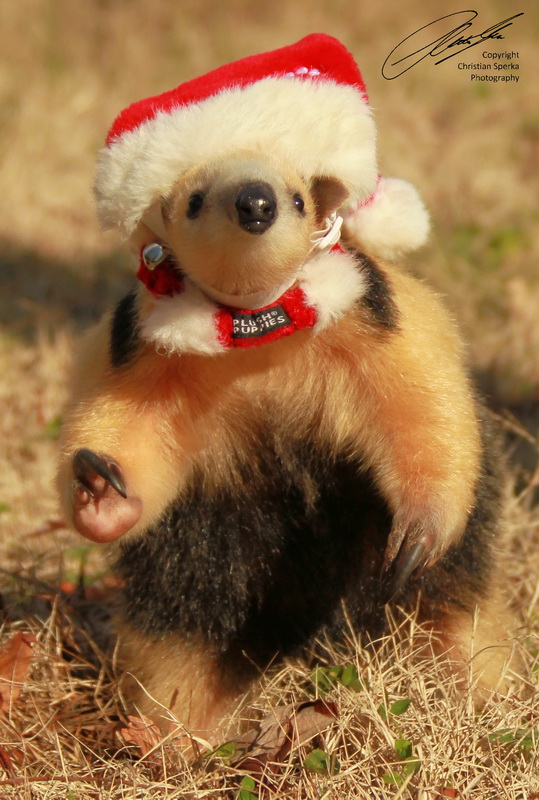
Ke$ha (one of Nashville Zoo’s Tamanduas) and I wish you

Merry Christmas and a Happy New Year 2012
 Frohe Weihnachten und ein Gutes Neues Jahr 2012
  Geseënde Kersfees en ‘n ​​Voorspoedige Nuwe Jaar 2012
   Ngikufisela uKhisimusi oMuhle noNyaka oMusha oNempumelelo
    Feliz Navidad y un Feliz Año Nuevo 2012
     圣诞快乐,新年快乐2012年
     Joyeux Noël et une Bonne Année 2012
    Schöni Wienachte und en guete Rutsch is neue Johr
   Buon Natale e un Felice Anno Nuovo 2012
  Cras et sem a Kalendis MMXII
 Wesołych Świąt i Szczęśliwego Nowego Roku 2012
Bonan Kristnaskon kaj feliĉan novan jaron

Try to identify the languages for these Holiday greeting – scroll down to see the answer.

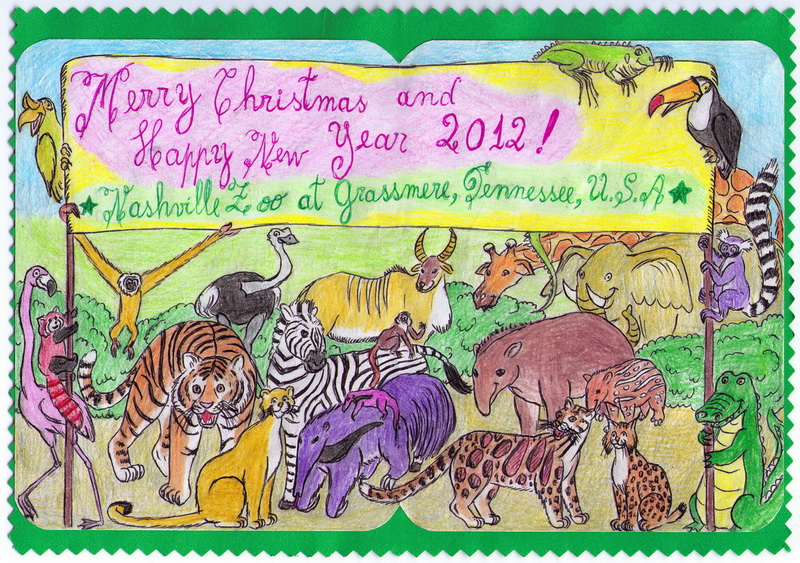
I got this colorful, hand-made Christmas card from a Nashville Zoo fan in Argentina.
He incorporated 20 of Nashville Zoo’s species into the picture (Rhinoceros Hornbill, Caribbean Flamingo, Red Panda, White-cheeked Gibbon, Bengal Tiger, Ostrich, Cougar, Damara Zebra, Eland, Masai Giraffe, Baird’s Tapir, African Elephant, Giant Anteater, Red-tailed Monkey, Eurasian Lynx, Rhinoceros Iguana, Tuco Toucan, Ringd-tailed Lemur, American Alligator and Clouded Leopard). Well done and thank you Flavio!

And here are the languages from the Holiday message: English, German, Afrikaans, Zulu, Spanish, Chinese, French, Swiss-German, Spanish, Latin, Polish and Esperanto.

I will be in Germany and Switzerland from December 21 to December 29. All the best – Christian

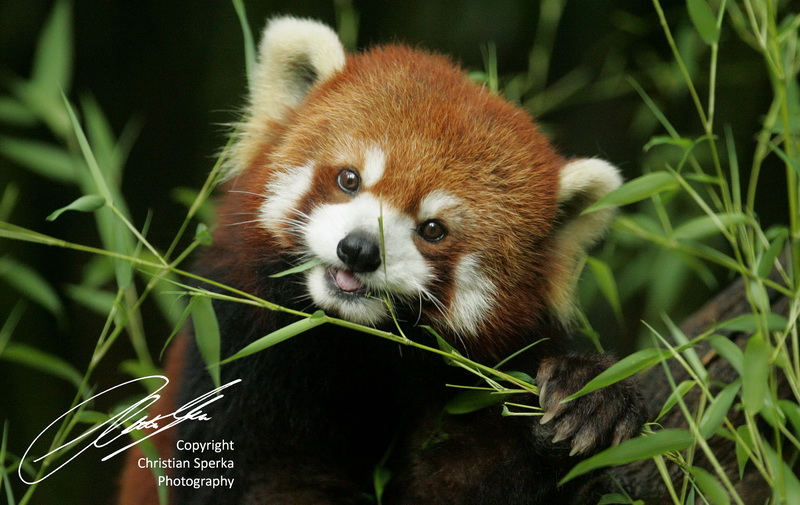
Pictures of the Week 51 – I love bamboo :-)

This weeks’ picture is of a female Red Panda at Nashville Zoo at Grassmere, Nashville, Tennessee, USA

To review all 2011 pictures of the week go to http://www.sperka.biz/potw2011/slideshow

More Red Panda pictures at www.sperka.biz/redpanda

About Red Panda

The Red Panda (Ailurus fulgens) is a small arboreal mammal native to the eastern Himalayas and southwestern China. It is the only species of the genus Ailurus. Slightly larger than a domestic cat, it has reddish-brown fur, a long, shaggy tail, and a waddling gait due to its shorter front legs. It feeds mainly on bamboo, but is omnivorous and may also eat eggs, birds, insects, and small mammals. It is a solitary animal, mainly active from dusk to dawn.

The taxonomic classification of the red panda has been controversial since it was discovered. French zoologist Frédéric Cuvier initially described the Red Panda in 1825, and classified it as a close relative of the Raccoon (Procyonidae). At various times it has been placed in Procyonidae, Ursidae (Bears), with Ailuropoda (Giant Panda) and in its own family, Ailuridae.

Recent molecular-systematic DNA research also places the red panda into its own family Ailuridae, which is in turn part of the broad superfamily Musteloidea that also includes skunk, raccoon, and weasel families.

Red Pandas are not related to Giant Pandas, as the name would suggest, but they both love bamboo. The Red Panda picture was taken at Nashville Zoo and the Giant Panda at Zoo Atlanta, Georgia, USA.

This weeks selection for the “Picture of the Week” was made by a 7th grade World Geography class at Sunset Middle School in Williamson County, TN. Thanks for your interest in wildlife photography and conservation.

New “Unseen New World” Photography Work Shop at the Nashville Zoo

A large number of animals species at the Nashville Zoo live in the Unseen New World. Their habitats (Terrariums and Aquariums) provide a completely different set of photographic challenges than outdoor exhibits. Join this new workshop if you would like to learn how Nashville Zoo Photographer, Christian Sperka, deals with those challenges.
Participants will also get the chance to photograph special animal feeding sessions.

The course is limited to ten participants, so don’t hesitate to take advantage of this unique opportunity.

For more information and/or book the 4 hour program on December 11, 2011 go to http://www.nashvillezoo.org/education/usnw-photography-class.
 
Earlier this year Christian has recorded a video about photography in the Unseen New World. Here is the link to the video in case you are interested:
http://www.youtube.com/user/NewMediaEdge#p/u/28/mCMi2Ncik2k

Picture of the Week 46 – Brothers

This week’s picture is of three Hyacinth Macaw brothers at Nashville Zoo at Grassmere, Nashville, Tennessee, USA.

About Hyacinth Macaws:
The Hyacinth Macaw (Anodorhynchus hyacinthinus) is a parrot native to central and eastern South America. With a length of about 100 cm (3.3 ft) it is the largest macaw and the largest flying parrot species. Habitat loss and trapping wild birds for the pet trade has taken a heavy toll on their population in the wild, and as a result the species is classified as endangered. In the 1980s, it is estimated that at least 10,000 birds were
taken from the wild. The Nashville Zoo is involved in Hyacinth Macaw conservation. (Species Survial Plan SSP).

For more Hyacinth pictures go to  www.sperka.biz/macaw

Picture of the Week 43 – Halloween

This week’s picture is of a small Tamandua at Nashville Zoo celebrating Halloween with a giant pumpkin 🙂

Enjoy the picture!

About Tamanduas:
Tamandua is a genus of anteaters. It has two members: the Southern Tamandua (Tamandua tetradactyla) and the Northern Tamandua (Tamandua mexicana). They live in forests and grasslands and possess partially prehensile tails. They mainly eat ants and termites. In captivity, they will eat fruits and meat. They have no teeth and depend on their powerful gizzard to break down their food. Besides the tamanduas, there are two other anteaters, the Giant Anteater and the Silky Anteater. Tamanduas are much smaller than the Giant Anteater, but are larger than the Silky Anteater. The word tamanduá is Tupi for “anteater”, and in Tupi and Portuguese refers to anteaters in general. The tamandua is called in those languages tamanduá-mirim (mirim means “small”).

Excellent Care!

  Nashville Zoo at Grassmere and Christian Sperka Photography present …

Excellent Care! An exhibition of images showing veterinarian care in a zoo environment


Picture: Monitoring by Christian Sperka
 
Invitation to the Nashville First Saturday Gallery Crawl – November 5, 2011
 
A very special exhibition awaits you at the Animal Art Photography Gallery on November 5, 2011 (at the First Saturday Gallery Crawl).
 
I have selected images documenting the excellent veterinarian animal care at the Nashville Zoo. Many of these – never before published – images were taken at procedures behind the scenes at the zoo.
 
Dr. Heather Robertson, Senior Veterinarian at the Nashville Zoo, will talk about the work of the vet staff in a short presentation (at 6:30pm, 7:15pm, 8:15pm and 9:00pm). She and other members of the Nashville Zoo staff will be there all evening to answer your questions.
 
A special guest, one of the over 2000 patients of Dr.Robertson, will make her appearance (together with her animal keeper).
 
Do not miss this exhibition of fascinating images!
 
When: Saturday, November 5, 2011 from 6:00pm to 9:00pm (Nashville First Saturday Gallery Crawl)
 
Where: Christian Sperka Photography & Animal Art Photography Gallery at the Arcade in Downtown Nashville (between Church and Union / 4th and 5th Avenue – )
 
I am looking forward to seeing you on Saturday.
 
Best regards – Christian

 
Picture: Hold on by Christian Sperka

Picture of the Week 41 – Heavy Ride

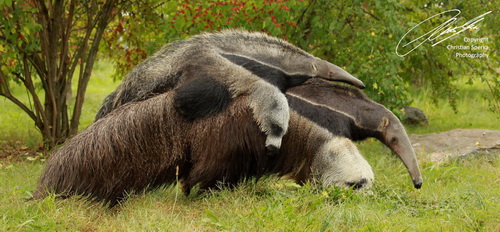
This week’s picture is of Giant Anteaters at Nashville Zoo at Grassmere, Nashville, Tennessee, USA. The “little one” is still riding on his mom’s back, even if he is not so little any more :-). The young male weighs already over 30 pounds. He was born on April 24, 2011. Tiana and Mochila reside in the Giant Anteater (off-exhibit) breeding facility at the Nashville Zoo.

Enjoy the picture!

About Giant Anteaters:
The Giant Anteater, Myrmecophaga tridactyla, is the largest species of anteater. It is found in Central and South America from Honduras to northern Argentina. It is a solitary animal, found in many habitats, including grasslands, forests and rainforests. It feeds mainly on ants and termites, sometimes up to 30,000 insects in a single day.

The giant anteater is one of few mammals without any teeth. An anteater crushes insects it consumes using hard growths found on the inside of its mouth. They have an average body temperature of 32.7C, which is one of the lowest of all land-living mammals. It grows to a size of up to 7 feet (2.1 m) in length. It weighs from 65 to 140 pounds (29 to 64 kg).

It bears a single offspring after a gestation period of 190 days, which will stay near the mother until she becomes pregnant again. The baby spends much of the first part of its life riding on its mother’s back, until it is nearly half her size. Females give birth standing up and the newborn anteater immediately climbs onto her back. Young are born with a
full coat of hair and adult-like markings.

More Giant Anteater Pictures at www.sperka.biz/anteater