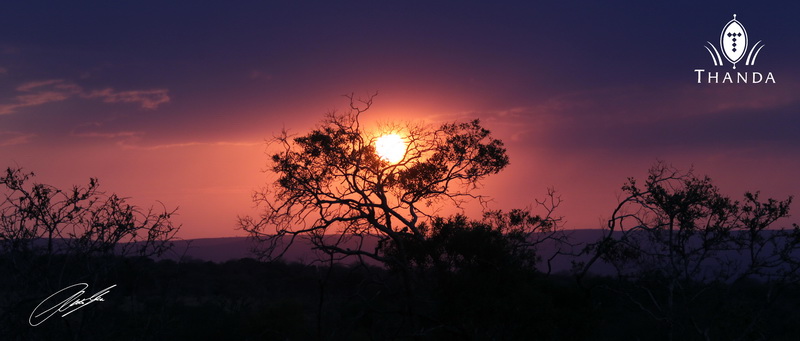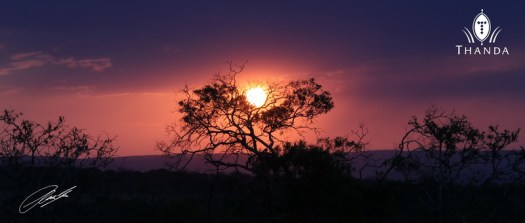
Sunrise over Mkuze

In the last few weeks a few people have asked me if I could also put some of my scenic “non-animal” pictures on the blog.

Even if it is not my focus (I usually target things that can move :-)) I will post a few of my scenic shots over the next few weeks.

So here we go. The first picture is – predictably – from South Africa!

It is a view over the Mkuze Game Reserve, Kwazulu Natal, South Africa. The picture was taken from high ground in then north of Phinda Private Game Reserve in the early hours of the morning.

Enjoy it.

Picture of the Week 4 – Evening Patrol!

[View all Pictures of the Week 2012]

Leopards are my favorite species of cats!

Since 2002 I am supporting a leopard conservation project in South Africa. It is called the Munyawana Leopard Project.

This week’s picture is of one of the female project leopards walking the boundries of her territory at dusk.

If you like to know more about this project and the organisation which runs the project go to www.panthera.org/programs/leopard/munyawana-leopard-project.

If you like to see more of my pictures taken for the project go to www.sperka.biz/mlp.

For more leopard images from my various trips to southern Africa go to www.sperka.biz/leopard.

About Leopards:

The Leopard (Panthera pardus) is the smallest of the four “big cats” in the genus Panthera, the other three being the tiger, lion, and jaguar. It was once distributed across eastern and southern Asia and Africa, from Siberia to South Africa, but its range of distribution has decreased radically because of hunting and loss of habitat. It is now chiefly found in sub-Saharan Africa; there are also fragmented populations in the Indian subcontinent, Sri Lanka, Indochina, Malaysia, Indonesia, and China. Because of its declining range and population, it is listed as a “Near Threatened” species on the IUCN Red List.

Compared to the other “big cats”, the leopard has relatively short legs and a long body with a large skull. Both leopards and jaguars that are melanistic (completely black or very dark) are known as black panthers. The species’ success in the wild is in part due to its opportunistic hunting behavior, its adaptability to habitats, its ability to run at speeds approaching 58 kilometres per hour (36 mph), its unequaled ability to climb trees even when carrying a heavy carcass, and its notorious ability for stealth.

Picture of the Week 2 – View Point

Cheetahs are one of my favorite cats. In 2005 I had the opportunity to follow a Cheetah mom and her four cubs for three days. I got many beautiful shots from these days. This week’s picture was never published before. Enjoy it!

View Point – A Cheetah with her cubs resting on a termite hill looking for prey on Mziki Marsh – Phinda Private Game Reserve – South Africa.

For more Cheetah pictures got to www.sperka.biz/cheetah.

If you would like to order a print of this images online go to http://www.sperka.biz/potw2012/h2ba335ce#h2ba335ce

About Cheetahs:
The Cheetah (Acinonyx jubatus) is a large-sized cat inhabiting most of Africa and parts of the Middle East.  It is the only cat with non-retractable claws (therefore cheetahs cannot climb vertical trees, although they are generally capable of reaching easily accessible branches). It achieves by far the fastest land speed of any living animal—up to 120 km/h (75 mph) in short bursts covering distances up to 500 m (1,600 ft), and has the ability to accelerate from 0 to over 100 km/h (62 mph) in three seconds.

The cheetah has unusually low genetic variability. It is thought that the species went through a prolonged period of inbreeding following a genetic bottleneck during the last ice age. The extinct genus Miracinonyx was extremely cheetah-like, but recent DNA analysis has shown that Miracinonyx (early to late Pleistocene epoch), found in North America and called the “North American cheetah” are not true cheetahs, instead being close relatives to the cougar.

Picture of the Week 50 – Bloodshot!

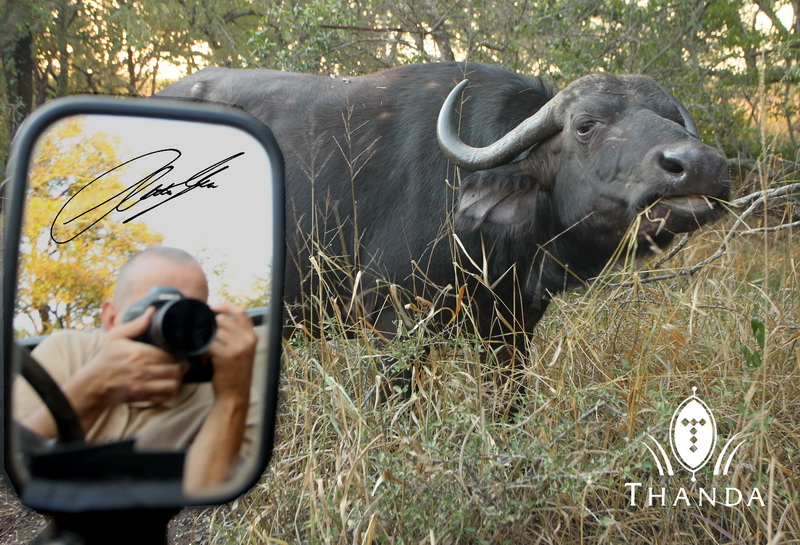
This weeks picture if of a Cape Buffalo Bull.  The picture was taken at Phinda Private Game Reserve, Kwazulu Natal, South Africa.

To review all 2011 pictures of the week go to http://www.sperka.biz/potw2011/slideshow

And this is my EYES series version of the image in black&white:

For more Cape Buffalo pictures go to http://www.sperka.biz/buffalo

About Cape Buffalo:

The Cape Buffalo, Affalo, Nyati, Mbogo or African Buffalo (Syncerus caffer) is a large African bovine. It is not closely related to the slightly larger wild Asian water buffalo. Owing to its unpredictable nature which makes it highly dangerous to humans, it has not been domesticated, unlike its Asian counterpart, the domestic Asian water buffalo.

The Buffalo is a very robust species. Its shoulder height can range from 1 to 1.7 m (3.3 to 5.6 ft) and its head-and-body length can range from 1.7 to 3.4 m (5.6 to 11 ft). Buffalo weigh up to 910 kg (2,000 lb), with males, normally larger than females.

Buffalo have few predators and are capable of defending themselves against (and killing) lions. Lions do kill and eat buffalo regularly, but it typically takes multiple lions to bring down a single adult buffalo.

Picture of the Week 48 – Tallest

This week’s picture of a South African Giraffes was taken at Kings Camp, Timbavati Game Reserve, South Africa.

Enjoy the picture!

For more Giraffe pictures go to www.sperka.biz/giraffe (Wild South African Giraffes) or www.sperka.biz/giraffes (Masai Giraffes at the Nashville Zoo)

About Giraffes:
The Giraffe (Giraffa camelopardalis) is the tallest of all land-living animal species, and the largest ruminant. Its scientific name refers to its irregular patches of color on a light background, which bear a vague resemblance to a Leopard’s spots, and its face, which is similar to that of a camel. In addition to these features, the Giraffe is noted for its extremely long neck and legs and prominent horns. It stands 5–6 m (16–20 ft) tall and has an average weight of 1,200 kg (2,600 lb) for males and 830 kilograms (1,800 lb) for females.

It is classified under the family Giraffidae, along with its closest relative, the Okapi. Different authorities have recognized different numbers of subspecies, differentiated by size, coloration, coat pattern and range. Up to nine subspecies are recognized:
G. c. angolensis (Smoky or Angolan)
G. c. antiquorum (Kordofan)
G. c. camelopardalis (Nubian)
G. c. giraffa (South African)
G. c. peralta (West African)
G. c. reticulata (Reticulated or Somali)
G. c. rothschildi (Rothchild)
G. c. thornicrofti (Thornicroft or Rhodesian)
G. c. tippelskirchi (Massai)

My pictures are mainly of South African Giraffes (www.sperka.biz/giraffe) and of Masai Giraffes(www.sperka.biz/giraffes).

Picture of the Week 47 – We are playing – don’t interrupt!

These two Cape Hunting Dog puppies were playing when they were rudly interrupted by the photographer 🙂

The picture was taken at Thanda Private Game Reserve, Kwazulu Natal, South Africa.

Enjoy the picture!

For more Cape Hunting Dog (or African Wild Dog) pictures go to www.sperka.biz/chd

About Cape Hunting Dogs / African Wild Dog:

The Cape Hunting Dog (Lycaon pictus) is a large canid found only in Africa, especially in savannas and lightly wooded areas. It is variously called the African wild dog, African hunting dog, Cape hunting dog, painted dog, painted wolf, painted hunting dog, spotted dog, or ornate wolf. This dog is the only canine without dewclaws which are the claws that are on the inside of the front feet.

The Cape Hunting Dog has a the highest biting force of any extant mammal of the order Carnivora, although exceeded by the Tasmanian devil a marsupial carnivore.

Litters can contain up to 19 pups, though ~10 is the most common. The typical gestation period is 70 days. Females will disperse from their birth pack at 14–30 months of age and join other packs that lack sexually mature females. Males typically do not leave the pack in which they were born.  In a typical pack, males outnumber females by a factor of two to one, and only the dominant female is usually able to rear pups. The species is also unusual in that some members of the pack, including males, may be left to guard the pups whilst the others, including the mothers, join the hunting group.