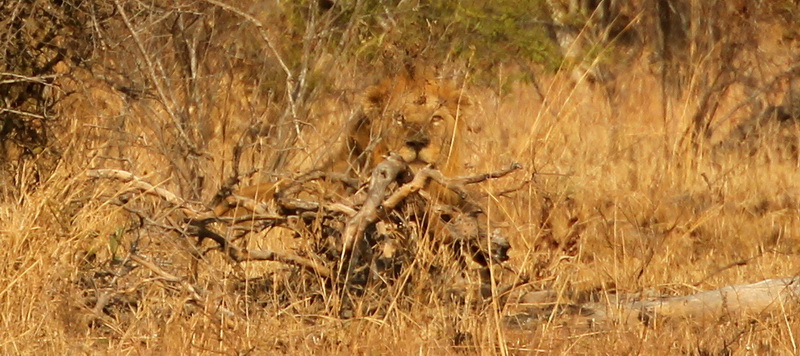
Walk the Mapogo Males

You may never heard of the Mapogo Male Lion Coalition of the Sabi Sands. For years a six male coalition “ruled” the Lion prides in the Sabi Sands. Two of these (now ten year old) Lions are still alive. Today we found and walked these two legendary males. We took a direct approach in which we made sure that the Lions knew we were there. The picture above was taken during the encounter.

We approached to about 50 meters (~ 130 feet) when one of the Lions showed some sign of “dis-comfort” with our presence. We extracted slowly (and safely) from the sighting. It was one of the most exciting things I ever done in my life!

We then went back and viewed them from our game viewer.
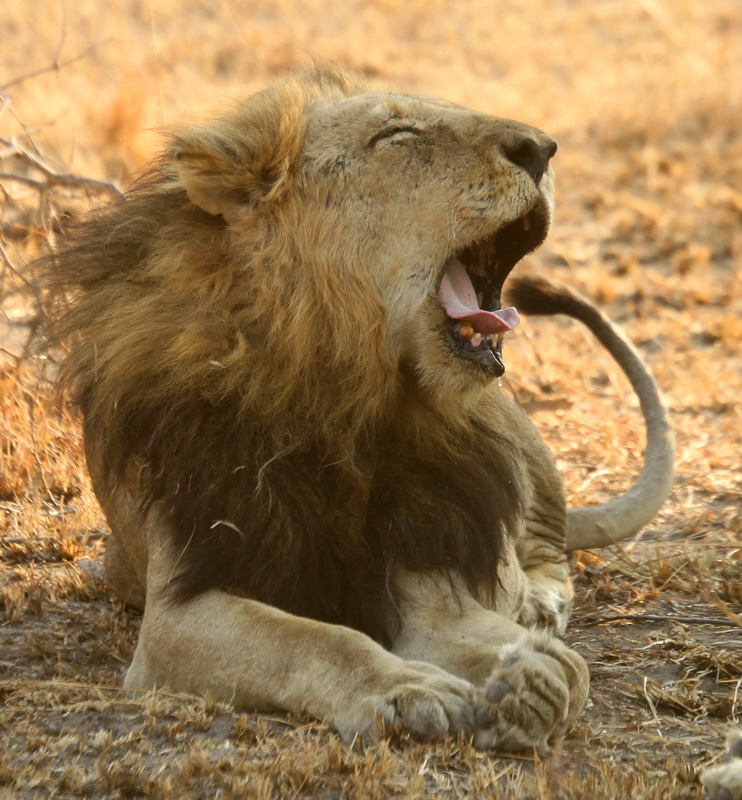
In the last few days we completed walks 6,7,8 and 9. This makes it now 49 km (= 31 miles) and 28 hours walking in the bush during the last week. The two pictures below are sightings of White Rhino and Buffalo on foot.

PS: If you like to know more about the Trails Guiding Course go to http://www.africanaturetraining.co.za. A great experience, even if you do it for fun and not for professional reasons.

To read more about the Mapogo males go to

History of the Mighty Mapogo Male Lions – by Brett Thomson

Massive, Flight and Almost!

On today’s game drive we had an encounter with the massive bulk of seven White Rhinos …

… and some Zebras took flight when we approached a waterhole.

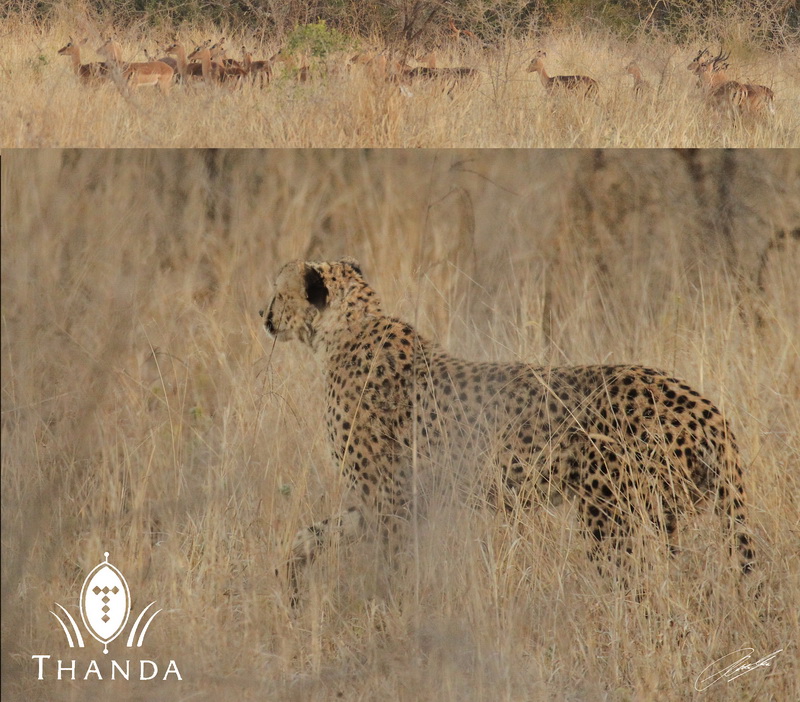
At the end of the day two male Cheetah almost caught an Impala.

We also saw an Elephant bull and a group of Wildebeest at the waterhole.

Not a bad Monday.

More of Mkuze …

As promised here are a few more pictures from my day at Mkuze Game Reserve.

Have a great week!

White Rhino (with mudded horn)

White Rhino

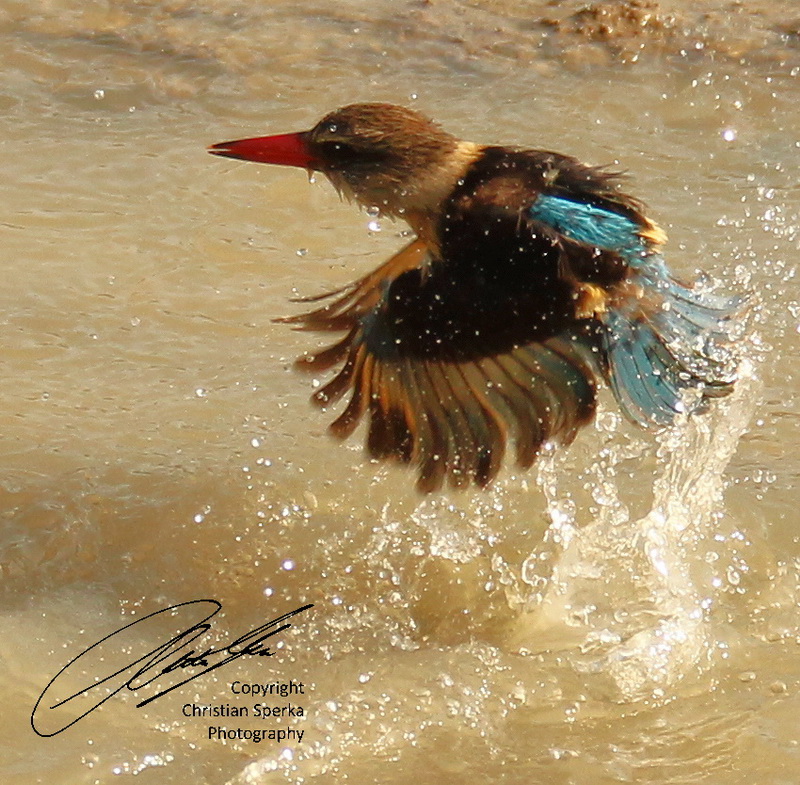
Brown-hooded Kingfisher (bathing)

Brown-hooded Kingfisher

Purple-crested Turaco

Cape Turtle Dove (landing)

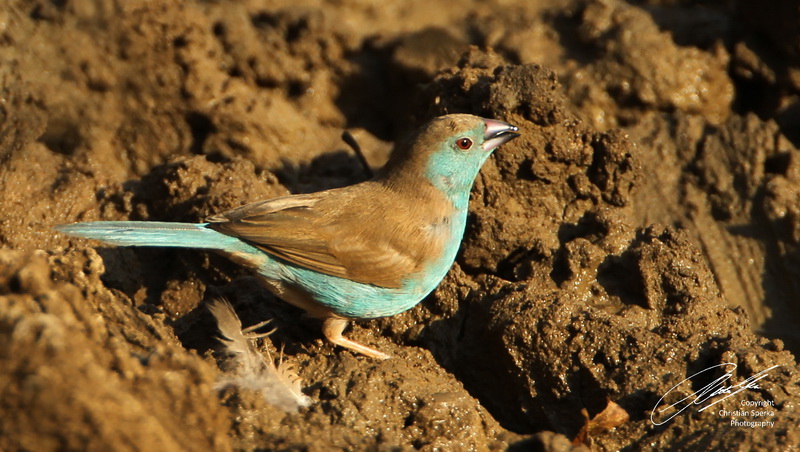
Blue Waxbill

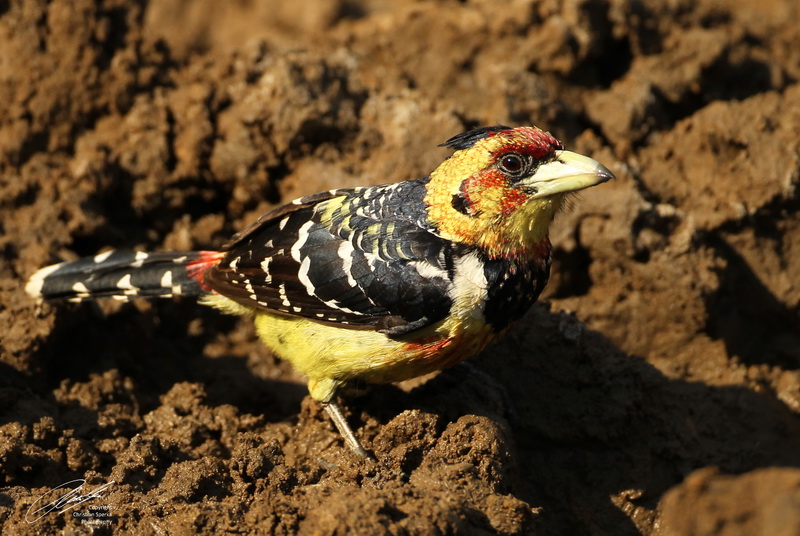
Crested Barbet


Technical Data – for photographers 🙂

Rhino – Picture 1 – Camera Canon 1D Mark IV – Lens Canon L f/4.0-500mm – 1/2000sec – f/4.5 – ISO 400 – +/-0eV – freehand

Rhino – Picture 2 – Camera Canon 1D Mark IV – Lens Canon L f/2.8-300mm – 1/1250sec – f/2.8 – ISO 400 – +/-0eV – freehand

Kingfisher – Picture 3 – Camera Canon 1D Mark IV – Lens Canon L 28-300mm – at 150mm – 1/2000sec – f/5.6 – ISO 800 – +0.67eV – freehand

Kingfisher – Picture 4 – Camera Canon 1D Mark IV – Lens Canon L f/4.0-500mm + 1.4Ext at 700mm – 1/500sec – f/5.6 – ISO 200 – +/-0eV – freehand

Turaco – Picture 5 – Camera Canon 1D Mark IV – Lens Canon L f/4.0-500mm + 1.4Ext at 700mm – 1/500sec – f/5.6 – ISO 200 – +/-0eV – freehand

Dove – Picture 6 – Camera Canon 1D Mark IV – Lens Canon L f/4.0-500mm – 1/5000sec – f/4.5 – ISO 800 – -0.67eV – freehand

Waxbill – Picture 7 – Camera Canon 1D Mark IV – Lens Canon L f/4.0-500mm + 1.4Ext at 700mm – 1/800sec – f/5.6 – ISO 200 – -1.00eV – freehand

Barbet – Picture 8 – Camera Canon 1D Mark IV – Lens Canon L f/4.0-500mm – 1/3200sec – f/4 – ISO 400 – -0.67eV – freehand


Force of Nature, Rhino Spa and Purple Beauty

As I am having this weekend off I went today into Mkuze Game Reserve and spent the whole day at the hides on the reserve. I got many very good pictures and will share a few of them with you over the next few weeks (on “Slow Thanda Days” :-)).

For today I have picked three pictures.

The first is titled “Force of Nature”. Four White Rhino made their way straight to the waterhole. From the angle this picture is taken they certainly look loke a force of nature.

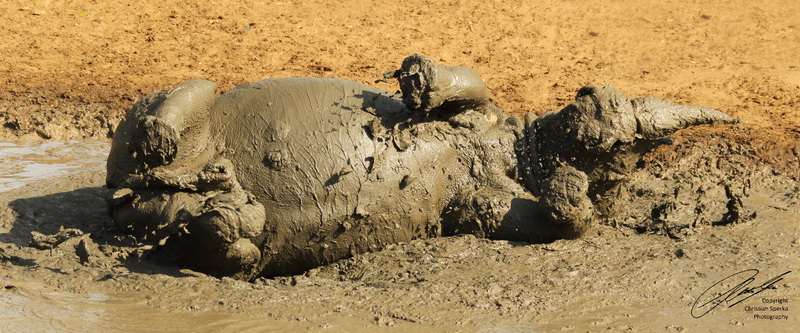
The second picture is of a White Rhino bull having a “Rhino Spa” mud treatment. He enjoyed himself thoroughly walling on the side of the waterhole.

The third picture is of Purple-crested Turcao, one of my favorite birds in South Africa, a “Purple-crested Beauty”.

More pictures will follow tomorrow. Have a great Sunday!

With a little bit of luck :-)

I had a successful and enjoyable first game drive with the photography volunteer program group at Thanda.

We found two White Rhinos drinking at one of the dams, enjoyed various general game and a pair of Giraffes and rounded off the day with a sunset shoot at another waterhole.

Not bad for my first official game drive on the reserve 🙂


First Rhinos

Today I saw my first Rhinos since I arrived at Thanda. After the Assistant Wildlife Manager, Mariana, helped me with my broken down Land Rover (I would not start again after I had stopped near one of the waterholes and we had to push start the engine) she was very kind and took me along to look for some White Rhinoceros on a remote part of the reserve.

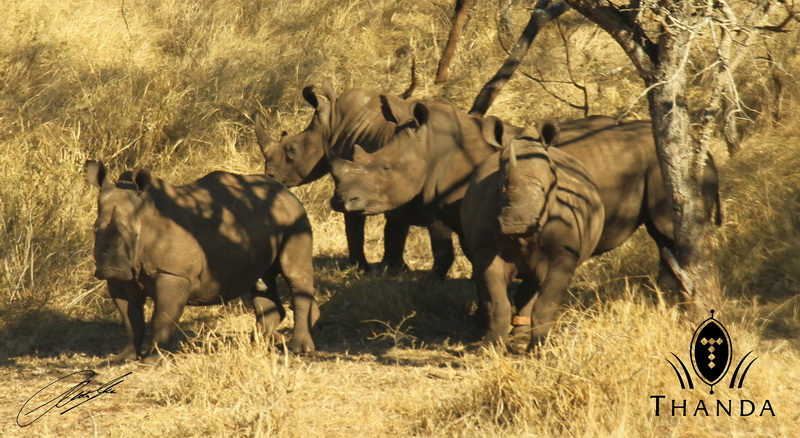
We found a crash of four Rhino!

The leather foot band on one of the Rhinos is a satellite tracking collar to keep track of these highly endangered animals, which are once again under severe threat from poachers.

We also stopped at the largest dam of the reserve and I got a glimpse of the only Crocodile currently living on Thanda.

Enjoy the pictures!

Pictures of the Week 15 – Browse and Graze

[View all Pictures of the Week 2012]

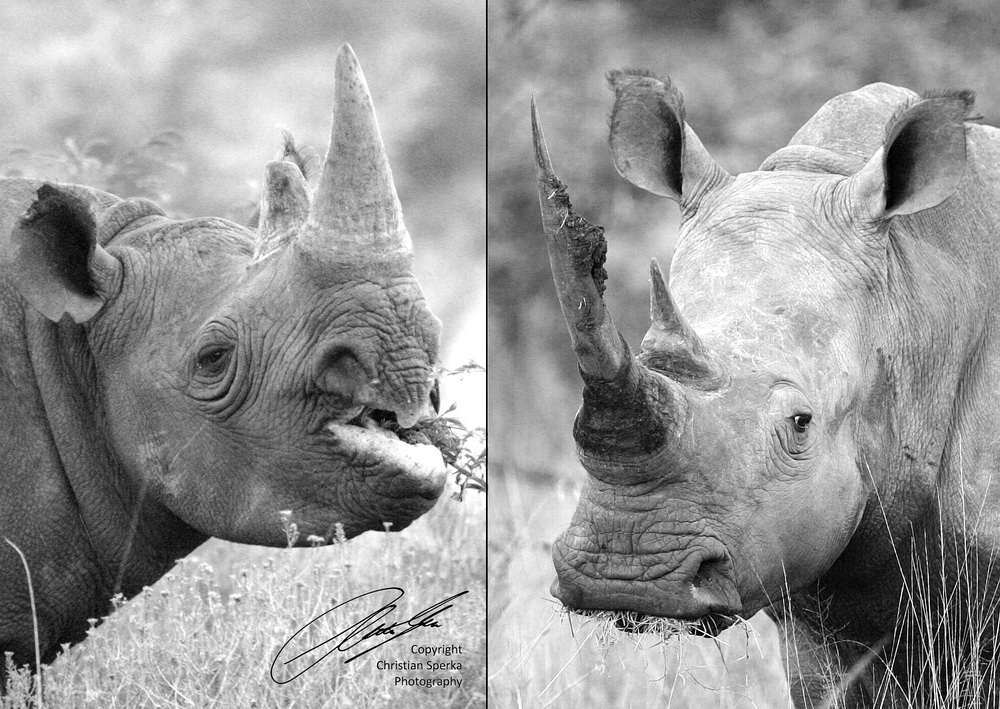
Black Rhino and White Rhino

This weeks’ pictures are in honor of two of my favorite mammal species which are under the threat of extinction by humans. If the poaching madness is not stopped these creatures, which were on this planet long before us, will disappear forever!

The main difference between Black Rhino and White Rhinos is the shape of their mouths. White Rhinos have broad flat lips for grazing and Black Rhinos have long pointed lips for browsing foliage. A popular theory claims that the name White Rhinoceros was actually a corruption of the word weid (“wide” in Afrikaans), referring to their square lips.

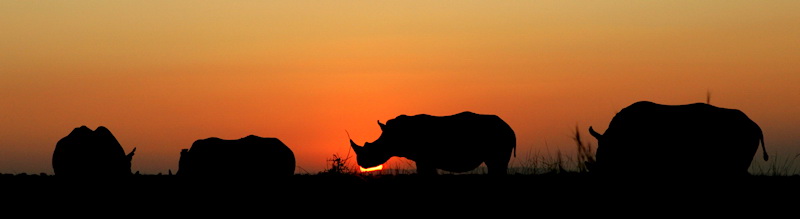
“Rhino Dawn”

More about Rhinos:

Rhinoceros, often abbreviated as rhino, is a family of five species of knee-less, odd-toed ungulates. Two of these species are native to Africa and three to southern Asia.

The Rhinoceros family is characterized by its large size, with all of the species able to reach one tonne or more in weight; a herbivorous diet; a thick protective skin; relatively small brains for mammals this size; and a large horn.

Rhinoceros are killed by humans for their horns, which are bought and sold on the black market, and which are used by some cultures for ornamental or (pseudo-scientific) medicinal purposes. The horns are made of keratin, the same type of protein that makes up hair and fingernails.

Click here if you would like to help the “Save our Rhino” effort on Thanda Private Game Reserve.

Click here is you would like to know more about the “Rhino Poaching Issue”.

Click here if you would like to see more of my Black Rhino pictures.

Click here if you would like to see more of my White Rhino pictures.