Amakhosi!

20130123 - CS2_8909 - E - SIG

I was not driving guests today, but I had very special mission.

I took a first series of pictures of three Amakhosi (Traditional Leaders / Chiefs / in the Zulu language: Amakhosi). They are the leaders of the three communities which border Thanda Private Game Reserve.

To meet all three chiefs in their communities I had to drive over 180km through the Zululand mountains. I was glad I had my Toyota Fortuner, a capable 4×4, because I had to get up some very rocky hills.

Next week I will repeat the tour for a second set of pictures of the gentlemen in traditional Zulu attire. It was a most interesting day 🙂

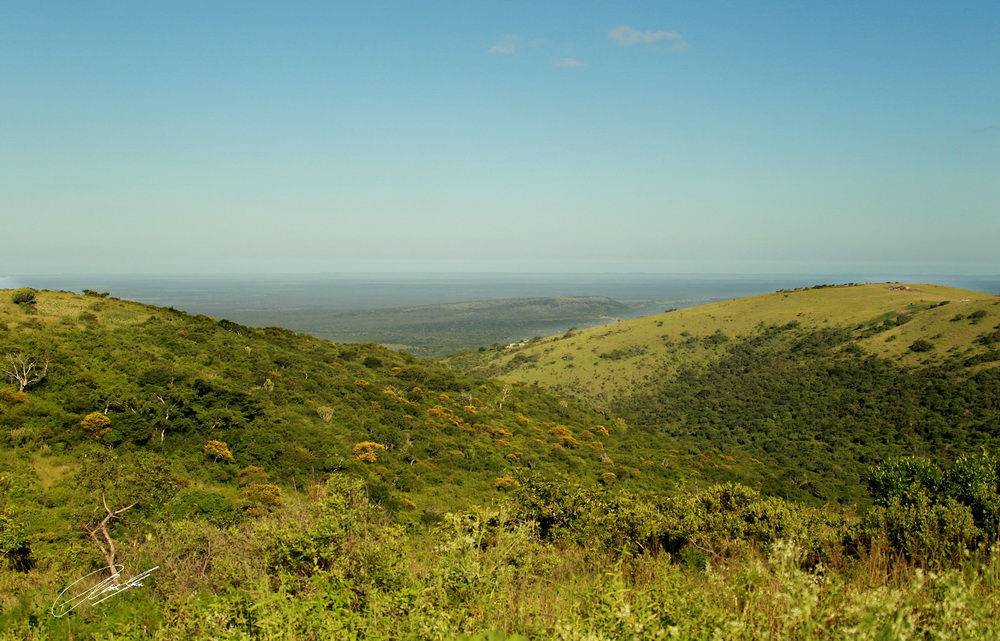
Today’s picture was taken from the top of one of the hills I climbed with my car.

From Europe to Africa

Today’s picture is an image of a European Roller, one of my favorite “Summer-Birds” in South Africa.

20130115 - CS2_7453 - E - SIG

About European Rollers:

The European Roller (Coracias garrulus) is the only member of the roller family of birds to breed in Europe. It is a long-distance migrant, wintering in southern Africa.

Rollers perch prominently on trees, posts or overhead wires, like giant shrikes, whilst watching for the large insects, small reptiles, rodents and frogs that they eat.

This species is striking in its strong direct flight, with the brilliant blue contrasting with black flight feathers. Sexes are similar, but the juvenile is a drabber version of the adult.

What a morning :-)

When it has rained as much as it did the last few days we cannot drive off-road for quite a while. So game viewing becomes rather more difficult, especially when looking for carnivores.

This mornings game drive was therefore a great surprise. We left the Lodge looking for Lions. About half an hour into the drive we came across a male Leopard walking down the road towards us. Luckily he took his time moving off the road.

20130121 - CS2_8338 - E - SIG

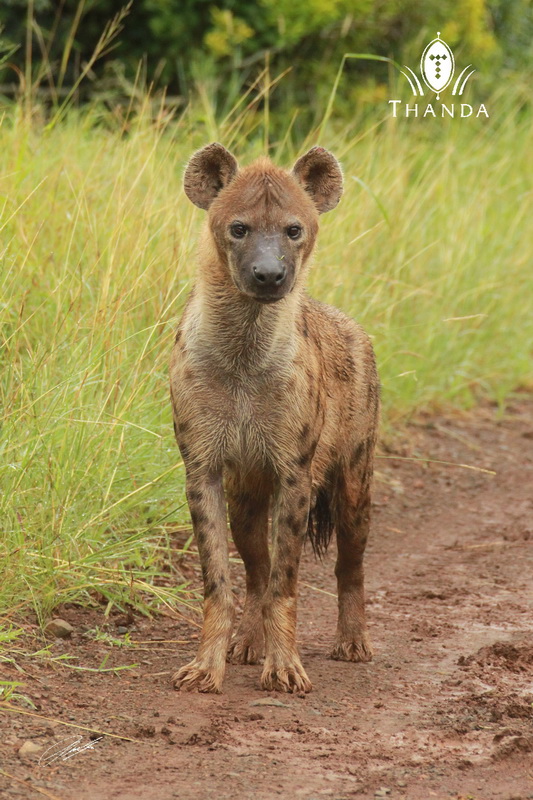
He was followed a few minutes later by a Spotted Hyena, which did not run immediately as usual, but stayed for a “photo shoot”.

20130121 - CS2_8380 - E - SIG

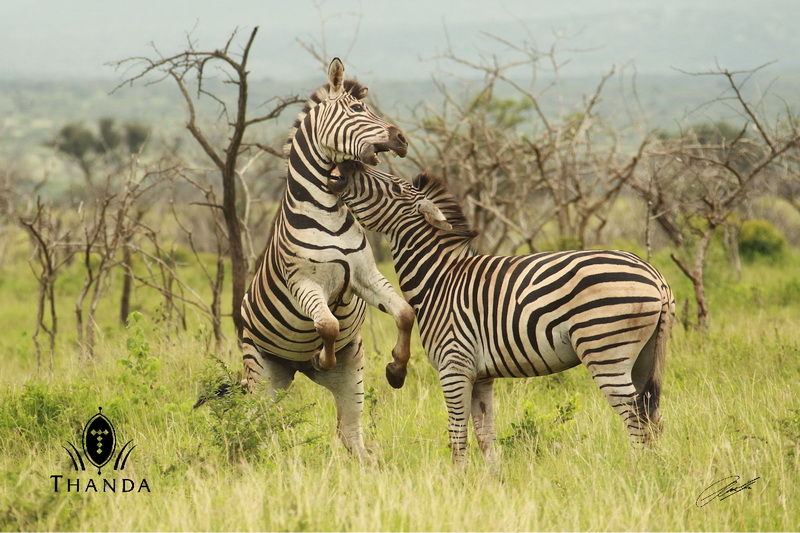
And when we stopped for our morning coffee break a dazzle of Zebra nearby did not run away as usual, but approached us quite close. Two of the males in the group started fighting which resulted in an interesting series of pictures.

20130121 - CS2_8511 - E - SIG

20130121 - CS2_8510 - E - SIG

What a morning 🙂 Have a good week!

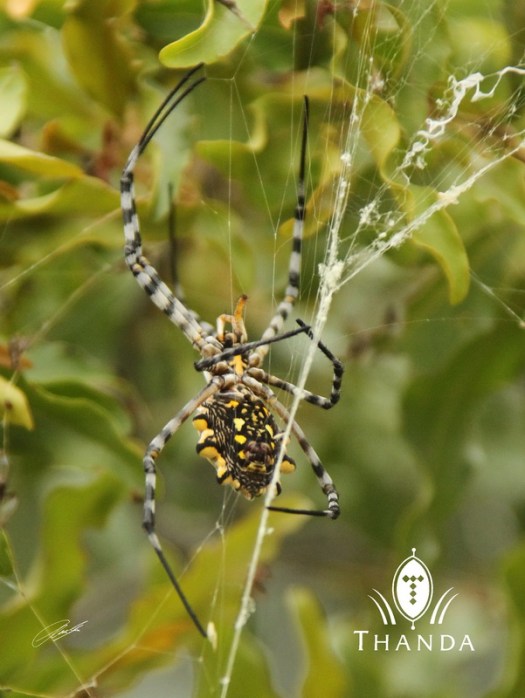
Bark Spider

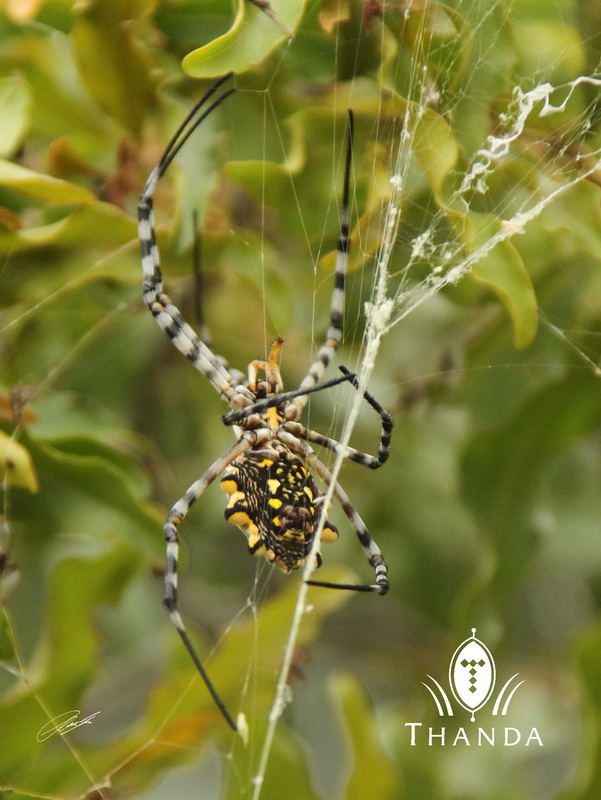
When I was going through some if my pictures from the last two weeks I found this image of a Bark Spider, which I liked a lot. Have a good Sunday!

20130118 - CS2_8016 - E - SIG

About Bark Spiders:

Bark Spiders (Genus:Caerostris) are nocturnal orb-web spiders that construct a large orb web, up to 1.5 meters  stretching from one tree to the next. When she is off her web she retires to a branch and packs her legs tightly next to her body and she melts into her surroundings looking like a knot on the branch.

Caerostris are large spiders with females reaching 30 mm in body length. The males are tiny. Its silk is the toughest biological material ever studied, over ten times tougher than a similarly-sized piece of Kevlar.

Scorpions, Lions … and more rain!

Heavy rains and thunderstorms – again! This year is starting as wet as the last one has ended.

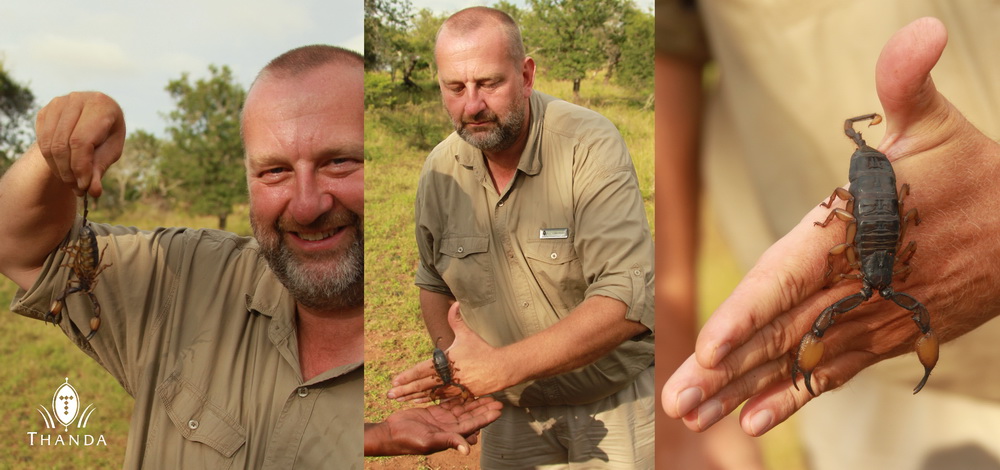
In the morning we showed our guests a Scorpion (in the few hours without rain). This is a picture collage of me presenting one of the large Scorpion species to our group of Swedish guests at our morning coffee stop. Bheki found this impressive specimen under a stone. After the presentation he returned “our performer” back to its stony home 🙂

20130118 - Collage 2015 - SIG

On the evening game drive we were lucky to find a Lioness with her two cubs just before the skies opened and before the rains drove us back to the Tented Camp.

20130118 - CS2_8051 - E - SIG

PS: The picture with me and the Scorpion were taken by one of our guests – Thanks a lot!

About Scorpions:

Scorpions are predatory arthropod animals. They have eight legs and are easily recognized by the pair of grasping claws and the narrow, segmented tail, often carried in a characteristic forward curve over the back, ending with a venomous stinger. Scorpions range in size from 9 mm to 20 cm.

All known scorpion species possess venom and use it primarily to kill or paralyze their prey so that it can be eaten. In general, it is fast-acting, allowing for effective prey capture. It is also used as a defense against predators. Of the 1000+ known species of scorpion, only 25 have venom that is deadly to humans; most of those belong to the family Buthidae. However, all scorpions are able to penetrate human skin and deliver sharp, unpleasant stings, most of which usually leave redness around the stung area.

Good Morning!

Our dominate male Lion was greeting us at the start of our morning game drive. He had rested on top of a hill for the night.

20130116 - CS2_7806 - E - SIG

Cooling systems!

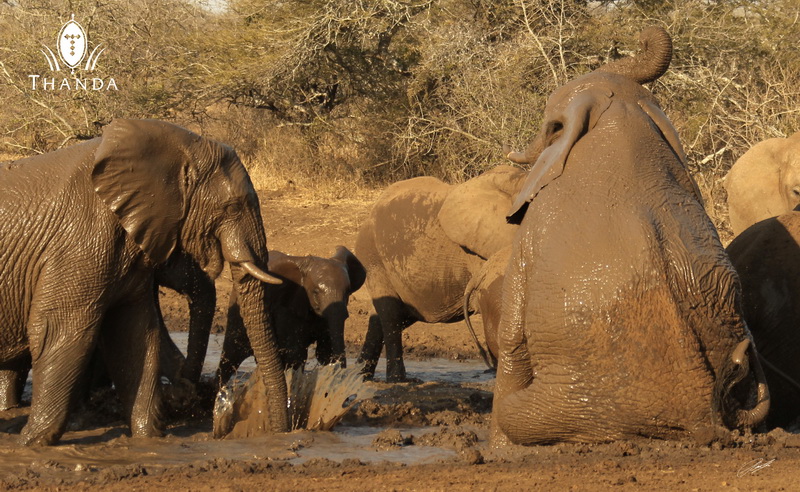
Most mammals can use their sweat glands to cool themselves down. Elephants cannot sweat so they have to use other means to cool down. They pump huge amounts of blood through their ears (which represent 20% of their body surface) while waving the ears – as one means of cooling. They also try to use shade wherever possible and take extended baths on hot days. But one of the most effective ways of lowering their body temperature is to take a mud bath. The drying mud draws a lot of heat from the body and cools them down very effectively

On yesterday’s evening game drive I took this picture of one of the largest Thanda bulls after he had a thorough mud bath.

20130113 - CS2_6923 - E - SIG

The second picture is of a “family bath” a few month ago.

20120814 - CS1_4585 -  E - SIG

Summer Time – Spider Time

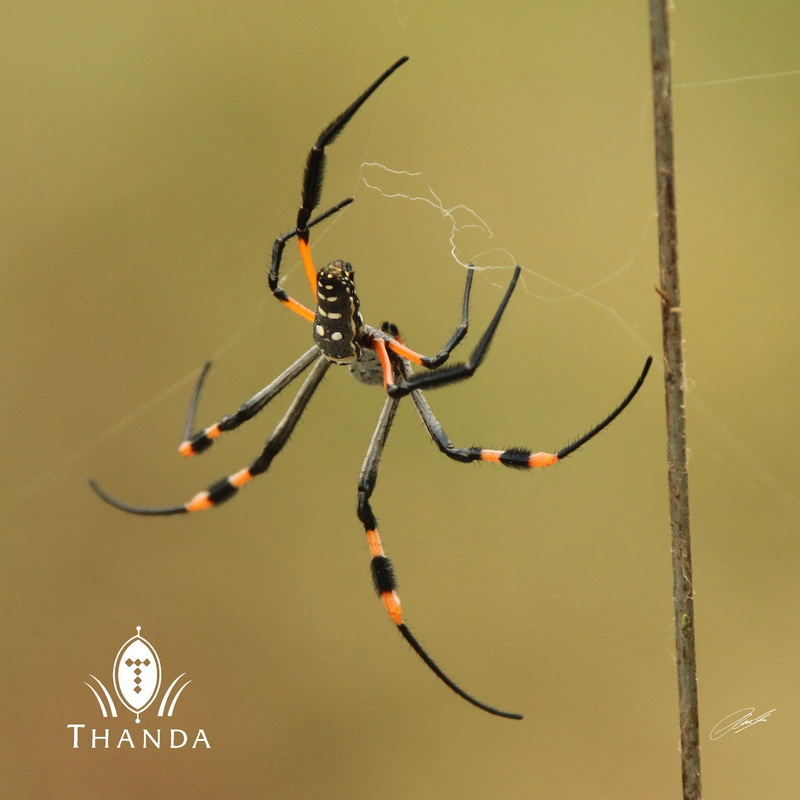
20121220 - CS2_4178 - E - SIG

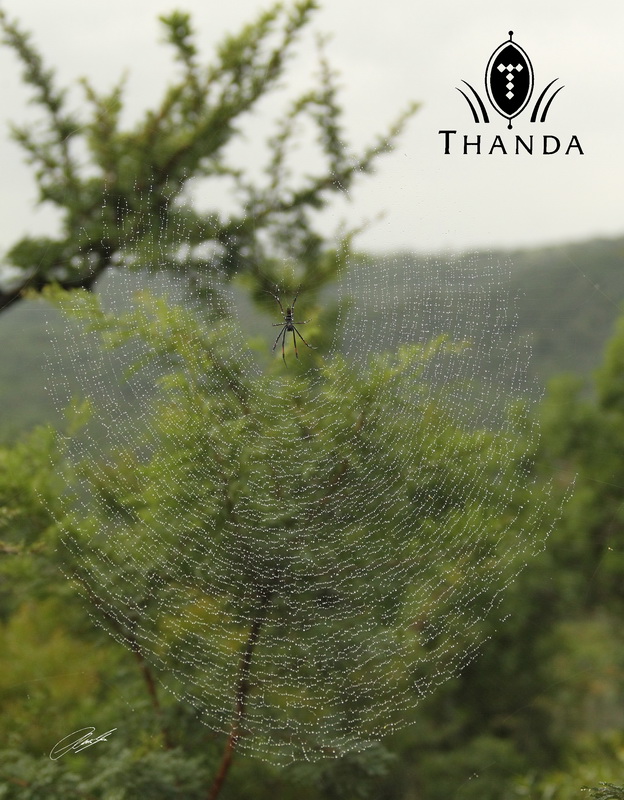
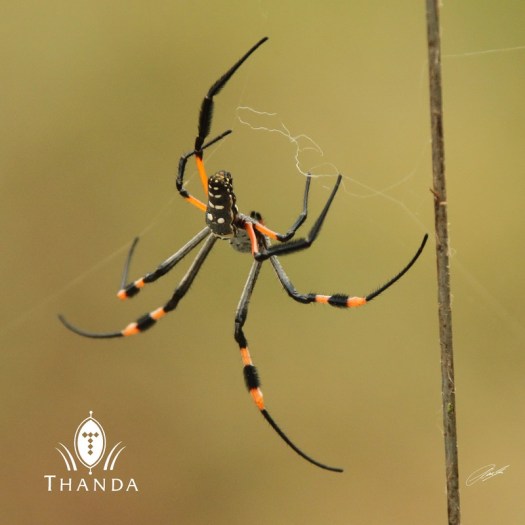
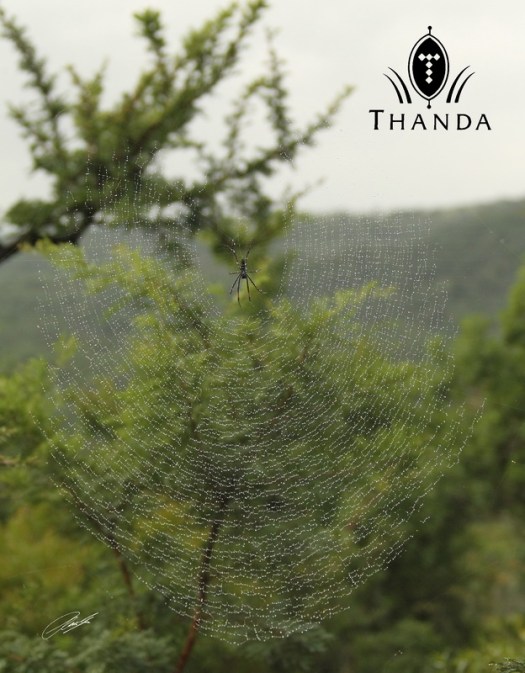
When the weather gets hot and humid many different species of Golden Orb Spiders build their webs along and across the roads on Thanda. Part of Bheki’s job at this time of the year is to take down the webs across the roads before they reach our guests.

It is good to know that spiders do not like large warm-blooded mammals and therefore avoid any contact with humans. Even in the rare case that one touches Bheki’s fingers it immediately descends and gets away from him. That also means that one can walk or drive safely beneath their webs – they do not drop on people 🙂

These beautiful creature occur in many color variations.
20121223 - CS2_4640 - E - SIG

20121226 - CS2_5154 - E - SIG

More about Golden Orb Spiders:

The Golden Orb Spiders (genus Nephila) are a genus of spiders noted for the impressive webs they weave. Nephila consists of numerous individual species found around the world. They are also commonly called Golden Silk Orb-weavers, Giant Wood Spiders, or Banana Spiders.

Golden Orb Spiders usually reach sizes up to 5.1 cm (2 in) in females, not including leg span, with males being usually 2/3 smaller (less than 2.5 cm, 1 in).

They are the oldest surviving genus of spiders, with a fossilized specimen known from 165 million years ago.

These spiders do not seem to form either beneficial or harmful relationships with humans. An (unlikely) bite causes local pain, redness, and blisters that normally disappear within 24-hours.

Hope

20121231 - CS2_5779 - E - SIG

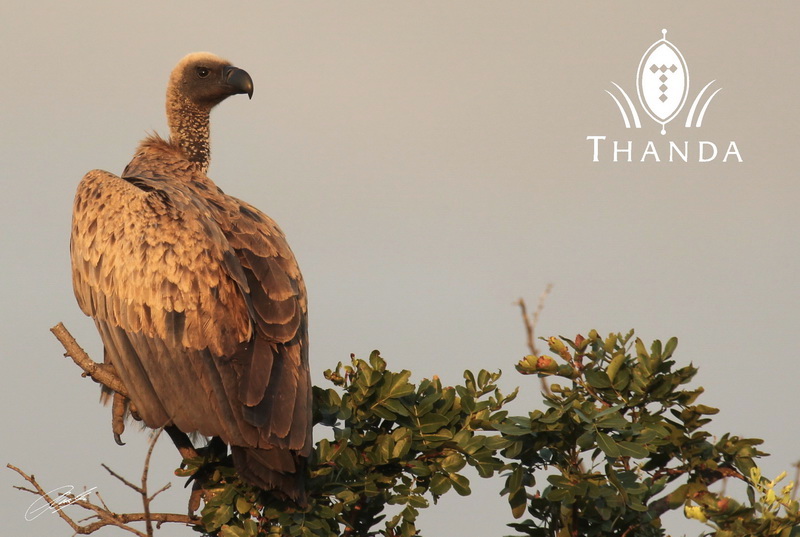
These Vultures were hoping that the Lions would move away from their nearby kill soon. This picture was taken in the early hours of the day before it started heating up.

All images are of  White-backed Vultures, the most common vulture species to be seen on Thanda.

20121223 - CS2_4711 - E - SIG 20121231 - CS2_5741 - E - SIGAbout White-backed Vultures:

The White-backed Vulture is a typical vulture, with only down feathers on the head and neck, very broad wings and short tail feathers. The adult’s whitish back contrasts with the otherwise dark plumage. This is a medium-sized Vulture with a wingspan up to 2.25 m (7 ft).
Like other Vultures it is a scavenger, feeding mostly from carcasses of animals which it finds by soaring high over the savanna. It often moves in flocks. It breeds in trees , laying one egg. The population is mostly resident. Its conservation status is “Endangered”.

Lions on his mind!

20120627 - CS1_0253 - E - SIG - S 2 - 10 x 15

I do not often merge or manipulate images, but I had to play with this picture of Bheki – my Tracker – looking into a sunrise. I merged it with an image of our dominate male Lion.

We were looking for Lions at the time, so I created this collage in memory of that morning 🙂