Mother and son in a lengthy morning cleaning session. Lions are the only gregarious cats. They really enjoy being close to each other 🙂
These two Lions are part of the Thanda South Pride.
Some of you may have seen my EYES series images. I enjoy creating these pictures by removing the colors from all parts of the image except from the eyes.
Over the next few month I will try to create a few more EYES images and place them into my web-gallery (www.sperka.biz/eyes)
To start with, a little quiz: To what animal belong these eyes?
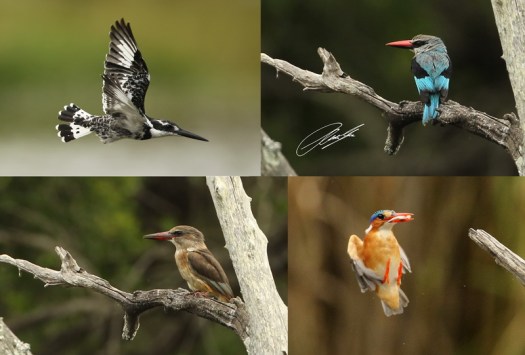
Yesterday I spent a few hours at Mkuze Game Reserve. My main aim was to get some good bird pictures. The day was not as productive as a Winter’s day at Mkuze but I got some images of Pelicans, Bee-eaters, a Sparrowhawk, an Ibis and a small Crocodile. Not bad for a hot morning!
Especially during the Winter month Mkuze is one of the best birding places in Kwazulu Natal. It is only 45 minutes from Thanda and always worth-while an excursion.
Pink-backed Pelican
Black Sparrowhawk
Blue-cheeked Bee-eater
Hadeda Ibis
Nile Crocodile
In the last few month quite a few people have asked me about the difference between Summer (Rainy Season) and Winter (Dry Season) at Thanda. And most often the question was: When is the best time to visit Thanda and South Africa?
Well, there is no simple answer to this question, but here is my opinion:
SUMMER (RAINY SEASON)
If you are looking for very warm (hot) weather (30C+ /90F+), if you want to enjoy the beach, if you want to see most of the country (Cape Town, the wine growing areas, the Garden Route), if you do not mind the occasional rain and if wildlife viewing is not your major priority than I think that the Summer (Rainy Season) is the right time for you.
The rainy season normally starts in October and ends in March (but it can be as early as September and as late as April).
WINTER (DRY SEASON)
If your priority is wildlife viewing (short grass, good visiblity and many animals at waterholes), if you do not mind cool nights (around 5-10 C / around 40-50F) and mild days (around 20-25C / around 70F) than I think you should come in the Winter (Dry Season).
The best dry season month for wildlife viewing are June, July and August.
IN BETWEEN
If you look for a compromise between the two weather extremes you may want to try September or April/May. It is a bit of a gamble but you might have good weather (warm with not too much rain) and quite good wildlife viewing.
I think today’s picture collage helps to illustrate the game viewing difference between summer and winter: Zebras in the rainy season (top) and Zebras in the dry season (bottom).
How about waking up in the middle of the night and hearing the sounds of mating Lions nearby?
When we met some of our guests for morning game drive they claimed that they heard the Lions all night. We drove up the hill in front of the lodge to investigate and found our dominant male and the oldest female of the South pride less than 100 meters from the Lodge.
The Thanda guest were most impressed how close they were all night to these formidable cats.
The picture shows the male Lion with the Thanda Luxury Lodge in the background. The female was hiding a few meters away in the bushes.
Today’s images are a bit more “artsy” than my usual wildlife images.
The first is of an Golden Orb Spider on a branch.
The second is of an Golden Orb Spider at sunrise.
The third is of an Zebra’s eye just before sunset. (This image is part of my EYES series)
Enjoy the images!
All three images are part of my “Without the Five” series (images 12-14).
Today’s Thanda morning and afternoon game drives were amazing.
We sat for almost an hour in between a herd of Elephants while they were feeding, playing and sparring around the vehicle. We watched Lions on a kill and drinking at a waterhole. We found a White Rhino mum and her calf and we encountered a herd of Buffalo while we were looking for the Rhinos.
I got many good shots today but my favorite picture is of this Cape Buffalo bull running down the road looking for his herd. He was quite far away from the herd at the time and obviously was a bit worried about catching up 🙂
Today was a great day for the Thanda Cheetah population. They were joined by a new female which was released onto the reserve. The three year old cat was born at Mountain Zebra National Park and came to Thanda via the Hoedspruit Endangered Wildlife Center.
Faye Peters and Phillip Lennon from the popular South African TV program 50/50 documented the event.
The Thanda Wildlife Team (led by Mariana Venter) with the help of specialists from WildlifeACTFund (led by Simon Morgan) worked for seven hours to convince the young lady to leave her boma (A boma is an enclosure in which animals are normally kept at full board from the time of arrival at Thanda to their release onto the reserve).
The Thanda Wildlife Team and Researchers will be monitoring the animal for the next few month to see how she is doing in her new home and I will try to get more pictures of her in her new surroundings 🙂
Enjoy this picture documentary!
1 – A portrait of the lady!
2 – Still in the boma.
3 – Simon Morgan (WildlifeACTFund) trying to spot the cat in the boma.
4 – Mariana Venter (Thanda Private Game Reserve) explains to the 50/50 team the use of bait.
5 – A small step for a Cheetah … … see you around 🙂