
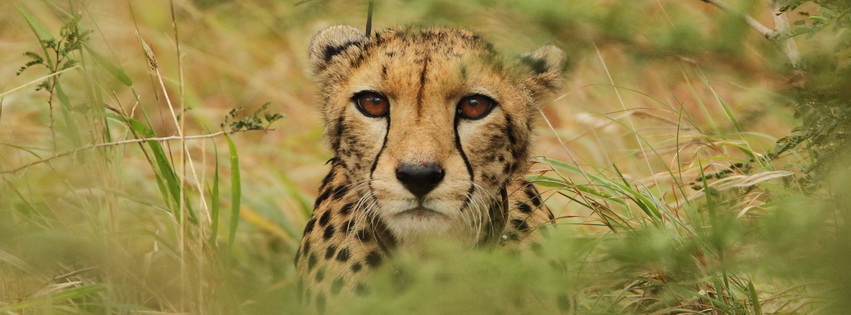
This is a picture I took yesterday of the mum of our new Cheetah cubs. She was away from the cubs feeding on a kill when I was able to get this image.
This is a picture I took yesterday of the mum of our new Cheetah cubs. She was away from the cubs feeding on a kill when I was able to get this image.

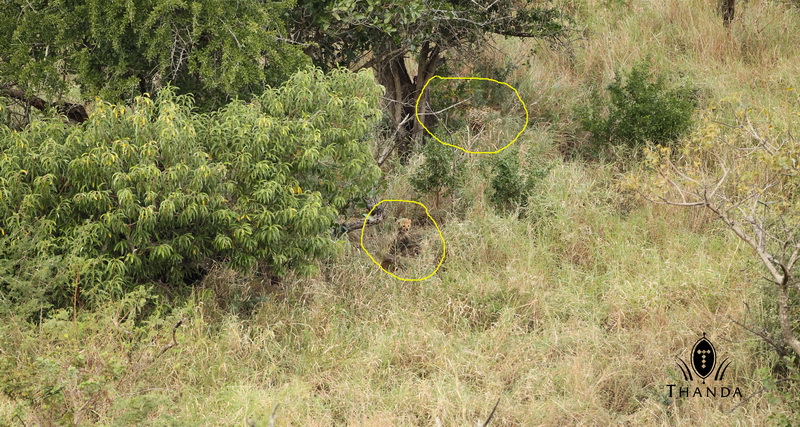
Great news for Cheetah conservation. A Cheetah female on Thanda Private Game Reserve gave birth to four cubs. Yesterday we managed to get pictures of the five weeks old cubs for the first time. They played around a thicket in which their mum hides them when she goes hunting.
The collage shows a few images of the cubs and the mother. Theses pictures were taken with 910 mm lens length across a valley (hence the marginal quality :-)).
 Enjoy your weekend!
Imagine you are a Cheetah male!
You have not a had a meal for a while and you and your brother are getting hungry …

… you stalk some newly arrived Impala. It is a good thing (for you not them) that they do not know the area so well yet 🙂 and …
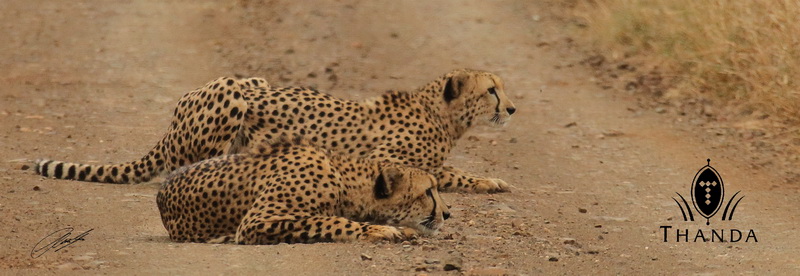
… you got one. And after a good and hasty meal (not touching the prey’s stomach – its smell could attract some nasty company) …
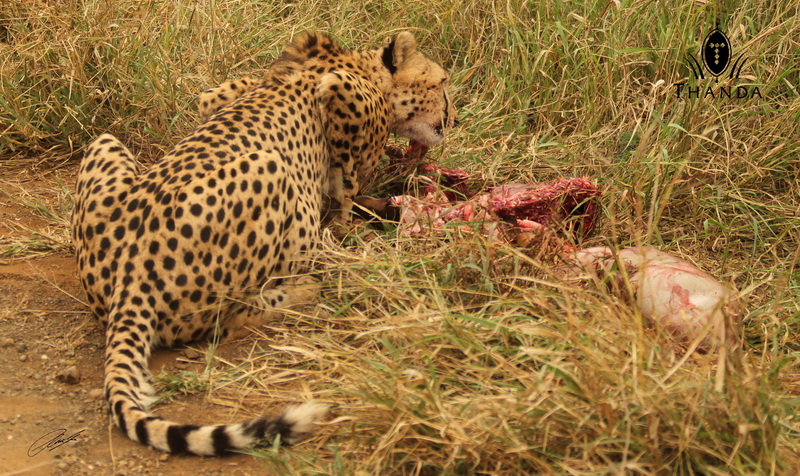
… you can hardly move …
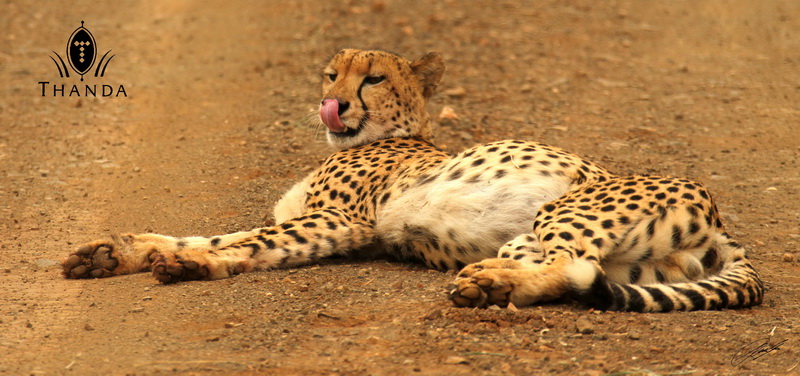
… so you decide to clean yourself up a bit and get some needed rest – A good day!

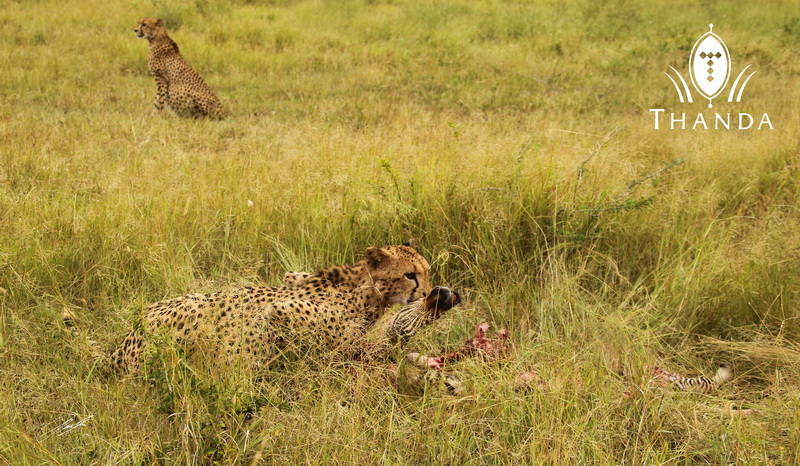
This was the first time that I saw our two male Cheetahs on a kill. They often hunt in very thick areas and only appear once they are well fed, far away from the actual kill. On this occasion they brought down a baby Zebra on the savanna. In this picture one of the brothers is keeping watch while the other one still feeds on the carcass.
Cheetahs eat incredibly fast because they often loose their kill to larger predators.
They can “stuff” themselves to the point they have difficulties moving – except when motivated by an approaching Lion :-).

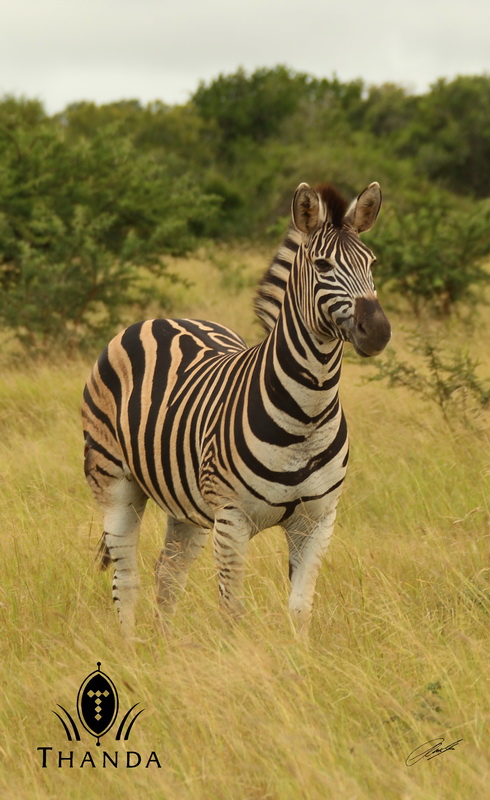
The Zebra’s mother was still looking and calling for her calf when we arrived at the scene. A wound on her back showed that she had recently survived a Lion attack. And now she lost her new-born calf to the Cheetah. Let’s hope she survives her injury and that she will be able to have another calf.

Today was a great day for the Thanda Cheetah population. They were joined by a new female which was released onto the reserve. The three year old cat was born at Mountain Zebra National Park and came to Thanda via the Hoedspruit Endangered Wildlife Center.
Faye Peters and Phillip Lennon from the popular South African TV program 50/50 documented the event.
The Thanda Wildlife Team (led by Mariana Venter) with the help of specialists from WildlifeACTFund (led by Simon Morgan) worked for seven hours to convince the young lady to leave her boma (A boma is an enclosure in which animals are normally kept at full board from the time of arrival at Thanda to their release onto the reserve).
The Thanda Wildlife Team and Researchers will be monitoring the animal for the next few month to see how she is doing in her new home and I will try to get more pictures of her in her new surroundings 🙂
Enjoy this picture documentary!

1 – A portrait of the lady!
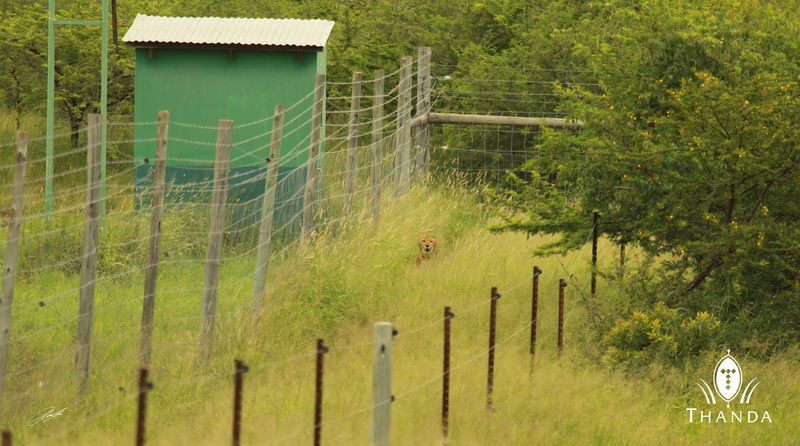
2 – Still in the boma.
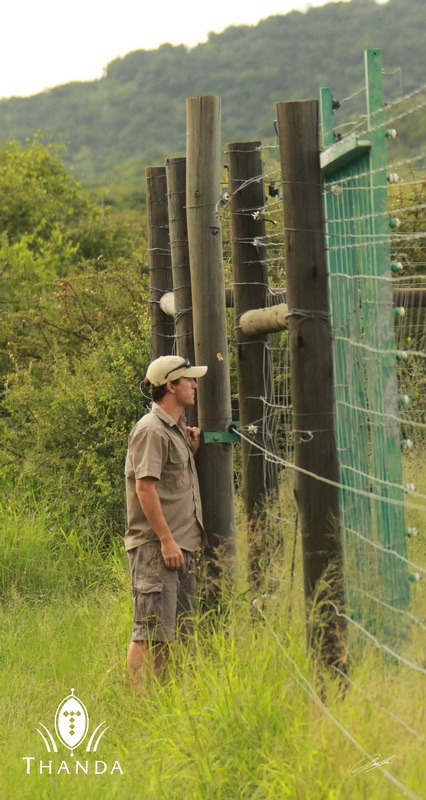
3 – Simon Morgan (WildlifeACTFund) trying to spot the cat in the boma.

4 – Mariana Venter (Thanda Private Game Reserve) explains to the 50/50 team the use of bait.
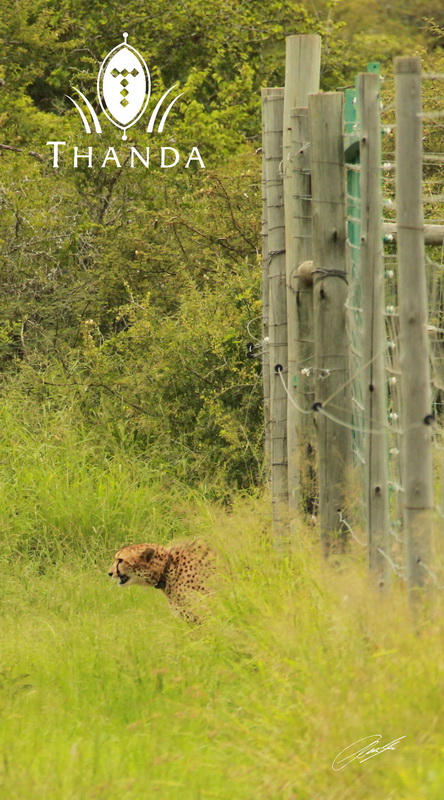
5 – A small step for a Cheetah … … see you around 🙂
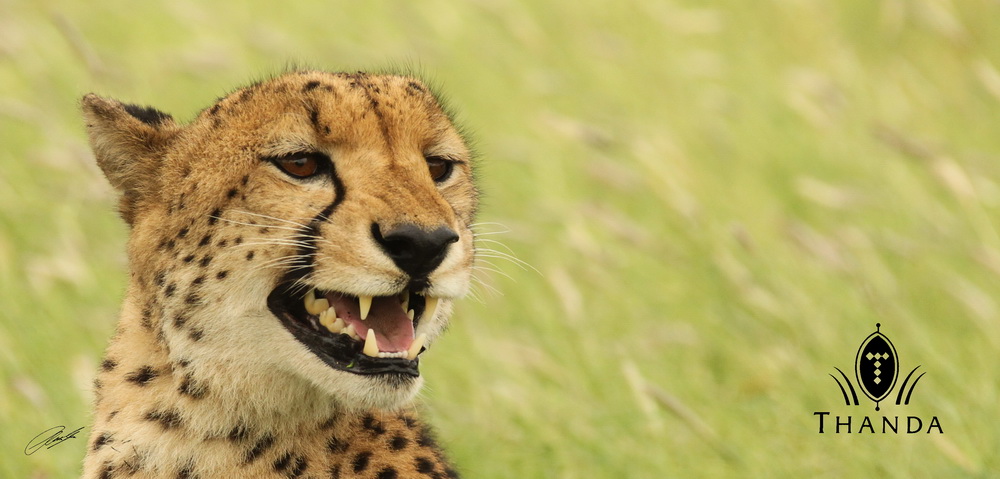
This male Cheetah was vocalizing to call his brother.
If you want to hear what it sounds go to http://www.youtube.com/watch?v=rtG9Xhqzcf8.
Have a good week!
Today I put together my Thanda sighting report. I had a total of 183 major/special game sightings since I arrived at Thanda in June.
Here are the detailed numbers 🙂
42 x Lions / 40 x Elephants / 34 x Cheetah / 32 x Buffalo / 23 x White Rhino / 3 x Spotted Hyena / 2 x Leopard / 1 x Black Rhino / 1 x African Wild Dog /5 x Others (Jackal, Python, Puff Adder, Vultures)
And here are three of my favorite pictures from this week …
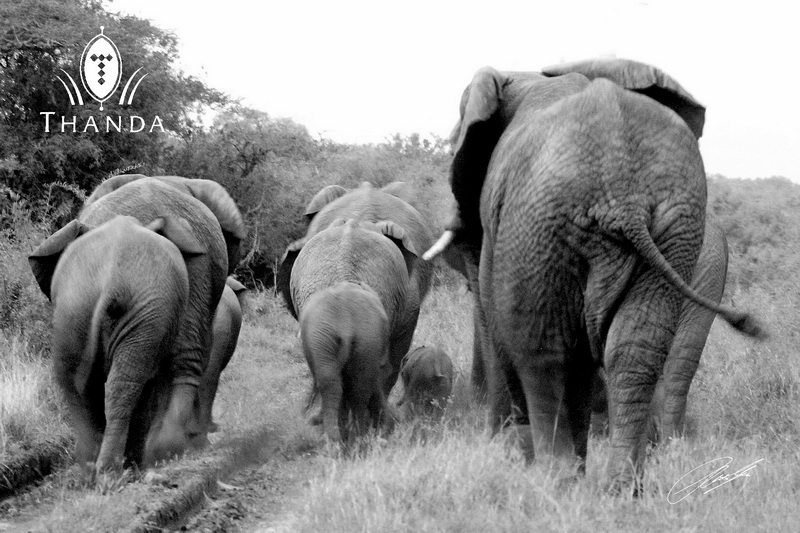
… our Elephant herd moving away from me. Please note the little one (2 weeks old) in between!
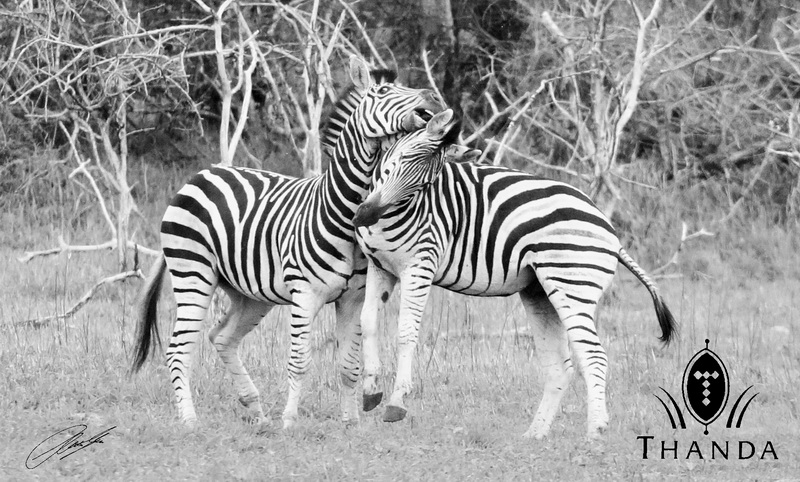
… two Zebras biting one another “lovingly”
… one of the Cheetah brothers walking close to my camera (on the savanna)

Our two male Cheetah were demonstrating two very typical Cheetah poses. They were scanning their surroundings for possible prey!

More about Cheetahs:
The Cheetah (Acinonyx jubatus) is a large-sized feline inhabiting most of Africa and parts of the Middle East. Cheetahs can run faster than any other land animal, up to 120 km/h (up to 75 mph) in short bursts covering distances up to 500 m (1,600 ft), and has the ability to accelerate from 0 to over 100 km/h (62 mph) in three seconds.
Cheetahs have unusually low genetic variability. It is thought that the species went through a prolonged period of inbreeding following a genetic bottleneck during the last ice age. The Cheetah likely evolved in Africa during the Miocene epoch (26 million to 7.5 million years ago).
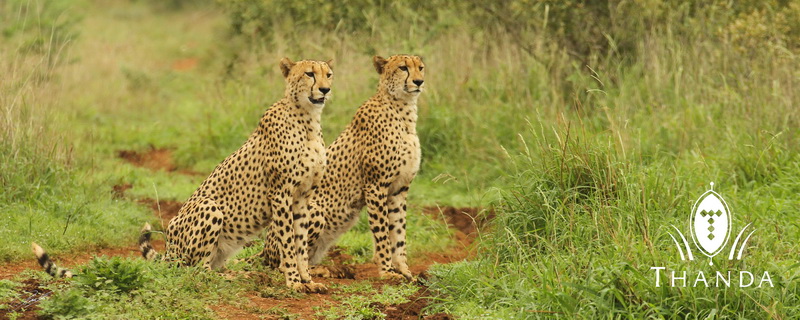
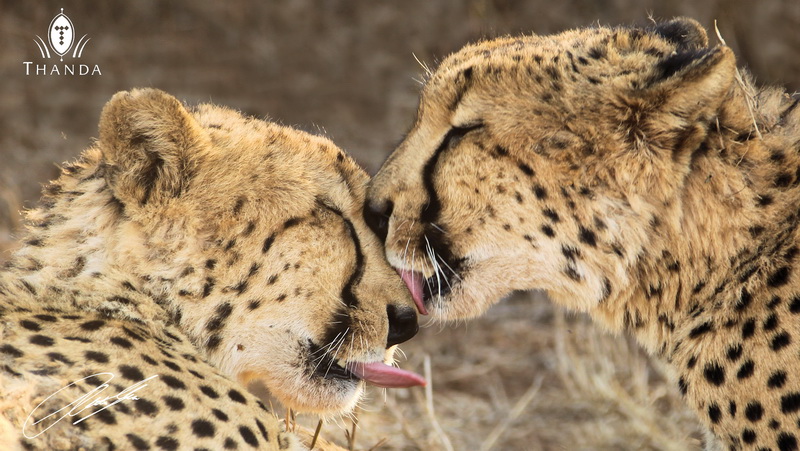
These two Cheetah brothers have a strong bond since many years. Unlike female Cheetah, who are always solitary, Cheetah males often form coalitions. Being able to groom one another is one of the advantages of such a relationship.


Today I saw my first King Cheetah!
I arrived in Hoedspruit a bit earlier than expected so I visited the Hoedspruit Engangered Species Center. This institution is successfully breeding various engangered species. Their main focus are Cheetahs and I was lucky to see a King Cheetah (A rare Cheetah mutation) stalking a small boy who shouted a bit too loudly and attracted the Cheetah’s attention (no worries there, was a fence between the animal and the boy :-)).

More about King Cheetah:
The King Cheetah is a rare mutation of Cheetah characterized by a distinct fur pattern. In 1927, the naturalist Reginald Innes Pocock declared it a separate species, but reversed this decision in 1939 due to lack of evidence. Its species status was resolved in 1981 when King Cheetahs were born at the De Wildt Cheetah and Wildlife Centre in South Africa. Two spotted sisters gave birth there and each litter contained one King Cheetah. The sisters had both mated with a wild-caught male. A recessive gene must be inherited from both parents for this pattern to appear, which is one reason why it is so rare.
 Christian Sperka Photography | Custom Luxury Tours