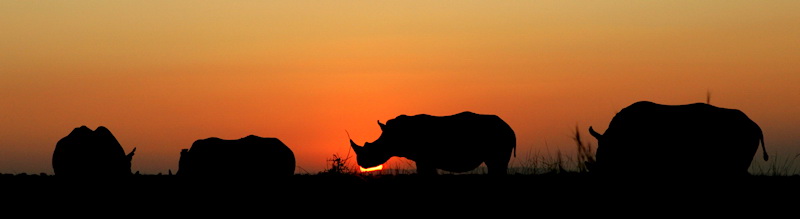
With a little bit of luck :-)

I had a successful and enjoyable first game drive with the photography volunteer program group at Thanda.

We found two White Rhinos drinking at one of the dams, enjoyed various general game and a pair of Giraffes and rounded off the day with a sunset shoot at another waterhole.

Not bad for my first official game drive on the reserve 🙂


First Rhinos

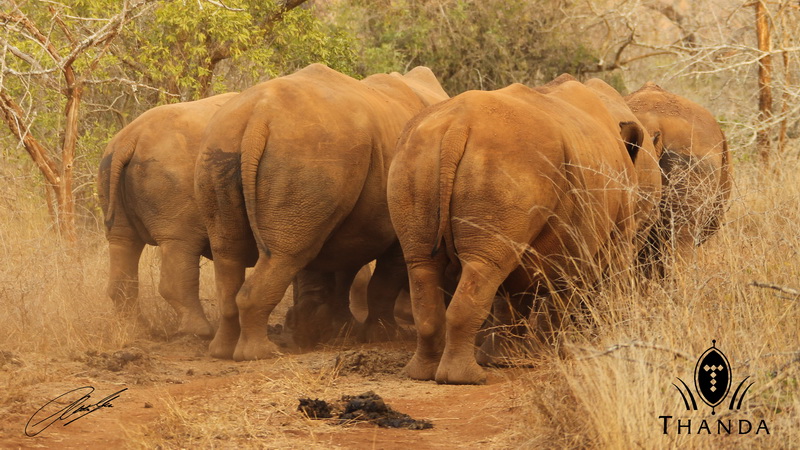
Today I saw my first Rhinos since I arrived at Thanda. After the Assistant Wildlife Manager, Mariana, helped me with my broken down Land Rover (I would not start again after I had stopped near one of the waterholes and we had to push start the engine) she was very kind and took me along to look for some White Rhinoceros on a remote part of the reserve.

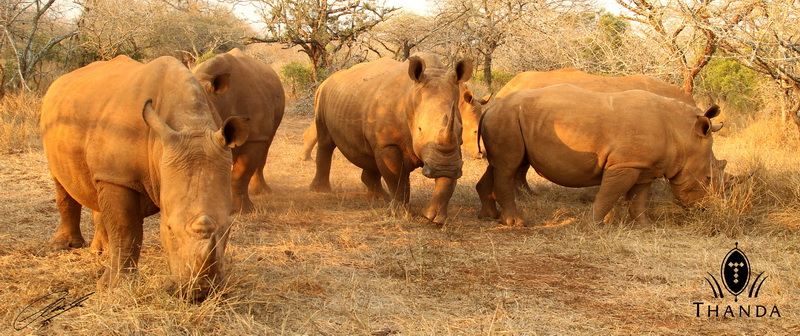
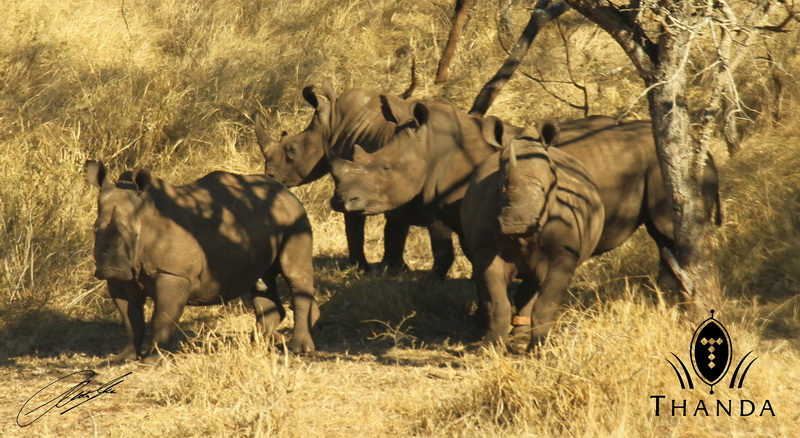
We found a crash of four Rhino!

The leather foot band on one of the Rhinos is a satellite tracking collar to keep track of these highly endangered animals, which are once again under severe threat from poachers.

We also stopped at the largest dam of the reserve and I got a glimpse of the only Crocodile currently living on Thanda.

Enjoy the pictures!

Pictures of the Week 15 – Browse and Graze

[View all Pictures of the Week 2012]

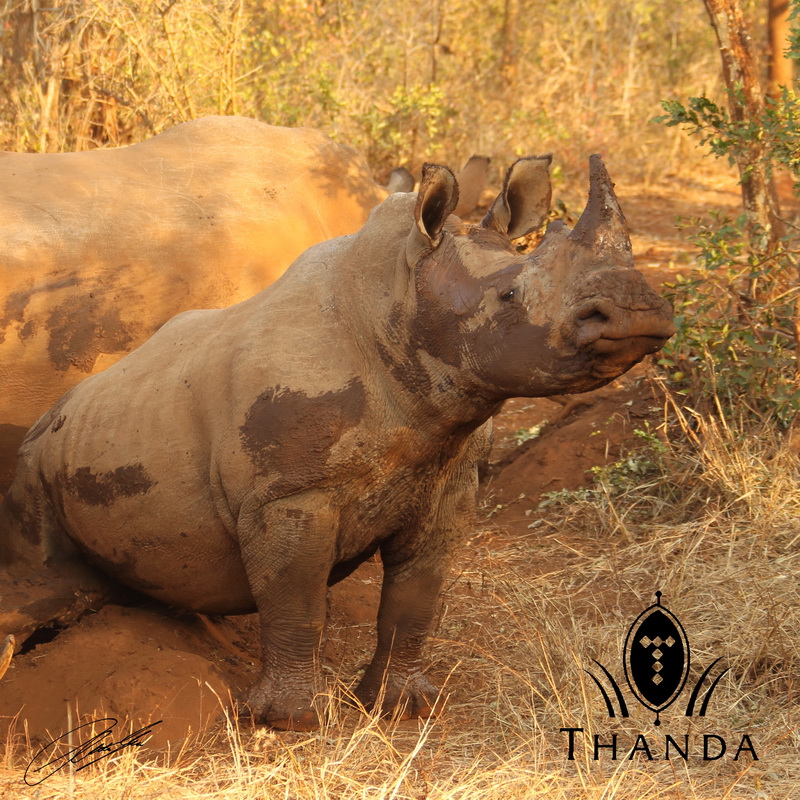
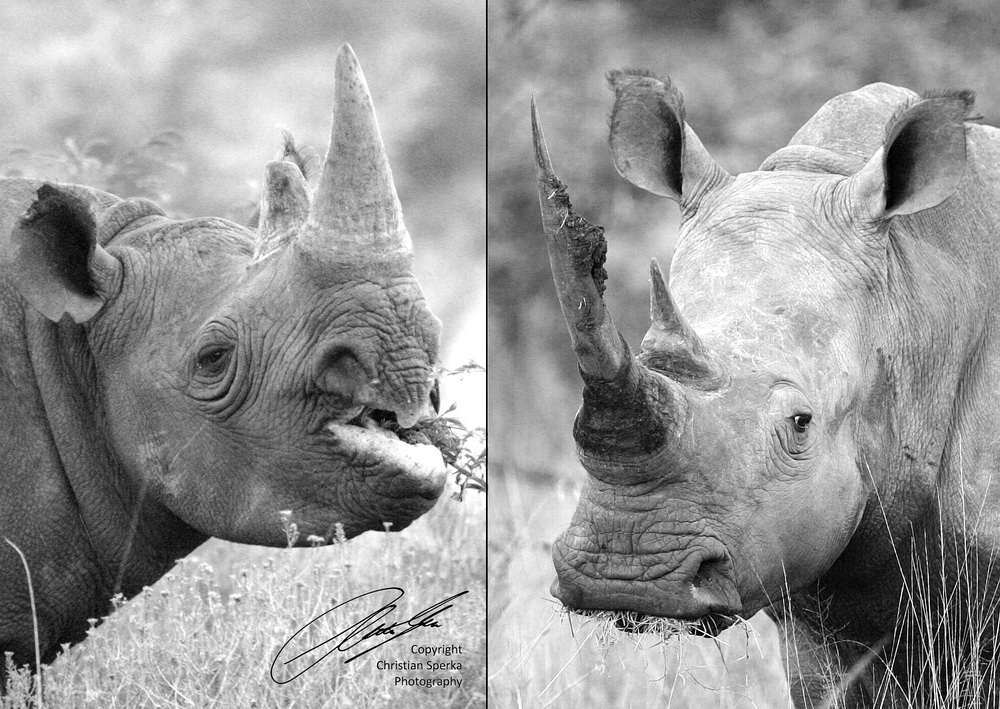
Black Rhino and White Rhino

This weeks’ pictures are in honor of two of my favorite mammal species which are under the threat of extinction by humans. If the poaching madness is not stopped these creatures, which were on this planet long before us, will disappear forever!

The main difference between Black Rhino and White Rhinos is the shape of their mouths. White Rhinos have broad flat lips for grazing and Black Rhinos have long pointed lips for browsing foliage. A popular theory claims that the name White Rhinoceros was actually a corruption of the word weid (“wide” in Afrikaans), referring to their square lips.

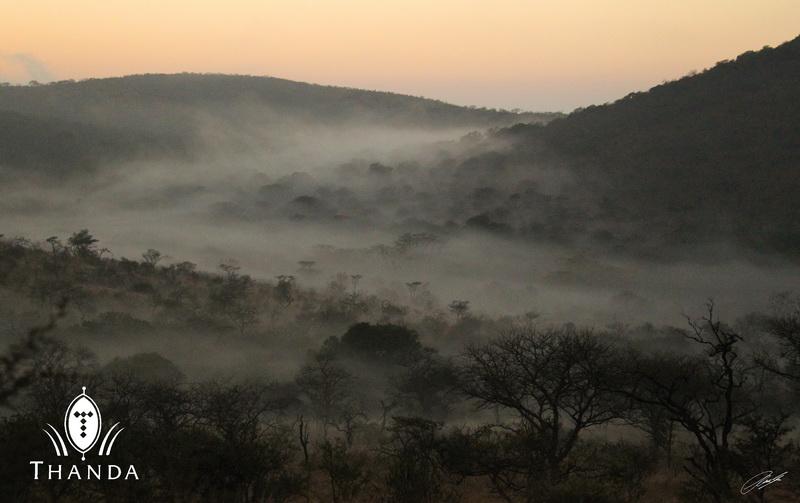
“Rhino Dawn”

More about Rhinos:

Rhinoceros, often abbreviated as rhino, is a family of five species of knee-less, odd-toed ungulates. Two of these species are native to Africa and three to southern Asia.

The Rhinoceros family is characterized by its large size, with all of the species able to reach one tonne or more in weight; a herbivorous diet; a thick protective skin; relatively small brains for mammals this size; and a large horn.

Rhinoceros are killed by humans for their horns, which are bought and sold on the black market, and which are used by some cultures for ornamental or (pseudo-scientific) medicinal purposes. The horns are made of keratin, the same type of protein that makes up hair and fingernails.

Click here if you would like to help the “Save our Rhino” effort on Thanda Private Game Reserve.

Click here is you would like to know more about the “Rhino Poaching Issue”.

Click here if you would like to see more of my Black Rhino pictures.

Click here if you would like to see more of my White Rhino pictures.

Call for Help!

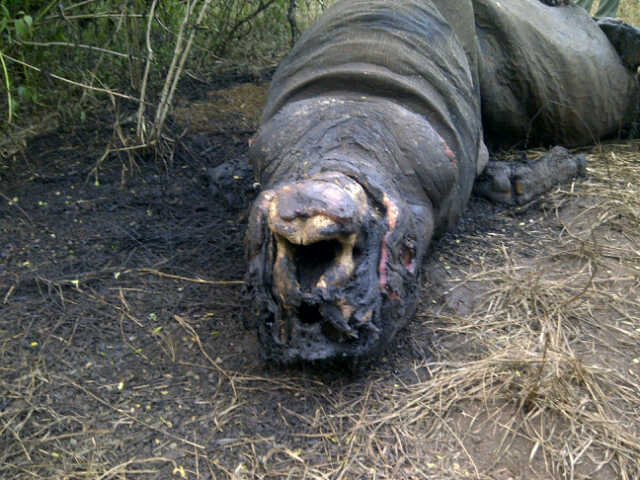
Today, Thanda Private Game Reserve – my future workplace in South Africa – has lost a Black Rhino to poachers.

This is the second Rhino killed by poachers on Thanda (the first one was a White Rhino).

If you would like to help you can email melanie@thanda.co.za. Any donations, cash or items are very much appreciated. We need radios, camping gear, binoculars, cellphones, solar panels, …

If you live in the USA you can also send your donation to me and I will make sure that the money will go to Thanda’s “Save Our Rhinos” efforts. You can contact me at christian@sperka.com

Thanks for your support!

Picture of the Week 7 – Browsing in the Rain!

[View all Pictures of the Week 2012]

This is a picture of a Black Rhino browsing in the rain at Phinda Private Game Reserve, Kwazulu Natal, South Africa.

If you would like to order a print of this image go to http://www.sperka.biz/potw2012/h31e582f6#h31e582f6
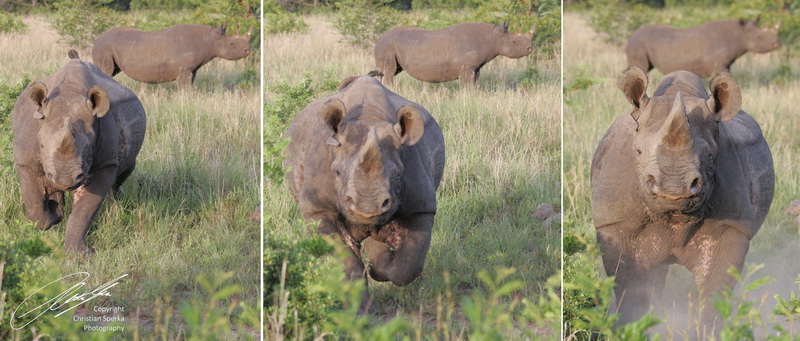
The first time I took pictures of a Black Rhino mock-charging our car I did not take pictures 🙂  My adrenaline level was high and I had visions of a horn coming through the side of the car.  But, after a few of these “show” attacks I was able to get these pictures.

For more Black Rhino pictures go to www.sperka.biz/blackrhino

Picture Data (Browsing in the Rain):
Canon 1D Mark II, Canon L 100-400mm at 400mm, Freehand from vehicle, Mode AV, ISO 800, f/5.6, 1/125sec, Exposure compensation +/-0eV, AWB, Focus center point only

About Black Rhinoceros:
The Black Rhinoceros or Hook-lipped Rhinoceros (Diceros bicornis), is a species of Rhinoceros, native to the eastern and central areas of Africa including Kenya, Tanzania, Cameroon, South Africa, Namibia, Zimbabwe, and Angola. The species overall is classified as critically endangered, and one subspecies, the Western Black Rhinoceros, was declared extinct by the IUCN in 2011.

An adult Black Rhinoceros stands 132–180 cm (52–71 in) high at the shoulder and is 2.8–3.8 m (9.2–12 ft) in length. An adult typically weighs from 800 to 1,400 kg (1,800 to 3,100 lb), however unusually large male specimens have been reported at up to 2,900 kg (6,380 lb).

Females are smaller than the males. Two horns on the skull are made of keratin. These horns are used for defense, intimidation, and digging up roots and breaking branches during feeding. The Black Rhino is smaller than the White Rhino, and has a long, pointed, and prehensile upper lip, which it uses to grasp leaves and twigs when feeding.