The Elephants’ choice

20130104 - CS2_6634 - E  - SIG

One should never push Elephants and move in too close to them.

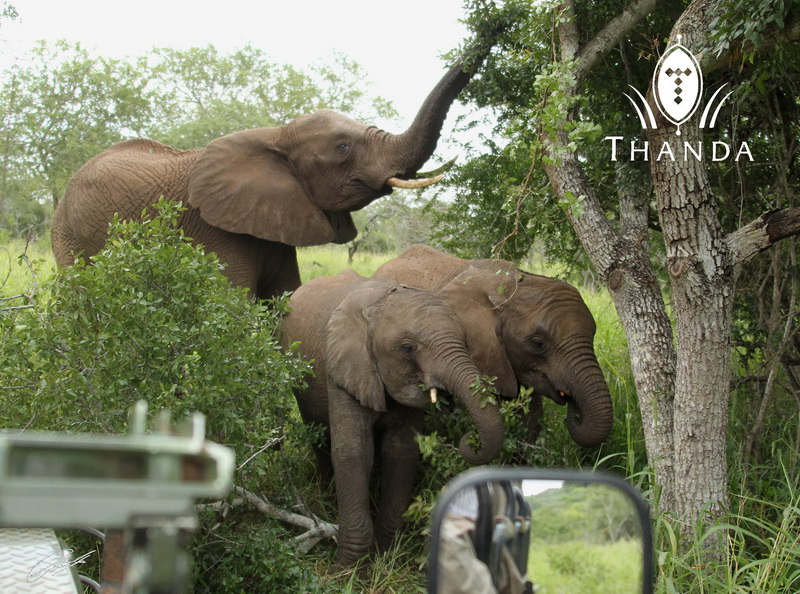
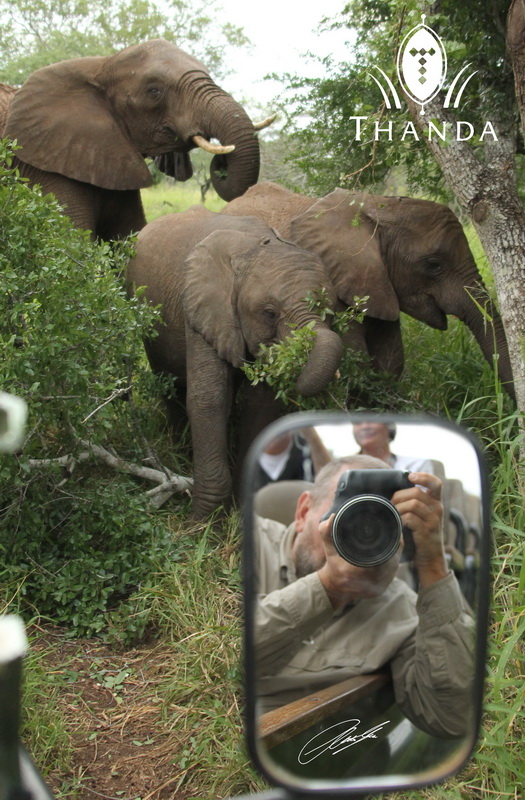
But sometimes they choose to come close themselves. This female Elephant and the two calves where browsing on trees right next to our Land Rover before moving on to follow the herd.

My guests loved this close encounter!

20130104 - CS2_6633 - E - SIG

PS: For the photographers among you: To get the effect with both “the Elephants” and “me in the mirror” in focus I overlaid two images with different focus (post-processing).

The Bush School!

20130105 - CS2_6771 - E - SIG

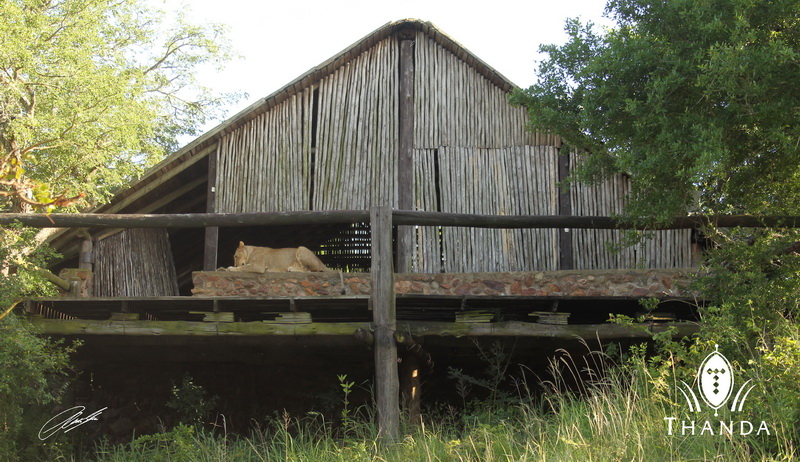
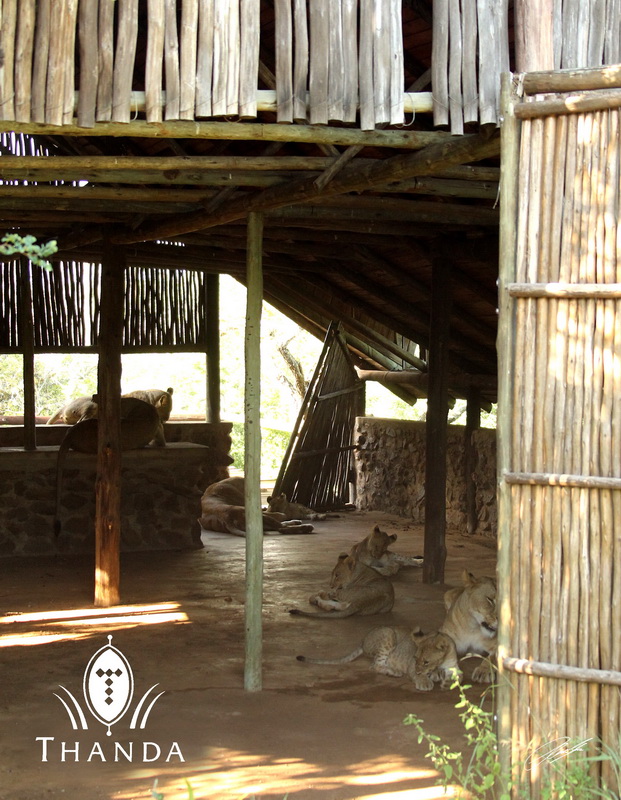
On Thanda we have an old bush school (a few A-frame huts and an old wooden classroom building) which is left from the days when Thanda was farmland.

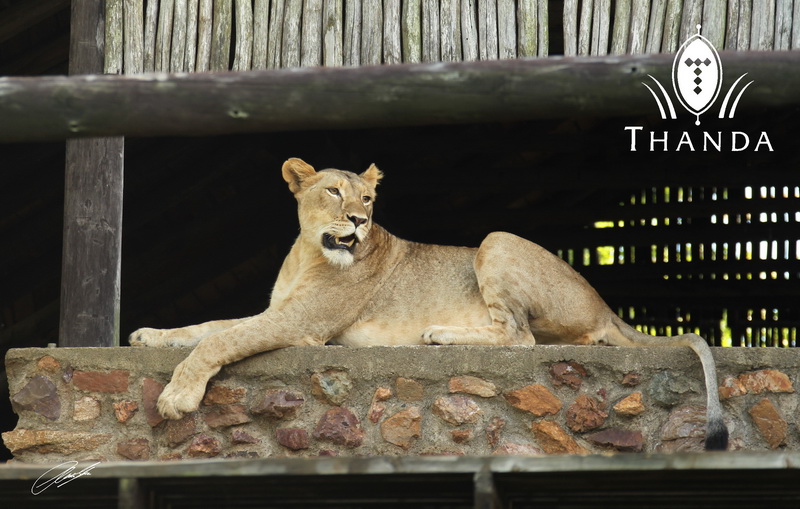
On hot days the Thanda North Pride likes to use the classroom as shelter from the sun. Here are a few images from our Lions in school.

20130105 - CS2_6774 - E - SIG

20130105 - CS2_6782 - E - SIG

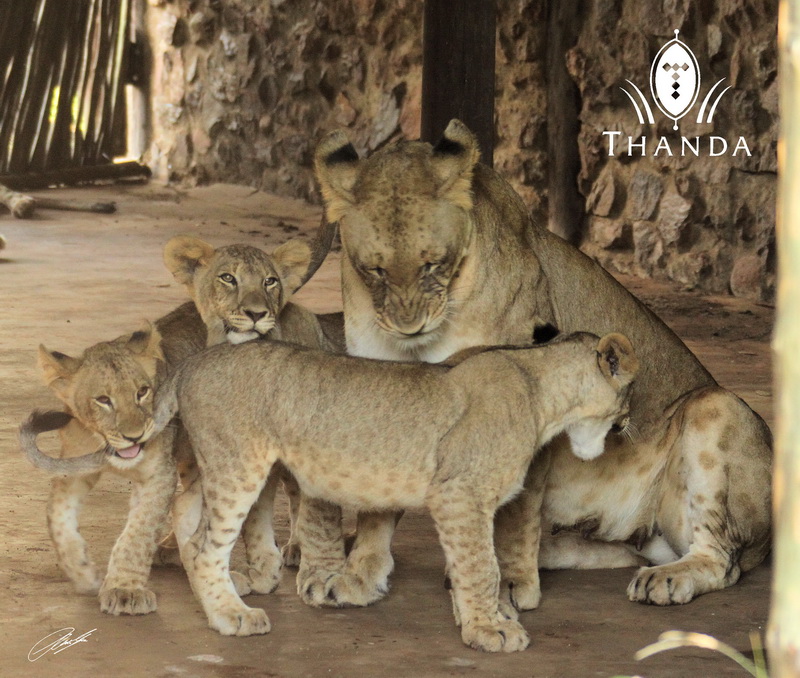
The little ones (about 8 month old now) learn from mom that is time to stop suckling. They complained noisily.

20130105 - CS2_6785 - E - SIG


The shaded cool concrete makes for an ideal resting surface. Especially the concrete table (on the left) is popular when is gets very hot.

So if one is on a walk, one needs to be careful to look for shelter at the school – the Lions may already be there 🙂

Have a good week!

Without the Five (4) – Sun Spider

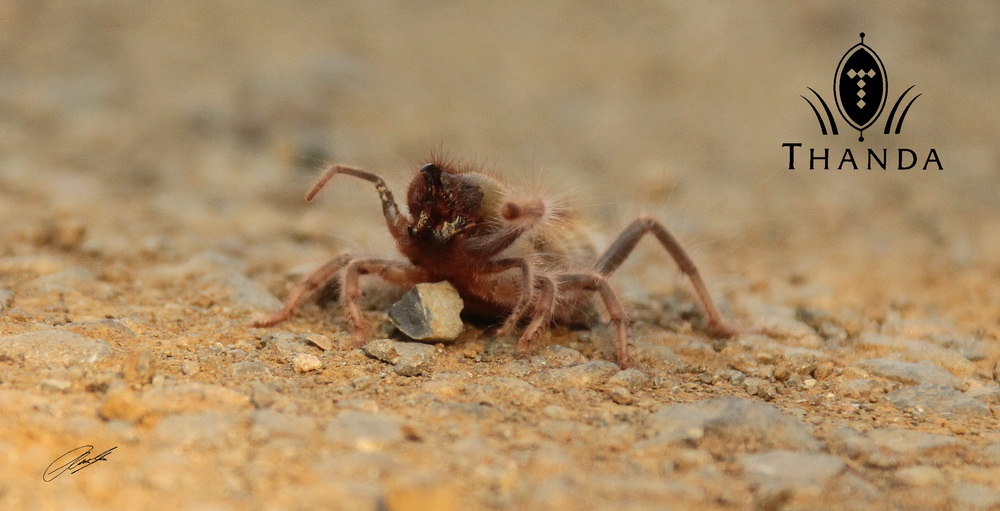
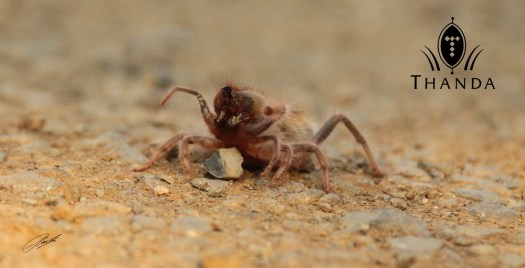
20130103 - CS2_6428 - E - SIG

This sun spider sat in the middle of the road when I left the lodge. I took an eye level shot of this small predator – lying on my belly as usual 🙂

About Sun Spiders:

Solifugae are known variously as Camel Spiders, Wind Scorpions or Sun Spiders. The order includes more than 1,000 described species. Sun Spiders are a different order from the true Spiders and the Scorpions. Much like a spider, the body of a Sun Spider has two tagmata (body segments).

Unlike Scorpions, Sun Spiders do not have a third body segment that forms a “tail”. Most species of Solifugae live in deserts and feed opportunistically on small ground-dwelling animals. A number of urban legends exaggerate the size and speed of Sun Spiders, and their potential danger to humans, which is practically nil.

This image is part of my “Without the Five” series:

Each image features a species, which is usually not in the safari limelight. So they will be no images of Lions, Leopard, Elephants, Rhinos, Buffalo, Cheetahs …

Enjoy the “without the Five” series

The Kill

If one watches animal programs on TV one usually sees the Lions running after the prey and then eating the animal. The struggle for food/life in between is rarely ever shown.

A few days ago my guests, Bheki and I watched such a struggle. The strength of the Zebra, the rush of adrenaline and the persistence and power of the Lions could be observed.

I was able to get one good images that documents this struggle (it all happened at night and we were using spotlights). Please do not click on this link if images of such scenes disturb you.

http://www.sperka.biz/thekill/h514dab36#h514dab36

SPC

Summer Sunset

20130103 - CS2_6561 - E - SIG

Yesterday evening we spent the sunset time next to our largest waterhole watching Cape Buffalo having their evening drink stop.

A great way to end a game drive with Giraffe, Sun Spider, Cheetah, Wild Dog, Yellow-billed Kite, Leopard Tortoise, Tawny Eagle, Lions and Cape Buffalo.

Christmas and New Year in South Africa

Quite a few people have asked me how I spend my Christmas and New Year at Thanda. The answer is simple: Working…

This is one of the busiest times of the year at a game reserve as many guests want to spend a special “Wildlife” Christmas or New Year.

But  – as I enjoy being in the bush and guiding people in this beautiful Big Five reserve – working over the holidays is not a sacrifice.

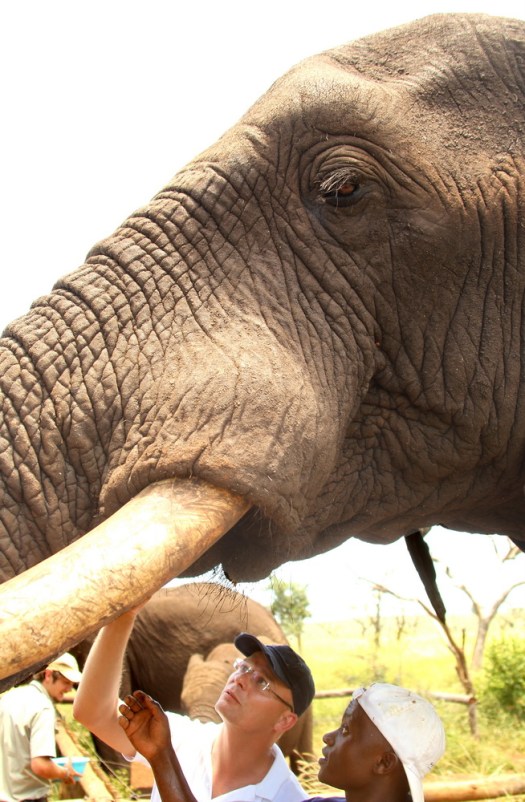
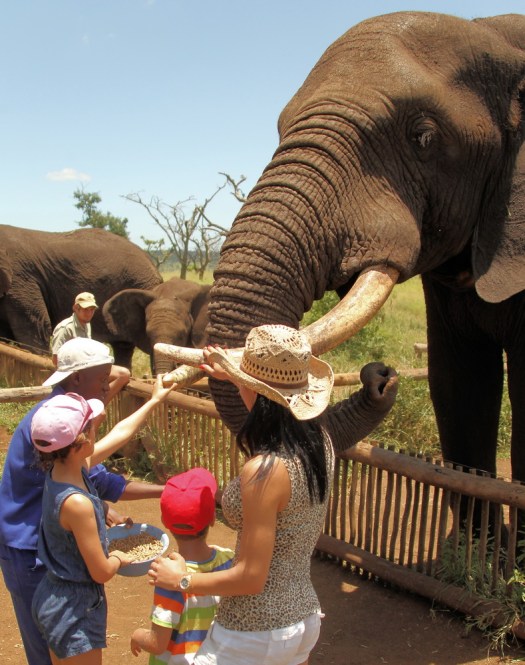
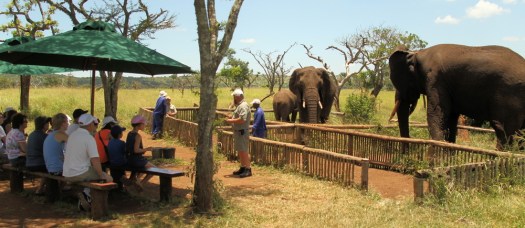
Yesterday I went with two guest families to the Elephant interaction at Bayete Game Reserve. This is one of the regular excursion we do with our guests. Everyone enjoyed interacting with Rambo, Rachel and Jabulani. These three “semi-wild” Elephants which roam freely on the game reserve show up every day for their “human interaction”.

20121224 - CS2_5044 - E 20121224 - CS2_4968 - E20121224 - CS2_5066 - E

I hope all of you enjoy the festive season, wherever you are!


Leopard Week at Thanda

20121221 - CS2_4449 - E 2

It is hard to believe but I had four great Leopard sightings in one week. That is more than in the six month since I started working at Thanda.

Today’s sighting was especially good. The young Leopard in the picture above stayed around a waterhole for half an hour and then joined a second Leopard in the bush nearby.

Below are pictures of all five Leopards which featured in this week’s sightings 🙂

20121221 - Collage 1256Enjoy your holiday weekend!

One of the Five!

Well, I had planned not to publish a “Big Five” picture for ten posts. But tonight’s Leopard sighting changed my mind.

On the way back to the lodge we had a very special night encounter. This Leopard female was a few meters (yards) of the road in the thick bush. When I moved the game viewer a bit closer she had a good look at us before she disappeared  into the bush. Bheki’s excellent spotlight work made this picture possible.

20121216 - CS2_3216 - E 1 - SIG - 150

I really like her alert expression in the picture!

Without the Five (3) – Black on White or White on Black?

White stripes on black background or black stripes on white background?

It was previously believed that Zebras were white animals with black stripes, since some Zebras have white underbellies. Embryological evidence, however, shows that the animal’s background color is black and the white stripes and bellies are additions.

The pattern on every Zebra is unique, very much like fingerprints. And sometimes the white stripes are wider or narrower. The faint stripe in between the black and white  is called a “shadow stripe” and is typical for the Burchell’s Zebra (a sub-species of the Plains Zebra).

20121215 - Collage 0705 - SIG

These images are part of my “Without the Five” series:

Each image features a species, which is usually not in the safari limelight. So they will be no images of Lions, Leopard, Elephants, Rhinos, Buffalo, Cheetahs …

Enjoy the “without the Five” series
Without the Five (2) – Common Beauty!

Today’s image is a portrait of an Impala ram. Impalas are the most common antelopes on Thanda. They have a special dental arrangement on the front lower jaw similar to a tooth-comb which is used during grooming to comb the fur and remove parasites – hence their impeccable appearance 🙂

20121128 - CS3_1160 - E - SIG

This image is part of my “Without the Five” series:
Each image will features a species, which is usually not in the safari limelight. So they will be no images of Lions, Leopard, Elephants, Rhinos, Buffalo, Cheetahs …

Enjoy the “without the Five” series