Pictures of the Week 15 – Browse and Graze

[View all Pictures of the Week 2012]

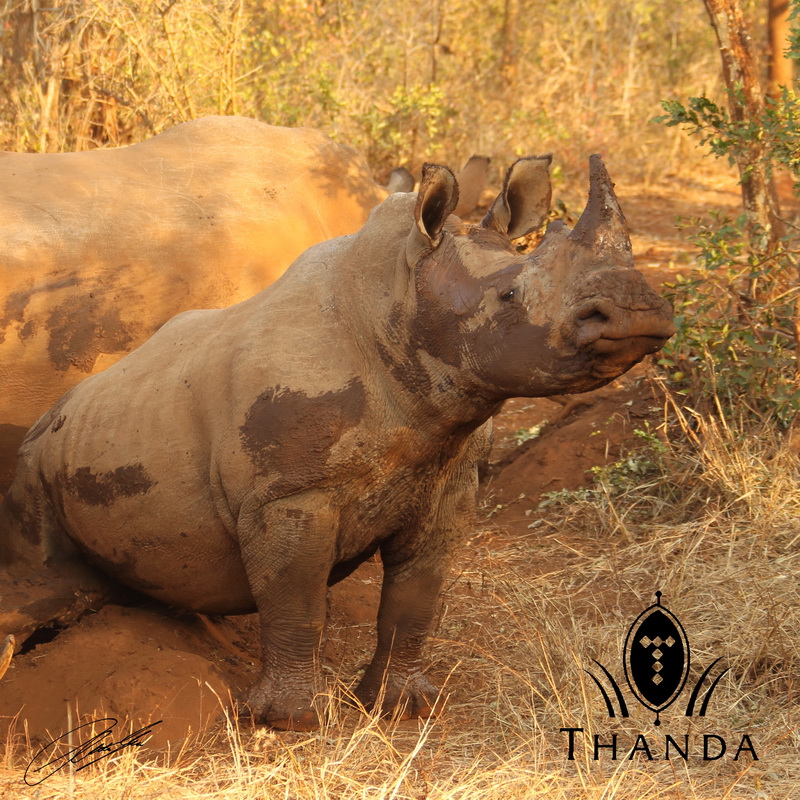
Black Rhino and White Rhino

This weeks’ pictures are in honor of two of my favorite mammal species which are under the threat of extinction by humans. If the poaching madness is not stopped these creatures, which were on this planet long before us, will disappear forever!

The main difference between Black Rhino and White Rhinos is the shape of their mouths. White Rhinos have broad flat lips for grazing and Black Rhinos have long pointed lips for browsing foliage. A popular theory claims that the name White Rhinoceros was actually a corruption of the word weid (“wide” in Afrikaans), referring to their square lips.

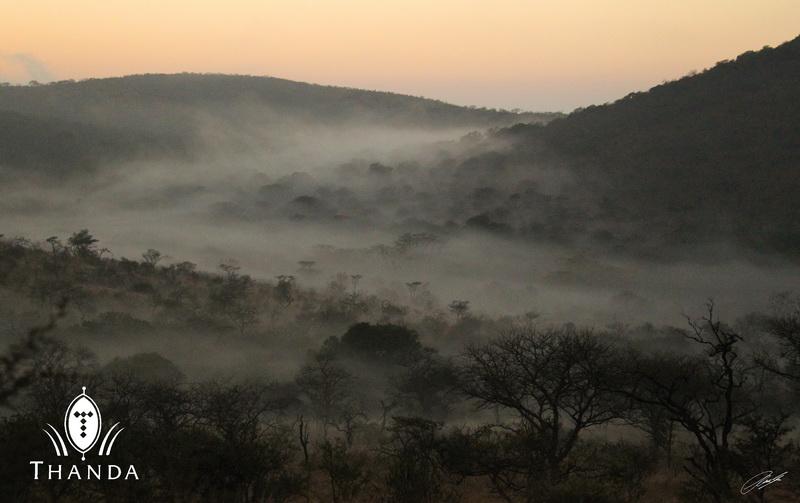
“Rhino Dawn”

More about Rhinos:

Rhinoceros, often abbreviated as rhino, is a family of five species of knee-less, odd-toed ungulates. Two of these species are native to Africa and three to southern Asia.

The Rhinoceros family is characterized by its large size, with all of the species able to reach one tonne or more in weight; a herbivorous diet; a thick protective skin; relatively small brains for mammals this size; and a large horn.

Rhinoceros are killed by humans for their horns, which are bought and sold on the black market, and which are used by some cultures for ornamental or (pseudo-scientific) medicinal purposes. The horns are made of keratin, the same type of protein that makes up hair and fingernails.

Click here if you would like to help the “Save our Rhino” effort on Thanda Private Game Reserve.

Click here is you would like to know more about the “Rhino Poaching Issue”.

Click here if you would like to see more of my Black Rhino pictures.

Click here if you would like to see more of my White Rhino pictures.

Call for Help!

Today, Thanda Private Game Reserve – my future workplace in South Africa – has lost a Black Rhino to poachers.

This is the second Rhino killed by poachers on Thanda (the first one was a White Rhino).

If you would like to help you can email melanie@thanda.co.za. Any donations, cash or items are very much appreciated. We need radios, camping gear, binoculars, cellphones, solar panels, …

If you live in the USA you can also send your donation to me and I will make sure that the money will go to Thanda’s “Save Our Rhinos” efforts. You can contact me at christian@sperka.com

Thanks for your support!

Feathery Spectrum!

I have not posted a bird picture for quite a while. So here are a few images of one of my favorite birds in South Africa.

Lilac-breaster Rollers have many colors of the spectrum in their plumage.

These pictures were taken in Phinda Private Game Reserve, the Timbavati Private Game Reserve and in Kruger National Park.

More about Lilac-breasted Rollers:
The Lilac-breasted Roller (Coracias caudatus) is widely distributed in sub-Saharan Africa. Usually found alone or in pairs, it perches conspicuously at the tops of trees, poles or other high vantage points from where it can spot insects, lizards, scorpions, snails, small birds and rodents moving about at ground level. It is the national bird of Botswana.

Picture of the Week 14 – The tree that shines from afar

[View all Pictures of the Week 2012]

This African Elephant is browsing in between Fever Trees on Phinda Private Game Reserve, South Africa.

In the Zulu language the Fever Tree is called umHlosinga (the tree that shines from afar). This beautiful acacia has a pale white bark and green foliage. It is one of the few trees where photosynthesis takes place in the bark. The yellow color on the Elephant’s skin is from rubbing against one of the trees.

Enjoy the picture!

The Tree That Shines From Afar ( Fever Tree – Acacia xanthophloea)

REMINDER – South Africa 100 – Invitation for tomorrow’s First Saturday Gallery Crawl

At my last event at the April First Saturday Gallery Crawl I will show one hundred of my best African wildlife images at the Arcade in downtown Nashville.

A reception with drinks and “nibbles” will be held from 2p.m. to 6.pm. for all of you receiving this invitation . The offical gallery crawl will start at 6p.m. and last until 9p.m.

When: Saturday, April 7, 2012 from 2p.m. to 9p.m.
Where: Christian Sperka Photography / Animal Art Photography Gallery at the Arcade

For more information go to https://christiansperka.wordpress.com/2012/03/29/south-africa-100-invitation/

South Africa 100 – Invitation

Invitation to the First Saturday Gallery Crawl

At my last event at the April First Saturday Gallery Crawl I will show one hundred of my best African wildlife images at the Arcade in downtown Nashville. These images were taken during my 20 trips to Southern Africa over the last ten years.

A reception with drinks and “nibbles” will be held from 2p.m. to 6.pm. for all of you receiving this invitation :-). The offical gallery crawl will start at 6p.m. and last until 9p.m.

When: Saturday, April 7, 2012 from 2p.m. to 9p.m.
Where: Christian Sperka Photography / Animal Art Photography Gallery at the Arcade [Downtown Nashville in the block between Church and Union Streets and 4th and 5th Avenues]

My gallery will close on April 8, 2012.  Amiee Stubbs, the new Official Nashville Zoo Photographer, will open her new gallery at the same location during the June First Saturday Gallery Crawl.  See amieestubbs.com.

PS: A few people have asked me what they could get me as a good-bye present for my move to South Africa. As I will have stringent luggage and shipment restrcitions I suggest for those who want, that they could contribute to my “African Vehicle Fund” = small contributions to buy my first vehicle in SA. But, the best gift would be for you to come on Saturday, April 7, and enjoy the afternoon and evening with me!

Coveted by lions ?

Coveted by Lions! ?

That’s how many of my friends see me once I am in Africa, including a cartoonist many years ago :-).   Well, I will try to stay off the lunch menu of these beautiful cats at Thanda, my new home and place of work in South Africa.

Over the last few weeks I got asked many times where exactly is Thanda?  So here is some more information:

Thanda is situated approximately 220 km north of Durban. The closest commercial airport is Richards Bay and the closest international airport is King Shaka Airport, Durban.

Coordinates – Base Camp: 27° 48′ 23″ South, 32° 06′ 33″ East (View using Google Maps)

It is located in northern Kwazulu Natal, in a sub-tropical, semi-arid area and the climate is very warm with average daily temperatures spanning 20°C – 30°C. Because Thanda is situated so close to the Indian Ocean, warmed by the Agulhas sea current, the summers are not as short as Mpumalanga and the winters are not as cold.

Reserve size: ~14,000 hectare / ~140 square kilometers /~35,000 acres

Thanda hosts the magnificent seven – Lion, Leopard, Cheetah, Cape Hunting Dog, Black and White Rhino, Cape Buffalo and African Elephants – as well as a large variety of general game species (Giraffe, Zebra, Kudu, Impala, Nyala, Wildebeest ….) and many different birds species.

I have started my preparations for the move to South Africa, if everything goes well I will arrive at Thanda on June 7, 2012!

Curious!

[View all Pictures of the Week 2012]

I took this Dwarf Mongoose picture many years ago at Ngala Private Game Reserve, South Africa. It gave me a curious look before disappearing in the bush.

More about Dwarf Mongoose:

The Dwarf Mongoose (Helogale parvula) is a small African carnivore belonging to the mongoose family (Herpestidae).  It is the smallest mongoose and it is Africa’s smallest Carnivore. The soft fur is very variable in color, ranging from yellowish red to very dark brown.

The Dwarf Mongoose is primarily found in dry grassland, open forests, and bush land, up to 2,000 meters in altitude. It is especially common in areas with many termite mounds, their favorite sleeping place. The species avoids dense forests and deserts. It ranges from East to southern Central Africa, from Eritrea and Ethiopia to the Transvaal in South Africa.

Picture of the Week 12 – Surprise!

[View all Pictures of the Week 2012]

I was very surprised when, on one of my first game drives at Thanda Private Game Reserve in 2010, this male Leopard crossed our path just as we left the lodge.

In Kwazulu Natal Leopards are usually very shy and are very hard to view, as they are still prosecuted by humans in many areas. Unlike in the Kruger National Park and the surrounding game reserves the Leopards in this part of South Africa have not be habituated to “non-threatening” human presence over many decades.

For more leopard images from my various trips to southern Africa go to www.sperka.biz/leopard.

I will start working at Thanda Private Game Reserve in June 2012.