Cat Identification Contest :-)

If you visit my blog regularly you may have recongnised that the header shows random wild cat EYES images every time you go to the blog.

So, here is small contest for the cat lovers among you.

These are all the 18 different wild cat header images in one picture.
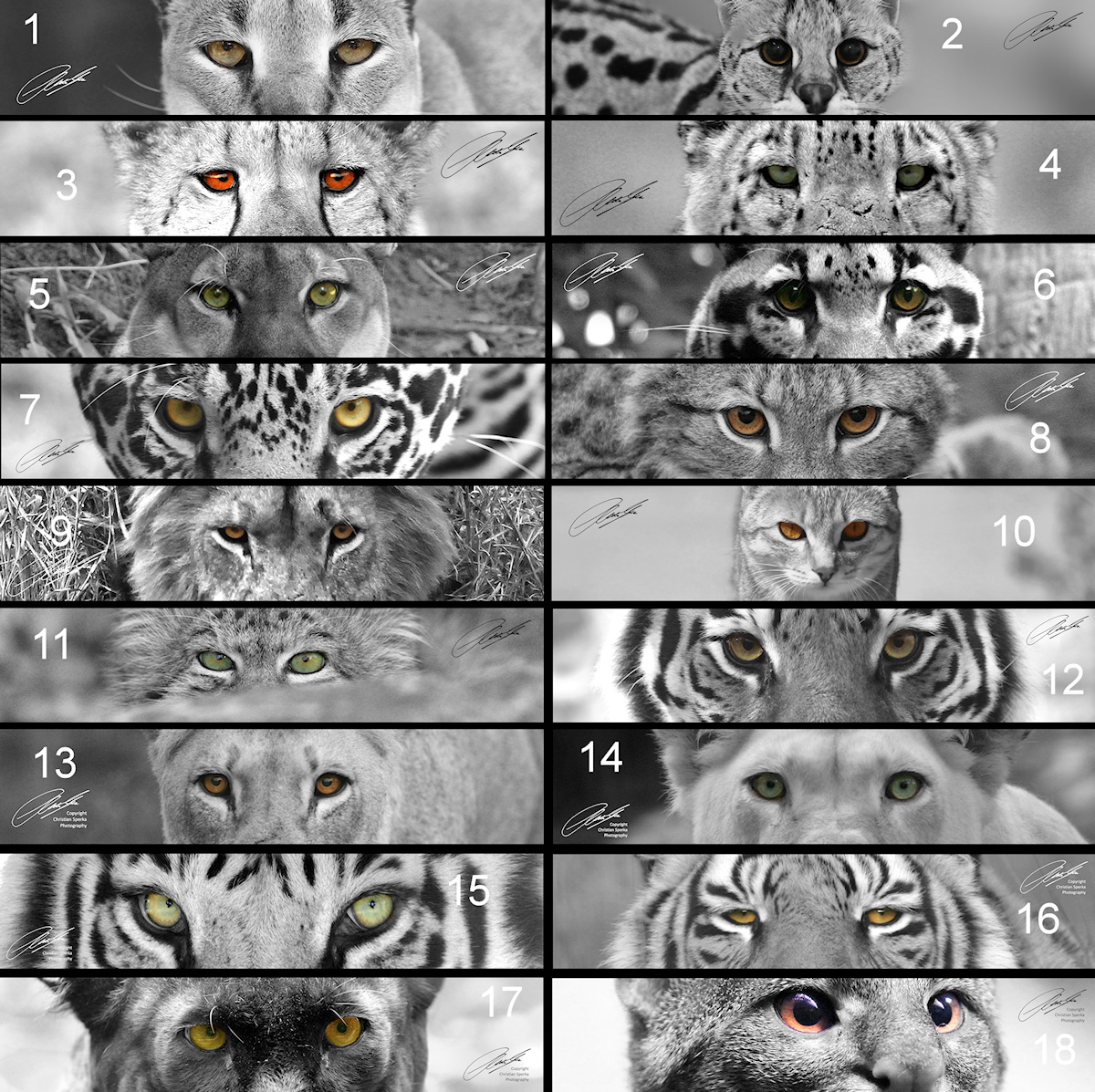
Below are 22 possible IDs for these cats (so I do not make it too easy I have included 4 species, which are not in the picture 🙂

The first reader of my blog who sends in the correct match list (images to names) by email to info@sperka.com will win a 8″x10″ EYES print of the cat species of her/his choice.

A – Male African Lion / B – Clouded Leopard / C – Amur/Sigerian Tiger
D – Eurasian Lynx / E – Caracal / F – Sand Cat / G – Ocelot / H – White Lion
I – Bengal Tiger / K – Jaguar / L – Snow Leopard / M – Serval /N – Cougar
O – Fishing Cat / P – Panther / Q – White Tiger / R – Pallas Cat/Manul
S – Jaguarundi / T – Cheetah / U – Bobcat / V – African Wild Cat / W – Female African Lion

Enjoy the contest 🙂

I will publish the correct match and the winner tomorrow!

If you like my EYES images go to www.sperka.biz/EYES to see more of them.

If you would like to help to protect all the wild cats in this world go to www.panthera.org

EYES images (ICT #2)

Image Creation Technique #2

One of my favorite methods to turn a realistic and natural image into a more “artsy” object is by turning it into an EYES portrait.

My definition of an EYES portrait is a picture where the eyes were left in the original color and the rest of the images is turned into a black and white image.

Here are the steps I usually use to accomplish this (this can be done in Photoshop, Paintshop Pro and many other image editing programs).

1. Crop the image to your liking and save it under a new name (This is to ensure that you do to overwrite the original image 🙂
2. Copy the complete image onto the windows clipboard
3. Create a new top layer (raster) and switch to that new top layer
4. Paste you complete image to the top layer
5. Hide the top layer
6. Switch to the background layer and adjust brightness and contrast so the eyes are as you want them
7. Unhide the top layer and switch to that layer
8. Turn the top layer into a black&white image (also adjust contrast and brightness to your liking)
9. Create a new masking layer
10. Unmask the eyes with the eraser tool (which will bring out the color from the background layer)
11. Save your image (and produce a JPG or other format as required)

These EYES images look particularly well on canvas or on metallic paper.

Here is a link to some of my EYES pictures: http://www.sperka.biz/eyes

Please feel free to make comments or ask any questions (either as comments on the blog message or as emails to info@sperka.com.

Note: Photography Classes or Private Photography Lessons with Christian Sperka are available at Nashville Zoo at Grassmere – nashvillezoo.org

Information about the two images used in this blog:
The Leopard image was taken at Londolozi Private Game Reserve in South Africa (during heavy rain :-).
The Boehlen’s Python images was taken in Nashville, Tennessee, USA (she is part of a private collection).

Bi-focal Images – ICT #1

Since I have published my “Nine Basic Rules of Motion Photography” quite a few people have asked me to share a few more of my image creation techniques.

So today I will be starting a new series of  message with “Image Creation Techniques” or short ICTs. From time to time I will publish blog messages explaining some of the ways I create my images.

Please feel free to make comments or ask any questions (either as comments on the blog message or as emails to info@sperka.com

Bi-focal images (ICT #1)

Often it is not possible to use small aperture to create an image with “deep” depth of field.

Here are two examples. One a is a snake picture and one is a scenic shot. In both cases I had to work with fully open aperture, because of the light available and the fact that the use of a tripod was not possible.

In case of the snake picture I wanted both eyes and nose in focus. So I shot multiple images
while slowly changing the focus from eyes to nose. I then used my editing tool (I use Corel Paintshop Pro) to merge two of the pictures and create the final image.

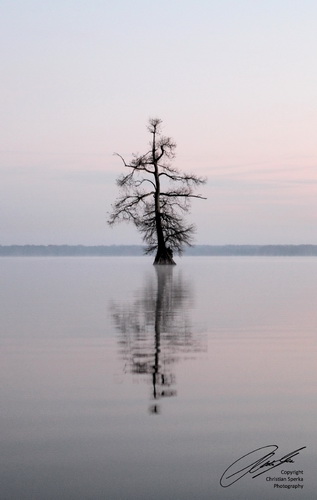
In the case of “the tree in the lake” I held the camera about 2 inches (~5 centimeters) above the water and shot one image with focus on the ripples up front and one image with focus on the tree in the background. Then I merged the images (stiched at the horizon). The results in an image with an interesting bi-focal effect.

Note: Photography Classes or Private Photography Lessons with Christian Sperka are available at Nashville Zoo at Grassmere – nashvillezoo.org

Picture of the Week 7 – Browsing in the Rain!

[View all Pictures of the Week 2012]

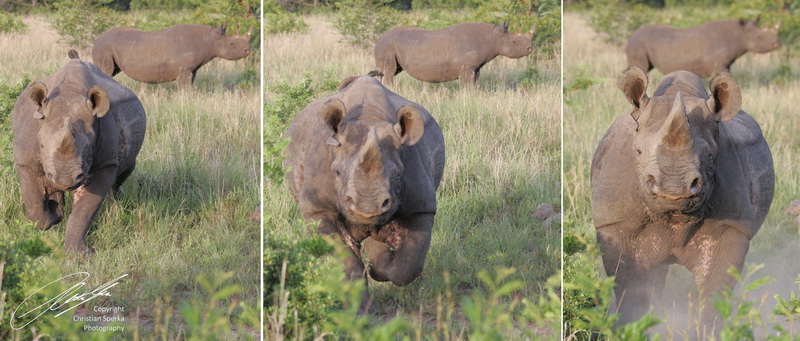
This is a picture of a Black Rhino browsing in the rain at Phinda Private Game Reserve, Kwazulu Natal, South Africa.

If you would like to order a print of this image go to http://www.sperka.biz/potw2012/h31e582f6#h31e582f6

The first time I took pictures of a Black Rhino mock-charging our car I did not take pictures 🙂  My adrenaline level was high and I had visions of a horn coming through the side of the car.  But, after a few of these “show” attacks I was able to get these pictures.

For more Black Rhino pictures go to www.sperka.biz/blackrhino

Picture Data (Browsing in the Rain):
Canon 1D Mark II, Canon L 100-400mm at 400mm, Freehand from vehicle, Mode AV, ISO 800, f/5.6, 1/125sec, Exposure compensation +/-0eV, AWB, Focus center point only

About Black Rhinoceros:
The Black Rhinoceros or Hook-lipped Rhinoceros (Diceros bicornis), is a species of Rhinoceros, native to the eastern and central areas of Africa including Kenya, Tanzania, Cameroon, South Africa, Namibia, Zimbabwe, and Angola. The species overall is classified as critically endangered, and one subspecies, the Western Black Rhinoceros, was declared extinct by the IUCN in 2011.

An adult Black Rhinoceros stands 132–180 cm (52–71 in) high at the shoulder and is 2.8–3.8 m (9.2–12 ft) in length. An adult typically weighs from 800 to 1,400 kg (1,800 to 3,100 lb), however unusually large male specimens have been reported at up to 2,900 kg (6,380 lb).

Females are smaller than the males. Two horns on the skull are made of keratin. These horns are used for defense, intimidation, and digging up roots and breaking branches during feeding. The Black Rhino is smaller than the White Rhino, and has a long, pointed, and prehensile upper lip, which it uses to grasp leaves and twigs when feeding.

The Land between the Lakes, Reelfoot Lake and the Banks of the Mississippi

Bald Eagle on the Banks of the Mississippi. 

This week I gave two presentations at the Paducah Photography Club in Kentucky, USA and at the Northwest Tennessee Photography Club in Martin, TN, USA.

This gave me the opportunity to take pictures at the Land between the Lakes in Kentucky, at Reelfoot Lake and on the Banks of the Mississippi.

This is a link to the pictures I took during the two days. Thanks to Donna, Melanie, Roy, Roger and  Richard for their hospitality and for showing me around their “home territory”!

SLIDESHOW: http://www.sperka.biz/lblrl/slideshow

Enjoy the pictures.

Reelfoot Lake

Picture of the Week 6 – Stare!

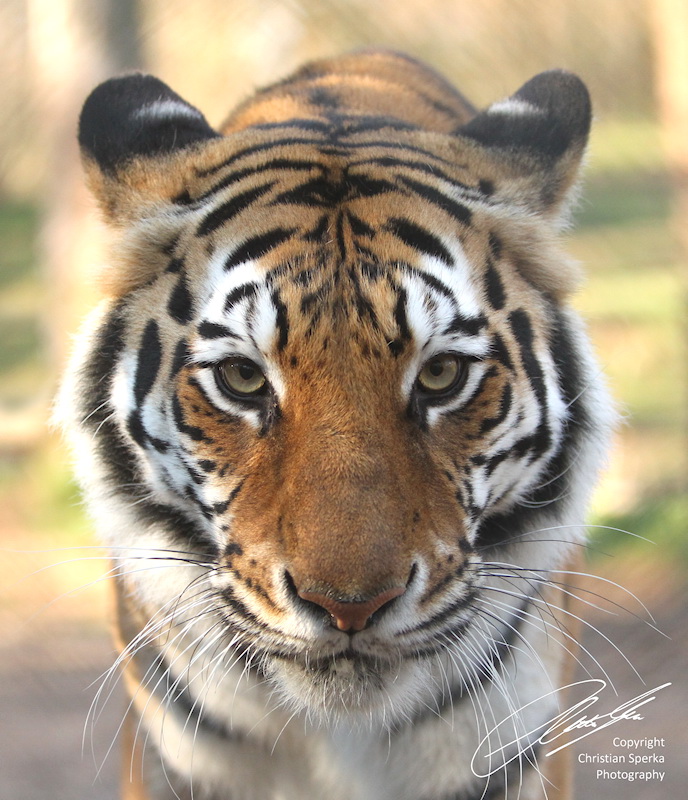
Female Bengal Tiger (Panthera tigris tigris) Deutsch:Koenigstiger

[View all Pictures of the Week 2012]

A direct stare of a fully grown tiger from a few feet away is making you feel a bit squeezy in the the stomach, even if you know that you are safe behind the fence.

I took this picture last week at Nashville Zoo at Grassmere as part of a series of “eye level” Bengal Tiger pictures.

Here are the technical details (for the photographers among you :-): The shot was taken through chain-linked fence with the lens a few inches from the fence. The chain link openings were only 2/3 of the lens diameter. The animal was moving at the time towards the camera (lens 70mm – aperture f/2.8 – shutter speed 1/1500sec – ISO 1600 – aperture control mode – continous focus mode – central focus point only – exposure compensation +/-0 – crop approx.50%).

If you would like to purchase a print of this image go to http://www.sperka.biz/p50955839/h7b49fb1#h7b49fb1

Eyes Series Version:

For more Tiger pictures:

Bengal Tiger (Nashville Zoo) – www.sperka.biz/nztiger
Bengal Tiger – www.sperka.biz/bengaltiger
Malayan Tiger – www.sperka.biz/malayantiger
Amur Tiger – www.sperka.biz/amurtiger

If you would like know more about the conservation efforts for Tigers go to Panthera’s Tiger projects webpage: http://www.panthera.org/species/tiger

About Tigers:

The Tiger (Panthera tigris) is the largest cat species, reaching a total body length of up to 3.3 metres (11 ft) and weighing up to 306 kg (670 lb). Their most recognizable feature is a pattern of dark vertical stripes on reddish-orange fur with lighter underparts. Tigers once ranged widely across Asia, from Turkey in the west to the eastern coast of Russia. Over the past 100 years, they have lost 93% of their historic range, and have been extirpated from southwest and central Asia, from the islands of Java and Bali, and from large areas of Southeast and Eastern Asia. Today, they range from the Siberian taiga to open grasslands and tropical mangrove swamps.

The remaining six Tiger subspecies (Bengal Tiger, Indochinese Tiger, Malayan Tiger, Sumatran Tiger, Amur or Siberian Tiger, South China Tiger) have been classified as endangered by IUCN. The global population in the wild is estimated to number between 3,000 to 4,000 individuals, with most remaining populations occurring in small pockets that are isolated from each other. Major reasons for population decline include habitat destruction, habitat fragmentation and poaching.

CAPTIVE and WILD

Captive and Wild – Lion Cubs

I was preparing this collage for one of my PowerPoint presentations and I thought I share it with all of you.  It is not easy to identify which of the pictures was taken in the wild and which was taken in captivity. Have a guess yourself. I will publish the correct answer with next week’s Picture of the Week!

I will give my CAPTIVE and WILD Presentation three times in February. You are welcome if you like to come to any of the events.
> February 6, 2012 – Paducah Photography Club, Broadway Church of Christ, 2820 Jefferson St., Paducah, Kentucky, USA – 6:30pm
> February 7, 2012 – Northwest Tennessee Photography Club, UT Martin Campus Library, Martin, Tennessee, USA – 6:30pm
> February 13, 2012 – Murfreesboro Art League, Murfreesboro, Tennessee, USA – 7:00pm

Picture of the Week 5 – Scare and Intimidate

Eurasian Eagle Owl (Bubo bubo)Deutsch: Uhu

[View all Pictures of the Week 2012]

One of my favorite birds at Nashville Zoo is this Eurasian Eagle Owl.

His name is Archimedes. He is one of the education animals at the zoo and he appears regularly on stage as part of the education animal shows and in the zoo’s outreach programs.

In this picture Archimedes showed his full beauty in a defensive posture as he sighted a young Lynx cub near by.

For more owl images go to http://www.sperka.biz/eeowl.

About Eurasian Eagle Owls

The Eurasian Eagle Owl (Bubo bubo) is a very large and powerful bird. It is often referred to as the world’s largest owl, although Blakiston’s Fish Owl is slightly heavier on average and the Great Grey Owl is slightly longer on average.

The Eagle Owl has a wingspan of 138–200 cm (55–79 in) and measures 58–75 cm (23–30 in) in heights. Females weigh 1.75-4.5 kg (3.9-10 lbs) and males weigh 1.5-3.2 kg (3.3-7 lbs). In comparison, the Great Horned Owl, roughly the Eagle Owl’s ecological equivalent in North America, weighs around 1.4 kg (3.1 lbs). The great size, ear tufts and orange eyes make this a distinctive species.

Eagle Owls are distributed sparsely through a wide range of habitats. They have been found in habitats as diverse as Northern coniferous forests to the edge of vast deserts. Rocky areas seem to be favored, with cliffs and mountains abutting woodland usually containing the largest numbers of these owls.