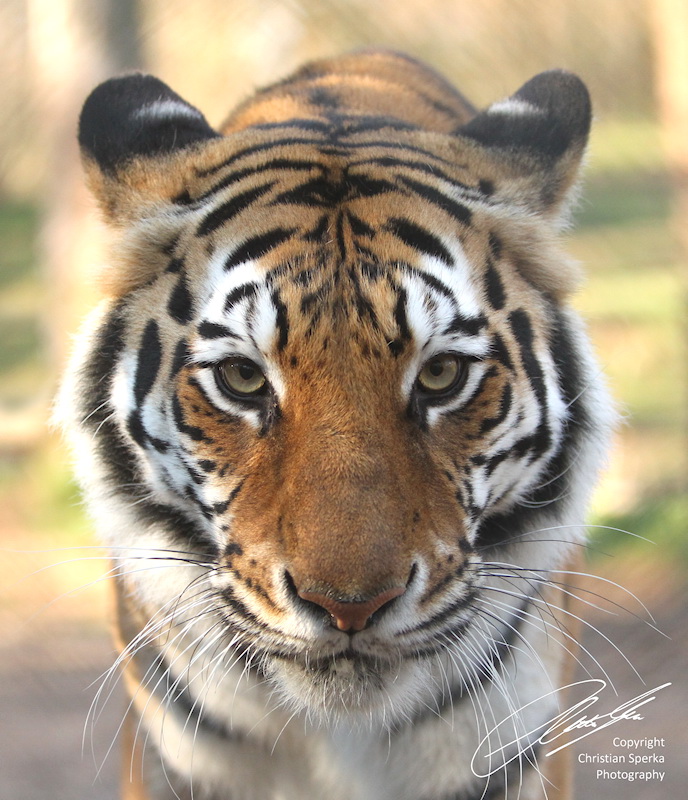
Frosty, Foggy, Freezing

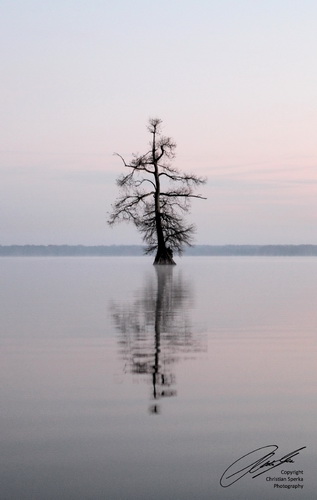
I have just returned from a short trip to Germany and Switzerland. The weather over Christmas was not great, but on my last day I took this image in Switzerland.

I like the ambiance of this foggy, frosty and freezing scenery.

Once I have had time to edit  all the pictures from this trip I will upload the few pictures I took at the Zurich Zoo, the Basel Zoo and the Tierpark Goldau. In Zurich and Goldau I spent most of my visit in the fog 🙂

Vote for your Picture of the Year 2011 and win an Art Print

PLEASE VOTE FOR THE PICTURE OF THE YEAR 2011 by sending an email to INFO@SPERKA.COM. Thanks you.

Select from  http://www.sperka.biz/potw2011.

Same procedure as last year 🙂 Please select your Picture of the Year 2011 from all my Pictures of the Week in 2011. You can review the pictures at http://www.sperka.biz/potw2011. Then either send me an email, a blog message or a facebook message with your choice of image.  The voting process is open until the end 20th of January 2012.

On January 21 I will draw two winners from the group of people who voted for the winner image (with the most votes). I will also draw one winner from all people who voted regardless for which image. All three winners will get one Christian Sperka Art Print (11″x14″) with an image of their choice for free.

So, PLEASE VOTE FOR THE PICTURE OF THE YEAR 2011 by sending an email to INFO@SPERKA.COM. Thanks you.

Picture of the Week 52 – Walking the tight-rope!

This week’s picture of a male Bateleur was taken at Phinda Private Game Reserve, Kwazulu Natal South Africa.

To review all 2011 pictures of the week go to www.sperka.biz/potw2011/slideshow

About Bateleur …

The Bateleur (Terathopius ecaudatus) is a medium-sized eagle. It is a common resident species of the open savanna country in Sub-Saharan Africa. Bateleurs pair for life, and will use the same nest for a number of years. Unpaired birds, presumably from a previous clutch, will sometimes help at the nest. The Bateleur is a colourful species with a very short tail which makes it unmistakable in flight. Immature birds are brown with white dappling. The prey of this raptor is mostly birds and also small mammals; it also takes carrion. “Bateleur” is French for “tight-rope walker”. This name describes the bird’s characteristic habit of tipping the ends of its wings when flying, as if catching its balance.

For more Bateleur pictures go to www.sperka.biz/bateleur

Merry Christmas and a Happy New Year 2012

Ke$ha (one of Nashville Zoo’s Tamanduas) and I wish you

Merry Christmas and a Happy New Year 2012
 Frohe Weihnachten und ein Gutes Neues Jahr 2012
  Geseënde Kersfees en ‘n ​​Voorspoedige Nuwe Jaar 2012
   Ngikufisela uKhisimusi oMuhle noNyaka oMusha oNempumelelo
    Feliz Navidad y un Feliz Año Nuevo 2012
     圣诞快乐,新年快乐2012年
     Joyeux Noël et une Bonne Année 2012
    Schöni Wienachte und en guete Rutsch is neue Johr
   Buon Natale e un Felice Anno Nuovo 2012
  Cras et sem a Kalendis MMXII
 Wesołych Świąt i Szczęśliwego Nowego Roku 2012
Bonan Kristnaskon kaj feliĉan novan jaron

Try to identify the languages for these Holiday greeting – scroll down to see the answer.

I got this colorful, hand-made Christmas card from a Nashville Zoo fan in Argentina.
He incorporated 20 of Nashville Zoo’s species into the picture (Rhinoceros Hornbill, Caribbean Flamingo, Red Panda, White-cheeked Gibbon, Bengal Tiger, Ostrich, Cougar, Damara Zebra, Eland, Masai Giraffe, Baird’s Tapir, African Elephant, Giant Anteater, Red-tailed Monkey, Eurasian Lynx, Rhinoceros Iguana, Tuco Toucan, Ringd-tailed Lemur, American Alligator and Clouded Leopard). Well done and thank you Flavio!

And here are the languages from the Holiday message: English, German, Afrikaans, Zulu, Spanish, Chinese, French, Swiss-German, Spanish, Latin, Polish and Esperanto.

I will be in Germany and Switzerland from December 21 to December 29. All the best – Christian

Pictures of the Week 51 – I love bamboo :-)

This weeks’ picture is of a female Red Panda at Nashville Zoo at Grassmere, Nashville, Tennessee, USA

To review all 2011 pictures of the week go to http://www.sperka.biz/potw2011/slideshow

More Red Panda pictures at www.sperka.biz/redpanda

About Red Panda

The Red Panda (Ailurus fulgens) is a small arboreal mammal native to the eastern Himalayas and southwestern China. It is the only species of the genus Ailurus. Slightly larger than a domestic cat, it has reddish-brown fur, a long, shaggy tail, and a waddling gait due to its shorter front legs. It feeds mainly on bamboo, but is omnivorous and may also eat eggs, birds, insects, and small mammals. It is a solitary animal, mainly active from dusk to dawn.

The taxonomic classification of the red panda has been controversial since it was discovered. French zoologist Frédéric Cuvier initially described the Red Panda in 1825, and classified it as a close relative of the Raccoon (Procyonidae). At various times it has been placed in Procyonidae, Ursidae (Bears), with Ailuropoda (Giant Panda) and in its own family, Ailuridae.

Recent molecular-systematic DNA research also places the red panda into its own family Ailuridae, which is in turn part of the broad superfamily Musteloidea that also includes skunk, raccoon, and weasel families.

Red Pandas are not related to Giant Pandas, as the name would suggest, but they both love bamboo. The Red Panda picture was taken at Nashville Zoo and the Giant Panda at Zoo Atlanta, Georgia, USA.

This weeks selection for the “Picture of the Week” was made by a 7th grade World Geography class at Sunset Middle School in Williamson County, TN. Thanks for your interest in wildlife photography and conservation.

Picture of the Week 50 – Bloodshot!

This weeks picture if of a Cape Buffalo Bull.  The picture was taken at Phinda Private Game Reserve, Kwazulu Natal, South Africa.

To review all 2011 pictures of the week go to http://www.sperka.biz/potw2011/slideshow

And this is my EYES series version of the image in black&white:

For more Cape Buffalo pictures go to http://www.sperka.biz/buffalo

About Cape Buffalo:

The Cape Buffalo, Affalo, Nyati, Mbogo or African Buffalo (Syncerus caffer) is a large African bovine. It is not closely related to the slightly larger wild Asian water buffalo. Owing to its unpredictable nature which makes it highly dangerous to humans, it has not been domesticated, unlike its Asian counterpart, the domestic Asian water buffalo.

The Buffalo is a very robust species. Its shoulder height can range from 1 to 1.7 m (3.3 to 5.6 ft) and its head-and-body length can range from 1.7 to 3.4 m (5.6 to 11 ft). Buffalo weigh up to 910 kg (2,000 lb), with males, normally larger than females.

Buffalo have few predators and are capable of defending themselves against (and killing) lions. Lions do kill and eat buffalo regularly, but it typically takes multiple lions to bring down a single adult buffalo.

Picture of Week 49 – Hold on!

This picture of a three month old male Orangutan baby was taken at the Krefeld Zoo in Germany.

More about Orangutans:

Orangutans are the only exclusively Asian genus of great ape. They are the largest living arboreal animals. Their hair is typically reddish-brown, instead of the brown or black hair typical of other great apes. Orangutans are found only in rainforests on the islands of Borneo and Sumatra. There are only two surviving species, both of which are endangered: the Bornean Orangutan (Pongo pygmaeus) and the critically endangered Sumatran Orangutan (Pongo abelii). The word “orangutan” comes from the Malay words “orang” (man) and “(h)utan” (forest); hence, “man of the forest”.

Gestation lasts for nine months with females giving birth to their first offspring between 14 and 15 years old. Female orangutans have the longest interbirth intervals of the great apes, having eight years between births. Male orangutans play almost no role in raising the young. Females are the primary caregivers for the young and are also instruments of socialization for them. A female often has more than one offspring with her, usually an adolescent and an infant, and the older of them can also help in socializing their younger sibling. Infant orangutans are completely dependent on their mothers for the first two years of their lives. The mother will carry the infant during traveling, as well as feed it and sleep with it in the same night nest. Orangutans are juveniles from about two to five years of age and start to exploratory trips from their mothers. Juveniles are usually weaned at about four years of age.

Double Feature! – Invitation – First Saturday Gallery Crawl

When: Saturday, December 3, 2011 from 6p.m. to 9p.m.
Where: Christian Sperka Photography / Animal Art Photography Gallery at the Arcade [Downtown Nashville in the block between Church and Union Streets and 4th and 5th Avenues]

DOUBLE FEATURE

Photographer Amiee Stubbs will be exhibiting a collection of wildlife images from her journey to 10 U.S. zoos in 2011. (see attached flyer below).

And I will be showing my new Wildlife Portrait Poster Collection (see http://www.sperka.biz/csp)

I am looking forward to seeing you at on Saturday.

Picture of the Week 48 – Tallest

This week’s picture of a South African Giraffes was taken at Kings Camp, Timbavati Game Reserve, South Africa.

Enjoy the picture!

For more Giraffe pictures go to www.sperka.biz/giraffe (Wild South African Giraffes) or www.sperka.biz/giraffes (Masai Giraffes at the Nashville Zoo)

About Giraffes:
The Giraffe (Giraffa camelopardalis) is the tallest of all land-living animal species, and the largest ruminant. Its scientific name refers to its irregular patches of color on a light background, which bear a vague resemblance to a Leopard’s spots, and its face, which is similar to that of a camel. In addition to these features, the Giraffe is noted for its extremely long neck and legs and prominent horns. It stands 5–6 m (16–20 ft) tall and has an average weight of 1,200 kg (2,600 lb) for males and 830 kilograms (1,800 lb) for females.

It is classified under the family Giraffidae, along with its closest relative, the Okapi. Different authorities have recognized different numbers of subspecies, differentiated by size, coloration, coat pattern and range. Up to nine subspecies are recognized:
G. c. angolensis (Smoky or Angolan)
G. c. antiquorum (Kordofan)
G. c. camelopardalis (Nubian)
G. c. giraffa (South African)
G. c. peralta (West African)
G. c. reticulata (Reticulated or Somali)
G. c. rothschildi (Rothchild)
G. c. thornicrofti (Thornicroft or Rhodesian)
G. c. tippelskirchi (Massai)

My pictures are mainly of South African Giraffes (www.sperka.biz/giraffe) and of Masai Giraffes(www.sperka.biz/giraffes).

Happy Thanksgiving!

I wish all my American friends a very happy Thanksgiving.

It is traditionell in North America to have a turkey dinner for Thanksgiving. I love these beautiful birds (in pictures and on my plate :-)).

This picture of a beautiful male Wild Turkey was taken at Radnor Lake in

 Nashville, Tennessee, USA.

The Wild Turkey (Meleagris gallopavo) is native to North America.

Turkeys have 5000 to 6000 feathers.Tail feathers are of the same length in adults, different lengths in juveniles. The adult male normally weighs from 5 to 11 kg (11–24 pounds) and measures 100–125 cm (39–49 in). The adult female is typically much smaller at 2.5–5.4 kg (5.5–12 lb) and is 76 to 95 cm (30–37 in) long.

Males are polygamous, mating with as many hens as they can. Male wild turkeys display for females by puffing out their feathers, spreading out their tails and dragging their wings.

For more pictures of wildlife at Radnor Lake go to www.sperka.biz/radnor