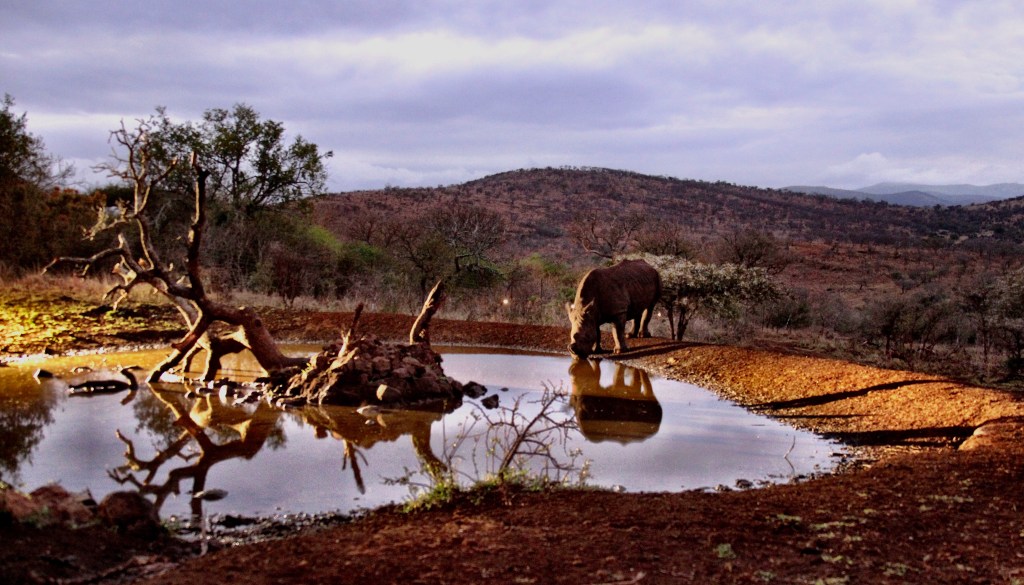
As we returned from our afternoon game drive a surprise waited for us at Thanda Safari’s Villa iZulu. A White Rhino bull had arrived just a few minutes before at the waterhole in front of the villa.
I love this (rather low quality) images for itsspecial atmosphere captured using a long time exposure.
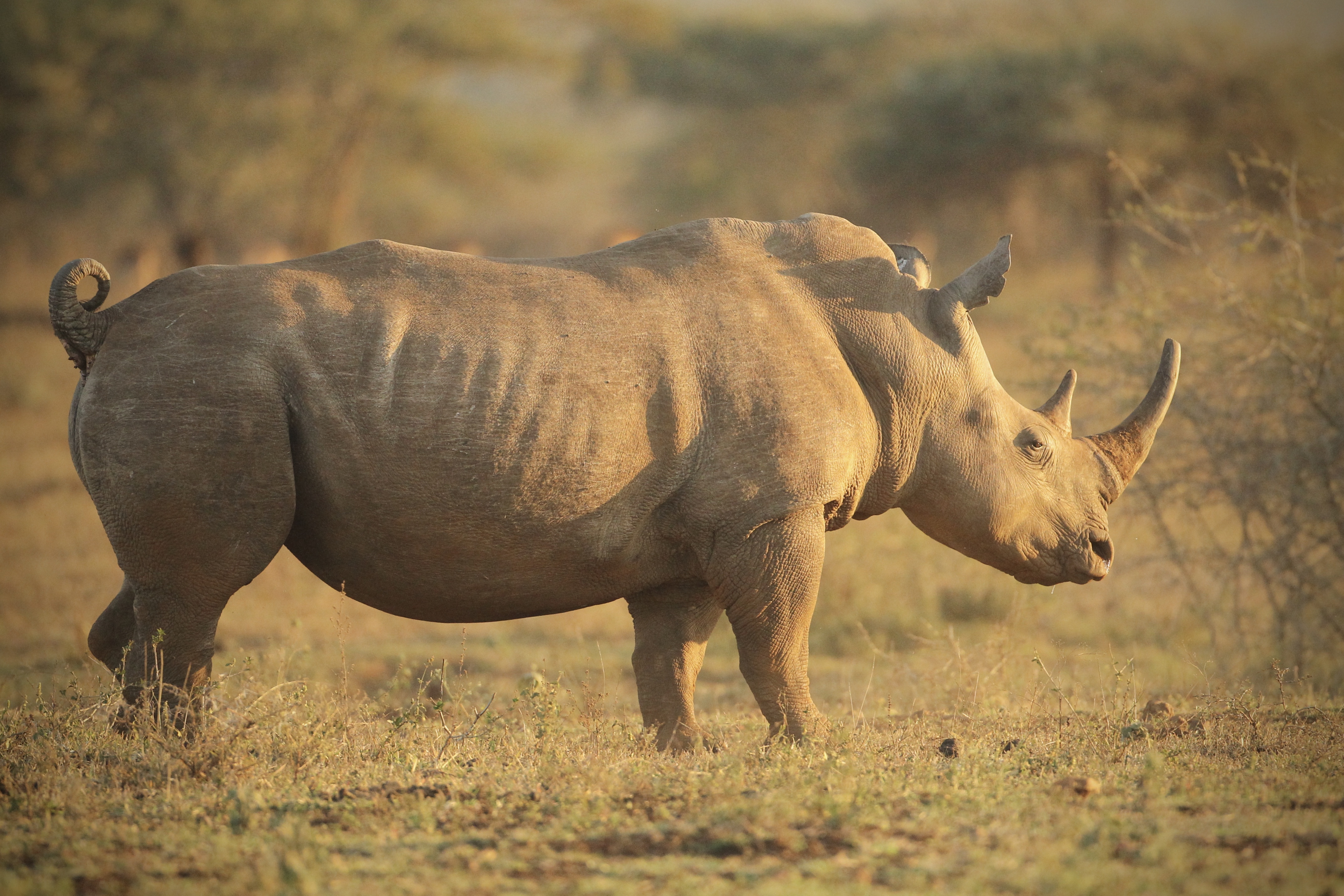
Horns of antelopes, goats, cattle … are normally made of keratin with a life bone core. But there are exceptions. Rhino ‘horns’ are made of keratin only and are structured like compressed hair.
Giraffe ‘horns’ are actually called ossicones and are part of the skull (bone) covered with furred skins. And deer antlers are not true horns either as they are dead bone without any covering.
So not all that looks like a horn is a horn, but you do not want to get in contact with any of them 😊
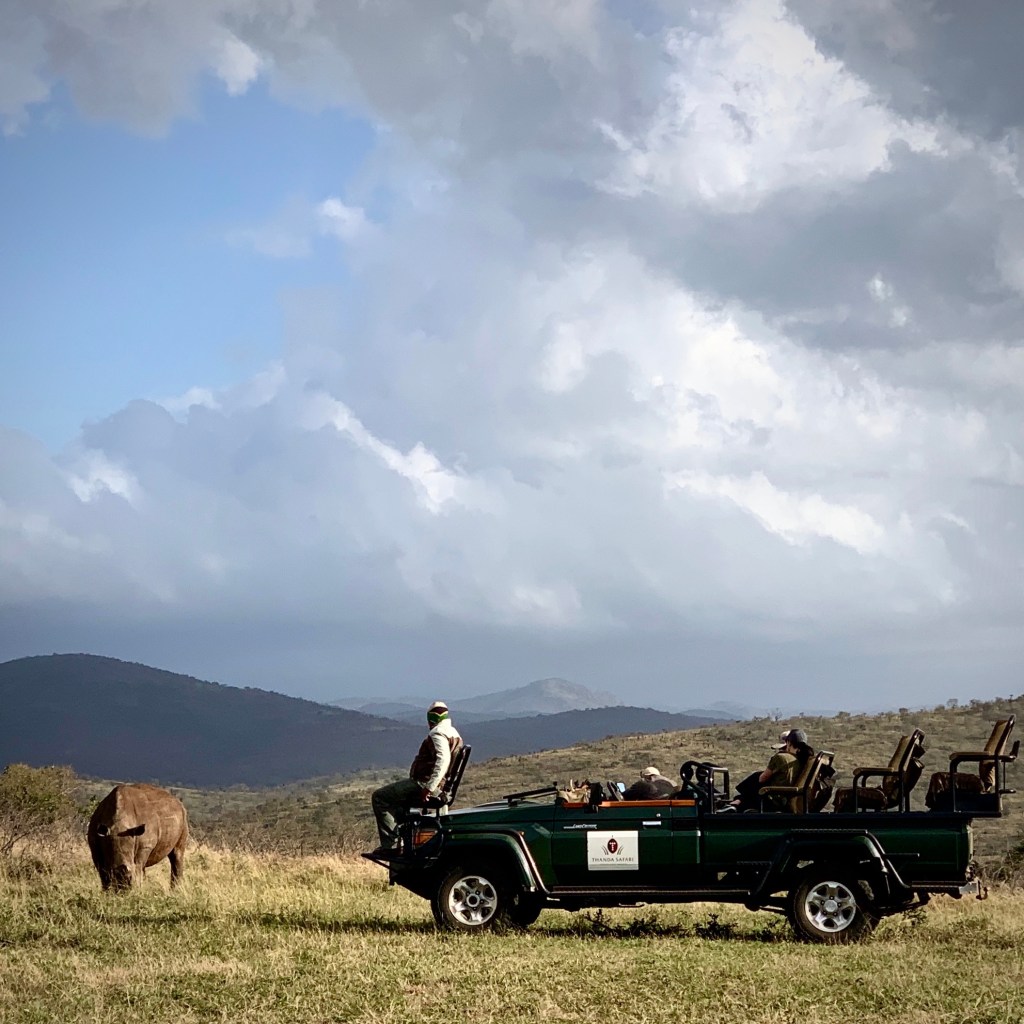
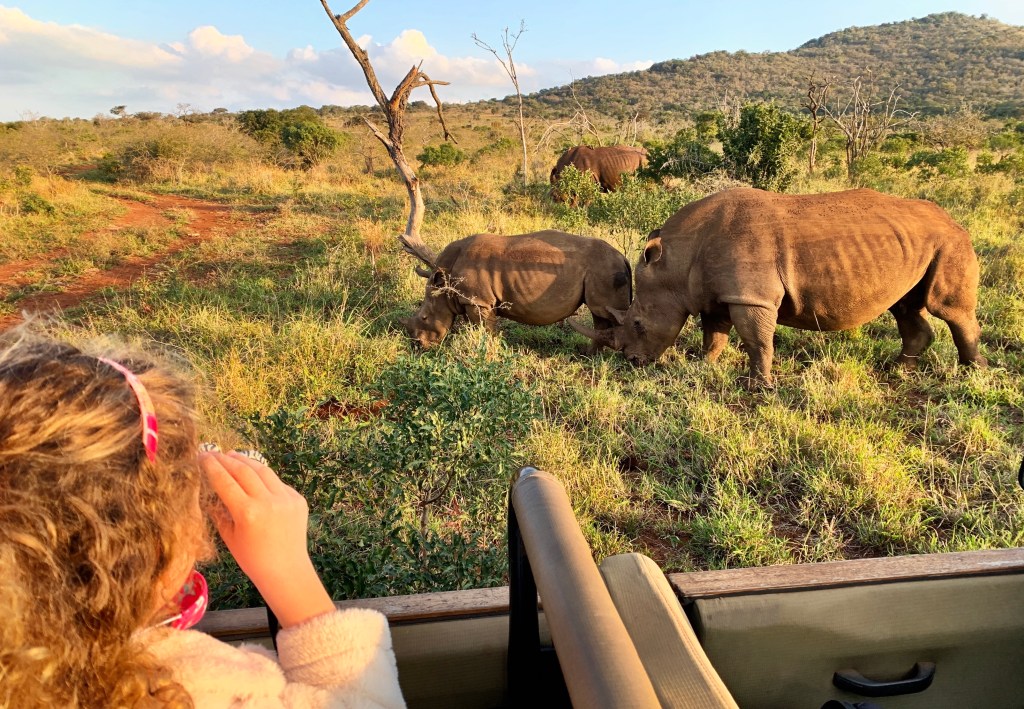
After being stuck at home with online schooling for a long time this young lady enjoyed the ‘live Thanda Safari biology class’ very much, learning all about White Rhinos and their role in nature.
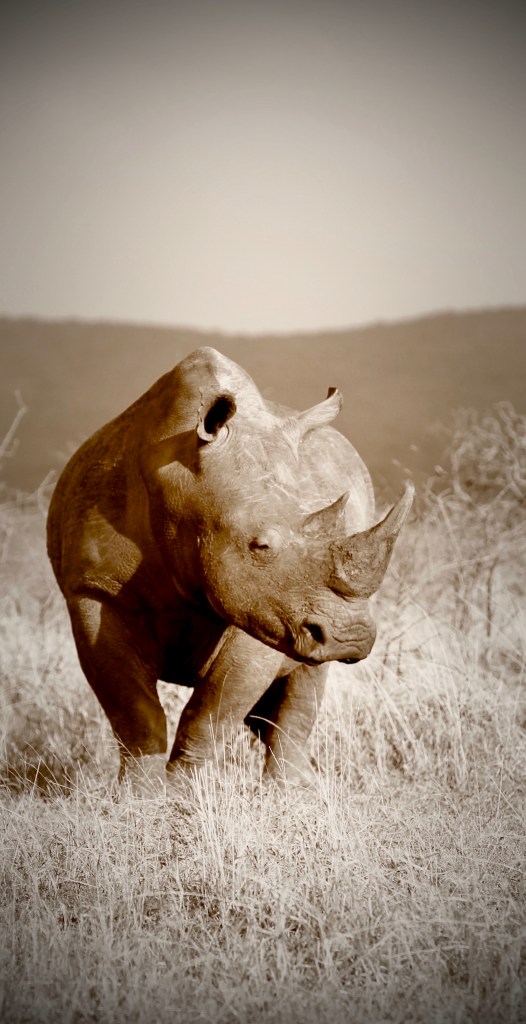
A picture from my archives: What an exciting sighting when a Black Rhino met a Lioness.
Rhinos do not like Lions. Lions are wary of Rhinos. So usually they stay away from one another but sometimes the Lions’ hunting instinct gets the better of them and they try to edge close to the Rhinos, or the two species just meet by accident. As soon as the Rhinos realize the proximity of cats they get very upset and start chasing their foe. That is usually the end of the encounter because at this stage the Lions move away. Due to the bad eyesight of all adult Rhinos the Lions sometimes get quite close.
In this particular case the Black Rhino bull appeared over the dam wall when it almost bumped into the Lioness. The large herbivore immediately went for the cat which made a hurried retreat.
The reason why Lions are interested in Rhinos is because on occasion they get to kill a young Rhino calf. And therefore Rhinos instinctively dislikes all cats and want to get rid of them!
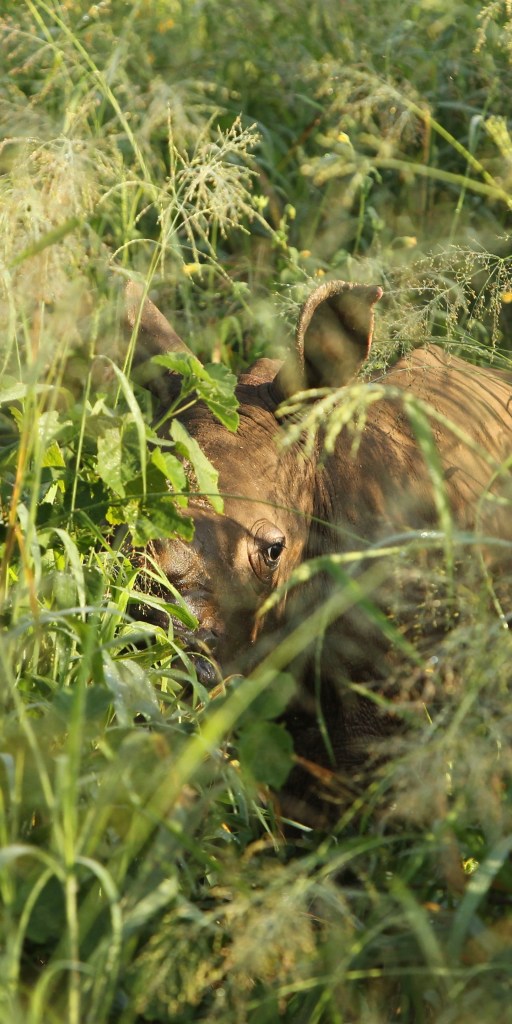
This is one of the cutest pictures I have been taking in a long time. This small Baby Rhino was walking with its mum through high grass in the early morning hours. From all the dew on the grass it got very wet and was a bit irritated with the world … and with me 😊





 Christian Sperka Photography | Custom Luxury Tours