

It seems to be a moonlight week. While I was waiting for my guests to be finished with bush dinner I watched the moon and the stars. I took these two – very different – images of the moon 🙂
It seems to be a moonlight week. While I was waiting for my guests to be finished with bush dinner I watched the moon and the stars. I took these two – very different – images of the moon 🙂
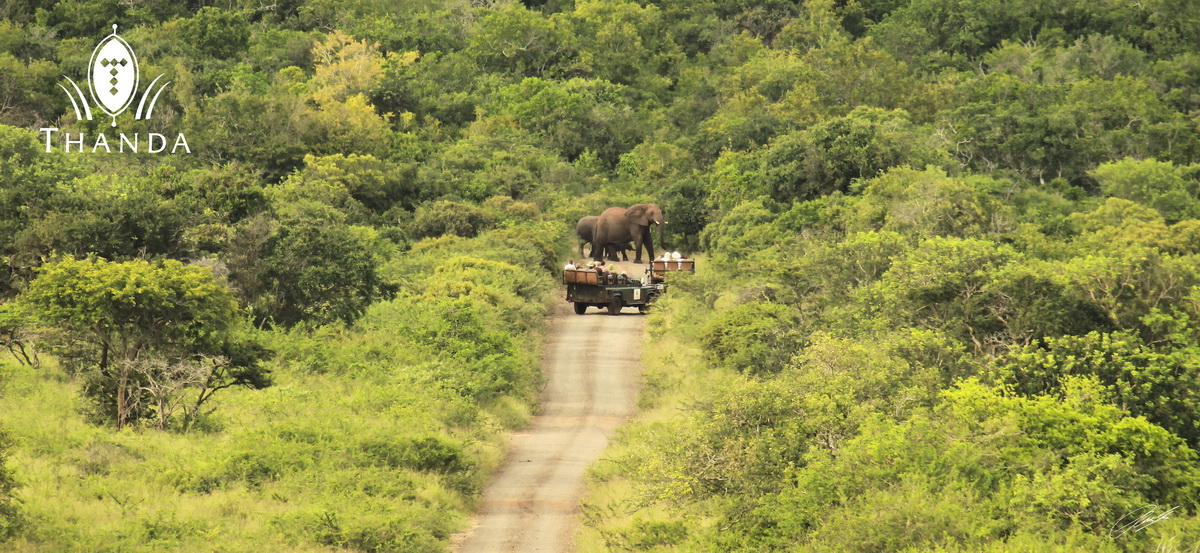
This picture shows the Thanda Elephant herd crossing a road in front of two game drive vehicles.
In the summer time when the vegetation is very dense it takes excellent tracking skills and also a bit of luck to view these magnificent creatures in the open.

If you think that only members of the human race make funny faces when attending to a little itch then have a look at our dominant male Lion.
He was scratching his left front leg with his left back paw. Judging by his funny face the procedure was quite successful.
The Thanda guests on my vehicle enjoyed the moment 🙂
PS: We had to wait for a long time for him to get up. He was sleeping for a long time in the grass. He even collected some spider webs in the process!


It may sound funny, but to take a good picture of a Scrub Hare in the wild is more challenging than to photograph a lion. Scrub Hares are quite common around Thanda, but it is very rare to get them in front of the lens (unless on the road blinded by headlights :-).
This little one was very relaxed and the Thanda guests on my game viewer enjoyed this special sighting. We also saw Lions and Rhinos during the game drive, so the Hare was in good company!

The sun was just setting when we found some of our South Pride Lions playing in a tree on top of a ridge. The Thanda guest on game drive enjoyed this most beautiful sighting until the light was gone completely and the Lions had left the tree and rested in the grass next to the road.

Have a good week!


This little Cape Buffalo calf obviously does.
Mud baths are used by many mammals to help them to cool down in Summer, protect them from the sun and deter insects from being too friendly 🙂
This little bull was looking for his mum, hence the puzzled expression on his face. He found her very soon after I took this picture.
Have a good weekend.

Yesterday I spent a few hours at Mkuze Game Reserve. My main aim was to get some good bird pictures. The day was not as productive as a Winter’s day at Mkuze but I got some images of Pelicans, Bee-eaters, a Sparrowhawk, an Ibis and a small Crocodile. Not bad for a hot morning!
Especially during the Winter month Mkuze is one of the best birding places in Kwazulu Natal. It is only 45 minutes from Thanda and always worth-while an excursion.

Pink-backed Pelican

Black Sparrowhawk
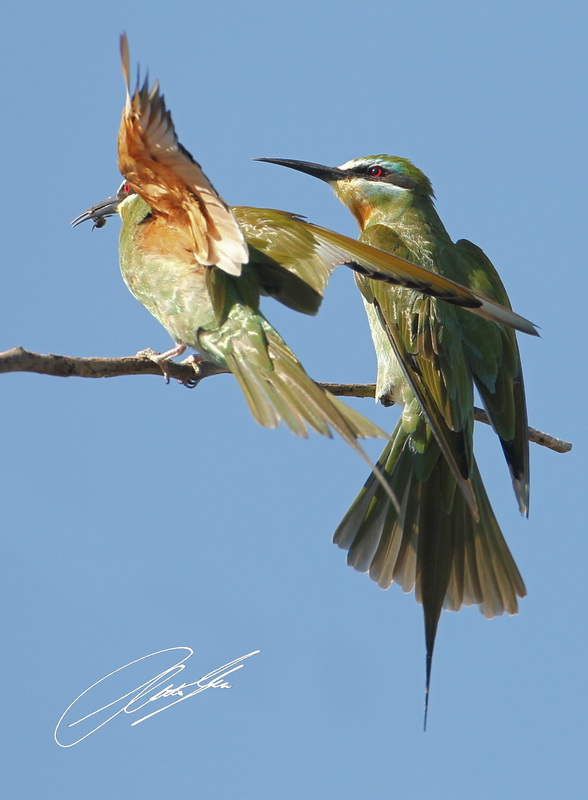
Blue-cheeked Bee-eater
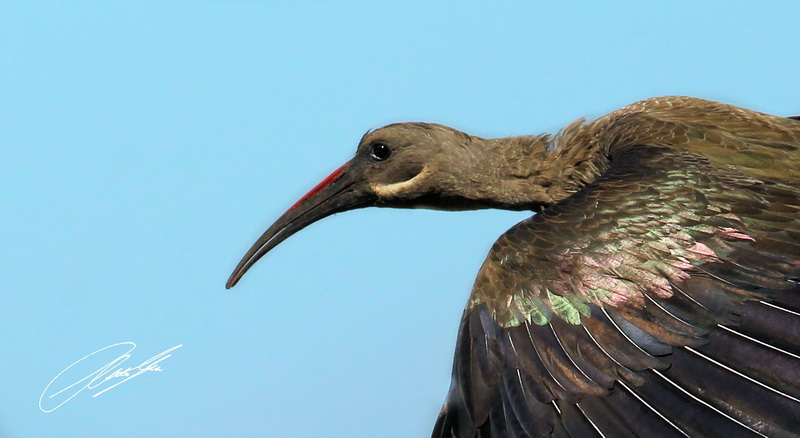
Hadeda Ibis
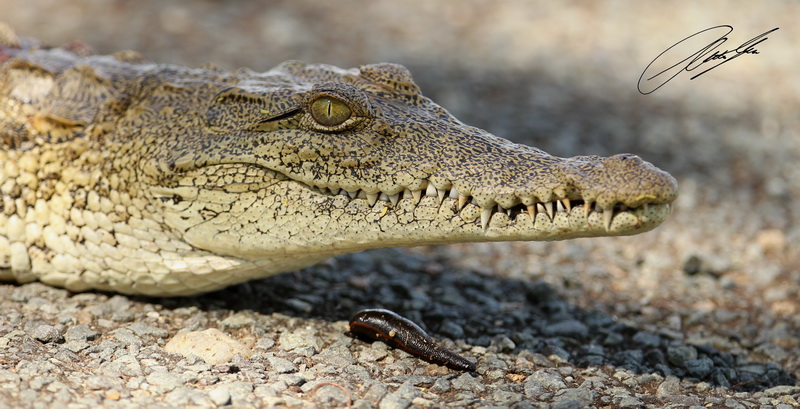
Nile Crocodile

This morning’s game drive was amazing. We left the Lodge with the intention to track a herd of Buffalo. But on the way out we decided to have another quick look at our dominate male Lion and the oldest female of the South Pride (“Grandma”), who we saw the previous evening on top of hill.
When we arrived there we met eight Lions – three Sub-Adults (“Uncles” and “Aunt”) and a young Lioness (“Mum” with her two – eight month old – cubs (“Boy” and “Girl”), the Thanda Dominate Male and “Grandma”. This was the complete South pride. Over the next three hours we observed family life and family drama.
“Mum” had kept away the cubs from the rest of the pride for a long time. It was clear after a few minutes that the Thanda Dominate Male had accepted these cubs as his own, but “Mum” would not allow any of the “Uncles” and the “Aunt” near the cubs. (Note: The cubs were fathered by a male that is no longer on Thanda).
Every time one of the “Uncles” approached “Mum” became very aggressive and the Thanda Dominate Male joined her in defense of the cubs. “Grandma” sided with the three sub-adults and was also quite aggressive towards her grand-kids.
We observed “Mum” fighting for her cubs, the cubs playing, the “Aunt” climbing a tree, one of the “Uncles” mating with the “Aunt” (when the big male was not watching), all of them growling a lot at each other and the “Uncles” and “Aunt” in an attempt to hunt for Impala.
The Thanda guests on my vehicle, Behki and I have seldom enjoyed a game drive more, even so we only drove a few hundred meters during the three hours 🙂
I hope you enjoy this picture documentary!
PS: I have a included a “family chart” to make it easier to understand the relationships.
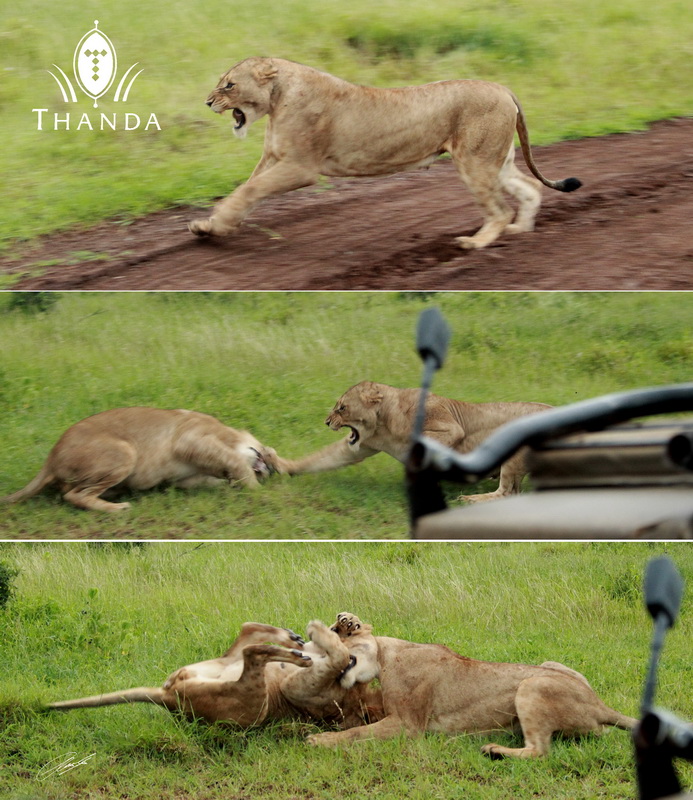
“Mum” disciplining her younger brother “Uncle 2”, who tried to get to close to her cubs.

The Thanda Dominate Male was watching the family drama from a distance.
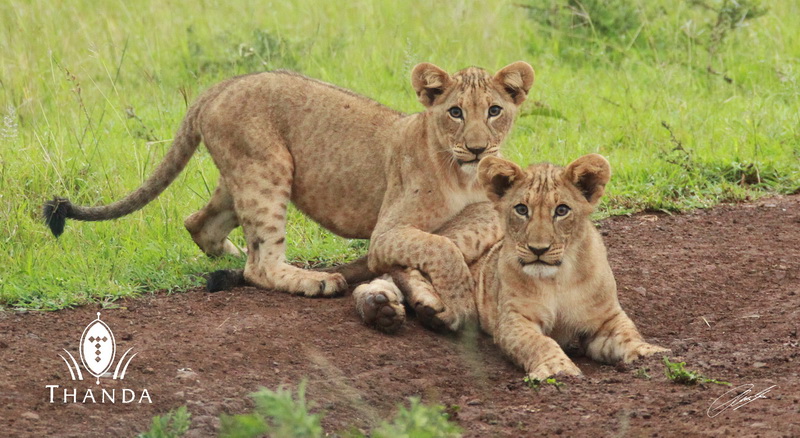
The two cubs were playing while the adults were arguing about them!

The “Aunt” was observing the scene from a nearby tree.

Mating!
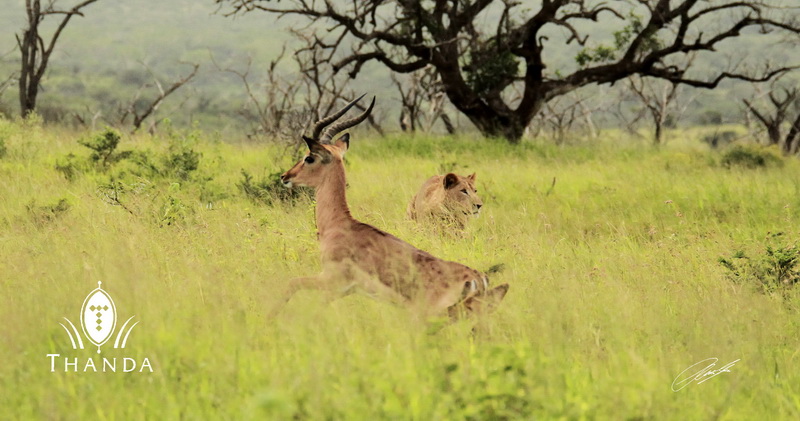
The (not successful) Impala Hunt 🙂

“Mum” getting upset again!

The Thanda South Pride.
Quite a few people have asked me how I spend my Christmas and New Year at Thanda. The answer is simple: Working…
This is one of the busiest times of the year at a game reserve as many guests want to spend a special “Wildlife” Christmas or New Year.
But – as I enjoy being in the bush and guiding people in this beautiful Big Five reserve – working over the holidays is not a sacrifice.
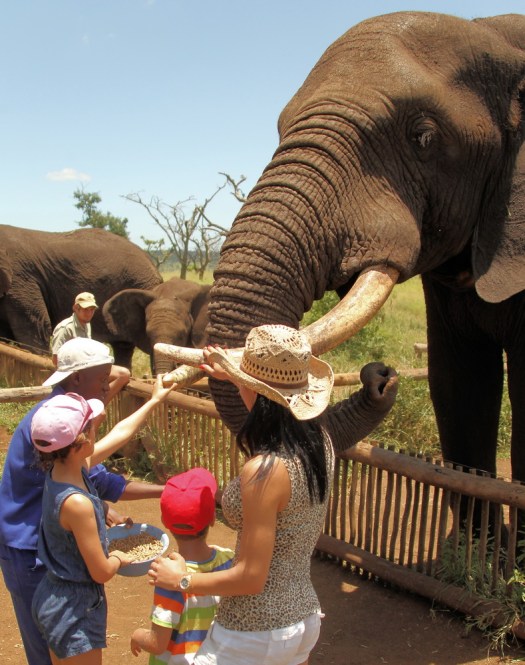
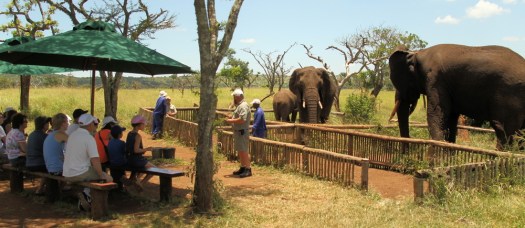
Yesterday I went with two guest families to the Elephant interaction at Bayete Game Reserve. This is one of the regular excursion we do with our guests. Everyone enjoyed interacting with Rambo, Rachel and Jabulani. These three “semi-wild” Elephants which roam freely on the game reserve show up every day for their “human interaction”.
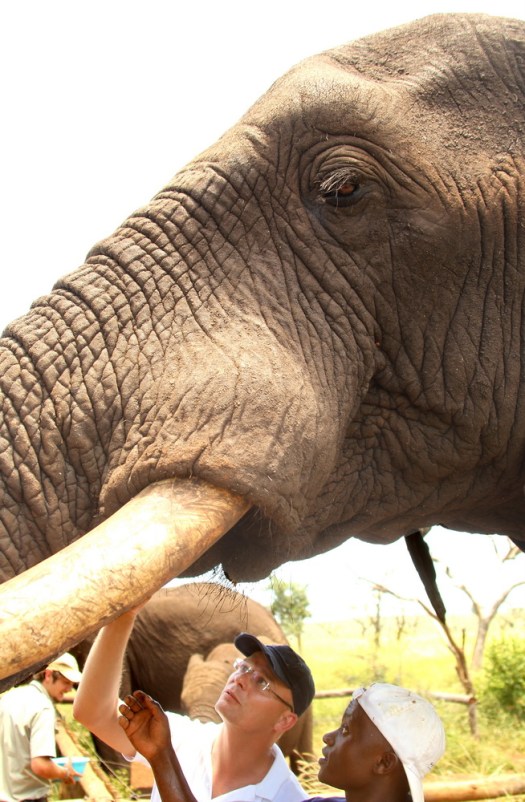
I hope all of you enjoy the festive season, wherever you are!

It is hard to believe but I had four great Leopard sightings in one week. That is more than in the six month since I started working at Thanda.
Today’s sighting was especially good. The young Leopard in the picture above stayed around a waterhole for half an hour and then joined a second Leopard in the bush nearby.
Below are pictures of all five Leopards which featured in this week’s sightings 🙂
 Enjoy your holiday weekend!
 Christian Sperka Photography | Custom Luxury Tours