A Lion’s Roar

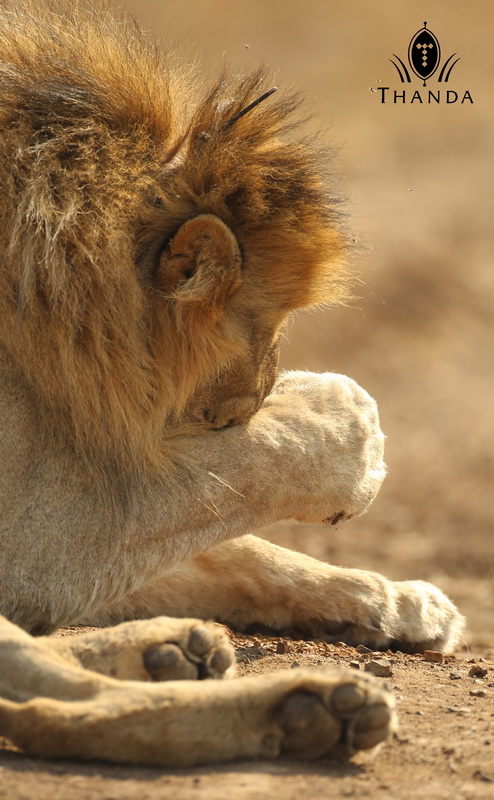
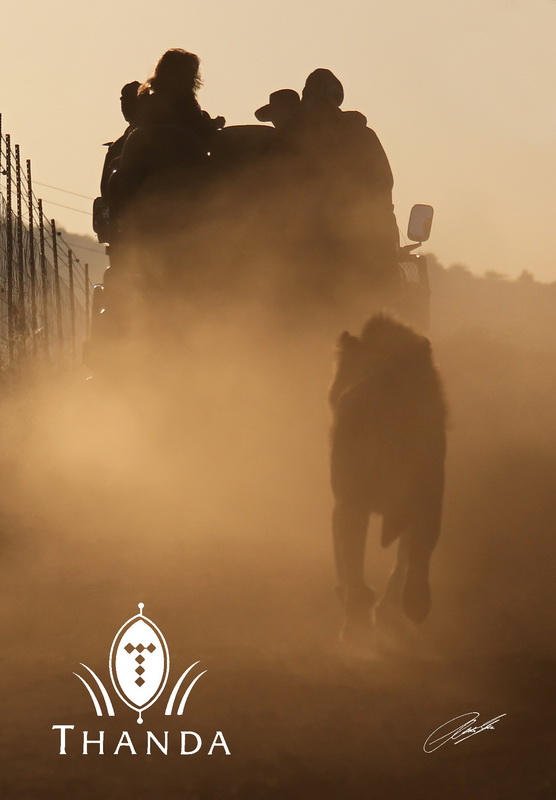
This morning I woke up to the sound a lion roaring. When I left for Richards Bay I heard him very clearly east of Thanda House.

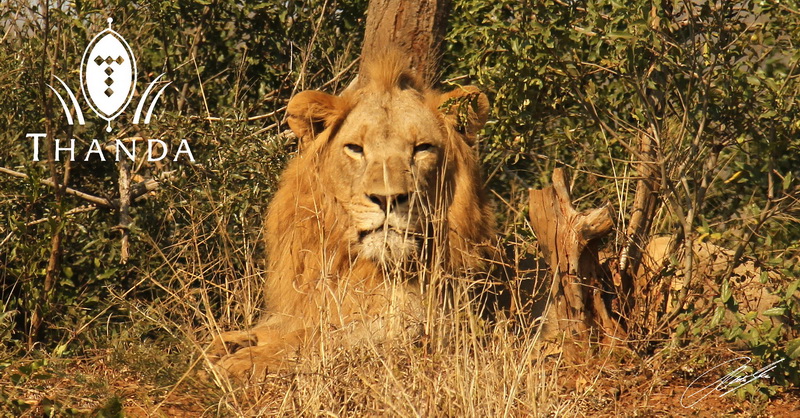
I am not sure if it was the male that I saw yesterday afternoon while I was driving through the reserve (picture below). It might have been him 🙂

Have a good day!

Vulture, Lions and Wildebeest

Today’s blog message is about three different sightings.

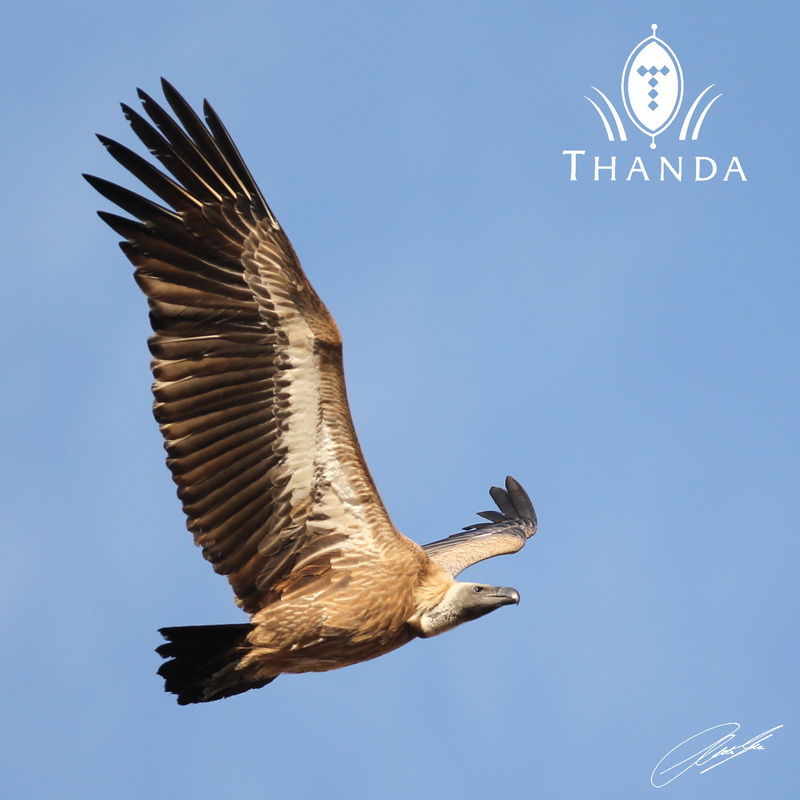
First I got a very good image of a White-baked Vulture in flight.

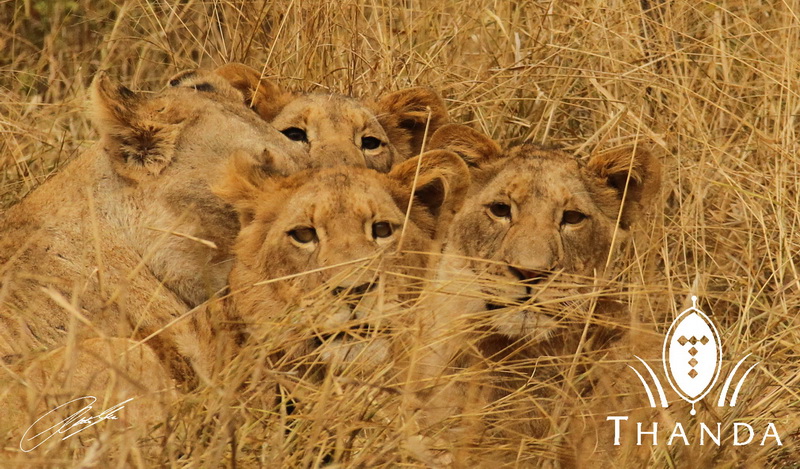
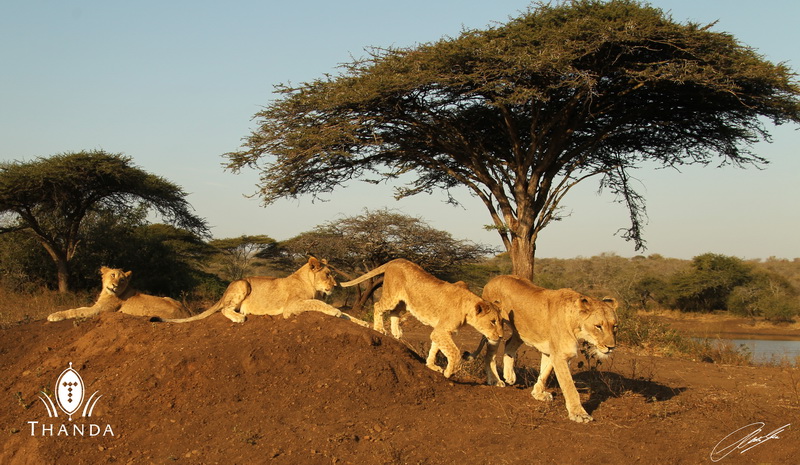
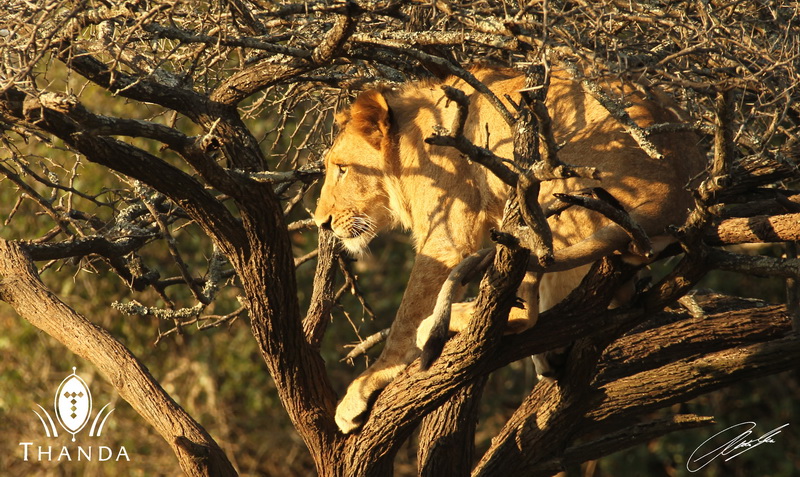
Below are two pictures of the Thanda North Pride (Mum, her two daughters and her son) and the young male in a tree.

And last but not least a herd of Blue Wildebeest in the evening sun.

Enjoy today’s pictures!

Dreaming of Cattle :-)

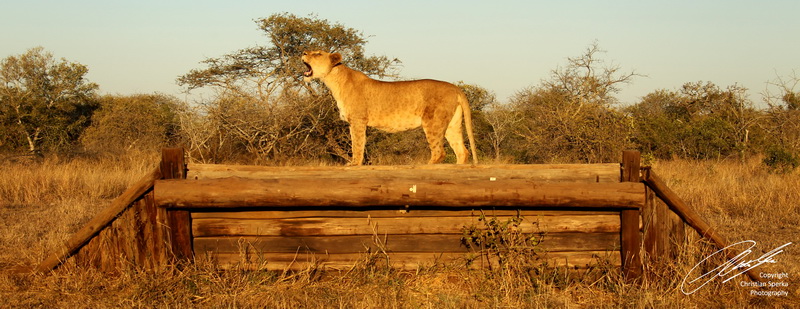
When I was driving on the reserve today I saw my first lion since I started working at Thanda. The young lioness was sleeping on top of an old cattle loading station. I thought she was dreaming of cattle 🙂

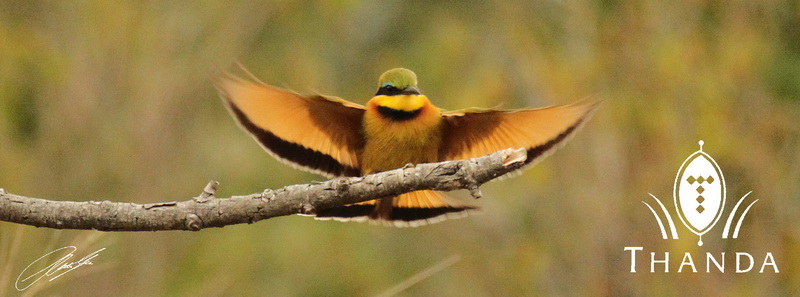
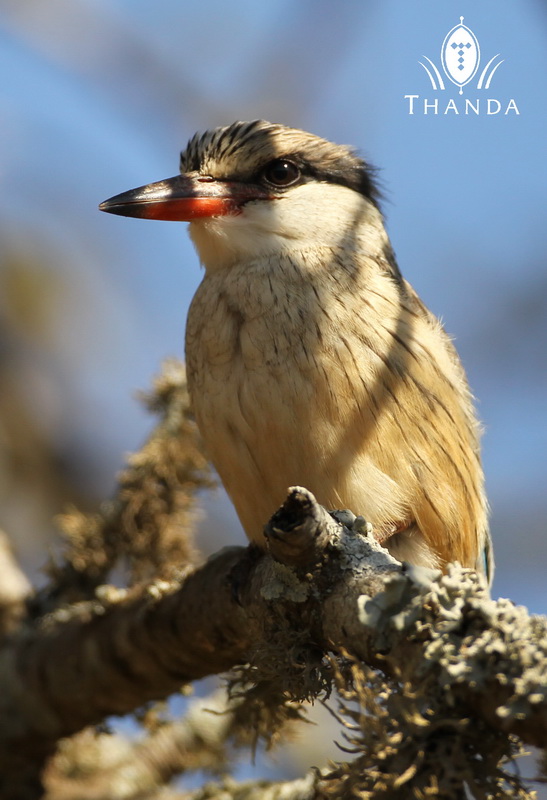
I also got a beautiful shot of a Brown-hooded Kingfisher. (see below)

Enjoy the pictures!

Thanda 2012 Gallery

Quite a few of you have asked me if all the pictures I am publishing on my blog are available for purchase. The answer is yes. I have created a new gallery on my website: Thanda 2012 – Direct link: http://www.sperka.biz/thanda

It may sometimes take a few day (after the blog has been published), before the images will appear on the gallery.

If you live in the USA or in Europe you can order prints and other products directly online. They will be produced locally and sent directly to you (So you do not have to pay shipping cost from South Africa :-))

Next to the new Thanda 2012 gallery there are thousands of other animal images available on my site – http://www.sperka.biz

Feel free to contact me if you cannot find your favorite image or a specific species and I will make it available to you.

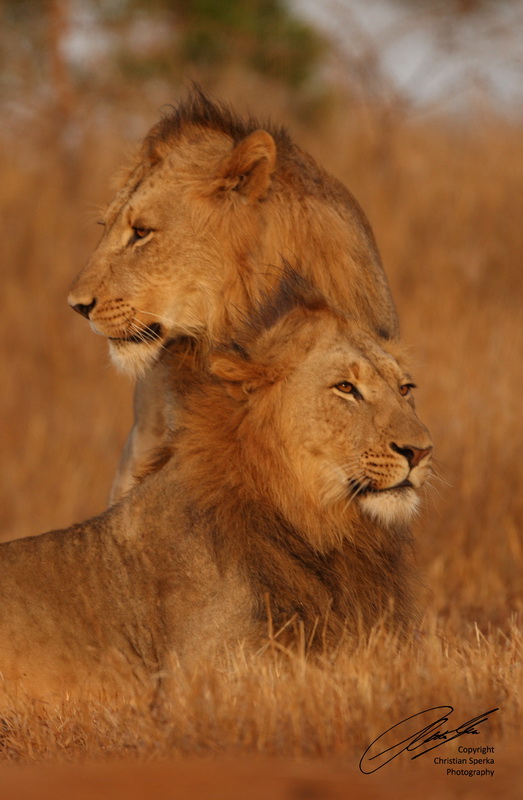
PS: Today I was again in Richards Bay and I did not take any animal pictures, so I have uploaded a picture I took last year  in July on Thanda (Two young male Lions). Enjoy the image!

Picture of the Week 11 – My Favorite Lion

[View all Pictures of the Week 2012]

Between 2002 and 2008 I have taken hundreds of pictures of this beautiful male Lion. He was the dominant male of the Phinda North Pride for many years and whenever I think about Lions I first think about him.

Together with my friend and field guide Mike Karantonis I spent many days and sometimes part of the nights watching him grow older and stronger. In 2009 a coaltion of three younger males replaced him as the dominant  male of the pride.

I took this picture in December 2006 in the streaming rain (see also the second picture taken at the same time) in front of my room at Phinda’s Vlei Lodge.

About male Lions:

Male lions are not lazy. They have a very tough life. Only one out of ten males makes it to full maturity. Once their father has evicted them, they have to fight other male Lions for a few years. The very few that get not killed in this harsh selection process may become the dominant male of a pride after they successfully drive away or kill the previous “boss”.

Male Lions do usually not participate in hunts because they are very visible with their large mane and would make it much easier for the prey to “get wind” of the hunt. They also have to preserve their strength and avoid to get insured in a hunt, because they have to defend their pride towards other males and prides. It is in the interest of the whole pride that they are capable of doing so, because if another male manages to take over, the first thing he will do is to kill all the young lions of the pride (up to two years old). For the same reason it makes sense that male Lions eat first and plenty at each kill to make sure that they stay strong for any upcoming fights.

Picture Data:

Picture 1: Camera: Canon 1D MII / Lens: Canon L 2.8 300mm / Mode: AV / Shutter Speed: 1/400s / Aperture: f/2.8 / ISO: 800 / Exposure Correction -0.33eV / Metering: Central weighted / White balance: manual K6500 / Time: early morning / Freehand

Picture 2: Camera: Canon 1D MII / Lens: Canon L 28-300mm at 78mm / Mode: AV / Shutter Speed: 1/100s / Aperture: f/4.5 / ISO: 400 / Exposure Correction -0.33eV / Metering: Central weighted / White balance: manual K6500 / Time: early morning / Freehand

For more Lion pictures got to
www.sperka.biz/lion (for African Lion)
www.sperka.biz/lion2 (for African Lion in zoos)
www.sperka.biz/lion3 (for Asiatic Lion)

Picture of the Week 8 – An “Unhappy” Lady

[View all Pictures of the Week 2012]

Most of the time you see a picture of a lion with an open mouth the animal is either yawning or flehming. It may look threatening and intimidating but it really is neither.

The young lioness in this pictures shows that she is quite upset. She is growling  at two young males (one of them in the picture), which were part of a different pride, who walked quietly past her in a show of dominance.

This scene was part of an encounter of the juvenile offspring from two prides on Thanda Private Game Reserve (2 males and one female on both sides). This happened while the adult females of each pride were absent.

During the time we watched the encounter there were no open hostilities, just lots of territorial marking behavior, many growls and fierce facial expressions (as the one in the picture 🙂

But the next day the males of both prides showed obvious signs of a night battle (wounds from claws on his shoulder – see the picture below).

More about lions:

Both males and females defend the pride and its territory against intruders. The male(s) associated with the pride must defend their relationship to the pride from outside males who attempt to take over their relationship with the pride. Females form the stable social unit in a pride and do not tolerate outside females. Membership only changes with the births and deaths of lionesses, although some females do leave and become nomadic and/or form a new pride. Sub-adult males on the other hand, must leave the pride when they reach maturity at around 2–3 years of age.

Picture Data:

Picture 1: Camera: Canon 1Ds MIII / Lens: Canon L 4.0 500mm / Mode: AV / Shutter Speed: 1/500s / Aperture: f/4 / ISO: 400 / Exposure Correction +1eV / Metering: Central weighted / White balance: manual K6500 / Time: midday / Freehand

Picture 2: Camera: Canon 1D MIV / Lens: Canon L 3.5-5.6 28-300mm at 210mm / Mode: AV / Shutter Speed: 1/4000s / Aperture: f/5.6 / ISO: 1600 / Exposure Correction +0.5eV / Metering: Central weighted / White balance: manual K6500 / Time: mid morning / Freehand

For more Lion pictures got to
www.sperka.biz/lion (for African Lion)
www.sperka.biz/lion2 (for African Lion in zoos)
www.sperka.biz/lion3 (for Asiatic Lion)

CAPTIVE and WILD

Captive and Wild – Lion Cubs

I was preparing this collage for one of my PowerPoint presentations and I thought I share it with all of you.  It is not easy to identify which of the pictures was taken in the wild and which was taken in captivity. Have a guess yourself. I will publish the correct answer with next week’s Picture of the Week!

I will give my CAPTIVE and WILD Presentation three times in February. You are welcome if you like to come to any of the events.
> February 6, 2012 – Paducah Photography Club, Broadway Church of Christ, 2820 Jefferson St., Paducah, Kentucky, USA – 6:30pm
> February 7, 2012 – Northwest Tennessee Photography Club, UT Martin Campus Library, Martin, Tennessee, USA – 6:30pm
> February 13, 2012 – Murfreesboro Art League, Murfreesboro, Tennessee, USA – 7:00pm

Picture of the Week 3 – Determined!

This small Lion cub was playing very determinedly with the piece of wood.
The picture was taken at The Bronx Zoo in New York.

[View all Pictures of the Week 2012]


Determined by Christian Sperka

For more Lion pictures got to
www.sperka.biz/lion (for African Lion)
www.sperka.biz/lion2 (for African Lion in zoos)
www.sperka.biz/lion3 (for Asiatic Lion)

[If you would like to order a print of this images online click here] 

About lions:

Lions (Panthera leo) are one of the four big cats in the genus Panthera. With some males exceeding 250 kg (550 lb) in weight, it is the second-largest living cat after the tiger. Wild Lions currently exist in Sub-Saharan Africa and in Asia with an endangered remnant population in Gir Forest National Park in India, having disappeared from North Africa and Southwest Asia in historic times.

Lions are a vulnerable species, having seen large, possibly irreversible, population decline over the past two decades in its African range. Lion populations are untenable outside designated reserves and national parks. Although the cause of the decline is not fully understood, habitat loss and conflicts with humans are currently the greatest causes of concern. 

Lions live for ten to fourteen years in the wild, while in captivity they can live longer than twenty years. In the wild, males seldom live longer than ten years, as injuries sustained from fighting with rival males greatly reduce their longevity. Zoos are cooperating worldwide in breeding programs for the endangered Asiatic subspecies (See my pictures of the Asiatic Lions at the Zurich Zoo in Switzerland).

Lions at The Bronx Zoo in New York.